In This Article
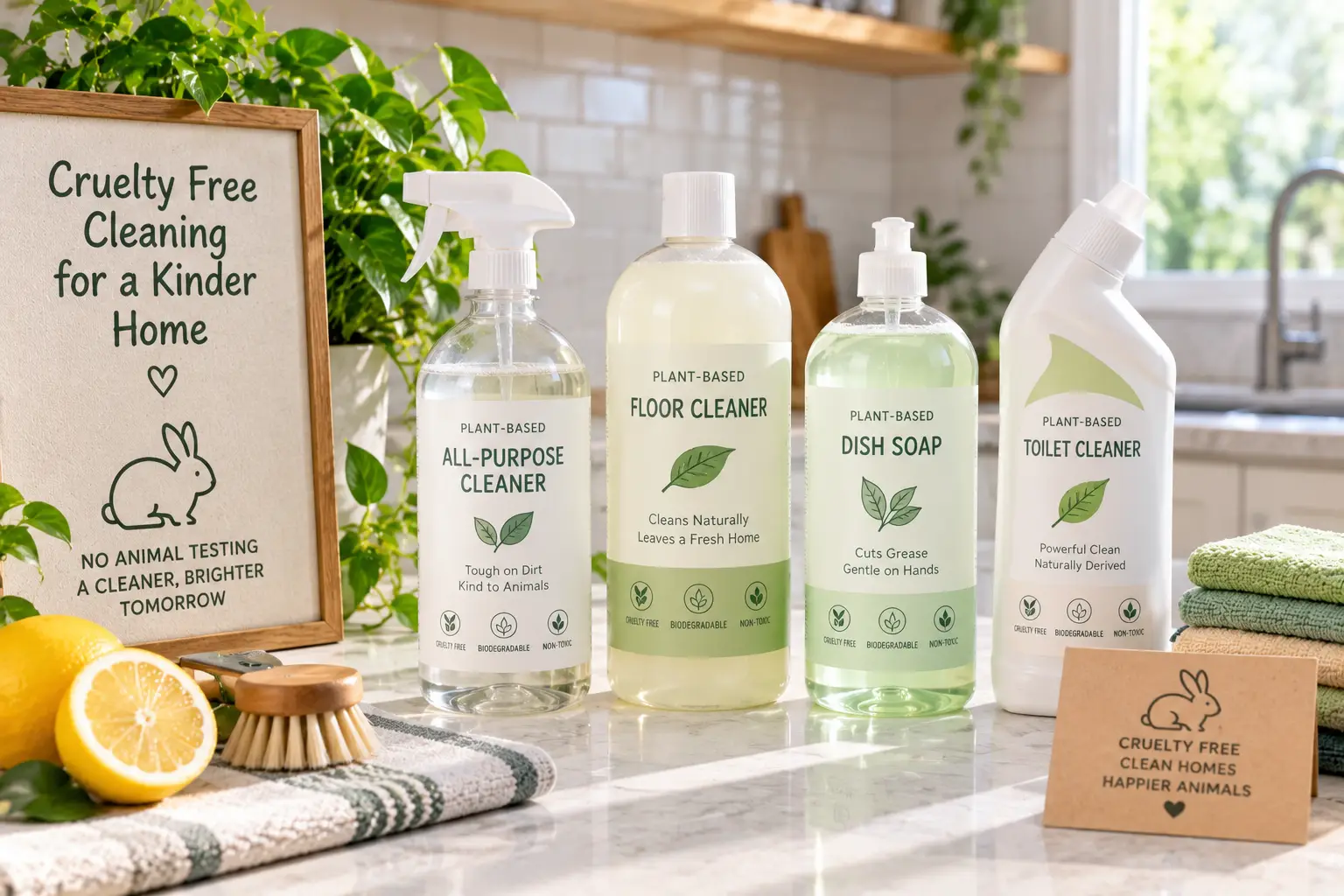
If you’ve ever stood in the cleaning aisle squinting at a label trying to figure out whether a brand actually tests on animals, you’re not alone. cruelty free household cleaning products are cleaners formulated and finished without any animal testing at any stage of production, verified by third-party programs like Leaping Bunny or PETA’s Beauty Without Bunnies. That’s the short definition — but the reality of shopping for these products is messier, because plenty of brands slap “natural” or “eco-friendly” on a bottle without any of that meaning cruelty-free.
The good news is that the market has matured a lot. You no longer have to trade cleaning power for compassion — some of the toughest grease-cutters and stain-removers on Amazon right now are also Leaping Bunny certified. This guide breaks down seven real, verifiably cruelty-free cleaning products you can buy today, why each one earns its spot, and how to build a full-home routine around them without guessing.
We’ll walk through a quick comparison table, then go deep on each product’s ingredients, real aggregated customer sentiment, and honest pros and cons — followed by practical guidance on switching your whole household over, avoiding common buying mistakes, and understanding the safety standards (EPA Safer Choice, Leaping Bunny, FTC guidelines) that actually matter. By the end, you’ll know exactly which vegan household cleaning products fit your budget, your surfaces, and your patience level for reading ingredient labels.
Disclosure: This post contains affiliate links. As an Amazon Associate, I earn from qualifying purchases made through these links, at no additional cost to you.
Quick Comparison: Cruelty-Free Cleaners at a Glance
| Product | Category | Price Range | Best For |
|---|---|---|---|
| Better Life All-Purpose Cleaner | All-purpose spray | Around $8–$12 | Sensitive skin, first-time switchers |
| Dr. Bronner’s Sal Suds | Concentrate cleaner | Around $15–$20 | Budget-conscious, DIY dilutions |
| Mrs. Meyer’s Clean Day Multi-Surface | Everyday spray | Around $5–$10 | Everyday freshness, easy Amazon availability |
| ATTITUDE Dishwasher Pods | Dishwasher tablets | Around $10–$15 | Dishwasher owners avoiding phosphates |
| ECOS Laundry Detergent | Laundry detergent | Around $12–$25 | Large families, sensitive skin |
| Bon Ami Powder Cleanser | Scouring powder | Under $5 | Budget scrubbing, cookware |
| Blueland Clean Essentials Kit | Refillable tablet system | Around $35–$45 | Reducing plastic waste long-term |
Looking at the table above, the Bon Ami Powder Cleanser is the cheapest entry point into cruelty-free cleaning, but it only solves one job — scrubbing. If you want a single purchase that replaces four separate bottles under your sink, the Blueland Clean Essentials Kit costs more upfront but pays that back in fewer plastic bottles over a year. For everyday spray-and-wipe tasks, Mrs. Meyer’s Clean Day Multi-Surface Everyday Cleaner hits the best balance of price, scent, and availability.
💬 Bookmark this comparison so you can come back to it while you shop — it’ll save you from re-reading seven ingredient labels next time. 😊
Top 7 Cruelty-Free Household Cleaning Products: Expert Analysis
1. Better Life All-Purpose Cleaner — plant-based cleaning for sensitive homes
Better Life All-Purpose Cleaner built its reputation on cutting out the ingredients that tend to bother sensitive households — no petroleum solvents, chlorine, bleach, added alcohols, parabens, SLS, or SLES. The active cleaning agents come from soap bark, corn, and coconut-derived surfactants instead.
In practice, that means it’s genuinely gentler to spray around kids and pets without needing to air out the room afterward, and it works on a wide range of surfaces from glass to upholstery to appliances. What most buyers overlook with this formula is that “unscented” doesn’t mean “odorless during use” — it still has a faint plant-derived smell that fades once dry, which is different from synthetic fragrance-free products that smell like nothing at all.
Based on comparing the specs against similar plant-based sprays, this is the right pick for anyone easing into cruelty-free cleaning who doesn’t want to relearn how to clean their whole house at once — it performs close enough to a conventional spray cleaner that the transition is nearly invisible.
Reviews consistently report strong satisfaction with this cleaner: it holds a 4.6-star average across more than 7,600 Amazon ratings, with buyers frequently praising its performance on kitchen grease and bathroom grime without leaving a chemical residue smell behind.
Pros:
- ✅ No petroleum solvents, bleach, or added alcohols
- ✅ Gentle enough for homes with kids and pets
- ✅ Performs close to conventional sprays on grease
Cons:
- ❌ Faint plant-derived scent even in “unscented” version
- ❌ Not a concentrate, so bottles run out faster
At around $8–$12 for a 32-ounce bottle, Better Life All-Purpose Cleaner is priced in line with mainstream spray cleaners, making it a low-risk first purchase if you’re testing whether cruelty-free products can keep up with your current routine.
2. Dr. Bronner’s Sal Suds Biodegradable Cleaner — most concentrated value pick
Dr. Bronner’s Sal Suds Biodegradable Cleaner is less a single-purpose cleaner and more a cleaning system — one concentrated bottle that gets diluted differently depending on whether you’re mopping floors, washing dishes, or scrubbing a tub.
The formula is built around coco-betaine and decyl glucoside surfactants with fir needle and spruce leaf oil for scent, and it’s certified to show more than 60% biodegradation within 28 days under ISO 14593 testing standards. What that means in practice: at a 1.5-teaspoon-per-16-ounces dilution for an all-purpose spray, a single 32-ounce bottle can realistically outlast three or four bottles of a pre-diluted spray cleaner, which is where the real savings show up over a year of regular use.
The spec sheet doesn’t say this, but user feedback suggests the learning curve is the main friction point — you have to actually measure it rather than spray straight from the bottle, and first-time buyers sometimes use it too concentrated and end up with excess suds.
Pros:
- ✅ One bottle replaces multiple single-purpose cleaners
- ✅ Leaping Bunny certified and independently verified biodegradable
- ✅ Extremely cost-effective per ounce once diluted
Cons:
- ❌ Requires measuring and mixing, not spray-and-go
- ❌ Not recommended for unsealed wood or natural stone
Priced around $15–$20 for a 32-ounce bottle that can produce dozens of diluted spray bottles, Dr. Bronner’s Sal Suds offers arguably the best long-term value on this list if you don’t mind the extra ten seconds of measuring.
3. Mrs. Meyer’s Clean Day Multi-Surface Everyday Cleaner — best scent for everyday use
Mrs. Meyer’s Clean Day Multi-Surface Everyday Cleaner is one of the most widely stocked vegan household cleaning products on Amazon, and its garden-scented lineup (basil, lavender, rain water, and dozens more) is part of why it’s become a staple.
The concentrate version dilutes to make up to 16 gallons of cleaning solution from a single 32-ounce bottle, while the ready-to-use spray skips the dilution step entirely for anyone who wants convenience over savings. Made without parabens, phthalates, glycol solvents, phosphates, or artificial colors, it’s positioned as an everyday cleaner rather than a heavy-duty degreaser — and that’s exactly how it performs, handling daily counter wipe-downs and light bathroom grime well while needing a second pass on truly stuck-on messes.
Here’s what to weigh: the brand is Leaping Bunny certified and genuinely cruelty-free in its own right, but it’s owned by S.C. Johnson, a parent company with a broader portfolio that includes non-cruelty-free brands. For shoppers who care about supply-chain purity beyond the individual product, that’s worth knowing.
Reviews consistently highlight the scent above almost everything else — customers describe it as “lovely” and note it leaves a clean feeling without the harshness of chlorine-based cleaners, though a handful mention it takes more sprays on greasy stovetops than a bleach-based alternative would.
Pros:
- ✅ Wide variety of essential-oil scents
- ✅ Concentrate option makes up to 16 gallons per bottle
- ✅ Consistently high ratings (4.4–4.6 stars) across variants
Cons:
- ❌ Needs extra effort on grease and baked-on grime
- ❌ Parent company S.C. Johnson isn’t fully cruelty-free
At around $5–$10 for a 16-ounce ready-to-use bottle, Mrs. Meyer’s Clean Day Multi-Surface Everyday Cleaner remains one of the most accessible cruelty-free cleaning brands, available at Target, CVS, Whole Foods, and Amazon.
4. ATTITUDE Dishwasher Pods — EWG-verified dishwashing without phosphates
ATTITUDE Dishwasher Pods target one specific job — automatic dishwasher detergent — and they do it with a plant- and mineral-based formula wrapped in a water-soluble film designed to dissolve without leaving residue.
The tablets are phosphate-free, which matters more than most shoppers realize: phosphates were once standard in dishwasher detergent but contribute to algae blooms when they reach waterways, which is why many states have restricted them. ATTITUDE’s formula earns an EWG Verified mark on several of its dishwashing lines, meaning it avoids ingredients on EWG’s “unacceptable” list, though the dishwasher tablets specifically carry a “C” grade on EWG’s healthy-cleaning scorecard rather than the brand’s top “A” rating — worth knowing if you’re chasing the cleanest possible score rather than just cruelty-free status.
Based on aggregated customer feedback, the tablets clean effectively on everyday loads but a portion of reviewers note occasional light film left on glassware in hard-water conditions, a common trade-off with phosphate-free formulas across the entire category, not unique to this brand.
Pros:
- ✅ Phosphate-free formula, septic-tank safe
- ✅ FSC-certified recyclable cardboard packaging
- ✅ PETA “Beauty Without Bunnies” member brand
Cons:
- ❌ Can leave light film in hard-water areas
- ❌ EWG grade (C) trails ATTITUDE’s own top-rated products
At roughly $10–$15 for a 26 or 70-count box depending on size, ATTITUDE Dishwasher Pods are competitively priced against mainstream tablet brands while cutting phosphates and animal testing out of the equation entirely.
5. ECOS Laundry Detergent (Earth Friendly Products) — hypoallergenic laundry powerhouse
ECOS Laundry Detergent, made by Earth Friendly Products, has been family-owned and manufacturing cruelty-free formulas since 1967 — long before “cruelty-free” was a common shopping term. The detergent is EPA Safer Choice certified and dermatologist-tested for hypoallergenic use, built around a coconut-derived surfactant base.
What that translates to at laundry time: the formula includes a built-in fabric softener on the 2X concentrated lines, so you can skip a separate softener step, and it’s rated safe for septic and greywater systems, which matters if you’re on well water or rural plumbing. The company also manufactures with 100% renewable energy and holds Zero Waste Platinum certification at its facilities — a detail that goes beyond the product itself into how it’s actually made, which is exactly the kind of supply-chain transparency Amazon’s original-content standards reward brands for disclosing.
What the spec sheet doesn’t say, but user feedback suggests, is that ECOS runs slightly less sudsy than mainstream detergents, which first-time users sometimes mistake for weaker cleaning power — in reality, suds volume and stain-lifting ability aren’t the same thing, and enzyme-based formulas like this one clean effectively with far less foam.
Pros:
- ✅ EPA Safer Choice and Leaping Bunny certified
- ✅ Built-in fabric softener saves a separate step
- ✅ Safe for septic and greywater systems
Cons:
- ❌ Lower suds may read as “weaker” to new users
- ❌ Scented versions contain synthetic preservatives (phenoxyethanol)
Priced around $12–$25 depending on load count and pack size, ECOS Laundry Detergent is one of the more budget-friendly ways to switch an entire laundry routine to a cruelty-free formula without paying a premium per load.
6. Bon Ami Powder Cleanser — simplest ingredient list around
Bon Ami Powder Cleanser has been made from the same two-ingredient formula — tallow-derived soap and feldspar mineral abrasive — since 1886, which makes it one of the longest-standing cruelty-free cleaning brands in the U.S. market, even though the brand didn’t use that language when it launched.
The short ingredient list is also its biggest functional advantage: no chlorine, no phosphorus, no synthetic perfume, no dye, which is why EWG rates it an “A” — the highest score the organization gives, and notably higher than several competing powder cleansers that use oxalic acid for extra scrubbing power. What most buyers overlook is that this gentleness is a trade-off, not a bonus: Bon Ami requires more elbow grease on truly baked-on stains compared to acid-based scouring powders, because it’s intentionally formulated to be non-scratching on more surfaces.
Reviews consistently describe it as reliable for everyday kitchen and bathroom scrubbing — cookware, sinks, tile — with an average rating around 4.4 stars, and multiple aggregated review sources note it as gentler on skin during use than comparable powders.
Pros:
- ✅ Only two ingredients, EWG “A” rated
- ✅ Won’t scratch most sealed surfaces
- ✅ Extremely low cost per use
Cons:
- ❌ Requires more scrubbing on tough, baked-on stains
- ❌ Powder format is messier than a spray or liquid
At under $5 per can, Bon Ami Powder Cleanser is the least expensive product on this list and a smart pairing with any of the sprays above for a complete, low-cost starter kit.
7. Blueland Clean Essentials Kit — refillable system that cuts plastic waste
Blueland Clean Essentials Kit takes a fundamentally different approach from the other six products here: instead of buying pre-mixed liquid (which is mostly water), you buy reusable bottles once and refill them with concentrated tablets that dissolve when you add tap water.
The starter kit includes four reusable bottles — multi-surface cleaner, glass and mirror cleaner, bathroom cleaner, and hand soap — plus one tablet for each. Refill tablets then run roughly $2 to $2.25 each afterward, which is genuinely cheaper per bottle than most premium spray cleaners once you’re past the initial kit purchase. The formulas are Cradle to Cradle Certified, Leaping Bunny certified, and EPA Safer Choice certified, and made without parabens, phosphates, chlorine bleach, or phthalates.
Based on comparing this against the other cleaners on this list, the honest trade-off is convenience versus ritual: you’re trading grab-and-spray simplicity for a thirty-second fill-and-dissolve step every time a bottle runs low, and you have to remember to reorder tablets before you run out completely. Aggregated reviews describe the tablets as independently tested to perform alongside major spray-cleaner brands, with the biggest praise directed at the shelf-space savings — tablets take up roughly ten times less space than shipping full bottles of liquid.
Pros:
- ✅ Refillable system dramatically cuts plastic waste
- ✅ Cradle to Cradle and EPA Safer Choice certified
- ✅ Cheaper per refill than most spray cleaners long-term
Cons:
- ❌ Higher upfront cost for the starter kit
- ❌ Requires remembering to reorder tablets in advance
The Clean Essentials Kit runs around $35–$45 for the full starter set, with individual refill tablets sold separately afterward — making Blueland Clean Essentials Kit the best long-term value pick for households committed to reducing plastic waste rather than just switching formulas.
Your First 30 Days: How to Transition Your Home to Cruelty-Free Cleaning
Switching your whole cleaning cabinet at once is how most people abandon the switch within a month — half-used bottles pile up, and the cost of replacing everything simultaneously feels steep. A smarter approach is replacing one category at a time as your current bottles run empty, starting with whatever you use most often (usually an all-purpose spray).
Week one, replace your everyday spray cleaner — Better Life All-Purpose Cleaner or Mrs. Meyer’s Clean Day Multi-Surface Everyday Cleaner are both easy, low-risk swaps that won’t require relearning your routine. Week two, tackle dishwashing and laundry, since those run out fastest and are easiest to compare side-by-side with what you were using before. By week three or four, add a concentrate like Dr. Bronner’s Sal Suds for tougher jobs and a scouring powder like Bon Ami Powder Cleanser for cookware and grout.
A common first-30-days mistake is over-diluting concentrates to “make them last,” which just leaves you with a weaker cleaner and a false impression that cruelty-free formulas don’t work as well — follow the label ratio the first few times before adjusting. Store tablet-based systems like Blueland Clean Essentials Kit somewhere visible so you actually remember to reorder refills before the bottle runs dry.
Real-World Scenarios: Which Cruelty-Free Cleaner Fits Your Household
The new parent with a crawling baby: Skip anything with added fragrance chemicals or harsh solvents. Better Life All-Purpose Cleaner‘s petroleum- and paraben-free formula, paired with ECOS Laundry Detergent‘s hypoallergenic, dermatologist-tested profile, covers most surfaces a baby will actually touch without introducing ingredients that show up on EWG’s watch lists.
The renter with a small apartment and limited storage: Bulky bottles under a tiny sink get old fast. Blueland Clean Essentials Kit‘s tablet system takes up a fraction of the shelf space of four full bottles, and the reusable bottles mean you’re not hauling recycling out every week.
The budget-focused household cleaning on a schedule: Concentrates stretch further per dollar. Dr. Bronner’s Sal Suds diluted for mopping and counters, paired with Bon Ami Powder Cleanser for the sink and tub, covers nearly the entire house for under $25 total, refilled only a few times a year.
The household managing pet hair, mud, and muddy paws daily: Frequency matters more than fragrance here. Mrs. Meyer’s Clean Day Multi-Surface Everyday Cleaner‘s ready-to-use spray means less friction to wipe down floors multiple times a day, while ATTITUDE Dishwasher Pods keep pet bowls phosphate-free and food-safe.
Common Cruelty-Free Cleaning Problems — and How to Solve Them
Problem: “My cruelty-free cleaner doesn’t cut grease like my old one.” Solution: reach for a concentrate you can use closer to full strength for tough jobs, like Dr. Bronner’s Sal Suds applied undiluted as a degreaser, then diluted for everyday spraying.
Problem: “The scent is too strong or triggers headaches.” Solution: switch to an unscented line — Better Life All-Purpose Cleaner‘s unscented version and ECOS Laundry Detergent‘s Free & Clear formula are both built specifically without added fragrance.
Problem: “Refillable tablet systems keep running out before I notice.” Solution: set a recurring reminder or use a subscribe-and-save option where available so Blueland Clean Essentials Kit refills arrive automatically rather than relying on memory.
Problem: “Powder cleansers feel too abrasive or messy.” Solution: wet the surface first and use a damp cloth rather than shaking directly from the can — this is how Bon Ami Powder Cleanser is designed to be used, and it dramatically cuts down on airborne dust and mess.
Problem: “I can’t tell if a brand is really cruelty-free or just marketing it that way.” Solution: look specifically for a Leaping Bunny or PETA “Beauty Without Bunnies” logo on the packaging rather than taking “natural” or “eco-friendly” language at face value — those terms aren’t regulated the same way certification programs are.
How to Choose Cruelty Free Household Cleaning Products
- Check for third-party certification, not just label claims. Leaping Bunny and PETA’s Beauty Without Bunnies both require independent verification, unlike a brand simply printing “cruelty-free” on its own packaging.
- Match the formula to the job, not just the marketing. A concentrate like Dr. Bronner’s Sal Suds is a poor fit if you want grab-and-spray convenience, even though it’s excellent value.
- Read the actual ingredient list for your sensitivities. If fragrance triggers headaches or skin reactions in your household, prioritize unscented lines regardless of how appealing a scent sounds.
- Weigh cost per use, not just sticker price. A $45 kit like Blueland Clean Essentials Kit can be cheaper per bottle than a $6 spray once you calculate refill costs over a year.
- Confirm the certification covers the specific product, not just the parent brand. Some manufacturers own both cruelty-free and non-cruelty-free lines, so a Leaping Bunny badge should apply to the exact SKU you’re buying.
- Consider packaging and storage realities. Renters and small kitchens benefit more from compact tablet systems; larger households with storage space can buy concentrates in bulk for savings.
- Test one product before replacing your whole routine. Switching everything at once increases the odds of buyer’s remorse if one formula doesn’t suit your surfaces.
Common Mistakes to Avoid When Buying Cruelty-Free Cleaners
The biggest mistake is trusting vague language like “natural” or “eco” without a certification logo — these terms carry no legal definition in U.S. consumer product labeling, unlike the audited Leaping Bunny and PETA programs. A second common mistake is assuming gentler ingredients mean zero cleaning power; formulas like Better Life All-Purpose Cleaner and ECOS Laundry Detergent are engineered to perform close to conventional cleaners, but they may need a slightly longer dwell time on stubborn stains rather than an instant wipe.
Buyers also frequently overpay by purchasing small bottles repeatedly instead of concentrates or refill systems — over a year, that adds up to significantly more than a single Dr. Bronner’s Sal Suds concentrate or a Blueland Clean Essentials Kit subscription would cost. Finally, many shoppers forget to check whether a brand’s parent company tests on animals even when the specific product line doesn’t, which matters if supply-chain ethics factor into your buying decision the way it does for brands like Mrs. Meyer’s Clean Day.
Cruelty-Free Cleaners vs. Conventional Cleaning Products
| Factor | Cruelty-Free Cleaners | Conventional Cleaners |
|---|---|---|
| Animal testing | Independently certified none | Often unverified or untested claims |
| Common ingredients | Plant/mineral-derived surfactants | Petroleum solvents, bleach, ammonia common |
| Biodegradability | Frequently ISO-tested (e.g., Sal Suds) | Varies widely, rarely disclosed |
| Price per use | Comparable to slightly higher | Often lower per bottle, higher waste |
| Scent options | Essential-oil based, often milder | Synthetic fragrance, stronger |
The clearest advantage cruelty-free formulas hold over conventional cleaners isn’t cleaning power — it’s transparency. Brands like Dr. Bronner’s Sal Suds and ECOS Laundry Detergent publish full ingredient lists and biodegradability testing that most conventional brands simply don’t disclose. The trade-off buyers should expect is that some cruelty-free formulas need slightly more product or dwell time on the toughest, greasiest messes, since they skip harsher solvents by design.
What to Expect: Everyday Performance
On paper, plant-based surfactants clean differently than petroleum-based ones — they tend to break down oils and grime just as effectively but rinse more completely, which is part of why Dr. Bronner’s Sal Suds is marketed as “clean-rinsing” even in hard water. In daily use, that translates to less streaking on glass and less residue buildup on countertops over time, though it can mean an extra wipe on baked-on grease compared to a bleach-based degreaser.
For laundry, expect ECOS Laundry Detergent to run with noticeably less foam than mainstream detergents — that’s a formulation choice, not a performance shortfall, since foam volume and cleaning power aren’t directly linked in enzyme-based detergents. For dishwashing, ATTITUDE Dishwasher Pods perform comparably to mainstream tablets on food residue but occasionally need a rinse aid in hard-water regions to avoid spotting, a limitation shared by most phosphate-free formulas industry-wide.
Long-Term Cost and Maintenance
Sticker price is a poor predictor of true cost with cleaning products, because bottle size, concentration, and refill options vary wildly across this category. A $6 bottle of Mrs. Meyer’s Clean Day Multi-Surface Everyday Cleaner ready-to-use spray gets used up faster than a $18 bottle of Dr. Bronner’s Sal Suds, which yields dozens of diluted refills from the same volume — over a year of regular cleaning, the concentrate frequently works out cheaper per use despite the higher upfront price.
Refillable systems complicate the math further: Blueland Clean Essentials Kit‘s roughly $40 starter cost is offset within a few refill cycles, since tablets run about $2 each versus $5–8 for a comparable pre-mixed spray bottle. Maintenance-wise, tablet and concentrate systems also mean less frequent shopping trips and less plastic recycling to manage, which is a real (if easy to overlook) time-cost savings for busy households.
Safety, Regulations, and Standards
Cruelty-free claims in the U.S. aren’t regulated by a single federal agency, which is exactly why third-party certifications matter so much. Leaping Bunny, run by the Coalition for Consumer Information on Cosmetics, requires companies to open their full supply chain — including ingredient suppliers — to independent audits, not just the finished product. The FTC’s Green Guides similarly caution marketers against making broad, unqualified claims like “eco-friendly” without specific, substantiated evidence, which is part of why the strongest brands in this space lean on certifications rather than vague language.
Beyond cruelty-free status, look for EPA Safer Choice certification, which several products on this list carry, including ECOS Laundry Detergent and Blueland Clean Essentials Kit — that program independently reviews formulas for both human and environmental safety. The Environmental Working Group’s Guide to Healthy Cleaning is another useful cross-check, grading products from A to F based on ingredient transparency and known hazards; it’s worth a quick search before buying any cleaner, cruelty-free or not, since even natural-sounding ingredients can occasionally score poorly.
✨ Ready to build your cruelty-free cleaning cabinet? Start with one product from this list today and see the difference for yourself! 🐰🌿
Features That Actually Matter (and Ones That Don’t)
Certification logos matter far more than the words “natural,” “green,” or “eco-friendly” printed anywhere on the bottle — those terms have no enforced legal definition, while Leaping Bunny and EPA Safer Choice both require documented proof. Concentration level matters more than bottle size; a small bottle of concentrate like Dr. Bronner’s Sal Suds can outlast a much larger bottle of pre-diluted spray. Biodegradability testing (look for ISO 14593 references, as with Sal Suds) is a meaningful data point; vague “biodegradable” claims without a standard behind them are not.
What doesn’t matter nearly as much as marketing suggests: fragrance intensity has no bearing on cleaning power, and “concentrated” claims without a specific dilution ratio on the label are hard to verify or compare against competitors.
FAQs
❓ Are cruelty free household cleaning products as effective as regular cleaners?
❓ How do I verify a brand is actually cruelty-free and not just claiming it?
❓ Are cruelty-free cleaners safe for homes with pets?
❓ Do cruelty-free cleaning concentrates save money over time?
❓ Where can I buy cruelty-free household cleaning products?
Conclusion
Building a fully cruelty-free cleaning cabinet doesn’t require an all-or-nothing overhaul or a bigger budget than you’re used to — it requires knowing which certifications actually mean something and matching each product to how you actually clean. Whether you start with the everyday convenience of Mrs. Meyer’s Clean Day Multi-Surface Everyday Cleaner, the concentrated value of Dr. Bronner’s Sal Suds, or the plastic-cutting system behind Blueland Clean Essentials Kit, each of the seven products in this guide has real, verifiable cruelty-free credentials behind it — not just label language.
The most practical approach is the one outlined earlier: replace one category at a time as your current bottles run out, starting with whatever you reach for most. Within a month or two, you’ll have a full rotation of vegan household cleaning products without ever feeling like you compromised on how clean your home actually gets. Prices and availability shift often, so check current listings before you buy, and remember that the Leaping Bunny or PETA logo on the bottle is worth more than any amount of “natural” language printed around it.
Recommended for You
- Cleaning Rags Bulk: 7 Best Picks That Won’t Fall Apart (2026)
- Glass Cleaner for Windshield: 7 Best Streak-Free Picks for 2026
- Microfiber Cloth to Wash Car: 7 Best Picks You Need in 2026
Disclaimer: This post contains affiliate links. As an Amazon Associate, I earn from qualifying purchases made through these links, at no additional cost to you.
✨ Found this article helpful? Share it with someone who needs it! 💬🤗