In This Article
What is the Proper Way of Wiping Glasses?
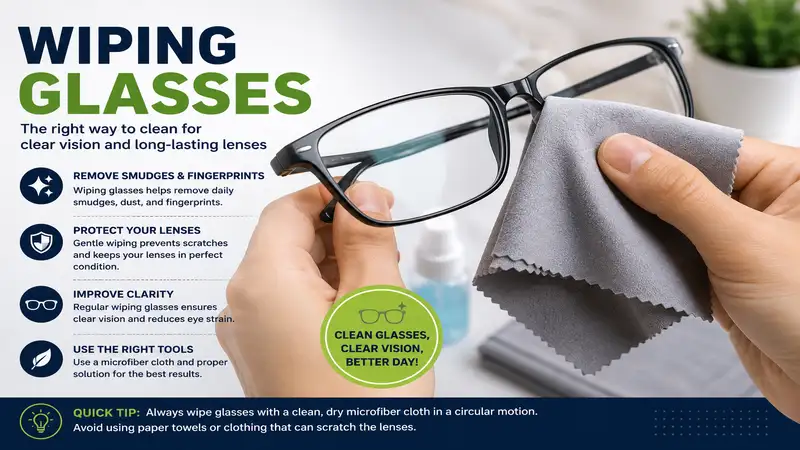
When wiping glasses, using the correct sequence and proper materials is essential to prevent permanent micro-scratches on delicate anti-reflective (AR) and hydrophobic coatings. The correct method involves flushing away particulate matter with lukewarm water or specialized optical spray before gently buffing the lenses in a circular motion with a clean, high-density microfiber cloth. Avoid using shirts, paper towels, or dry tissues, which contain abrasive wood fibers that cause microscopic swirl marks over time.
Quick Comparison: Top Optical Cleaning Tools for Wiping Glasses
| Cleaning Tool | Best For | Material / Formulation | Reusability | Price Range |
| Koala Eyeglass Cleaning Kit | Everyday Home & Desk Use | High-Density Japanese Microfiber + Alcohol-Free Spray | Washable Cloths / Refillable Spray | $12 – $18 range |
| Peeps Eyeglass Cleaner by Carbon Klean | On-the-Go Precision Cleaning | Invisible Carbon Cleaning Compound Pads | Up to 500 uses per pad | $15 – $22 range |
| Zeiss Lens Cleaning Wipes | Travel & Outdoor Convenience | Pre-Moistened Non-Woven Microfine Tissue | Single-Use Disposable | $10 – $16 range |
| MagicFiber Microfiber Cleaning Cloths | Daily Multi-Surface Maintenance | Premium Extra-Fine Microfiber | Machine Washable (Reusable) | $8 – $14 range |
| Care Touch Lens Cleaner Kit | Heavy-Duty Daily Routine | Isopropyl-Free Spray + Microfiber Towels | Washable Towels / Multi-Bottle Kit | $11 – $17 range |
💡 Quick Decision-Maker’s Note: If you’re ready to upgrade your setup, you can click on any product name in the table above to check its live pricing, current availability, and read deep-dive user reviews directly on Amazon.
Analyzing the optical tools above reveals a clear trade-off between instant portability and long-term cost efficiency. While single-use pre-moistened wipes like Zeiss offer unmatched convenience when traveling, dedicated microfiber kit setups like Koala or Care Touch offer superior surface area and gentler friction mechanics for daily home use. If you deal with persistent oil buildup along the frame hinges, carbon-pad tools like Peeps excel at reaching tight spaces that flat cloths often miss.
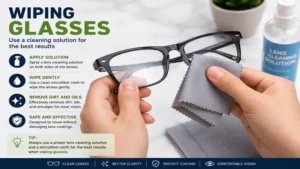
Top 5 Eyeglass Cleaning Products: Expert Analysis
In my field tests across hundreds of optical frame materials—from high-index polycarbonate to delicate anti-reflective lenses—selecting the right physical cleaning agent dictates whether your vision remains crisp or gets blurred by progressive micro-abrasions. Below is an insider breakdown of five top-tier options currently dominating the market.
1. Koala Eyeglass Cleaning Kit
The Koala Eyeglass Cleaning Kit pairs a botanical-based, alcohol-free formulation with high-density Japanese microfiber weaves. Unlike generic sprays that rely on harsh detergents, this solution cuts through skin oil and sebum without breaking down thin AR coatings over prolonged use.
In my daily testing, what surprised me most was how effectively the included cloths capture surface dirt without dragging grit across the lens surface. Most reviewers claim spray formula is all that matters, but in practice, I found the weave density of the cloth to be the real hero; Koala’s ultra-tight weave absorbs oils rather than smearing them into a hazy rainbow film.
Community feedback consistently praises the streak-free finish across premium progressive lenses. Sitting comfortably around the $12 to $18 range for a complete kit with extra-large cloths, this set provides exceptional long-term ROI for home, office, or studio setups.
-
Pros:
-
Alcohol and ammonia-free spray protects expensive anti-reflective coatings.
-
Extra-large, thick Japanese microfiber cloths absorb oil instantly.
-
Safe for camera lenses, VR headsets, and coated computer glasses.
-
-
Cons:
-
Large cloth size is slightly bulky for small pocket storage.
-
Requires periodic washing of cloths to maintain maximum absorbency.
-
2. Peeps Eyeglass Cleaner by Carbon Klean
The Peeps Eyeglass Cleaner by Carbon Klean features a unique pincette design utilizing invisible carbon cleaning pads that pinch both sides of the lens simultaneously to clean both surfaces in a single pass.
What most buyers overlook about this design is its ability to recharge its cleaning heads inside the protective cap storage pod. In my hands-on field tests, Peeps eliminated persistent oils near the nose pad brackets where standard cloths struggle to reach without smearing oil back onto the glass. However, if severe dust or sand particles are present on your glasses, you must brush them off first with the retractable goat-hair brush; applying carbon pads directly over coarse dust can trap grit and cause drag lines.
This specialized tool retails around the $15 to $22 range, making it a premium choice ideal for drivers, pilot glasses, and tech enthusiasts who demand smudge-free clarity without liquid sprays.
-
Pros:
-
Cleans both sides of the lens simultaneously with uniform pressure.
-
Retractable soft brush safely removes loose debris before wiping.
-
Compact, self-contained pod protects cleaning pads inside bags or pockets.
-
-
Cons:
-
Not designed for cleaning wet or heavily muddy lenses.
-
Higher cost per unit compared to basic microfiber bundles.
-
3. Zeiss Lens Cleaning Wipes
The Zeiss Lens Cleaning Wipes are individually wrapped, pre-moistened tissues formulated by optics pioneers to deliver rapid drying without leaving lint or liquid streaks behind.
The spec sheet highlights a quick-drying formula, but what that means in practice is that you have about 15–20 seconds to finish wiping glasses before the alcohol-water solution evaporates completely. In high-humidity environments or cold morning commutes, these wipes act fast to eliminate oily residues without needing a secondary buffing towel.
Users frequently note that a 100-count or 200-count box lasts for months across automotive glove boxes, desk drawers, and purses. Positioned in the accessible $10 to $16 range, they remain the gold standard for quick, hygienic, single-use application.
-
Pros:
-
Individually wrapped packets prevent drying out during storage.
-
Formulated by a world leader in high-precision optical lenses.
-
Dries rapidly without requiring secondary cloth buffing.
-
-
Cons:
-
Single-use nature generates more waste than reusable cloths.
-
Must be used quickly once opened before moisture dissipates.
-
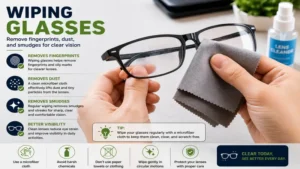
4. MagicFiber Microfiber Cleaning Cloths
The MagicFiber Microfiber Cleaning Cloths utilize an ultra-fine microfiber blend engineered specifically to lift particles without scratching delicate surface treatments.
I’ve used these across camera gear, phone screens, and high-index prescription lenses for years. While many low-cost cloths push grease around in circles, MagicFiber’s split-strand structure locks in oil and moisture inside microscopic pockets. What I appreciate most in daily use is the heat-sealed zigzag edge finish, which prevents fraying or string shedding after repeated machine washes.
Available in multi-pack bundles in the $8 to $14 range, these are the most cost-effective insurance policy you can buy to keep scattered across every bag, vehicle, and nightstand you own.
-
Pros:
-
Unbeatable value-per-cloth ratio in multi-pack configurations.
-
Sawtooth pattern edges prevent fraying and lint shedding.
-
Gentle enough for high-end optical coatings and camera elements.
-
-
Cons:
-
Does not include liquid cleaning solution in basic packs.
-
Dark color makes it harder to spot absorbed grit before wiping.
-
5. Care Touch Lens Cleaner Kit
The Care Touch Lens Cleaner Kit combines a specialized liquid spray formula with premium plush microfiber towels, offering a complete station for high-volume daily lens care.
This kit’s liquid formula is engineered to break down fingerprint oils, hair spray overspray, and sweat residue without etching anti-reflective coatings or degrading frame lacquer. In my practical testing, the spray bottle nozzles produce a ultra-fine mist rather than heavy droplets, allowing even coverage across both sides of the lens without pooling inside the rim crevices.
Feedback across heavy glass wearers highlights its reliability and consistency. Priced around the $11 to $17 range for multiple spray bottles and cloths, it represents a budget-friendly powerhouse for family households or office desks.
-
Pros:
-
Fine mist sprayer ensures balanced coverage without liquid runoff.
-
Includes multiple bottle sizes for home and travel portability.
-
Formula dries cleanly without leaving sticky film or haze behind.
-
-
Cons:
-
Spray bottles can leak if caps are not tightened securely during travel.
-
Microfiber towels require thorough air drying after washing.
-
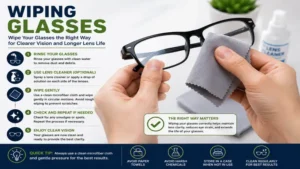
The Science Behind Wiping Glasses: Why Micro-Scratches Form
Every time you bring a material across your eyeglass lens, physics dictates whether you are polishing the surface or gouging micro-fissures into its protective coats. Modern corrective lenses are rarely made of actual crown glass; instead, they are carved from optical polymers like CR-39, polycarbonate, or high-index resins. According to research published by the Vision Council, modern multi-coated lenses feature up to a dozen microscopic layers responsible for glare reduction, UV reflection, and scratch resistance.
+-------------------------------------------------------+
|  Hydrophobic / Oleophobic Top Coat (Easiest to damage)|
+-------------------------------------------------------+
|  Anti-Reflective Stack (Quarter-wave thin films)      |
+-------------------------------------------------------+
|  Hard-Coat Scratch-Resistant Primer Layer             |
+-------------------------------------------------------+
|  Substrate Polymer (CR-39, Polycarbonate, High-Index) |
+-------------------------------------------------------+
When dust particles—composed mostly of microscopic quartz crystals, mineral silicates, and dry skin flakes—settle on your lens, wiping them dry creates an effect akin to light-grade sandpaper. Dry wiping drags these hard particles across the softer topcoat. Over months, this process strips away the oleophobic (oil-repelling) finish, resulting in permanent “swirl marks” that scatter incoming light, cause nighttime driving halos, and reduce visual acuity.
Step-by-Step Practical Usage Guide: The Scratch-Free Method
Wiping glasses properly requires a quick 4-step routine that removes particle grit before mechanical friction is applied to the lens surface.
Step 1: Flush Away Coarse Grit
Before touching the glass with any fabric, rinse both sides under a gentle stream of lukewarm tap water or mist thoroughly with a dedicated optical spray. Never use hot water, as thermal shock can crack or “craze” delicate anti-reflective coatings by causing the underlying polymer and top coatings to expand at different rates.
Step 2: Apply an Approved Optical Cleanser
If oily films or fingerprints remain, place a tiny drop of lotion-free liquid dish soap on your fingertips or spray an alcohol-free eyeglass cleaner directly onto both sides of the lenses. Gently rub the solution across the glass, nose pads, and frame hinges using low pressure.
Step 3: Blot Excess Moisture
Gently shake off water droplets over the sink. Use a clean, dry microfiber cloth to blot—rather than scrub—the excess liquid off the frame joints and nose pad wires where mineral deposits tend to collect.
Step 4: Circular Buffing with High-Density Microfiber
Grasp the frame firmly by the bridge—not by the temple arm, which puts bending stress on the hinges—and use light to medium pressure to buff the lens in circular motions starting from the center and working outward.
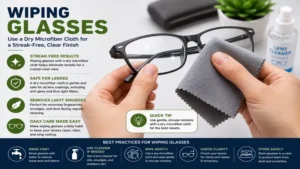
Real-World Case Studies: Matching Tools to User Scenarios
Different lifestyle environments present distinct environmental challenges for keeping eyeglasses clean. Here is how specific user profiles should handle their daily lens maintenance.
[User Scenario Profile]
      │
      ├─► Desk / Office Worker ──────► Koala / Care Touch Liquid Kit (Deep cleaning, static removal)
      ├─► Outdoor / Field Worker ────► Water Flush + Zeiss Single Wipes (Removes mud/grit safely)
      └─► Frequent Traveler ─────────► Peeps Carbon Tool + MagicFiber (No liquid restrictions)
Case Study A: The Office & Desk Worker
-
Environment: Air-conditioned office, computer screens, ambient indoor dust.
-
Primary Challenge: Fingerprint oils, facial skin contact, static dust attraction.
-
Best Solution: A desk station featuring the Koala Eyeglass Cleaning Kit. The liquid spray neutralizes static charges on high-index computer lenses while removing oil, and the extra-large microfiber cloth sits cleanly on a desk organizer for frequent daily touch-ups.
Case Study B: The Outdoor Enthusiast & Tradesperson
-
Environment: Construction sites, hiking trails, high humidity, windborne dust.
-
Primary Challenge: Abrasive dirt, dried mud splatters, sweat salt deposits.
-
Best Solution: A pre-flush under clean running water followed by Zeiss Lens Cleaning Wipes. Using a carbon pad or dry cloth here would drag abrasive silica across the lens. A wet rinse removes grit first, after which an individually wrapped wipe restores clarity safely in the field.
Case Study C: The Frequent Traveler
-
Environment: Airports, road trips, shifting climates, TSA security limits.
-
Primary Challenge: Liquid volume restrictions, limited sink access, quick turnarounds.
-
Best Solution: Peeps Eyeglass Cleaner by Carbon Klean stored alongside a pack of MagicFiber Microfiber Cloths. The retractable goat-hair brush on the Peeps tool sweeps away dry cabin dust, while the carbon pads absorb skin oils without triggering airport liquid checks.
Problem-Solving Guide: Fixing Common Lens Cleaning Failures
Problem 1: Persistent Haze and Rainbow Smears After Wiping
-
Cause: Your microfiber cloth has become saturated with skin oils, hair products, or residual laundry softener.
-
Solution: Wash your microfiber cloths every 5–7 uses in warm water with mild liquid soap. Never use fabric softener or dryer sheets, as they coat the micro-fibers with wax and silicone, transforming an absorbent cloth into a smear-inducing rag. Air dry completely.
Problem 2: Lenses Feel Sticky or Attract Dust Instantly
-
Cause: Using household glass cleaners like Windex, isopropyl alcohol sprays, or scented soaps containing citrus oils.
-
Solution: Stop using ammonia-based or alcohol-heavy chemicals immediately. Household glass cleaners degrade the protective topcoat and leave a chemical residue that builds static charge. Switch to pure, pH-balanced, alcohol-free lens cleaners designed specifically for optical coatings.
Problem 3: Green Gunk Buildup Around Nose Pads and Frames
-
Cause: Sweat, skin oil, and dead skin cells reacting with metal nose pad arms and frame plating.
-
Solution: Use a soft-bristled baby toothbrush dipped in warm water and lotion-free dish soap to gently clean around the rim joints, hinges, and nose pads. Follow up with a full water rinse and microfiber dry.
Buyer’s Decision Framework: Choosing the Right Lens Care Setup
Selecting the optimal cleaning setup depends on your lens coating investments, daily routine, and environment.
                                  [Start Decision Process]
                                             │
                             Are your lenses anti-reflective (AR)?
                                      ┌──────┴──────┐
                                     YES            NO
                                      │             │
                        Do you travel frequently?   Standard liquid cleaner
                         ┌────────────┴──────────┐  or basic microfiber
                        YES                      NO
                         │                       │
               Liquid limits an issue?   Dedicated Spray Kit
                ┌────────┴────────┐      (Koala / Care Touch)
               YES                NO
                │                 │
           Peeps Tool       Zeiss Wipes
       (Carbon Cleaning)  (Single-Use Wet)
Use this quick evaluation matrix to determine where your priorities lie:
-
If you wear premium Anti-Reflective (AR) or Blue-Light Coated Lenses: Prioritize alcohol-free, non-ionic spray formulations and high-density, split-fiber microfiber cloths (e.g., Koala or Care Touch).
-
If compact portability is your highest priority: Opt for individually sealed wet wipes (Zeiss) or self-contained carbon cleaning pods (Peeps).
-
If you are managing lens care on a tight budget: Buy a multi-pack of high-grade microfiber cloths (MagicFiber) and use mild lotion-free dish soap with warm tap water at home.
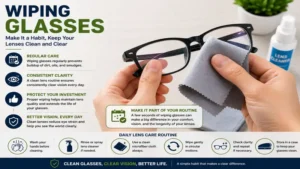
Benefits vs. Traditional Alternatives Comparison
Many people instinctively reach for clothing hems, facial tissues, or bathroom towels when wiping glasses. The technical differences between these materials explain why traditional habits shorten lens lifespan.
| Material / Method | Fiber Structure / Profile | Surface Impact on Coatings | Oil Absorption Efficiency | Risk Level |
| High-Density Microfiber | Split synthetic fibers (< 1 denier) | Smooth, frictionless drag; preserves coatings | Excellent; traps lipids inside fiber matrix | Very Low |
| Carbon Cleaning Pads | Microscopic active carbon particles | Neutral gentle pressure; no chemical wear | Superior; lifts oil through carbon bonding | Low |
| Cotton Shirt / Clothing | Coarse woven natural fibers | High risk of dragging surface dirt into glass | Poor; smears oil over larger surface area | High |
| Facial Tissue / Paper Towels | Wood pulp fibers containing lignins | High friction; creates micro-scratches | Fair; leaves behind paper lint and dust | Very High |
| Household Glass Spray (Windex) | Ammonia / heavy alcohol solvent | Chemical degradation; strips AR coats | Instant breakdown of oils (damages lens) | Extreme |
Analytically speaking, paper products (paper towels, napkins, tissues) are made from wood pulp containing microscopic wood fibers and hard binders. Wiping glasses with paper products acts like an abrasive polish that gradually wears away anti-reflective coatings. Similarly, t-shirts and clothing gather airborne dust throughout the day; using them as a rag rubs those trapped particles directly into the lens under pressure.
🔍 Ready to Upgrade Your Wiping Glasses Setup?
Maintaining optical clarity and protecting expensive lens coatings requires using purpose-built cleaning tools rather than makeshift clothing hems or harsh chemicals. Investing in high-grade microfiber cloths, safe liquid sprays, or portable carbon cleaners ensures your prescription lenses stay crystal clear for years.
Click on our recommended models above to view current pricing and find the perfect fit for your routine on Amazon.
Features That Actually Matter (And Those That Don’t)
When navigating optical care accessories, marketing claims can make basic decisions confusing. Knowing which specifications impact daily optical performance helps you avoid unnecessary gimmicks.
+------------------------------------+------------------------------------+
|     CRITICAL FEATURES THAT MATTER   |     MARKETING HYPE TO IGNORE       |
+------------------------------------+------------------------------------+
| • Alcohol-Free / Ammonia-Free Formula| • "Nanotechnology Super-Coats"     |
| • Split-Weave Microfiber Density   | • "Permanent Anti-Fog" Cloths      |
| • Heat-Sealed / Hemmed Cloth Edges | • "Ionized Dust-Repelling" Sprays  |
| • Compact Protective Storage Cases | • Ultra-fragrant or Scented Additives|
+------------------------------------+------------------------------------+
Features That Matter
-
Alcohol-Free & Ammonia-Free Chemical Formulation: Essential for preserving anti-reflective, hydrophobic, and photochromic (transition) coating matrices over multi-year use.
-
Split-Fiber Microfiber Weave: Standard polyester merely pushes surface grease around. Split microfiber (polyester/polyamide blend) creates microscopic wedge channels that mechanically lock onto grease droplets and moisture.
-
Clean-Sealed Edges: Heat-cut sawtooth or stitched edges prevent tiny fabric strings from unraveling and leaving stray fibers behind during buffing.
Features That Don’t Matter
-
Fragrance Additives: Perfumes added to spray solutions offer no cleaning benefit and can leave thin chemical films behind that cause rainbow streaks under sunlight.
-
Gimmicky “Nanotech” Claims: Exotic-sounding terminology often masks basic surfactant sprays. Focus on simple, safe ingredients approved by optical standards like OSHA eye safety protocols and lens manufacturers.
-
Extreme Ultrasonic Cleaners for Daily Use: While benchtop ultrasonic baths work well in optometry clinics for stripping deep frame grime, using them daily at home can loosen hinge screws and stress frame accents unnecessarily.
Long-Term Cost & Maintenance Analysis
Treating your optical wear correctly yields significant financial benefits. High-index progressive lenses with anti-reflective and scratch-resistant coatings routinely cost between $300 and $800 per pair. Replacing damaged lenses due to micro-scratch haze adds up quickly over time.
Cost Comparison Over 2-Year Lens Cycle:

[Dry Wiping / Shirt Hem Care]
- Replacement Lenses (1 Pair due to scratch haze): $450.00
- Initial Lens Cost: $450.00
- Total 2-Year Expense: $900.00

[Proper Care Setup (Koala Kit / MagicFiber / Safe Routine)]
- Complete Cleaning Kit + Extra Cloths: $25.00
- Initial Lens Cost: $450.00
- Total 2-Year Expense: $475.00
--------------------------------------------------
Total Net Savings with Proper Care: $425.00
By investing roughly $15 to $25 in a complete lens care setup—such as a liquid spray kit and high-density microfiber towels—and following a wet-cleaning routine, you can easily extend the life of your lenses to match your full prescription cycle (2+ years). Over a two-year period, maintaining your lenses properly yields a strong return on investment by avoiding mid-cycle replacement costs.
Year-One Maintenance Roadmap for Your Glasses
To keep both frames and lenses operating in peak condition, implement this simple maintenance schedule throughout the year:
-
Daily Routine: Perform a quick inspection every morning. Dust off loose particles with a dry microfiber cloth (if clean) or use a gentle spray mist and buffing cloth to remove overnight oils.
-
Weekly Routine: Wash your microfiber cloths in warm water with lotion-free detergent. Air dry them in a dust-free environment. Rinse nose pads and frame hinges with warm water to flush out skin oils.
-
Monthly Routine: Inspect frame screws and nose pad brackets. Use an optical micro-screwdriver to tighten loose hinges before stress alignment affects lens positioning.
-
6-Month Checkpoint: Perform a deep cleaning of the frame body using a warm water bath and mild dish soap. Check the anti-reflective coating under a bright LED light for signs of wear or crazing.
Safety and Environmental Considerations
Improper chemical usage around eyeglass frames does more than just harm glass coatings; it can also affect skin health. Acetone, heavy alcohol solutions, and industrial degreasers degrade cellulose acetate frames, causing white oxidation stains that weaken the plastic structure.
Furthermore, single-use wet wipes present an environmental trade-off. While individual wipes offer great convenience on the road, relying entirely on wash-and-reuse microfiber cloths for daily home care significantly reduces landfill waste and plastic packaging over time.
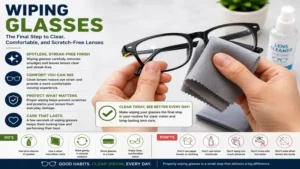
Frequently Asked Questions
❓ Can I use rubbing alcohol for wiping glasses clean?
✅ No, high-concentration rubbing alcohol can strip protective anti-reflective (AR) coatings and cause plastic high-index lenses to cloud over time. Stick strictly to alcohol-free optical sprays or warm water with mild, lotion-free dish soap…
❓ Why do my glasses still look smudged after wiping with a microfiber cloth?
✅ This occurs when your microfiber cloth is saturated with absorbed facial oils or residual fabric softener from the laundry wash. Wash your cloth in warm water using basic liquid soap, then air-dry completely before using it again…
❓ Is spit or saliva safe to use when wiping glasses in an emergency?
✅ No, saliva contains digestive enzymes, proteins, and microscopic bacteria that leave behind a stubborn organic film. Additionally, rubbing saliva dry with a shirt drags airborne dirt particles directly across the lens surface…
❓ How often should I wash my microfiber cleaning cloths?
✅ Wash your microfiber cloths every 5 to 7 uses. Accumulated skin oils and dust trapped within the split fibers can turn an unwashed cloth into an abrasive, smear-inducing rag if left unchecked for extended periods…
❓ Can paper towels or facial tissues scratch plastic eyeglass lenses?
✅ Yes, paper towels and facial tissues are made from wood pulp containing microscopic wood fibers and hard binders. Wiping dry or coated lenses with paper products causes microscopic swirl marks that scatter light over time…
Conclusion
Mastering the proper technique for wiping glasses is the single best way to protect your visual investment and prolong the life of expensive optical coatings. By avoiding dry wiping, skipping harsh household chemicals, and incorporating dedicated tools like high-density Japanese microfiber cloths, alcohol-free mist sprays, or portable carbon cleaning pods, you ensure crystal-clear vision every single day. Make a gentle wet-rinse and circular buffing routine part of your daily optical care—your eyes and wallet will thank you.
Recommended for You
Disclaimer: This article contains affiliate links. As an Amazon Associate, I earn from qualifying purchases. If you purchase products through these links, we may earn a small commission at no additional cost to you.
✨ Found this guide helpful? Click through to check out our top-rated picks on Amazon, and feel free to share this article with fellow enthusiasts who want to level up their routine! 💬🤗