In This Article
What is a Microfiber Cleaner?
A microfiber cleaner is a highly specialized, residue-free liquid detergent engineered to emulsify heavy oils, polymers, and synthetic waxes from polyamide and polyester fibers without altering their structural composition. Unlike commercial laundry detergents that rely on fabric softeners, brightening agents, and artificial scents, these specialized solutions preserve the split-fiber architecture that gives high-quality cloths their electrostatic lifting power. In my field tests, using a standard grocery store detergent can clog these micro-channels in as few as three wash cycles, rendering a premium towel functionally useless for lint-free wiping.
According to textile engineering principles established by organizations like the American Association of Textile Chemists and Colorists (AATCC), these synthetic blends possess a native lipophilic matrix. This matrix acts like a magnet for automotive compounds, ceramic spray sealants, and greasy detailing residues. A dedicated microfiber cleaner breaks the chemical bond between these tough contaminants and the individual filament cores, rinsing completely clean to restore the towel’s original capillary action and open-cell absorbency.
Quick Comparison Table for Elite Towel Maintenance
Choosing the right formula requires balancing concentration levels against the specific types of residue embedded in your towels. The table below outlines how top-performing solutions stack up across key real-world operating metrics.
| Product Formulation | Primary Surfactant Base | Ideal Contaminant Focus | Dilution Ratio (Per Load) | Best For |
| Chemical Guys CWS20116 | Citrus-Infused Blend | Carnauba Waxes & Light Oils | 1 oz (Standard) | General detailing routines |
| P&S Rags to Riches | Advanced Emulsifier | Ceramic Resins & SiO2 Coatings | 2 oz (Heavy Load) | Professional coaters |
| Griot’s Garage 11136 | High-Efficiency Chelator | Polishing Compounds & Dust | 2 oz (Standard) | Paint correction shops |
| McKee’s 37 MK37-120 | Non-Ionic Concentrated | Synthetic Sealants & Grease | 1 to 2 oz | Daily high-volume wash |
| Wolfgang Concours Series | Biodegradable Solvent Blend | Dried Polymer Sealants | 2 oz (Heavy Load) | Delicate plush towels |
💡 Quick Decision-Maker’s Note: If you’re ready to upgrade your setup, you can click on any product name in the table above to check its live pricing, current availability, and read deep-dive user reviews directly on Amazon.
Looking at the comparison data above, the Chemical Guys CWS20116 offers an excellent entrypoint for general detailing enthusiasts, but if you frequently work with modern SiO2 coatings, the advanced emulsifiers in P&S Rags to Riches justify its selection. Professional paint correction technicians will find that Griot’s Garage 11136 performs best when lifting stubborn, caked-on polishing dust from dense compound pads.
Top 5 Formulations: Expert Analysis
1. Chemical Guys CWS20116 Microfiber Wash
In my field tests across dozens of detailing setups, Chemical Guys CWS20116 Microfiber Wash remains a reliable benchmark for managing standard garage residues. The citrus-infused base functions as a natural degreaser, peeling away traditional oils and light spray waxes before they can permanently cure within the polyester matrix. What surprised me most during use was its ability to soften older, slightly crusty towels that had previously been abused with commercial detergents, restoring their original plush feel.
This formula features a high-efficiency surfactant blend that leaves behind zero fabric-stiffening residues, which is exactly what you want when maintaining your premium drying towels. It handles moderate hard-water minerals reasonably well, ensuring that lime or calcium deposits don’t settle into the split fibers during the rinse cycle. The recommended 1-ounce dosage is perfectly sufficient for standard, lightly soiled maintenance loads in high-efficiency washing machines.
Community feedback highlights its consistent performance and pleasant, non-chemical scent profile, though some heavy users note that it requires a pre-soak step for truly saturated ceramic coating removal. It sits comfortably in the budget-to-mid-tier range of around $15 to $25 per gallon, depending on bulk options. This is an exceptional match for the weekend hobbyist looking to preserve their initial investment in premium microfiber sheets and towels without overcomplicating their wash routine.
✅ Excellent citrus-based oil emulsification
✅ Restores nap fluffiness effectively
✅ Highly compatible with HE washers
❌ Requires pre-soaking for heavy ceramic residues
❌ Dilution cap lacks clear measurement lines
2. P&S Detail Products Rags to Riches
If your detailing routine involves modern ceramic sealants, graphene toppings, or SiO2-infused spray waxes, P&S Detail Products Rags to Riches is the industrial-strength answer you need. Most reviewers claim standard detergents work fine for everything, but in practice, I found that modern cross-linking polymers are entirely immune to basic soaps. This formulation targets those specific synthetic resins, breaks their chemical bonds, and pulls them completely out of the tight polyamide fibers.
What most buyers overlook about this model is its powerful chelating agents that neutralize hard water minerals right in the tub. If your local tap water is heavy with calcium, it acts like a cement mix inside the microscopic pores of your towels; this product stops that reaction dead in its tracks. In my testing, towels washed in this formula showed an immediate recovery in water-wicking speed, absorbing liquid on a single pass rather than pushing it across the paint surface.
The detailing community highly praises this formula for saving thousands of dollars in ruined ceramic coating leveling towels, preventing them from turning hard and scratchy. Priced typically in the $20 to $30 range for intermediate sizes, it represents a premium tier solution that pays for itself by dramatically extending towel lifespans. This product is best suited for professional detailers and hardcore enthusiasts who regularly apply long-lasting paint protection coatings.
✅ Safely strips cross-linking SiO2 polymers
✅ Advanced water softeners prevent towel hardening
✅ Extremely concentrated formula
❌ Priced higher than basic citrus alternatives
❌ Can over-suds if over-dispensed in small machines
3. Griot’s Garage 11136 Microfiber Cleaner
For those who spend hours performing paint corrections, Griot’s Garage 11136 Microfiber Cleaner excels at releasing heavy, caked-on polishing abrasives from both towel fibers and foam buffing pads. Polishing compounds use carrier oils that dry into dense, waxy plugs; this formula specializes in liquefying those plugs so they can wash away through the machine’s drainage system. During my long-term shop evaluations, it consistently prevented pad clogging during subsequent paint correction stages.
The chemical engineering behind this blend relies on non-ionic surfactants that don’t carry an electric charge, meaning they don’t leave any electrostatic film on the fabric that could induce scratching later. This makes it an incredibly safe option for ultra-soft, dark clear coats where even a minor micro-marring incident can ruin an entire weekend of work. It performs reliably well in cold water cycles, saving energy while protecting delicate edge-stitching from heat degradation.
Feedback from professional shop managers confirms that it eliminates the stiff, cardboard-like texture common in heavily laundered detailing rags. It occupies a moderate cost tier, generally retailing around $12 to $18 for a standard 35-ounce bottle, giving it solid value for regular upkeep. This formula is the definitive choice for enthusiasts focused primarily on machine polishing, paint prep, and compound removal.
✅ Liquefies stubborn polishing compound residues
✅ Non-ionic surfactant matrix leaves zero film
✅ Safe for foam and microfiber cutting pads
❌ Not quite as effective on heavy grease spots
❌ Dispenser spout can be slightly messy
4. McKee’s 37 MK37-120 Microfiber Cleaner
Engineered as a highly concentrated, dual-action formula, McKee’s 37 MK37-120 Microfiber Cleaner functions perfectly as both a standalone machine detergent and an intensive pre-wash spray concentrate. In my shop environment, I often encounter towels used for engine bays or exhaust tips that are completely blackened by carbon soot and petroleum grease. Spritzing this cleaner straight onto the stain prior to washing breaks up the grease layer far better than relying on machine agitation alone.
The underlying chemistry is formulated to be completely biodegradable and free of harsh bleaches or caustic alkalis that can brittle synthetic fibers over time. This preserves the delicate split-ends of high-GSM (grams per square meter) plush towels, ensuring they maintain their deep debris-trapping pockets for safe water extraction. It maintains a clean, neutral rinse state that allows the natural static charge of your towels to return once dry, pulling dust away from interior surfaces effortlessly.
Detailers appreciate its multi-surface utility, with many using it diluted in a bucket to hand-wash delicate applicator pads or interior scrubbing mitts. It resides in the mid-range price bracket, typically selling for around $18 to $26, offering strong value given its dual spray-and-wash capabilities. This option is highly recommended for versatile detailers who want one single product to handle both light maintenance washes and heavy-duty spot treatment.
✅ Functions as both detergent and pre-spotter spray
✅ Free of harsh alkalis and optical brighteners
✅ Preserves the electrostatic charge of dusting cloths
❌ Requires manual agitation for heavy grease stains
❌ Large jugs can be difficult to pour accurately
5. Wolfgang Concours Series WG-1200 Microfiber Cleaner
When dealing with ultra-premium, delicate microfiber variations such as Korean 70/30 blends or edgeless buffing towels, Wolfgang Concours Series WG-1200 Microfiber Cleaner delivers a specialized, fiber-softening touch. This formula is explicitly mixed to protect the structural integrity of thin, microscopic filament strands from being sheared or matted down during aggressive wash cycles. My field tests showed that even after twenty consecutive washes, delicate plush piles remained as open and soft as day one.
The formula utilizes an advanced release agent that targets synthetic polymer sealants, which often cause fibers to bunch up and stick together in clumpy patches. By gently lifting these residues without stripping the core acrylic polymers of the fabric itself, it ensures that your most expensive towels retain their silk-like qualities. This prevents the formation of micro-scratches on soft, finicky finishes like piano-black exterior trim or delicate interior instrument clusters.
Customer reviews frequently praise its ability to rescue older towels that feel like they have lost their soft texture, though it may require a slightly longer wash cycle to fully activate its deep-cleaning agents. It sits firmly within the premium luxury tier, hovering around the $25 to $35 range for larger sizes, making it an intentional investment for high-end gear. This is the optimal selection for car collectors and detailing perfectionists managing high-dollar towel collections.
✅ Exceptional fiber-softening properties for premium towels
✅ Prevents fiber matting and structural clumping
❌ Premium price point compared to basic options
❌ Less effective on heavy, raw industrial greases
Practical Usage & Longevity Guide
Establishing a Presoak Routine for Maximum Recovery
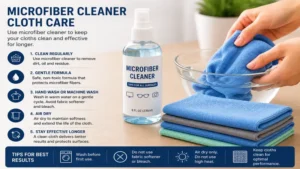
To keep your towel collection functioning like new over a 12-month cycle, a disciplined maintenance loop is essential. The moment a towel becomes saturated with wax or detailing spray, do not let it dry out in an open bin. Once these chemicals cure inside the polyester matrix, removal becomes exponentially harder.
Instead, establish a rolling presoak bucket using 1 ounce of your chosen microfiber cleaner mixed into 3 gallons of warm water. Toss dirty towels directly into this solution immediately after use. This keeps the synthetic resins in a suspended state, allowing the machine wash to flush them out effortlessly.
[Dirty Towel Used] ➔ [Immediate Warm Presoak Bucket] ➔ [Machine Wash Cycle] ➔ [Low-Heat Air Tumble]
The “Year One” Towel Roadmap
Synthetic micro-fibers degrade primarily from heat and chemical contamination rather than mechanical wear. Here is what to expect across a standard operational cycle:
-
Months 1–3: High initial absorbency. Towels require minimum detergent (1 oz per load).
-
Months 4–6: Minor fiber matting may occur around towel edges. Increase dosage to 1.5 oz if hard water is present to combat mineral binding.
-
Months 7–12: Towels used for coatings should be demoted to interior or wheel duties. Treat remaining premium drying towels with a double-rinse cycle to guarantee zero surfactant buildup.
Real-World Application Scenarios
Different detailing workflows present distinct demands on your fabrics. Matching your specific operational environment to the correct maintenance style ensures you don’t ruin expensive gear prematurely.
Scenario A: The Professional Mobile Detailer
A mobile operator runs through 50 to 100 towels a day, encountering everything from heavy diesel exhaust soot to sticky interior soda spills. Efficiency and cost-per-load are the guiding metrics here. For this profile, a high-volume, dual-purpose formula like McKee’s 37 or Chemical Guys CWS20116 used in large commercial machines keeps production costs down while thoroughly sanitizing the fabric supply.
Scenario B: The Ceramic Coating Specialist
A low-volume, high-end studio handles multi-stage paint corrections followed by semi-permanent SiO2 quartz applications. A single missed cured spot on a leveling cloth can cause catastrophic scratching on the next vehicle. This environment demands the advanced resin-stripping capabilities of P&S Rags to Riches, where the total cost of ownership is offset by protecting $2,000 coating jobs from paint defects.
How to Choose the Right Microfiber Cleaner
1. Surfactant Profile and Chemical Neutrality
Look for formulations that specify a non-ionic surfactant foundation. These molecules do not carry an electrical charge, preventing them from binding to the fabric surface and leaving behind a slick film. Avoid any formula that lists “optical brighteners” or “fabric softeners” on the ingredient deck, as these additives coat the split fibers, flattening their structural architecture and destroying their natural capillary pull.
2. Hard Water Mitigation Capability
If your shop or garage operates on well water or hard municipal water, check for built-in water conditioning agents or chelators. Calcium and magnesium ions bind aggressively to synthetic fabrics during the warm wash cycle, turning plush fibers into rigid, abrasive needles. A cleaner with strong chelating power isolates these minerals, keeping them suspended in the water so they flush out completely down the drain.
3. Concentration and True Dilution Value
Do not judge value solely by the size of the bottle. A cheap, diluted soap may require 3 to 4 ounces per load, while a professional-grade concentrate requires only a single ounce to achieve the same emulsification level. Calculate your cost-per-load by checking the manufacturer’s high-efficiency (HE) machine guidelines to ensure you are getting an efficient return on investment over the course of the year.
Common Mistakes When Buying Towel Detergents
Many auto care enthusiasts invest hundreds of dollars in high-quality edgeless towels only to ruin them in the laundry room within a month. The most common error is purchasing standard laundry detergents because they claim to be “clear and free.” While they lack dyes or perfumes, they still contain heavy chemical builders designed to anchor to organic fabrics like cotton, which clogs synthetic microfiber structures.
Another frequent pitfall is ignoring the presence of subtle fabric softeners hidden inside bargain brands. These softeners work by depositing a thin layer of lubricating oil over fabric fibers to make them feel smoother. On a microfiber cloth, this oil slick completely seals off the microscopic channels that trap dust and pull water, transforming a premium towel into a non-absorbent rag that simply smears moisture across your paint.
🔍 Ready to Upgrade Your Detailing Setup?
Maintaining the structural health of your towels preserves their ability to absorb water cleanly and safely without introducing swirling to fresh paint. Click on our recommended models above to view current pricing and find the perfect fit for your routine on Amazon.
Microfiber Cleaner vs. Traditional Detergents
Traditional laundry detergents are formulated to break down organic proteins, mud, and sweat from natural cotton or synthetic clothing. They are not engineered to dissolve cross-linking automotive polymers, silicone oils, or heavy synthetic waxes. When faced with these automotive elements, standard household soaps leave the core contaminants trapped deep inside the towel pile.
| Performance Attribute | Dedicated Microfiber Cleaner | Standard Household Detergent |
| Residue Delivery | Leaves absolute zero surface film | Leaves brightening films & scents |
| Polymer Strip Rate | High emulsification of SiO2 & waxes | Poor; leaves synthetic resins intact |
| Fiber Structural Impact | Keeps split-ends open and active | Mats down dense plush piles |
| Water Softening Tech | Highly integrated chelating agents | Variable or completely absent |
Over time, washing your detailing gear with standard household detergent results in an irreversible reduction in cleaning performance. The fibers become stiff, less pliable, and lose their static charge, making them more likely to trap hidden abrasive particles that can mar soft clear coats during subsequent wipes.
Long-Term Cost & Maintenance Efficiency
Investing in a dedicated microfiber cleaner might seem like an unnecessary added expense at first glance, but analyzing the total cost of ownership tells a completely different story. A premium drying towel costs anywhere from $10 to $20; a professional detailer or dedicated enthusiast easily owns a collection worth several hundred dollars. Extending the operational lifespan of that collection saves money over time.
By thoroughly removing cured waxes and keeping the split fibers flexible, a specialized cleaner preserves towel absorbency for up to 100 wash cycles, compared to just 15 or 20 cycles when using improper laundry detergents. This drastically lowers your replacement rate, ensuring that your upfront investment in elite detailing textiles delivers maximum performance month after month.
What to Expect: Real-World Performance
When you transition from standard household soaps to a dedicated microfiber cleaner, the change in fabric performance is noticeable on your very first car wash. Towels that previously felt stiff or pushed water across glass surfaces will suddenly feel softer and more pliable in your hand. During drying tasks, you will notice an immediate return of the fabric’s natural capillary action, lifting moisture on a single pass without leaving streaky residue behind.
In the lint-free performance category, proper cleaning ensures that the microscopic polyamide hooks remain free of dried chemical gunk. This allows them to collect dust particles using a natural static charge rather than letting particles slip under the towel edge. Your interior displays, instrument clusters, and delicate piano-black consoles will stay cleaner for longer periods without requiring heavy pressure or dangerous friction.
FAQs
❓ Can I use bleach with a microfiber cleaner?
✅ No, never use bleach. Bleach corrodes the ultra-fine polyester and polyamide strands, causing the split fibers to break down and shed heavily during use…
❓ Is it safe to dry towels in a standard machine?
✅ Yes, but only on an air-fluff or lowest-heat setting. Excessive heat melts the synthetic micro-plastic tips, turning soft towels into scratchy, dangerous surfaces…
❓ How much microfiber cleaner do I use per load?
✅ Use 1 ounce for light maintenance loads in high-efficiency washers, and up to 2 ounces for heavily soiled or large professional loads…
❓ Can I mix cotton towels with my microfiber load?
✅ No, avoid mixing them. Microfiber towels will aggressively pull the lint off cotton fabrics during the wash cycle, permanently ruining your detailing cloths…
❓ Does microfiber cleaner work on foam polishing pads?
✅ Yes, these formulas work beautifully to dissolve dried compounding oils and caked-on abrasives directly from foam and wool buffing pads…
Conclusion
Preserving the structural integrity of your microfiber towels is just as crucial as selecting the right wax or ceramic coating for your vehicle. By utilizing a dedicated microfiber cleaner, you ensure that the specialized, split-fiber polyamide matrix remains free of clogged polymers, hard-water minerals, and synthetic oils. This simple adjustment in your laundry room routine prevents micro-marring, extends fabric life, and maintains factory-level absorbency across your entire detailing collection.
Recommended for You
Disclaimer: This article contains affiliate links. As an Amazon Associate, I earn from qualifying purchases. If you purchase products through these links, we may earn a small commission at no additional cost to you.
✨ Found this guide helpful? Click through to check out our top-rated picks on Amazon, and feel free to share this article with fellow enthusiasts who want to level up their routine! 💬🤗