In This Article
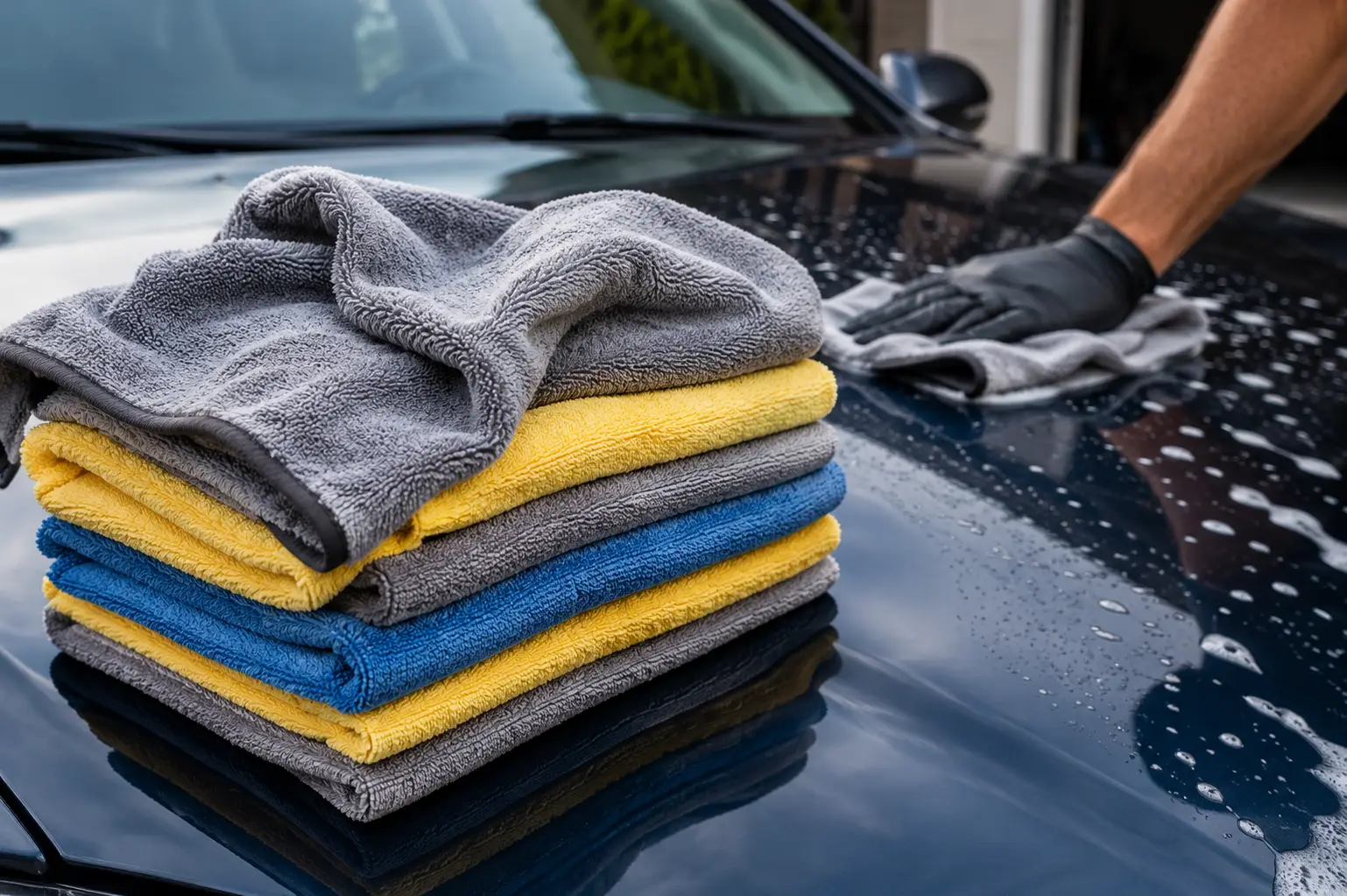
Grab the wrong rag and you’re not washing your car — you’re sanding it. Car wash rags are the unsung heroes (or villains) of any detailing routine, and the difference between a swirl-free showroom finish and a paint job full of fine scratches usually comes down to what’s in your hand, not what’s in the bucket. Car wash rags are soft, absorbent cloths — most commonly woven from microfiber — designed to lift dirt, soap, and water off a vehicle’s exterior and interior surfaces without dragging grit across the paint…
That last part matters more than most people realize. An old cotton t-shirt or a stiff terry towel might feel like a free, eco-friendly option, but it can trap grit against the clear coat and create the kind of fine scratching that only shows up under direct sunlight. Modern microfiber car wash rags are engineered specifically to avoid that problem, using split fibers that cushion and lift particles away from the surface instead of grinding them in.
This guide walks through seven real, currently available car wash rags — from budget-friendly multipacks to professional-grade detailing towels — with honest analysis of what each one does well, who it’s built for, and where it falls short. You’ll also find a practical buying framework, common mistakes to avoid, and answers to the questions car owners ask most often before clicking “buy.” Whether you’re outfitting a garage for the first time or replacing towels that have seen one too many bug splatters, there’s a pick here that fits your budget and your paint.
Affiliate Disclosure: This post contains affiliate links. As an Amazon Associate, I earn from qualifying purchases made through these links, at no additional cost to you.
Car Wash Rags at a Glance
Before diving into the full breakdown, here’s a fast-reference table comparing the standout pick from each price tier.
| Product | Best For | Price Range | Standout Feature |
|---|---|---|---|
| Amazon Basics Microfiber Cleaning Cloths (24-Pack) | Tightest budget | around $12–$18 | Cheapest per-towel cost on this list |
| USANOOKS Microfiber Cleaning Cloth (12-Pack) | Everyday durability | around $15–$20 | Rated for roughly 1,200 washes |
| Meguiar’s X2000 Water Magnet | Fastest hand-drying | around $10–$15 | Waffle-weave texture wrings out easily |
| The Rag Company Eagle Edgeless 500 | Professional-grade finishing | around $8–$12 per towel | 500 GSM edgeless plush pile |
Looking at this quick-reference table, the pattern is clear: cheaper multipacks win on cost-per-wash for routine cleaning, while the specialized towels from Meguiar’s and The Rag Company justify their higher per-unit price with better drying speed and a gentler finish on delicate paint. If you’re building a full detailing kit rather than buying a single product, most experienced owners end up owning at least one of each type — bulk rags for the dirty first pass, a dedicated drying towel for the final step.
Top 7 Car Wash Rags: Expert Picks for Every Budget
We researched real spec sheets, verified current U.S. Amazon availability, and cross-referenced aggregated customer sentiment to build this list. Coverage spans entry-level multipacks, mid-range everyday options, and professional-grade detailing towels — including a couple of lesser-known but genuinely solid picks.
1. Amazon Basics Microfiber Cleaning Cloths — cheapest per-towel cost
If your priority is stocking a garage without spending much, this is the pick most budget-conscious shoppers land on first. The pack includes 24 towels measuring 16″ x 12″ in a rotating mix of blue, white, and yellow, made from a blend of roughly 90% polyester and 10% polyamide.
At this price point, the towels are thinner than premium options, but the microfiber weave still does its job: it’s non-abrasive, lint-free, and rated to absorb several times its own weight in water. Practically speaking, that means you can use one rag per exterior panel without worrying about dragging the same dirty cloth across your hood and doors. Based on comparing the specs against pricier alternatives, the trade-off here is thickness and plushness, not core absorbency.
This is the right call for someone washing a daily driver on a budget, a parent who wants disposable-feeling rags for messy kid-related spills, or anyone building a first detailing kit who isn’t ready to invest in specialty towels yet. Reviews consistently report that the cloths hold up well through repeated machine washing, though a common complaint is that the thin material can start pilling after heavy use on rougher household surfaces.
Pros:
- ✅ Lowest cost per towel on this list
- ✅ Machine washable and reusable dozens of times
- ✅ Non-abrasive weave safe for clear coat paint
Cons:
- ❌ Thinner material than premium detailing towels
- ❌ Less plush feel, more noticeable on show-quality paint
A 24-pack typically runs around $12–$18, which works out to under a dollar per towel — hard to beat for anyone who just needs reliable, disposable-feeling rags in bulk. Check the current price and availability before ordering, since multipack pricing shifts with Amazon’s stock levels.
2. AIDEA Microfiber Cleaning Cloth 50-Pack — best for stocking a full garage
For anyone who goes through rags fast — think weekend detailers, ride-share drivers, or households with multiple vehicles — the AIDEA 50-pack solves the “I’m out of clean towels” problem before it starts. Each cloth measures roughly 12″ x 12″, sized for one-handed wiping across doors, mirrors, and interior trim.
The bulk format is the whole point here: with 50 towels in rotation, you can dedicate separate colors or stacks to wheels, glass, and paint, which is one of the simplest ways to avoid cross-contaminating grit between surfaces. What most buyers overlook with bulk packs like this is that having enough clean, dry towels on hand actually reduces scratching risk more than any single premium towel would, because you’re never tempted to reuse a dirty rag out of necessity.
Aggregated customer feedback on bulk microfiber packs like this one tends to praise the value and versatility — these cloths double for kitchen, window, and general household cleaning — while some buyers note thickness varies slightly across such large production runs.
Pros:
- ✅ Extremely low cost per towel at 50-count volume
- ✅ Versatile enough for house, kitchen, and car use
- ✅ Easy to color-code by task to avoid cross-contamination
Cons:
- ❌ Individual towel quality is inconsistent at this price
- ❌ Not built for heavy-duty drying of a full vehicle
A 50-pack generally falls in the $20–$30 range, making it one of the best value-per-towel options available. For anyone maintaining more than one vehicle, that math is hard to argue with.
3. HOMEXCEL Microfiber Cleaning Cloth 12-Pack — balanced mid-tier everyday pick
Sitting comfortably between rock-bottom multipacks and specialty detailing towels, the HOMEXCEL 12-pack is built for owners who wash their car regularly and want something a step up from the thinnest budget options. Each towel measures 12.5″ x 12.5″ in a grey finish designed to hide light staining between washes.
The added thickness compared to entry-level packs translates into noticeably better grip on grime and less streaking on glass — a small but real upgrade in practice. Based on comparing this to thinner budget cloths, the extra body in the weave also means the towels hold their shape better through repeated wash cycles, so they don’t flatten out and lose absorbency as quickly.
Reviews consistently describe these as a reliable “no-thinking-required” pick — not flashy, but dependable for weekly wash routines. A recurring theme in customer feedback is that they perform just as well on kitchen counters and stainless steel appliances as they do on car paint, which is a useful bonus for anyone who wants one type of towel for multiple jobs around the house.
Pros:
- ✅ Noticeably thicker than entry-level multipacks
- ✅ Holds shape and absorbency through repeated washing
- ✅ Doubles well for household and automotive cleaning
Cons:
- ❌ Not as plush as dedicated detailing towels
- ❌ Grey color can make it harder to spot embedded grit
Expect to pay somewhere in the $10–$15 range for the 12-pack — a sensible middle ground for buyers who want quality without stepping up to premium detailing brands.
4. USANOOKS Microfiber Cleaning Cloth (12-Pack) — best long-term durability
For buyers who hate replacing towels every few months, USANOOKS positions itself specifically around longevity, with a manufacturer rating of roughly 1,200 washes per towel. Each cloth measures 12.5″ x 12.5″ in grey, sized similarly to the HOMEXCEL pack but built with a denser weave.
That wash-count rating matters more than it might seem at first glance: a towel that survives 1,200 machine washes instead of a few hundred effectively cuts your long-term cost per use by more than half, even though the upfront price is a bit higher than entry-level packs. What the spec sheet doesn’t say, but the density of the weave suggests, is that these towels are also less prone to leaving lint on glass — a common frustration with thinner alternatives.
Customer feedback aggregated across major retailers consistently highlights the streak-free finish on mirrors and windows as a standout, with the density of the pile cited as the reason it doesn’t drag grit the way thinner cloths can.
Pros:
- ✅ Rated for roughly 1,200 machine washes
- ✅ Denser weave reduces streaking on glass and mirrors
- ✅ Grey finish resists visible staining over time
Cons:
- ❌ Higher upfront cost than basic multipacks
- ❌ Slightly stiffer feel when brand new, before the first wash
A 12-pack typically lands in the $15–$20 range. For anyone who plans to keep using the same set of towels for years, the cost-per-wash math tips clearly in USANOOKS’s favor.
5. Meguiar’s X2000 Water Magnet Microfiber Drying Towel — fastest hand-drying
Once the wash bucket is empty, the game changes — and this is where a dedicated drying towel like the Meguiar’s Water Magnet earns its keep instead of a general-purpose wash rag. The towel measures a generous 22″ x 30″ with a waffle-weave texture designed to grip and release water quickly.
Meguiar’s markets this towel as absorbing up to two times the water of a traditional terry towel, and the waffle weave is the mechanical reason why: the raised texture increases surface area contact with beaded water while still wringing out easily between passes. In practice, that means fewer wring-outs and a faster path to a spot-free finish, which matters most on larger vehicles like trucks and SUVs where drying time adds up fast.
Aggregated reviews are notably strong here, with buyers frequently citing it as a long-term staple they repurchase — a strong signal for a product in a category where cheap alternatives are everywhere. A common note in feedback is that the towel holds up well over years of regular use, provided it’s washed separately from other laundry to avoid picking up lint from cotton fabrics.
Pros:
- ✅ Waffle weave absorbs roughly 2x water versus terry towels
- ✅ Large 22″ x 30″ size covers big panels fast
- ✅ Long track record of durability with proper care
Cons:
- ❌ Single towel may not be enough for larger vehicles alone
- ❌ Waffle texture needs a gentle touch on soft-touch trim
A single towel usually runs around $10–$15, with multi-packs available for a bit more. Given how much time it saves on drying, this is one of the easiest upgrades to justify on this list.
6. Chemical Guys Woolly Mammoth Large Microfiber Drying Towel — biggest single-pass coverage
If the Meguiar’s towel is the efficient standard, the Woolly Mammoth is the oversized upgrade for anyone tired of multiple drying passes. At 36″ x 25″, it’s roughly double the surface area of a standard 16″ x 16″ microfiber towel, built from a 70/30 polyester-to-polyamide blend with a thick, plush pile.
The size isn’t just a marketing gimmick — a larger drying towel genuinely means fewer total wipes across the paint, and since the majority of swirl marks come from repeated contact during the wash and dry process, fewer passes translates directly into less risk of marring. The towel is rated to hold close to a gallon of water before needing to be wrung out, and its silk-bound edges are specifically designed to avoid the hard, scratchy borders found on cheaper towels.
Based on comparing this against smaller drying towels, the extra size and 1-inch pile thickness make the biggest practical difference on trucks, SUVs, and larger sedans where drying time adds up fast. Reviews consistently praise the plushness and drying speed, though a recurring theme in feedback is that the price feels steep compared to smaller towels — a fair trade-off for buyers who value fewer passes over lowest cost.
Pros:
- ✅ Oversized 36″ x 25″ coverage cuts drying passes
- ✅ Holds nearly a gallon of water before wringing out
- ✅ Silk-bound edges avoid scratchy hard borders
Cons:
- ❌ Noticeably pricier than comparable single towels
- ❌ Bulkier to wring out and store than smaller towels
Expect to pay in the $25–$35 range for a single towel, occasionally dipping lower during sales. For owners of larger vehicles who dry outdoors under the sun, the time savings alone can justify the premium.
7. The Rag Company Eagle Edgeless 500 — best professional-grade finish
Rounding out the list is the towel most detailing professionals reach for during the final steps of a wash: The Rag Company’s Eagle Edgeless 500. Each towel measures 16″ x 16″ at 500 GSM (grams per square meter), made from a 70/30 polyester-polyamide blend with a circular knit weave imported from South Korea.
The “edgeless” design is the key detail here — rather than a stitched or serged border, the towel’s edges are heat-sealed and rounded, eliminating the hard seam that can catch and scratch paint during wax or sealant removal. At 500 GSM, the pile sits in a sweet spot: plush enough for gentle final wipe-downs, but not so dense that it becomes hard to wring out. What most buyers overlook is that GSM alone doesn’t tell the whole story — the South Korean split-microfiber construction is what actually gives this towel its scratch-free reputation among professional detailers and even concours-level restorers.
Aggregated reviews are consistently strong, with a recurring theme praising the plush feel and scratch-free performance on freshly polished paint. A common caution in feedback, however, is that the edgeless construction can fray slightly after repeated washing, though most reviewers note it’s an easy fix with a pair of scissors.
Pros:
- ✅ Edgeless design eliminates hard, scratch-prone seams
- ✅ 500 GSM plush pile ideal for final wipe-downs
- ✅ Trusted by professional detailers and restorers
Cons:
- ❌ Smaller 16″ x 16″ size means more passes on large vehicles
- ❌ Edges can fray slightly with repeated machine washing
A single towel typically costs around $8–$12, with multi-packs offering a modest per-unit discount. For anyone doing paint correction, wax removal, or ceramic coating maintenance, this is the towel that belongs in the final step of the process.
✨ Don’t miss these exclusive deals! 🔍 Ready to upgrade your wash kit? Click a highlighted pick above to check current pricing and availability — the right combination of wash rags and drying towels will get your car looking showroom-fresh, wash after wash!
How to Use Car Wash Rags the Right Way (Without Scratching Your Paint)
Owning good towels is only half the equation — technique matters just as much. Here’s the practical sequence that actually protects your clear coat, based on how professional detailers structure a wash.
Start with the two-bucket method: one bucket holds soapy water, the other holds clean rinse water, ideally with a grit guard at the bottom of each. Dip your rag in the soap bucket, wash a single panel, then rinse the rag in the clean bucket before reloading it with soap — this single habit prevents the dirt you just removed from being dragged across the next panel. Work top to bottom, since dirt naturally concentrates lower on the vehicle near the wheels and rocker panels, which are also where you should switch to a dedicated (dirtier) rag entirely.
Fold each rag into quarters so you always have a clean face available; once all eight faces have touched the paint, swap it out rather than continuing to use a saturated, gritty cloth. When it’s time to dry, use a separate towel from your wash rags — this is where the Meguiar’s X2000 Water Magnet or Chemical Guys Woolly Mammoth earns its place — and blot or drag gently rather than scrubbing.
In the first 30 days of owning new microfiber towels, the most common mistake is washing them with regular laundry detergent containing fabric softener, which coats the fibers and kills absorbency almost immediately. Use a dedicated microfiber detergent or a small amount of mild, fragrance-free soap instead, and always wash car towels separately from cotton items that shed lint.
Which Car Wash Rag Setup Fits Your Situation?
Not every driver needs the same kit. Here’s how three common owner profiles typically shake out.
If you’re a college student washing a used sedan in a shared driveway every couple of weeks on a tight budget, the Amazon Basics 24-pack or AIDEA 50-pack covers you affordably, and you likely don’t need a dedicated drying towel yet — a couple of the multipack rags can double for drying in a pinch.
If you’re a suburban parent maintaining a family SUV or minivan that sees regular trips to the beach, the trailhead, or soccer practice, a mid-tier pack like HOMEXCEL or USANOOKS for washing paired with the Meguiar’s X2000 for drying strikes the right balance of durability and speed — you’re washing often enough that cost-per-wash matters, but you also want a towel large enough to dry a bigger vehicle quickly.
If you’re a weekend detailing enthusiast who applies wax or ceramic coating and cares about swirl-free paint, the setup shifts toward specialty towels: USANOOKS or HOMEXCEL rags for the initial wash, the Chemical Guys Woolly Mammoth for fast, large-coverage drying, and The Rag Company Eagle Edgeless 500 reserved specifically for wax and sealant removal, where its edgeless design and plush 500 GSM pile really shine.
How to Choose the Best Car Wash Rags for Your Vehicle
Working through these criteria in order will get most buyers to the right pick quickly.
- Material and weave. Microfiber outperforms cotton terry and old t-shirts because its split fibers lift dirt into the towel rather than dragging it across the surface — this should be your baseline requirement, not an upgrade.
- GSM (density). Lighter towels (300–400 GSM) work fine for quick wipe-downs, while 500+ GSM towels offer more cushioning for wax removal and paint correction work.
- Edge construction. Edgeless or silk-bound edges reduce the risk of hard-seam scratches; stitched or serged borders are fine for general wash rags but riskier on freshly polished paint.
- Size. Larger towels (22″ and up) mean fewer passes and less overall friction on the paint, which matters most for drying.
- Quantity. Buy more towels than you think you need — running out of clean rags mid-wash is one of the most common reasons people reuse dirty ones and introduce scratches.
- Color-coding. Dedicate specific colors to wheels, glass, and paint to avoid cross-contaminating abrasive brake dust onto your clear coat.
- Washability. Check whether the manufacturer specifies a wash-count rating or care instructions — towels that lose absorbency after a handful of washes cost more in the long run, even if they’re cheaper upfront.
Common Mistakes to Avoid When Buying and Using Car Wash Rags
Even experienced car owners fall into a handful of predictable traps.
The biggest one is using the same rag on wheels and paint. Brake dust contains metallic particles that are genuinely abrasive, and a rag that touches a wheel should never touch a painted panel afterward — dedicate separate towels by color for this reason alone. Another common mistake is washing microfiber towels with fabric softener or dryer sheets, both of which leave a waxy coating on the fibers that dramatically reduces absorbency; a towel that once dried a full sedan in one pass can end up needing three or four passes after just a couple of washes with the wrong detergent.
Buying too few towels is a subtler but equally damaging mistake — reviews across nearly every product in this category mention that having “just one or two” leads to reusing a dirty rag out of necessity, which defeats the purpose of buying quality microfiber in the first place. Finally, skipping the drying step entirely, or air-drying under direct sun, tends to bake mineral deposits from tap water into visible spots on the paint; a proper drying towel prevents this in a fraction of the time.
Microfiber Car Wash Rags vs Traditional Cotton Towels and Sponges
It’s worth spelling out exactly why microfiber has largely replaced cotton terry towels, chamois, and sponges in modern car care.
| Attribute | Microfiber Rags | Cotton Terry / Chamois / Sponges |
|---|---|---|
| Scratch risk | Low — split fibers lift dirt away from surface | Higher — loops and coarse weave can trap grit |
| Absorbency | High, often several times the towel’s weight | Moderate, tends to plateau faster |
| Lifespan | Hundreds to 1,000+ washes with proper care | Shorter; cotton fibers break down faster |
| Streak-free finish | Consistent across most microfiber weaves | Prone to lint and streaking, especially on glass |
| Best for | Wash, dry, wax removal, glass, interior | General wipe-downs, budget/emergency use |
The table above makes the case pretty directly: microfiber wins on every axis that affects paint safety and longevity, which is exactly why brands like The Rag Company and Chemical Guys have built entire product lines around it. Cotton towels and sponges aren’t inherently dangerous to use, but their coarser weave and shorter effective lifespan mean the odds of trapping grit and creating fine scratches go up the longer you use the same one. For interior spills or a quick emergency wipe-down when nothing else is on hand, cotton still gets the job done — it’s just not the tool of choice for anyone trying to protect a clear coat long-term.
Long-Term Cost and Maintenance
It’s tempting to judge car wash rags purely on sticker price, but total cost of ownership tells a more useful story. A 24-pack of budget towels at roughly $15 works out to about $0.63 per towel, but if those towels only survive 150–200 washes before losing meaningful absorbency, the effective cost per wash creeps upward once you factor in more frequent replacement. Compare that to USANOOKS, priced higher upfront in the $15–$20 range for 12 towels, but rated for roughly 1,200 washes each — over a multi-year ownership period, the cost-per-wash math often favors the more durable option, even though the initial receipt looks bigger.
Maintenance habits affect this equation just as much as the towel itself. Washing microfiber separately from cotton laundry, skipping fabric softener, and air-drying flat rather than in a hot dryer all extend usable lifespan significantly. A towel that’s cared for properly can realistically outlast its advertised wash-count rating, while one washed carelessly alongside regular laundry may lose effective absorbency well before that number is reached.
Features That Actually Matter (and Ones That Don’t)
With so many marketing claims floating around, it helps to know which specs genuinely predict performance. GSM and edge construction matter — they directly affect scratch risk and absorbency, and they’re backed by the physical properties of the weave. Wash-count ratings matter too, since they translate into real long-term cost differences, as shown above.
What matters less than the marketing suggests: exotic color options (a blue towel and a grey towel made from the same weave perform identically), and vague “professional grade” labeling without a GSM number or material breakdown to back it up. Size matters, but only relative to your vehicle — a 36″ x 25″ towel is genuinely useful for drying a full-size truck, but it’s overkill for wiping down a motorcycle tank, where a smaller detailing towel handles the job just as well with less bulk to wring out.
Safety, Regulations, and Eco-Friendly Car Washing
Car wash rags themselves aren’t a regulated product category, but how and where you use them intersects with real environmental guidelines worth knowing. The Environmental Protection Agency recommends washing your car on grass or a pervious surface rather than a driveway when possible, since soapy runoff on concrete flows directly into storm drains without treatment. The agency also specifically advises wringing rags out over a bucket or sink rather than onto the ground, and using phosphate-free soap to minimize the pollutant load that eventually reaches local waterways.
None of this requires special equipment — it’s mostly a matter of technique. Using the two-bucket method described earlier naturally limits how much soapy water ends up on the ground in the first place, and a quality set of absorbent microfiber rags means less water used overall compared to a running hose. If you’re washing frequently or running a car wash fundraiser, the EPA’s guidance is worth a full read, since a few small habit changes meaningfully reduce runoff pollution without adding real cost or effort to your routine.
Frequently Asked Questions
❓ What's the difference between a car wash rag and a wash mitt?
❓ How many car wash rags do I actually need?
❓ Can I use old bath towels or t-shirts to wash my car?
❓ How often should I replace my car wash rags?
❓ What's the best way to wash microfiber towels so they last longer?
Conclusion
The right car wash rag setup isn’t about buying the single “best” product on this list — it’s about matching the towel to the job. Budget multipacks like Amazon Basics and AIDEA make sense for routine washing on a tight budget, mid-tier options like HOMEXCEL and USANOOKS offer a durability upgrade worth the extra few dollars, and dedicated drying towels like the Meguiar’s X2000 or Chemical Guys Woolly Mammoth genuinely speed up the last, most water-spot-prone step of the process. For anyone doing wax removal or paint correction, The Rag Company Eagle Edgeless 500 stands out as the towel professionals reach for specifically because its edgeless design removes one of the last common causes of accidental scratching.
Whichever combination you land on, the underlying principle stays the same: more clean towels, dedicated by task, used with the two-bucket method, will protect your paint better than any single premium purchase used carelessly. Start with a setup that matches your budget and how often you wash, and expand from there as you learn what your specific routine actually demands.
✨ Found this article helpful? Check the current price on today’s pick and give your car the finish it deserves! 💬🤗
Recommended for You
- 7 Best Wholesale Microfiber Towels (2026 Bulk Picks)
- 5 Best Automotive Blow Dryer Options in 2026: Hands-On Field Test
- Best Way to Clean Plexiglass: 7 Expert Tips for 2026
Disclaimer: This post contains affiliate links. As an Amazon Associate, I earn from qualifying purchases made through these links, at no additional cost to you.
Found this article helpful? Share it with someone who needs it! 💬🤗