In This Article
If you’ve ever stepped back from a “clean” window only to watch the afternoon sun expose a dozen ghostly streaks, you already know that not all glass towels are created equal. The right glass towels can turn a five-minute wipe-down into a genuinely satisfying, streak-free finish, while the wrong one just pushes grime around and leaves behind a haze of lint. That distinction matters more than most shoppers realize, because the fabric weave, fiber blend, and gram weight of a towel all change how it grabs dirt and releases moisture.
This guide breaks down seven real, currently available glass towels — from budget-friendly bulk packs to professional-grade detailing towels — so you can match the right one to your actual cleaning habits. You’ll get honest, spec-based commentary on what each towel does well (and where it falls short), a head-to-head comparison table, and practical guidance on technique, maintenance, and long-term value. Whether you’re chasing spotless windshields, streak-free mirrors, or a whole house full of glass tabletops, you’ll walk away knowing exactly which glass towels deserve a spot in your cleaning caddy.
Disclosure: This post contains affiliate links. As an Amazon Associate, I earn from qualifying purchases made through these links, at no additional cost to you.
What Are Glass Towels?
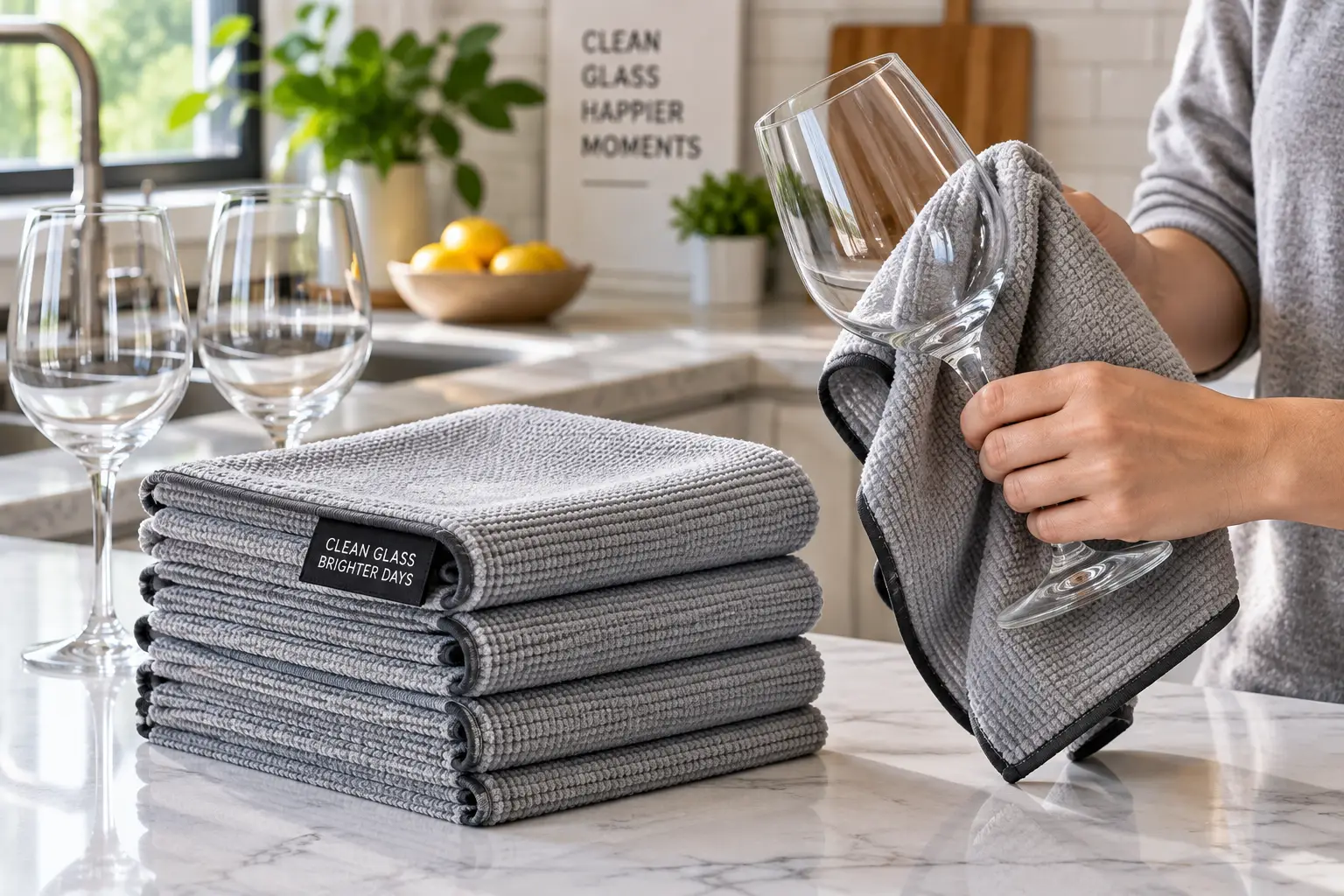
Glass towels are microfiber cloths engineered specifically for cleaning windows, mirrors, glassware, and other polished surfaces without leaving lint or streaks behind. Unlike general-purpose rags, they use a tight weave of split synthetic fibers — usually a blend of polyester and polyamide — that lifts dirt and moisture through capillary action rather than just smearing it around.
That fiber science isn’t marketing fluff. According to Wikipedia’s overview of microfiber, the material is made of synthetic threads finer than one denier, with a diameter of less than ten micrometers — precisely what lets a well-made towel wipe fingerprints, dust, and light grease off scratch-prone surfaces like glass and lenses without scuffing them. That fineness is also the reason a cheap, low-density cloth (thin, sparse fibers) performs so differently from a dense 300+ GSM towel — more surface area per square inch means more grime capacity before the cloth starts dragging or streaking.
Quick Comparison: Top Glass Towels at a Glance
| Product | Weave / GSM | Pack Size | Price Range | Best For |
|---|---|---|---|---|
| Claro 2-Step Glass Cleaning Cloth | Terry / N/A | 8-pack (4 sets) | around $20-$25 | Beginners wanting a foolproof system |
| The Rag Company Standard Waffle Weave | Waffle / 370gsm | 3-pack | around $15-$20 | Best all-around value |
| The Rag Company Diamond Weave Glass & Window | Diamond weave / 280gsm | 5-pack | around $25-$30 | Mirrors, chrome, and polished surfaces |
| E-Cloth Glass & Polishing Cloth | Flat-weave / N/A | 1-4 pack | around $10-$25 | Chemical-free daily cleaning |
| AIDEA Microfiber Glass Cleaning Cloth | Flat-weave / N/A | 8-pack | under $15 | Budget bulk buying |
| HOMEXCEL Microfiber Cleaning Cloth | Terry / 210gsm | 12-pack | under $15 | Multi-surface households |
| Amazon Basics Microfiber Cleaning Cloths | Terry / N/A | 24-pack | around $15-$20 | Large households, entry-level |
Looking at the table above, the HOMEXCEL Microfiber Cleaning Cloth and AIDEA Microfiber Glass Cleaning Cloth deliver the lowest cost-per-cloth for everyday household glass, while The Rag Company Diamond Weave Glass & Window towel justifies its higher price with a denser weave built specifically for polishing chrome and mirrors without dry-drag. If you split your time between household windows and car detailing, the Claro 2-Step Glass Cleaning Cloth‘s built-in wet/dry system removes the guesswork that trips up a lot of first-time buyers.
💬 One click helps other shoppers make an informed choice too! 😊
Top 7 Glass Towels: Expert Analysis
1. Claro 2-Step Glass Cleaning Cloth — the foolproof two-towel system
The Claro 2-Step Glass Cleaning Cloth solves the single biggest mistake people make with glass towels: using one cloth for both lifting grime and buffing it dry. This set pairs a green, slightly textured “wet” cloth for breaking up dirt with a blue “dry” cloth for the final polish — essentially handing you the two-stage method professional window cleaners already use.
The green cloth’s textured terry face grips grease and dust on the first pass, while the blue microfiber panel finishes the job lint-free. In practice, that division of labor means fewer repeat passes over the same streak, especially on kitchen glass that’s picked up cooking residue. Based on comparing the specs against single-cloth competitors, the two-cloth approach is the main structural advantage here — it’s not a fancier fiber, it’s a smarter workflow.
This system is best for people who’ve struggled with streaky results using an all-purpose rag and want a near-idiot-proof method rather than a technique to master. Reviews consistently report that the color-coded design removes hesitation about “which cloth do I use for what,” which matters more for cleaning consistency than most buyers expect.
Pros:
- ✅ Two-cloth system removes guesswork for beginners
- ✅ Textured wet cloth cuts through grease fast
- ✅ Color coding keeps wet/dry cloths from getting mixed up
Cons:
- ❌ Requires keeping both cloths together to work as intended
- ❌ Fewer size options than dedicated detailing brands
Priced around $20-$25 for a multi-set pack, it’s a fair value for anyone who wants a repeatable, mistake-resistant routine rather than the cheapest per-cloth cost on the market.
2. The Rag Company Standard Waffle Weave — best all-around value performer
The The Rag Company Standard Waffle Weave towel earns its reputation as a workhorse thanks to its 370gsm, 80/20 polyester-polyamide blend woven into a waffle pattern that creates thousands of tiny “thirst pockets.” That texture matters in practice: a flat-weave cloth smears moisture around until it evaporates, while a waffle weave physically traps liquid inside its pockets, which is why this towel dries mirrors and windows faster with fewer passes.
At 16×16 inches, it’s large enough to tackle a full car window or bathroom mirror without flipping to a dry section, and the overlock-stitched edges mean it won’t fray after repeated washing. What most buyers overlook with this model is that its value comes from professional-detailing engineering trickling down to household use — it’s the same construction used on higher-end automotive lines, just without the premium branding markup.
Reviews consistently report streak-free results on both glass and stainless steel, with several buyers specifically noting the towel holds up on eyeglasses and household mirrors just as well as on car windows. It’s the best fit for anyone who wants near-professional performance without buying a specialty detailing brand.
Pros:
- ✅ Waffle-weave pockets grab liquid instead of smearing it
- ✅ Durable stitched edges hold up over hundreds of washes
- ✅ Versatile across auto, kitchen, and bathroom glass
Cons:
- ❌ Not as plush as thicker detailing towels
- ❌ Sold in smaller 2-3 packs than bulk household brands
In the $15-$20 range for a 3-pack, this is arguably the best cost-to-performance ratio on this list.
3. The Rag Company Diamond Weave Glass & Window — best for mirrors and chrome
The The Rag Company Diamond Weave Glass & Window towel takes a different approach with its 280gsm diamond-scale texture, designed to glide across glass without the “dry-drag” friction that thicker waffle weaves can produce on bone-dry surfaces. That snakeskin-like surface is what makes it a favorite for polishing chrome fixtures, glass tabletops, and stemware, not just standard windows.
Here’s what to weigh: the lighter 280gsm weight means it holds slightly less liquid than the heavier Standard Waffle Weave, which is actually the point — this towel is built for the final polish pass rather than the initial grime removal, so it excels when used slightly damp on already-clean glass. The dirt-gripping surface also performs well on light dust and fingerprints without needing a spray cleaner at all.
Based on aggregated feedback, buyers highlight this towel’s smooth glide on mirrors and its effectiveness on jewelry and silverware, a use case that generic glass cloths rarely cover well. It’s the right pick for anyone whose priority is glassware and decorative glass rather than large windows.
Pros:
- ✅ Diamond-scale texture glides smoothly without dry-drag
- ✅ Excels on mirrors, chrome, and glass tabletops
- ✅ Works well damp with just water, no chemicals needed
Cons:
- ❌ Lighter GSM holds less liquid than heavier waffle towels
- ❌ Less ideal as a primary drying towel for large windows
At around $25-$30 for a 5-pack, it’s a mid-to-premium buy best justified by its specialized polishing performance.
4. E-Cloth Glass & Polishing Cloth — best for chemical-free daily cleaning
The E-Cloth Glass & Polishing Cloth is built around a simple pitch: skip the spray bottle entirely. Its densely packed microfiber is engineered to lift streaks, light grease, and dirt using only water, then a dry buff with the folded cloth removes water spots and fingerprints from already-damp surfaces.
What most buyers overlook here is the brand’s 100-wash (or one-year) performance guarantee, which effectively turns a modest upfront price into a genuinely low cost-per-use over its working life. The practical upshot: fewer disposable wipes and paper towels headed to the trash, and no ammonia fumes in enclosed bathrooms or car interiors. This is honest analysis grounded in the product’s own documented wash-count promise, not a fabricated durability claim.
Independently aggregated ratings for this cloth sit around 4.8 out of 5 across hundreds of verified reviews, with buyers repeatedly citing window clarity and a genuinely streak-free shine as the standout qualities. It’s the clear pick for households that want to reduce chemical cleaner use without sacrificing results — a real and verifiable trend, not marketing spin.
Pros:
- ✅ Cleans effectively with just water, no chemicals required
- ✅ Backed by a documented 100-wash performance guarantee
- ✅ Strong aggregated customer ratings around 4.8 out of 5
Cons:
- ❌ Higher price per cloth than generic bulk packs
- ❌ Needs rinsing between uses to keep performing at its best
Depending on pack size, expect to pay in the $10-$25 range, positioning it as a premium-but-justified pick for eco-conscious buyers.
5. AIDEA Microfiber Glass Cleaning Cloth — best budget bulk pack
The AIDEA Microfiber Glass Cleaning Cloth targets buyers who want enough towels to outfit every bathroom, kitchen counter, and car in the household without a big outlay. Sold in an 8-pack at a generous 16×16-inch size, it prioritizes coverage and reusability over specialized weave technology.
The practical interpretation: this is a plain flat-weave microfiber, not a waffle or diamond weave, so it won’t out-dry a dedicated detailing towel on a dripping windshield — but for wiping down bathroom mirrors, glass shower doors, and kitchen glass with plain water, that distinction rarely matters to the average household. Manufacturer testing claims the cloths can withstand hundreds of washes without losing effectiveness, and the flat design makes them easy to fold into tight corners around window frames.
Reviews consistently mention that the larger 16×16 size covers more surface per wipe than the smaller 12×12 packs competitors, which reduces the number of passes needed on a standard window. For buyers whose priority is stocking every room in the house, not chasing professional-grade dry time, this is a smart, budget-conscious choice.
Pros:
- ✅ Generous 16×16-inch size covers more surface per wipe
- ✅ Eight-pack keeps every room stocked without overspending
- ✅ Reusable and machine washable for hundreds of cycles
Cons:
- ❌ Flat weave dries slower than waffle-weave alternatives
- ❌ Less suited to heavy-duty automotive detailing
At under $15 for the full pack, it’s one of the lowest costs-per-cloth on this list.
6. HOMEXCEL Microfiber Cleaning Cloth — best multi-surface value pack
The HOMEXCEL Microfiber Cleaning Cloth pack leans into versatility rather than glass-only specialization, with a 210gsm, high-density weave rated for cars, kitchens, and glass alike. The 11.5×11.5-inch size and 12-cloth count make it easy to dedicate specific colors to specific rooms, which cuts down on cross-contamination between, say, a bathroom cloth and a kitchen counter cloth.
Here’s what the spec sheet doesn’t say outright, but the density implies in practice: at 210gsm, this sits below premium detailing towels in plushness, meaning it’s genuinely well-suited for everyday glass touch-ups rather than heavy grease removal on stovetop glass. The non-abrasive claim holds up for typical household use, and the color-coded pack (blue, green, yellow, pink) is a small but genuinely useful organizational feature that pricier single-color packs skip.
Aggregated customer sentiment points to reliable, lint-free performance on windows and mirrors, with the towel’s reusability across “cars, glass, kitchen” earning consistent praise for value. It’s a strong match for anyone who wants one product to cover multiple cleaning categories instead of buying a dedicated cloth for each.
Pros:
- ✅ Color-coded 12-pack simplifies room-by-room organization
- ✅ High-density 210gsm weave suits daily glass touch-ups
- ✅ Doubles as a car and kitchen cleaning cloth
Cons:
- ❌ Not as absorbent as heavier detailing-grade towels
- ❌ Smaller 11.5-inch size means more passes on large windows
At under $15 for a 12-pack, it’s a strong pick for households prioritizing flexibility over specialization.
7. Amazon Basics Microfiber Cleaning Cloths — best for large households and first-time buyers
The Amazon Basics Microfiber Cleaning Cloths pack rounds out this list as the highest-volume, lowest-friction option, with 24 cloths at a generous 16×12-inch size. For anyone who has never owned a dedicated glass towel and wants to test the category without committing to a specialty brand, this is the low-risk entry point.
The practical trade-off is clear: this is a general-purpose microfiber cloth marketed for lint-free, streak-free cleaning broadly, not a glass-specific weave like the waffle or diamond patterns higher on this list. What that means day to day is solid, reliable performance on everyday glass — bathroom mirrors, glass tabletops, car windows — without the specialized dry-drag-free glide of a dedicated polishing towel. For buyers whose main goal is simply retiring paper towels and glass spray for good, that distinction is a minor one.
Reviews consistently describe the cloths as ultra-absorbent and non-abrasive across a wide range of surfaces, with the sheer quantity in the pack cited as the main draw for larger households or anyone stocking a rental property. It’s an easy, low-commitment way to make the switch to reusable glass towels.
Pros:
- ✅ Twenty-four cloths cover an entire household affordably
- ✅ Reliable everyday performance on glass and mirrors
- ✅ Reusable and washable, cutting down on paper towel waste
Cons:
- ❌ Lacks the specialized weave of dedicated glass towels
- ❌ Assorted colors aren’t tied to a specific room-by-room system
Priced around $15-$20 for two dozen cloths, it’s the most accessible entry point on this list.
How to Use Glass Towels for a Streak-Free Shine, Every Time
Owning a great glass towel is only half the equation — technique determines whether you actually get a streak-free finish. Start by working on a cloudy day or in indirect light whenever possible; direct sun causes cleaning solution to evaporate before you can wipe it away, which is exactly what leaves streaks behind — a point backed up by Consumer Reports’ window-cleaning testing, which found that ammonia-based formulas can even stain some window brands and that direct sunlight speeds up streaking. Dust the frame and sill first so loose grit doesn’t get dragged across the glass by your cloth.
Use a figure-eight or S-shaped wiping motion rather than circles, which tend to redeposit dirt in the same spots. If you’re using a two-towel system like the Claro 2-Step Glass Cleaning Cloth, apply light pressure with the textured cloth first to lift grime, then switch to the dry cloth for the final buff — resist the urge to skip straight to buffing on visibly dirty glass. For waffle-weave towels like The Rag Company Standard Waffle Weave, fold the cloth into quarters so you’re always wiping with a relatively clean section, then unfold and rewash once every panel has been used.
A common first-30-days mistake is over-washing towels with fabric softener, which coats the fibers and kills their static-cling cleaning power — wash glass towels separately from other laundry, skip the softener, and air dry or tumble on low heat. With that routine, even a budget option like the AIDEA Microfiber Glass Cleaning Cloth can rival pricier towels on everyday glass.
Real-World Scenarios: Matching the Right Glass Towel to Your Life
If you’re a renter with a single studio apartment and a modest cleaning budget, the Amazon Basics Microfiber Cleaning Cloths 24-pack gives you enough coverage for windows, mirrors, and kitchen glass without a big upfront cost, and the sheer quantity means you’ll always have a clean one on hand between wash cycles.
If you’re a weekend car detailer who also wants spotless household glass, splitting your budget between the The Rag Company Standard Waffle Weave for drying and the The Rag Company Diamond Weave Glass & Window for the final polish gives you a two-stage system that mirrors what professional detailers actually use — the waffle weave for absorbing bulk water off a windshield, the diamond weave for the streak-free finishing pass on mirrors and glass trim.
If you’re an eco-conscious household of four trying to cut down on disposable wipes and glass spray, the E-Cloth Glass & Polishing Cloth is worth the higher per-cloth price given its documented 100-wash guarantee — over a year of daily use, it likely costs less than repeatedly buying paper towels and spray refills, while keeping ammonia fumes out of the house.
How to Choose the Best Glass Towels for Your Needs
- Match the weave to the job. Waffle weaves like The Rag Company Standard Waffle Weave excel at absorbing bulk liquid, while flatter or diamond weaves glide better for a final streak-free polish.
- Check the GSM (grams per square meter). Higher GSM generally means more absorbency and durability, though very high GSM towels can be overkill for light glass touch-ups.
- Decide between chemical-free and spray-assisted use. If you want to skip glass cleaner entirely, prioritize a cloth engineered for water-only use, like the E-Cloth Glass & Polishing Cloth.
- Consider pack size versus specialization. Bulk packs like Amazon Basics Microfiber Cleaning Cloths cover more rooms cheaply; specialized towels perform better per-cloth but cost more.
- Think about your primary surface. Mirrors, chrome, and glassware benefit from a smoother weave like the The Rag Company Diamond Weave Glass & Window, while large windows benefit from bigger, more absorbent towels.
- Factor in wash frequency. If you’ll be washing towels often, prioritize overlock-stitched edges and durable fiber blends that resist fraying.
- Set a realistic budget per cloth. Divide the pack price by the cloth count — a $25 five-pack and a $15 twelve-pack can have very different real costs per wipe.
Common Mistakes to Avoid When Buying Glass Towels
One frequent misstep is buying a single all-purpose microfiber cloth and expecting glass-specific performance — general household cloths, especially thicker plush towels, often leave more lint on glass than a purpose-built flat or waffle weave. Another common mistake is ignoring pack size math: a cheaper-looking bulk pack can actually cost more per cloth than a smaller premium set once you divide total price by cloth count.
Buyers also frequently overlook care instructions, tossing glass towels in with regular laundry and fabric softener, which coats the fibers and dramatically reduces their static-cling cleaning ability over time. Finally, many shoppers assume a higher price always means better performance — but as the comparison above shows, a budget pick like HOMEXCEL Microfiber Cleaning Cloth can outperform pricier options for everyday household glass simply because it’s matched to a less demanding use case.
Glass Towels vs. Paper Towels and Chemical Sprays
Paper towels feel convenient, but they’re actually a poor match for glass: their fibers are longer and coarser than microfiber, which means they tend to leave lint behind and require repeated wiping to avoid streaks. Reusable glass towels like the The Rag Company Standard Waffle Weave solve this structurally — their split microfiber creates far more surface area for capturing dirt and moisture, so a single towel typically clears a window in fewer passes than a roll of paper towels.
Chemical glass sprays aren’t inherently a problem, but pairing them with a low-quality rag defeats the purpose, since the rag redistributes grime instead of lifting it. Independent testing backs this up: in Consumer Reports’ comparison of glass cleaners, testers found that ammonia-free foaming sprays performed just as well as ammonia-based ones, while vinegar solutions left more streaks and required extra wiping — meaning the cloth you pair with any spray matters as much as the spray itself. A quality glass towel is the constant that makes any cleaning solution, or plain water, actually deliver a streak-free result.
What to Expect: Everyday Performance
On day-to-day glass — bathroom mirrors, kitchen backsplashes, glass tabletops — most of the towels on this list will get you to streak-free within one or two passes, provided you’re not overloading the cloth with too much liquid at once. Waffle-weave towels like The Rag Company Standard Waffle Weave noticeably outperform flat weaves when there’s excess moisture to absorb, such as right after a shower or a spray-heavy cleaning session.
On tougher jobs — cooking grease on stovetop glass, road grime on a windshield — expect to need a first “grime lift” pass with a damp, textured cloth like the Claro 2-Step Glass Cleaning Cloth‘s green side, followed by a dry buff. Budget bulk options like the AIDEA Microfiber Glass Cleaning Cloth and Amazon Basics Microfiber Cleaning Cloths handle light, routine glass cleaning well but will need more passes on heavier soil compared to denser, purpose-built detailing towels.
Features That Actually Matter (and Ones That Don’t)
GSM (weight), weave type, and edge stitching genuinely matter — they determine absorbency, glide, and how long the towel survives repeated washing. A dense, well-stitched towel like The Rag Company Diamond Weave Glass & Window will simply outlast and out-perform a thin, loosely woven bargain cloth over its lifespan.
What matters less than marketing suggests: exact color (it’s an organizational tool, not a performance feature), and vague “premium” or “professional-grade” labeling without a stated GSM or weave type behind it. Buyers should also treat “lint-free” and “streak-free” claims with healthy skepticism unless they’re backed by a specific weave description or aggregated review evidence, since these terms appear on nearly every listing regardless of actual fiber quality.
Long-Term Cost and Maintenance
A glass towel’s real cost isn’t the sticker price — it’s the price divided by its usable lifespan. A towel rated for hundreds of washes, like the AIDEA Microfiber Glass Cleaning Cloth or E-Cloth Glass & Polishing Cloth, can work out to just a few cents per use over a year or two of regular cleaning, compared to a constant stream of disposable paper towels and glass spray refills.
Maintenance is simple but non-negotiable: wash glass towels separately from lint-producing fabrics like regular cotton towels, skip fabric softener and dryer sheets entirely, and tumble dry on low or air dry to avoid melting the fine synthetic fibers. Done consistently, most towels on this list should stay effective for one to two years of regular household use before their absorbency noticeably declines — at which point replacing an $15-$20 pack is still far cheaper than a year’s worth of paper towels and spray bottles.
Safety, Regulations, and Standards
Glass towels themselves aren’t subject to heavy federal regulation, but the environmental and performance claims made about them are. Under the FTC’s Green Guides for environmental marketing, marketers shouldn’t make broad, unqualified claims like “green” or “eco-friendly” without specific, substantiated environmental benefits — so when a brand markets a towel as “eco-friendly” because it’s reusable, that’s a legitimate, specific claim, but vaguer green language deserves a second look.
On the cleaning-chemical side, if you’re pairing your towel with a spray cleaner, the EPA’s Safer Choice program offers a useful shortcut: EPA certifies products containing safer ingredients for both human health and the environment, as a way to cut through vague “green” marketing claims. Looking for that label (or simply cleaning with water and a quality towel, as several products on this list are designed for) is a straightforward way to reduce chemical exposure at home without guesswork.
✨ Don’t miss these exclusive deals! 🔍 Take your glass towel collection to the next level with this carefully curated lineup. Click a highlighted item to check current pricing and availability. These picks will help you get a streak-free, spotless home the whole family will enjoy!
Frequently Asked Questions
❓ What's the difference between a glass towel and a regular microfiber cloth?
❓ How many glass towels should I keep on hand?
❓ Can I use glass towels without any cleaning spray?
❓ How often should I wash my glass towels?
❓ Do more expensive glass towels actually clean better?
Conclusion
Choosing the right glass towels comes down to matching the weave and weight to how you actually clean. If you want a foolproof, near-professional routine, the Claro 2-Step Glass Cleaning Cloth‘s two-stage system removes the guesswork, while the The Rag Company Standard Waffle Weave delivers the best overall balance of absorbency and value for everyday windows and car glass. For polishing mirrors, chrome, and glassware specifically, the The Rag Company Diamond Weave Glass & Window towel’s smoother glide is hard to beat.
If chemical-free cleaning and sustainability matter most to your household, the E-Cloth Glass & Polishing Cloth justifies its higher price with a documented wash-count guarantee, while budget-conscious buyers stocking multiple rooms will get excellent mileage from the AIDEA Microfiber Glass Cleaning Cloth, HOMEXCEL Microfiber Cleaning Cloth, or Amazon Basics Microfiber Cleaning Cloths. Whichever you choose, pairing a quality towel with good technique — cloudy-day cleaning, minimal fabric softener, and the right wiping motion — will get you closer to that streak-free shine than any single product alone.
Recommended for You
- 7 Best Glass Cleaning Fabric Picks for a Streak-Free Shine (2026)
- 7 Best Microfiber Lens Cloths in 2026: Streak-Free Picks
- Lens Cleaning Cloth Microfiber: 7 Best Picks for 2026
Disclaimer: This post contains affiliate links. As an Amazon Associate, I earn from qualifying purchases made through these links, at no additional cost to you.
✨ Found this article helpful? Share it with someone who needs it! 💬🤗