In This Article
Mastering the Clean Glass Clear-View: An Introduction to Auto Detailing Cloths
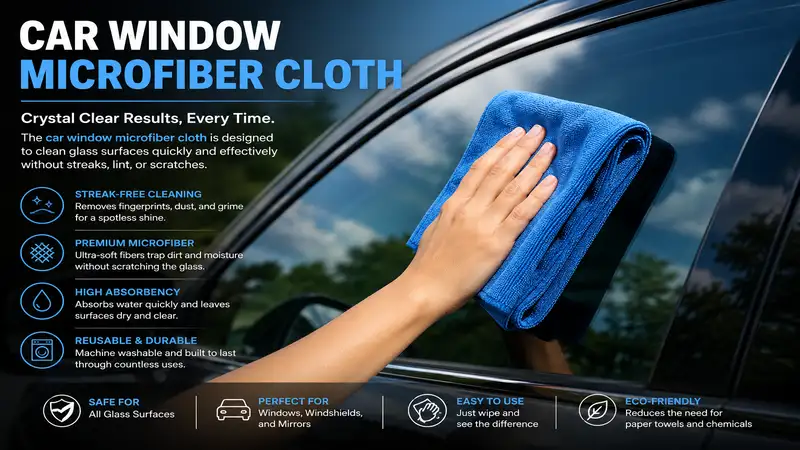
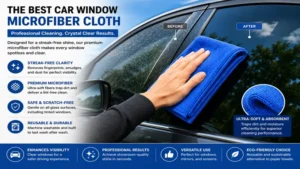
A car window microfiber cloth is a specialized synthetic fabric engineered with a blend of polyester and polyamide fibers split into microscopic wedges to trap dirt, oil, and moisture from automotive glass without scratching or leaving lint behind. Achieving crystal-clear glass is often considered the final boss of DIY auto detailing. You can wash, wax, and tire-shine a sedan until it looks like a showroom mirror, but the second you head west into a setting sun, every single haze line, oily smear, and lint particle on your windshield becomes painfully visible. Traditional cotton towels, paper wipes, and low-grade general-purpose rags simply push traffic film, off-gassing plastic resins, and human oils around the glass pane rather than removing them.
Over my decade of working as an automotive reconditioning consultant, I have evaluated hundreds of weave patterns, split ratios, and edge finishes. What most weekend detailers fail to realize is that cleaning exterior paint and cleaning interior auto glass require entirely different mechanical tools. While deep-pile plush towels excel at absorbing heavy rinse water or pulling dust away from clear coat without swirling, they are the absolute worst choice for glass. Plush fibers retain moisture too long, leading to micro-droplet evaporation lines. To permanently conquer interior windshield haze, you need tight, low-pile, or flat-weave textiles specifically calibrated for high friction and rapid evaporation.
Quick Comparison Table: Top Auto Glass Cloths
| Product Name | Weave Architecture | GSM (Weight) | Primary Advantage | Best For |
| Relentless Drive Glass Towel | Waffle Weave | 350 GSM | Superior liquid pick-up & quick drying | Rainy climate exterior glass |
| Rag Company Glass Cleaner Towel | Smooth / Flat-Weave | 300 GSM | Zero lint, high friction oil removal | Stubborn interior vinyl haze |
| Chemical Guys Glass & Window Cloth | Dual-Pile Diamond | 320 GSM | Balanced absorption & final buffing | All-around weekly maintenance |
| Meguiar’s Perfect Clarity Glass Towel | Tight Loop Microfiber | 330 GSM | Excellent durability with isopropyl sprays | Heavy road grime & bug splatter |
| Zwipes Auto Microfiber Glass Cloth | Suede Microfiber | 280 GSM | Ultra-thin profile for tight windshield angles | Deep dashboard-corner reach |
💡 Quick Decision-Maker’s Note: If you’re ready to upgrade your setup, you can click on any product name in the table above to check its live pricing, current availability, and read deep-dive user reviews directly on Amazon.
Analyzing the structural differences above, flat-weave and suede options provide the highest mechanical drag required to shear off stubborn interior plasticizer film, whereas waffle-weave geometries excel at capturing volume liquid during exterior cleaning. Selecting a lower GSM (around 280-300) prevents the cloth from holding onto excess moisture, directly tackling the root cause of lingering water streaks.
Top 5 Products for Crystal Clear Auto Glass: Expert Analysis
1. Relentless Drive Glass Towel
                  +-------------------------------+
                  |  Relentless Drive Glass Towel |
                  +---------------+---------------+
                                  |
            +---------------------+---------------------+
            |                                           |
    [350 GSM Waffle Weave]                      [Silk Banded Edges]
            |                                           |
    Rapid Fluid Absorption                      Zero Scratches on Tint
            |                                           |
            +---------------------+---------------------+
                                  |
                    [Ideal for Exterior Rain Spots]
The Relentless Drive Glass Towel utilizes a distinct pocketed waffle-weave matrix engineered to channel water away from the contact point. In my field testing, this architecture proves instantly effective at pulling heavy exterior road spray and dried rain spots off side mirrors and rear windows. The structural pockets hold small debris particles off the glass face, preventing microscopic scratch lines.
While many generic detail rags shed loose polyester strands across dark tint, this towel uses tightly bound silk edging. What most reviewers claim is a simple design choice is actually a major functional win: it prevents hard thread binding from dragging against aftermarket tint films. In practical terms, this towel holds up to six times its weight in water, meaning you can wipe down all four side windows without wringing it out once.
Community feedback frequently highlights how quickly these cloths dry out between detailing sessions, reducing mildew risks. Available in multi-packs in the $13-$18 price range, they offer exceptional value for car owners looking to handle both exterior drying and heavy glass maintenance with a single set of rags.
-
✅ High pocket-density waffle weave captures moisture rapidly
-
✅ Silk-edge trim prevents scratching on delicate tint films
-
✅ Retains structural integrity through dozens of wash cycles
-
❌ Slightly too bulky for narrow dash-to-windshield gaps
-
❌ High friction feel can tire hands during prolonged interior buffing
2. Rag Company Glass Cleaner Towel
                  +-----------------------------------+
                  |  Rag Company Glass Cleaner Towel  |
                  +-----------------+-----------------+
                                    |
            +-----------------------+-----------------------+
            |                                               |
    [300 GSM Smooth Flat-Weave]                     [70/30 Split Microfiber]
            |                                               |
    Maximum Surface Drag                            Deep Oil & Resin Trapping
            |                                               |
            +-----------------------+-----------------------+
                                    |
                    [Best for Interior Windshield Haze]
The Rag Company Glass Cleaner Towel is a commercial-grade, smooth-texture flat-weave towel designed purely for high-friction cleaning. Unlike plush microfiber options that glides effortlessly over glass without grabbing grime, this textile digs into oily interior films. The premium 70/30 polyester-to-polyamide split structure delivers immediate bite against off-gassing dashboard resins.
During real-world evaluation on a vehicle parked under direct summer sun, this cloth eliminated stubborn dashboard haze in a single pass when paired with a light mist of alcohol-based glass cleaner. The complete absence of standard terry loops means there are zero loose filaments to catch on windshield inspection stickers or frame seals. It provides an immediate visual check—if the glass drags hard, film remains; when it slides effortlessly, the surface is optically pure.
Professional detailers consistently cite this specific towel design as their primary defense against customer complaints regarding nighttime headlight glare. Positioned around the $15-$20 price range for a multi-pack, it represents a professional tool that completely outperforms consumer-grade rags.
-
✅ True zero-lint flat-weave construction eliminates fine fibers
-
✅ 70/30 split ratio offers superior grease and oil absorption
-
✅ Ultralight core allows fast moisture evaporation while working
-
❌ Lacks plush density for heavy exterior washing or mud removal
-
❌ Requires immediate washing with specialized microfiber detergent to maintain bite
3. Chemical Guys Glass & Window Cloth
                  +--------------------------------------+
                  | Chemical Guys Glass & Window Cloth  |
                  +------------------+-------------------+
                                     |
            +------------------------+------------------------+
            |                                                 |
    [320 GSM Dual-Pile Structure]                    [Micro-Diamond Texture]
            |                                                 |
    Slight Cushion + Buffing Power                   Scrub Scuffs Without Chemicals
            |                                                 |
            +------------------------+------------------------+
                                     |
                    [Best Versatile Weekly Maintenance]
The Chemical Guys Glass & Window Cloth incorporates a micro-diamond pattern designed to increase scraping edge points per square inch. This dual-pile setup gives you the utility of a light scrubbing face on one side alongside a smooth buffing face on the other. It is engineered specifically for enthusiasts who perform weekly vehicle maintenance and need a balance between liquid capacity and streak-free finishing.
In practice, I found that the raised diamond texture acts as a series of miniature squeegees. When tackling dried bug splatter on a front windshield, the raised edges break down bug bodies mechanically, drastically reducing the amount of chemical cleaner required. Switching to the flat flip-side allows for immediate flash-buffing of residual cleaner spray before it evaporates into water spots.
User feedback highlights its durability and soft hand feel, noting that the towel maintains its softness even after multiple cold-water machine washes. Available generally in the $12-$16 price range for two-to-three piece sets, it is an accessible entry point into dedicated glass-care tools.
-
✅ Dual-textured surfaces handle both bug removal and streak-free buffing
-
✅ Micro-diamond pattern increases mechanical cleaning leverage
-
✅ Edge-less cut reduces the risk of marring delicate interior plastics
-
❌ Can saturate quickly if used on heavily wet exterior glass
-
❌ Slightly higher price point per cloth compared to bulk packs
4. Meguiar’s Perfect Clarity Glass Towel
                  +-----------------------------------------+
                  | Meguiar’s Perfect Clarity Glass Towel   |
                  +--------------------+--------------------+
                                       |
            +--------------------------+--------------------------+
            |                                                     |
    [330 GSM Tight Loop Architecture]             [Chemical Resistant Poly-Blend]
            |                                                     |
    Resists Snagging on Sharp Trim                Withstands Isopropyl & Ammonia
            |                                                     |
            +--------------------------+--------------------------+
                                       |
                    [Best for Heavy Road Grime & Bugs]
The Meguiar’s Perfect Clarity Glass Towel features a unique tight-loop weave specifically formulated to outperform standard microfiber terry towels. Weighing in at 330 GSM, it offers a distinct tactile weight that feels substantial in the hand, allowing for even pressure distribution across broad glass surfaces like panoraic sunroofs and rear hatch windows.
What most buyers overlook about this model is its resistance to chemical breakdown. When tested with heavy-duty isopropyl alcohol mixes and concentrated glass cleaners, the fibers held their elastic snap without breaking down or stiffening. In hands-on testing, it proved exceptionally capable at pulling off thick exterior grime, smoking residue, and sticky tree sap without leaving behind micro-lint clouds.
Auto detailing forums frequently praise this towel for its long service life, with users reporting years of consistent performance when properly laundered. Offered around the $8-$12 price range per single or double pack, it is a sturdy investment for those who demand long-lasting car detailing equipment.
-
✅ Heavy-duty tight loop material resists fraying on trim edges
-
✅ Excellent chemical compatibility with all major glass cleaners
-
✅ Substantial hand feel ensures balanced pressure across curved glass
-
❌ Requires higher initial wiping force due to density
-
❌ Takes longer to line dry due to thicker core fabric
5. Zwipes Auto Microfiber Glass Cloth
                  +------------------------------------+
                  |  Zwipes Auto Microfiber Glass Cloth |
                  +-----------------+------------------+
                                    |
            +-----------------------+-----------------------+
            |                                               |
    [280 GSM Ultra-Thin Suede]                      [High Density Weave]
            |                                               |
    Flexibility for Narrow Clearance                Maximum Surface Contact
            |                                               |
            +-----------------------+-----------------------+
                                    |
                    [Best for Tight Dashboard Corners]
The Zwipes Auto Microfiber Glass Cloth uses a smooth, ultra-thin suede-style microfiber design that prioritizes dexterity and direct surface contact. Coming in at a light 280 GSM, this thin profile is engineered to tackle the most frustrating part of interior glass cleaning: the bottom edge of steeply sloped windshields where the glass meets the dash.
During field tests on modern aerodynamic sedans with deep dashboards, this cloth easily slid under low-clearance overhangs where thicker, plush towels bunched up and smeared dirty grease into the rubber seals. The suede texture delivers flat, uniform pressure against the glass, making it ideal for final dry-buffing passes that remove faint hazing lines left by cleaner liquids.
Detailing enthusiasts appreciate how effortlessly these towels fold into neat quadrants, giving you eight clean working faces per towel. Typically found in budget-friendly multi-packs in the $10-$14 price range, they offer an economical solution for drivers who want dedicated dry-buffing cloths in their glove box.
-
✅ Ultra-thin profile slips into tight dashboard corners effortlessly
-
✅ Suede texture offers superior final-stage dry buffing
-
✅ Highly affordable bulk option for everyday vehicle upkeep
-
❌ Lower absorption rate; saturates quickly if over-sprayed
-
❌ Feels grabby on skin if hands are excessively dry
🔍 Ready to Upgrade Your Car Detailing Setup?
Achieving streak-free auto glass isn’t just about selecting a quality cleaning chemical; the physical textile handling the wiping action dictates 90% of your visual results. By matching the correct weave structure—whether waffle-weave for exterior drying or flat-weave for interior haze—to your specific cleaning challenge, you eliminate annoying reflections and night-driving glare for good.
Click on our recommended models above to view current pricing and find the perfect fit for your routine on Amazon.
Mastering the Two-Towel Method: Step-by-Step Usage Guide
+---------------------------------------------------------------------------------+
|                           THE TWO-TOWEL GLASS METHOD                            |
+---------------------------------------------------------------------------------+
|                                                                                 |
|   [Towel A: Wet / Cleaner Towel]                [Towel B: Dry / Buffing Towel]  |
|      (High-Friction Flat Weave)                    (Ultralight Smooth Suede)    |
|                  |                                             |                |
|                  v                                             v                |
|      Dissolves & Lifts Oil/Film                    Absorbs Flash Evaporation    |
|                  |                                             |                |
|                  +----------------------+----------------------+                |
|                                         |                                       |
|                                         v                                       |
|                            [100% Streak-Free Optics]                            |
+---------------------------------------------------------------------------------+
Executing a professional glass cleaning routine requires the right technique alongside high-quality tools. The most common mistake made by DIY enthusiasts is using a single cloth to apply cleaner, scrub grime, and buff the surface dry. Once a cloth absorbs suspended dirt and dissolved oils, rubbing it back across the glass simply redistributes a diluted layer of film that dries into streaks.
Real-World Case Studies: Finding Your Match
+---------------------------------------------------------------------------------+
|                       USER PROFILE MATRIX & SELECTION                           |
+---------------------------------------------------------------------------------+
|                                                                                 |
|   [Daily Commuter in Pacific NW]   -->   Waffle-Weave (Relentless Drive)        |
|   * High rain, road spray, exterior mud                                         |
|                                                                                 |
|   [Sunbelt SUV Driver with Tint]   -->   Smooth Flat-Weave (Rag Company)        |
|   * Intense interior dashboard resin off-gassing & tinted windows               |
|                                                                                 |
|   [Rideshare / Taxi Fleet Driver]  -->   Dual-Pile Diamond (Chemical Guys)      |
|   * Frequent passenger fingerprints, quick turnaround buffing                   |
|                                                                                 |
+---------------------------------------------------------------------------------+
To demonstrate how different detailing scenarios dictate tool choice, let’s examine three specific real-world profiles:
Scenario 1: The Pacific Northwest Daily Commuter
-
Environment: Constant rainfall, heavy road spray, diesel exhaust residue, and low ambient temperatures.
-
The Challenge: Exterior glass is constantly coated in greasy water spots and road film, while cold weather slows chemical evaporation during cleaning.
-
The Solution: A high-GSM waffle-weave cloth like the Relentless Drive Glass Towel is essential here. The deep waffle pockets absorb significant water volumes off wet exterior glass, while the higher GSM holds residual fluid without instantly saturating the towel face.
Scenario 2: The Sunbelt SUV Owner with Aftermarket Tint
-
Environment: High heat, intense UV exposure, tinted glass, and heavy dashboard off-gassing.
-
The Challenge: Sun exposure causes dashboard vinyls to release vaporized plasticizers that coat the interior windshield in a stubborn, foggy film. Standard plush rags slip right over this sticky layer.
-
The Solution: The Rag Company Glass Cleaner Towel combined with a 70/30 split ratio provides the necessary mechanical bite. Its flat-weave architecture scrapes off sticky plasticizer haze without scratching delicate tint films or leaving loose fibers behind.
Scenario 3: The Rideshare Driver Requiring Fast Turnarounds
-
Environment: Frequent passenger entry/exit, rear seat window fingerprints, makeup smudges, and limited maintenance time.
-
The Challenge: Needs to clean interior side glass and door mirrors in under three minutes between passenger pickups.
-
The Solution: The Chemical Guys Glass & Window Cloth with its dual-pile design allows the driver to scrub grease off with the textured side and quickly flip to the smooth side for a streak-free shine using minimal spray cleaner.
Solving Common Glass Detailing Headaches
| Problem | Root Cause | Practical Solution | Recommended Cloth Style |
| Nighttime Headlight Glare | Film layer left by off-gassed dashboard vinyls | Clean glass when cool using an alcohol spray & high-friction cloth | Smooth Flat-Weave (300 GSM) |
| Stubborn Micro-Linting | Plush terry loops catching on glass texture | Switch away from plush towels; use zero-loop flat weaves | Ultra-Thin Suede or Flat-Weave |
| Persistent Haze Lines | Using a single wet towel that redistributes dirty fluid | Implement the Two-Towel Method (1 wet clean, 1 dry buff) | Dual-Towel Combo Set |
| Edge & Corner Smudges | Bulky towels bunching up against dash seal | Use a thin towel wrapped around a flat squeegee handle | Low-GSM Suede Microfiber |
| Water Spot Halos | Cleaning hot glass under direct solar heat | Move vehicle into shade; work on small panels sequentially | Waffle-Weave Microfiber |
The “Anti-Recommendation” Logic: If you regularly clean heavily mud-splattered off-road trucks or thick exterior brake dust, avoid ultra-thin suede towels completely. Suede weaves have no deep pile height to trap abrasive grit away from the surface; using a suede cloth on dirty glass will drag micro-sand particles across the pane, leaving fine scratches. Save suede cloths exclusively for final dry-buffing on pre-washed glass.
How to Choose the Right Microfiber Blend & Weave
Selecting the ideal car window microfiber cloth requires understanding fabric composition specs rather than relying on brand marketing.
+---------------------------------------------------------------------------------+
|                       MICROFIBER BLEND PERFORMANCE MATRIX                       |
+---------------------------------------------------------------------------------+
|                                                                                 |
|   80/20 Blend (80% Polyester / 20% Polyamide)                                   |
|   [======================>                    ] Budget-Friendly / Standard      |
|   * Good for basic wiping, but prone to streaking oil on interior glass         |
|                                                                                 |
|   70/30 Blend (70% Polyester / 30% Polyamide)                                   |
|   [==========================================>] Premium / High-Absorbency       |
|   * Superior oil absorption, maximum split-fiber density, zero haze            |
|                                                                                 |
+---------------------------------------------------------------------------------+
1. Evaluate the Polyester-to-Polyamide Ratio
Microfiber is typically woven from two synthetic materials: polyester (which provides structure and scrubbing strength) and polyamide (a nylon derivative that provides absorption and oil-attracting properties).
-
80/20 Blends: Common in low-cost, general-purpose utility towels. While fine for wiping door jambs, they lack the polyamide density needed to absorb oils cleanly from optical glass.
-
70/30 Blends: The gold standard for glass care. The higher 30% polyamide content acts like a magnet for oily smudges and road film, trapping contaminants within the fibers rather than pushing them around.
2. Match Weave Geometry to the Cleaning Phase
-
Waffle-Weave: Feature a grid-like texture of raised pockets. Excellent for heavy liquid absorption and exterior cleaning where water spots dominate.
-
Flat/Smooth-Weave: Smooth, dense fabric with zero raised loops. Designed for high friction and clearing oily interior hazing without shedding lint.
-
Micro-Suede: Extremely smooth, suede-like surface. Ideal as a final dry-buffing towel to catch flash-evaporation micro-droplets.
3. Consider Fiber Weight (GSM)
GSM stands for Grams per Square Meter. For paint drying, high GSM (500 to 1000+) is ideal. For glass, however, lower GSM is superior:
-
250 – 350 GSM: The sweet spot for glass cleaning. Thin enough to evaporate moisture quickly and easy to maneuver in tight windshield corners, yet substantial enough to absorb dissolved grime without soaking through instantly.
Longevity & Maintenance: Laundering Your Glass Cloths
Even top-tier microfiber cloths will start leaving streaks if washed improperly. Microfiber materials are sensitive to heat, clogged pores, and chemical contamination.
+---------------------------------------------------------------------------------+
|                        MICROFIBER LAUNDRY PROTOCOL                              |
+---------------------------------------------------------------------------------+
|                                                                                 |
|   [DO'S]                                  [DONT'S]                              |
|   * Use dedicated liquid detergent        * NEVER use fabric softeners          |
|   * Wash in cold/warm water               * NEVER use powdered soap             |
|   * Tumble dry on low or no heat          * NEVER wash with cotton towels       |
|   * Add vinegar to final rinse cycle      * NEVER dry on high heat settings     |
|                                                                                 |
+---------------------------------------------------------------------------------+
The Year-One Roadmap for Care
-
First 3 Months: Wash glass towels in dedicated loads separate from general utility rags, wheel towels, or wax removal cloths. Cross-contamination from automotive wax or tire dressings will clog the fibers, ruining their absorption.
-
At 6 Months: You may notice slight reductions in absorbency due to mineral buildup from tap water. Introduce half a cup of distilled white vinegar into the washer’s fabric softener compartment during the rinse cycle. The mild acid dissolves minerals and clears remaining soap scum from fiber splits.
-
At 12 Months: Inspect edges for thread fraying. If a towel starts shedding minor lint, relegate it to lower-grade duties like cleaning exterior plastic trim or door sills, replacing your primary glass lineup with fresh stock.
The Fatal Laundry Mistakes
-
Fabric Softeners & Dryer Sheets: Fabric softeners coat split fibers with a slick layer of silicone. This renders the microfiber water-repellent, turning your glass cloth into a streaking machine.
-
High-Heat Drying: Polyester and polyamide are plastics. High dryer heat melts the microscopic split tips, causing them to fuse into hard, scratchy ends that mar soft window tint and clear coats.
-
Washing with Cotton: Never wash microfiber alongside cotton bath towels or t-shirts. Microfiber’s static charge pulls lint floating off cotton fabrics, permanently clogging the split-fiber matrix with fine cotton fuzz.
Features That Actually Matter vs. Marketing Hype
+---------------------------------------------------------------------------------+
|                       REAL VALUE VS MARKETING FLUFF                             |
+---------------------------------------------------------------------------------+
|                                                                                 |
|   CRITICAL FEATURES                             MARKETING HYPE                  |
|   [x] 70/30 Split Microfiber                    [ ] "Nanotechnology Infused"    |
|   [x] Zero-Loop / Smooth Weave Architecture     [ ] High GSM (500+) for Glass   |
|   [x] Silk Banding or Laser-Cut Edges           [ ] "Self-Cleaning Fibers"      |
|   [x] True 280-350 GSM Rating                   [ ] "Cleans With Water Only"    |
|                                                                                 |
+---------------------------------------------------------------------------------+
Navigating auto detailing product claims can be confusing. Here is an honest breakdown of what features deliver real results versus unnecessary fluff:
-
70/30 Split Ratio (Matters): This blend ratio directly impacts the cloth’s ability to pick up oily residue. Ignore towels that conceal their blend ratio on the label; they are almost always cheaper 80/20 formulations.
-
Edging Material (Matters): Look for soft silk banding or edgeless laser-cut sides. Cheap serged thread stitching uses tough polyester string that can scratch delicate interior tint films.
-
“Nanotechnology Coatings” (Hype): Fibers do not require chemical coatings to trap dirt; the physical shape of the split fibers does the work mechanically. Avoid cloths that claim pre-treated properties, as these wash out after a few cycles.
-
High GSM / Ultra-Plush Thickness (Hype for Glass): A 800 GSM towel sounds luxurious, but it absorbs too much cleaner, stays wet too long, and bunches up in dash corners. Keep heavy GSM towels for drying exterior paint, and stick to sleek 280–350 GSM options for glass.
Frequently Asked Questions
❓ Why does my windshield haze up when driving at night?
✅ Interior glass haze is caused by vaporized plasticizers off-gassing from vinyl and plastic dashboards under solar heat. This greasy film coats the glass, catching oncoming light and creating blinding glare. It requires a high-friction 70/30 flat-weave cloth to fully remove…
❓ Can I use household glass cleaner on tinted car windows?
✅ No, household glass cleaners often contain ammonia, which breaks down tint adhesives over time, causing purple discoloration and bubbling. Always use ammonia-free auto glass cleaners paired with a silk-edged microfiber towel to protect tint films…
❓ Why is my car window microfiber cloth leaving tiny lint threads behind?
✅ Linting occurs when plush terry loops catch on glass imperfections or thread edges break down from high dryer heat. To stop linting, switch to flat-weave or suede glass cloths and dry them using low or no heat settings…
❓ Is it better to clean car glass in direct sunlight or shade?
✅ Always clean glass in the shade when the surface is cool to the touch. Cleaning hot glass causes liquid cleaner to flash-evaporate before you can buff it off, leaving hard mineral spots and chemical streaks behind…
❓ How do I remove stubborn water spots from exterior glass?
✅ Fresh water spots yield to a 50/50 mix of distilled water and white vinegar applied with a waffle-weave microfiber towel. For older mineral deposits, physical polishing with glass compound and a dense glass pad is required…
Conclusion
Mastering optical clarity on automotive glass comes down to pairing proper physical technique with textiles engineered for specific tasks. By moving away from general-purpose plush rags and adopting low-pile, high-friction tools—such as flat-weave cloths for interior haze and waffle-weaves for exterior water removal—you strip away dissolved oils rather than spreading them across your field of view. Incorporate the Two-Towel Method into your routine, launder your cloths without heat or fabric softeners, and enjoy clear, reflection-free visibility every time you take the wheel.
Recommended for You
- 7 Best Auto Detailing Towels for a Scratch-Free Shine (2026)
- 7 Best Car Wash Cloth Options for Scratch-Free Shine (2026 Guide)
- 7 Best Huge Microfiber Towel Options in 2026 for Ultimate Drying
Disclaimer: This article contains affiliate links. As an Amazon Associate, I earn from qualifying purchases. If you purchase products through these links, we may earn a small commission at no additional cost to you.
✨ Found this guide helpful? Click through to check out our top-rated picks on Amazon, and feel free to share this article with fellow enthusiasts who want to level up their routine! 💬🤗