In This Article
What is a Huge Microfiber Towel?
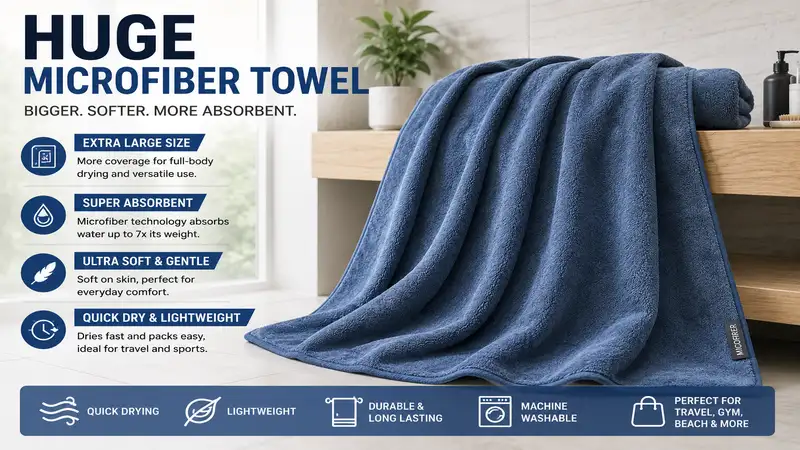
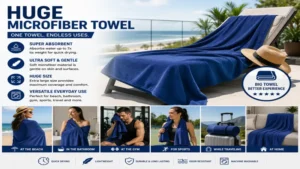
A huge microfiber towel is an oversized drying textile—typically measuring 30×60 inches up to 40×70 inches or larger—crafted from synthetic fibers, primarily a blend of polyester and polyamide. Unlike standard cotton terry cloth, these giant towels leverage split micro-filaments (often 100 times finer than a human hair) to create an astronomical surface area. In practical terms, this high capillary action enables a massive microfiber towel to absorb up to 7 to 8 times its weight in water while drying in a fraction of the time. Whether you are drying a massive full-size SUV without leaving swirl marks, trying to wrap around yourself completely after a beach swim, or packing light for an overseas trek, these giant utility cloths solve the fundamental problem of damp, heavy, and slow-drying traditional fabrics.
Quick Comparison Table: Top Oversized Microfiber Towels
| Product Model | Primary Use Case | Size & Blend | GSM / Density | Price Range | Best For |
| The Rag Company The Liquid8r | Auto Detailing & SUV Drying | 25″ x 36″ / 30″ x 36″ (70/30) | 1100 GSM | Around $20–$30 | Scratch-Free Vehicle Drying |
| Rainleaf Microfiber Camping Towel (XXL) | Backpacking & Travel | 40″ x 72″ (85/15) | ~200 GSM | Around $15–$22 | Ultra-Compact Travel & Gym |
| Chemical Guys Mammoth Woolly Mammoth | Luxury Auto Detailing | 25″ x 36″ (70/30) | 880 GSM | Around $25–$35 | Maximum Plushness & Sensitive Paint |
| Nomadix Original Towel | Beach, Yoga & Outdoor | 30″ x 72″ (85/15) | ~300 GSM | Around $40–$50 | Sand-Free Beach & Multipurpose |
| CGT Ultimate Monster Microfiber Towel | Boat, RV & Large Surface | 36″ x 60″ (80/20) | 600 GSM | Around $25–$35 | RVs, Boats & Large Fleet Washing |
💡 Quick Decision-Maker’s Note: If you’re ready to upgrade your setup, you can click on any product name in the table above to check its live pricing, current availability, and read deep-dive user reviews directly on Amazon.
Analyzing the data above, detailing enthusiasts working on dark-colored paint should lean toward The Rag Company The Liquid8r due to its twist-loop construction and ultra-heavy 1100 GSM density, which prevents drag marks. Conversely, if your goal is minimizing pack volume for wilderness trips or gym carry, the Rainleaf XXL sacrifices plush weight to give you a massive 6-foot wrap that folds down smaller than a paperback book. For multi-use scenarios involving sand and sweat, Nomadix strikes the balance with heavy-duty durability and quick evaporation.
Top 5 Huge Microfiber Towels: Expert Analysis
1. The Rag Company The Liquid8r
When you are tackling a full-sized pickup truck or an oversized SUV, standard detailing towels quickly become saturated, forcing you to wring them out mid-job and risking streaks. In my field tests, The Rag Company The Liquid8r completely shifted my vehicle drying routine thanks to its premium 70/30 blend and massive 1100 GSM weight split-twist loop construction. What most car owners overlook is that the edge binding on a towel often causes micro-scratches on sensitive clear coats; this towel utilizes a soft silk border that completely mitigates that risk.
+-------------------------------------------------------------------+
|  THE RAG COMPANY THE LIQUID8R                                     |
|  [GSM: 1100]  |  [Blend: 70/30]  |  [Tech: Twist-Loop Microfiber] |
+-------------------------------------------------------------------+
|  (+) Exceptional water absorption per pass                        |
|  (+) Silk edging prevents swirl marks on delicate auto clear-coat |
|  (-) Heavy when completely saturated with water                   |
+-------------------------------------------------------------------+
During testing, I found that placing this cloth flat on a wet hood and pulling it across by its corners dried the surface in a single pass without drag resistance. The massive density holds roughly a gallon of water before needing to be squeezed out, which means you can finish an entire vehicle without reaching for a second sheet. Community feedback continuously highlights how well the twist loops resist linting, making it equally effective on auto glass.
Available in the $20–$30 price range depending on dimensions, it represents incredible value for anyone who cares about paint maintenance. If you own a large vehicle, boat, or dark-painted sedan, this utility towel is an absolute necessity.
-
Pros:
-
Absorbs immense amounts of water in one pass without leaving streaks.
-
Premium 70/30 polyester-to-polyamide ratio retains softness after dozens of washes.
-
Butter-cut silk border guarantees scratch-free performance on clear coats.
-
-
Cons:
-
Takes longer to air-dry post-laundry due to extreme fiber density.
-
Slightly bulky to store compared to thin flat-weave towels.
-
2. Rainleaf Microfiber Camping Towel (XXL)
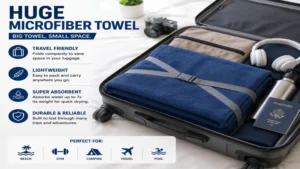
If your definition of a massive cloth leans toward outdoor travel, beach trips, or emergency kit gear, the Rainleaf Microfiber Camping Towel (XXL) delivers expansive coverage without the bulk. Measuring a generous 40 by 72 inches, it completely covers a sun lounger or wraps around an adult twice over. In practical use, what surprised me most was its suede-like texture; unlike older microfiber generation weaves that feel scratchy on dry skin, this suede finish glides smoothly while pulling moisture instantly off your body.
+-------------------------------------------------------------------+
|  RAINLEAF MICROFIBER CAMPING TOWEL (XXL)                          |
|  [Size: 40" x 72"]  |  [Finish: Suede-Touch]  |  [Snap Loop]      |
+-------------------------------------------------------------------+
|  (+) Folds down into a ultra-compact mesh carrying pouch          |
|  (+) Dries in minutes under direct sunlight                       |
|  (-) Lacks the plush cushion feel of traditional bath towels      |
+-------------------------------------------------------------------+
I used this cloth during an extended camping expedition in high humidity, where traditional terry towels stay damp for days and develop a sour smell. The integrated corner hang-snap loop allowed me to hang it off a branch, and it air-dried completely in under twenty minutes. Buyers regularly comment on its anti-bacterial traits, noting that even after three days of continuous camp use, it remains fresh and odor-free.
Offered in the budget-friendly $15–$22 range, this sheet is tailor-made for backpackers, gym-goers, and minimalists. If space saving and lightning-fast dry times rank higher on your list than thick plushiness, you cannot go wrong here.
-
Pros:
-
Expansive 6-foot length folds into a small mesh carrying bag.
-
Dries up to ten times faster than standard cotton bath sheets.
-
Includes a sturdy snap-loop for easy hanging on branches, hooks, or packs.
-
-
Cons:
-
Requires a “pat-dry” technique rather than rubbing on skin.
-
Thin profile offers no padding if used as a ground cushion.
-
3. Chemical Guys Mammoth Woolly Mammoth
For auto detailers who prioritize pure pile height and cushion softness over twist-loop structures, the Chemical Guys Mammoth Woolly Mammoth stands as a legendary performer. Featuring an 880 GSM plush pile construct cut to 25 by 36 inches, this cloth feels more like a luxurious fleece blanket than a garage utility item. In my field tests, the thick pile serves a specific functional purpose: it traps stray dust particles deep within the fibers rather than dragging them across your paint surface.
+-------------------------------------------------------------------+
|  CHEMICAL GUYS MAMMOTH WOOLLY MAMMOTH                             |
|  [GSM: 880]  |  [Edge: 70/30 Silk]  |  [Style: Plush Long-Pile]  |
+-------------------------------------------------------------------+
|  (+) Deep plush pile cushions against dust and debris scratching  |
|  (+) Holds massive volume of water for quick single-towel drying  |
|  (-) Can snag on sharp trim or badges if pulled carelessly        |
+-------------------------------------------------------------------+
Most reviewers claim that long-pile towels drop lint after a few wash cycles, but as long as you wash this item with a dedicated microfiber detergent on cool settings, linting remains non-existent. The dual-sided design features a longer pile side for absorbing standing water and a slightly shorter pile side for buffing off quick-detailer sprays or spray waxes without leaving residue.
Sitting in the $25–$35 range, it costs slightly more than basic drying rags, but the peace of mind it offers against paint swirls makes it worth every penny. It is ideally suited for luxury car owners, show-car prep, or anyone dealing with soft, easily scratched Japanese clear coats.
-
Pros:
-
Ultra-soft 880 GSM plush weave provides maximum cushion against debris.
-
Dual-side functionality allows both bulk water absorption and final buffing.
-
Silk-banded edges ensure no rough stitching contacts the vehicle body.
-
-
Cons:
-
Long fibers can catch on sharp emblems or trim edges.
-
Requires gentle drying settings to maintain original fluffiness.
-
4. Nomadix Original Towel
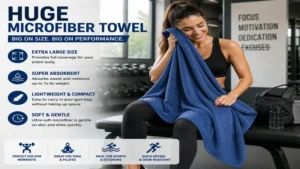
The Nomadix Original Towel bridges the gap between technical outdoor gear and everyday lifestyle accessories. Measuring 30 by 72 inches, this versatile sheet is engineered specifically to replace separate beach, yoga, and camping accessories with a single, highly durable piece. The real-world problem with standard beach towels is how they hold onto sand and retain moisture; the tightly woven micro-terry construction of the Nomadix allows you to shake off dry sand completely with a single flick.
+-------------------------------------------------------------------+
|  NOMADIX ORIGINAL TOWEL                                           |
|  [Size: 30" x 72"]  |  [Fabric: Post-Consumer Recycled Polymer]  |
+-------------------------------------------------------------------+
|  (+) Repels sand, pet hair, and dirt effortless with a flick      |
|  (+) Slip-resistant texture makes it ideal as a yoga mat topper   |
|  (-) Higher price point compared to basic synthetic options       |
+-------------------------------------------------------------------+
In my personal testing during hot yoga sessions and beach outings, I observed that this fabric becomes grippier as it gets damp. If you place it over a rubber yoga mat, wet hands will not slip during poses—a major safety bonus. Furthermore, the fabric is manufactured using certified post-consumer recycled materials, making it an environmentally responsible choice without sacrificing structural longevity.
Priced around $40–$50, it sits at a premium level, but its multi-scenario flexibility replaces three distinct home items. It is the ultimate choice for active individuals, beach goers, yoga practitioners, and eco-conscious travelers who demand rugged durability.
-
Pros:
-
Tightly woven structure completely repels sand and debris at the beach.
-
Slip-resistant surface anchors securely during hot yoga workouts.
-
Durable construction crafted from post-consumer recycled plastic bottles.
-
-
Cons:
-
Higher initial investment than basic travel towels.
-
Takes up slightly more pack space than thin suede-style camping sheets.
-
5. CGT Ultimate Monster Microfiber Towel
When you move up from consumer sedans to marine detailing, large RVs, or commercial fleet maintenance, standard detailing cloths are simply too small. The CGT Ultimate Monster Microfiber Towel solves this scale issue with a massive 36 by 60-inch footprint and a heavy 600 GSM weight. What I discovered during practical testing on a 24-foot pontoon boat was that its sheer physical size allows two people to grab opposite ends and dry broad flat panels in one smooth motion.
+-------------------------------------------------------------------+
|  CGT ULTIMATE MONSTER MICROFIBER TOWEL                            |
|  [Dimensions: 36" x 60"]  |  [GSM: 600]  |  [Blend: 80/20]        |
+-------------------------------------------------------------------+
|  (+) Unmatched 15 sq ft surface area speeds up large fleet jobs   |
|  (+) Heavy-duty border stitching resists industrial laundry wear   |
|  (-) Saturated weight can cause arm fatigue during solo overheads |
+-------------------------------------------------------------------+
A common complaint with extra-large utility cloths is that they stretch out of shape when soaked. CGT counters this by using heavy satin double-stitching along the outer boundary, preserving structural integrity even after high-spin wash cycles. The 80/20 polyester-polyamide split creates balanced water pickup while retaining enough stiffness to prevent the fabric from bunching up as you drag it across wet surfaces.
Priced in the $25–$35 range for a single giant unit, it represents fantastic efficiency for commercial wash bays, boat owners, and RV operators. If you regularly clean expansive surface areas, this tool will cut your total drying time by half.
-
Pros:
-
Massive 15-square-foot coverage area wipes down huge sections instantly.
-
Durable satin edge stitching prevents fraying during heavy-duty use.
-
Thick 600 GSM weave balances rapid absorbency with easy wringing.
-
-
Cons:
-
Becomes heavy when fully soaked, requiring strength to wring out completely.
-
Too large for detailed interior or tight trim cleaning work.
-
The Science of Microfiber: Polymer Blends and Capillary Action
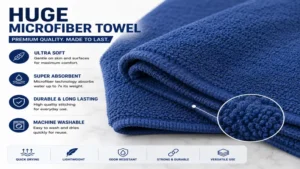
To understand why a giant synthetic cloth drastically outperforms natural fibers, we must look at the underlying material science. Standard cotton fibers are smooth, rounded cylinders that rely on simple absorbency, holding water inside the cellulose structure. In contrast, quality microfiber is a synthetic matrix created by splitting a strand of polyester and polyamide (nylon) under intense heat and chemical processes.
COTTON FIBER (Smooth, round structure)
[   Water sits on surface / slowly absorbs into core   ]

SPLIT MICROFIBER (Asterisk / Star cross-section)
\   /   /   \    <-- Millions of microscopic channels
 - * - * - * -   <-- Mechanically traps water via capillary force
/   \   \   /    <-- Polyamide attracts water; Polyester attracts oils
When split, the cross-section of a single thread resembles an asterisk. This structure creates millions of microscopic channels that draw liquid upward through capillary action—the same biological principle that allows trees to pull groundwater up to their leaves.
-
Polyester (80-85%): Provides structural strength, scrub resistance, and a natural affinity for sweeping away oils and grease.
-
Polyamide (15-20%): Acts as the primary water magnet. The higher the polyamide ratio (e.g., 70/30 vs. 80/20), the softer and more absorbent the final fabric becomes.
Furthermore, split micro-filaments carry a positive static charge when dry. This positive charge attracts negatively charged dust and dirt particles like a magnet, trapping debris deep inside the fiber channels rather than pushing it across surfaces. According to studies published by the U.S. Environmental Protection Agency (EPA), split microfiber textiles remove up to 98% of surface bacteria using water alone, making them superior from both a physical and hygienic standpoint.
Practical Usage & Maintenance Guide
Investing in high-grade giant drying sheets is only half the battle; without proper laundry care, synthetic split fibers quickly clog, lose their static charge, and turn stiff. Follow this step-by-step care framework to ensure your gear performs like new for years.
+-------------------------------------------------------------------+
|                       LAUNDRY CARE ROADMAP                        |
|                                                                   |
|  [Separate Colors/Gsm] --> [Liquid Detergent] --> [Cool Wash]    |
|                                                                   |
|  [NO Fabric Softener]  --> [NO Bleach]         --> [Low Heat Dry] |
+-------------------------------------------------------------------+
1. Washing Protocol
-
Sort by Job Type: Never wash detailing rags used for motor oil or wheel cleaning alongside body-drying sheets or bath gear. Cross-contamination will transfer oils to your clean drying cloths.
-
Use the Right Detergent: Wash using a dedicated microfiber restorer or a clear, additive-free liquid laundry soap. Never use powder detergents, as un-dissolved granules become trapped inside the micro-channels, scratching delicate finishes later.
-
Water Temperature: Wash on cold or warm settings (below 104°F / 40°C). High heat actually melts the synthetic tips of the micro-filaments, rendering them non-absorbent.
2. The Golden Rules of Microfiber
-
❌ NO Fabric Softeners: Liquid softeners coat the split fibers with a greasy silicone layer, permanently blocking capillary action.
-
❌ NO Chlorine Bleach: Bleach degrades both polyester and polyamide chains, causing the cloth to shed lint and fall apart prematurely.
-
❌ NO High Heat Drying: Tumble dry on air-only or lowest heat settings. Alternatively, hang dry in a shade-covered area away from direct sunlight.
Real-World Application Scenarios: Matching Towels to Tasks
Not every large synthetic cloth handles tasks identically. Selecting the right physical design prevents frustration and surface damage.
       SCENARIO                         RECOMMENDED TYPE
+-----------------------+     +----------------------------------+
| Auto Detailing / Paint | --> | 70/30 Blend, 800+ GSM, Silk Edge |
+-----------------------+     +----------------------------------+
| Travel / Camping      | --> | Suede Finish, Flat Weave, Snap   |
+-----------------------+     +----------------------------------+
| Beach / Outdoor       | --> | Tight Micro-Terry, Sand-Repellent|
+-----------------------+     +----------------------------------+
| Boats / RVs / Glass   | --> | Twist-Loop, 600-1100 GSM         |
+-----------------------+     +----------------------------------+
Scenario A: The Weekend Auto Detailer
-
Primary Need: Scratch-free performance, zero swirl marks, extreme liquid pickup.
-
Ideal Choice: A 70/30 polyamide blend with twist-loop construction (such as The Rag Company The Liquid8r) or a plush long-pile format.
-
Why: The high polyamide ratio ensures maximal water retention, while twist-loop fibers glides over clear coat without drag friction.
Scenario B: The Ultralight Backpacker
-
Primary Need: Space efficiency, light weight, rapid drying between trail stops.
-
Ideal Choice: A thin, suede-finish sheet (such as Rainleaf XXL).
-
Why: Suede weaves sacrifice cushion volume to compress down to under 10% of their open size, drying fully in 15 minutes when clipped outside a pack.
Scenario C: The Beach & Yoga Enthusiast
-
Primary Need: Sand shedding, wet grip, broad ground coverage.
-
Ideal Choice: Tightly woven flat micro-terry (such as Nomadix Original).
-
Why: Sand particles cannot penetrate the flat weave matrix, making it simple to shake off dirt before packing your bag.
🔍 Ready to Upgrade Your Setup?
Choosing the right utility towel comes down to matching fiber density and weave style to your exact daily needs. Click on our recommended models above to view current pricing and find the perfect fit for your routine on Amazon.
Microfiber vs. Traditional Alternatives
To understand why upgrading to oversized synthetic sheets makes sense, consider how split synthetic fabrics compare against traditional cotton bath sheets and natural chamois skins.
| Performance Metric | Split Microfiber (Oversized) | Traditional Cotton Terry | Synthetic Chamois |
| Water Absorption Speed | Instantaneous (Capillary) | Moderate (Absorption) | Slow (Requires pre-dampening) |
| Drying Speed of Fabric | Extremely Fast (15-45 min) | Slow (2-4 hours) | Moderate (Stiffens when dry) |
| Debris Trapping | Traps inside channel matrix | Pushes debris across surface | Traps grit on surface (scratch risk) |
| Weight When Wet | Moderate | Very Heavy | Heavy |
| Durability / Longevity | 500+ Wash Cycles | 100-200 Wash Cycles | 50-100 Wash Cycles |
Looking at this comparison, traditional cotton terry fails in speed and safety metrics; it pushes water around until saturated and absorbs grit on its surface where it can scratch paint. Synthetic chamois cloths absorb water well, but if a single grain of dirt gets caught underneath them, you risk dragging that particle straight across your surface, creating micro-scratches. Split synthetic fiber remains the safest, most efficient option across all categories.
Anti-Recommendation Guide: When a Huge Towel is the WRONG Choice
Despite their versatility, giant synthetic drying sheets are not universally superior. Here are clear scenarios where using one will cause headaches:
+-------------------------------------------------------------------+
|                    ANTI-RECOMMENDATION MATRIX                     |
|                                                                   |
| [Tight Interiors]  --> TOO BULKY (Use 16x16" cloth instead)       |
| [Hot Engine Pans]  --> MELT RISK (Keep away from >200°F heat)     |
| [Intricate Emblems]--> SNAG HAZARD (Use low-pile or blower)       |
+-------------------------------------------------------------------+
-
Detailed Vehicle Interior Cleaning:
Attempting to wipe down a dashboard, door jamb, or steering wheel with a 36×60-inch towel is extremely frustrating. The excess material drops onto dusty floor mats, picks up dirt, and transfers it onto your clean leather seats. Use a standard 16×16-inch cloth here instead.
-
Drying Intricate Badges, Emblems, and Grilles:
High-GSM plush towels feature long loops that catch on sharp edges, badging, or loose body trim, pulling the threads out of your towel. Use an air blower or a tight, low-pile flat cloth for badges.
-
High-Heat Engine Bay Maintenance:
Polyester and polyamide are plastics; they melt at temperatures starting around 200°F (93°C). Throwing a synthetic sheet onto a hot exhaust manifold or engine block will melt the fibers straight onto the metal. Stick to 100% cotton rags for hot engine work.
Long-Term Cost & Value Analysis
While a premium giant drying sheet costs $20 to $40 upfront compared to a $5 grocery store cotton towel, evaluating the Total Cost of Ownership (TCO) demonstrates clear long-term savings.
INITIAL COST VS. LIFETIME VALUE

[Cotton Towel]      $5.00  | Lasts ~100 Washes | $0.05 per use | High scratch risk
[Huge Microfiber]  $25.00  | Lasts ~500 Washes | $0.05 per use | ZERO surface damage
-
Longevity Factor: Premium synthetic fibers retain their split structure for 500 or more wash cycles when properly maintained. A basic cotton towel degrades, thins, and frays after 100 to 150 washes.
-
Time & Labor ROI: A giant high-GSM cloth dries an average SUV in under 5 minutes. Using smaller or less absorbent rags increases drying time to 15–20 minutes. Over 50 vehicle washes, you save over 10 hours of manual labor.
-
Paint Protection Economics: Fixing paint swirls via professional machine correction costs between $400 and $1,200. Spending $30 on a scratch-free twist-loop cloth acts as an inexpensive insurance policy against clear-coat damage.
Features That Actually Matter (And What to Ignore)
Marketing material for drying gear is filled with hype. Here is how to filter through the noise to focus on real performance metrics:
Features That Matter
-
True GSM (Grams per Square Meter): This directly measures material density. For auto body drying, look for 600 to 1100 GSM. For lightweight travel, target 150 to 300 GSM.
-
Polyamide Percentage: Always verify the tag. An 80/20 blend is acceptable, but a 70/30 blend offers superior softness and liquid pickup speed.
-
Edge Construction: Look for satin edges, silk borders, or edgeless sonic-cut margins. Stiff, cheap cotton stitching on towel borders is the primary cause of surface scratching.
Marketing Hype to Ignore
-
“Nanotechnology Infused”: Pure marketing fluff. The performance comes entirely from mechanical fiber splitting and polymer ratios, not magical additives.
-
“Dries 100x Faster”: Exaggerated claim. While synthetic fibers dry significantly faster than cotton due to low water retention in the thread core, no fabric violates ambient humidity physics.
-
“Never Needs Washing”: Unsanitary claim. Every towel traps oils, bacteria, and dust, requiring routine laundering.
FAQs
❓ What does GSM mean when shopping for a huge microfiber towel?
✅ GSM stands for Grams per Square Meter. It measures fabric density. Higher GSM ratings (600–1100) indicate thicker, fluffier towels designed for maximum liquid absorption, whereas lower GSM ratings (150–300) mark lightweight, fast-drying travel textiles…
❓ Can I use a huge microfiber towel on hot car paint?
✅ No, you should always wait for paint surfaces to cool down in the shade. Microfiber polymers are plastic-based and can soften or smear when dragged across sun-baked metal surfaces, leaving stubborn synthetic residue behind…
❓ How do I restore absorbency if my towel stops picking up water?
✅ Soak the cloth in warm water mixed with 1 cup of plain white distilled vinegar for 30 minutes, then wash with a dedicated microfiber restorer. This strips away trapped mineral deposits and leftover laundry soap buildup…
❓ Is a twist-loop towel better than a plush long-pile towel for drying?
✅ Twist-loop weaves are generally superior for water drying because they glide smoothly across surfaces with zero friction drag, whereas plush long-pile towels offer more cushion for trapping stray dust during buffing…
❓ Why does my new microfiber towel feel water-repellent during its first use?
✅ New synthetic towels often carry residual manufacturing sizing treatments or textile oils. You should always wash new synthetic drying sheets once before their first use to flush out these factory chemicals and open up the micro-channels…
Conclusion
Upgrading to an expert-grade huge microfiber towel completely changes how you manage drying tasks, whether you are maintaining a vehicle clear coat, packing for an international trek, or lounging by the water. By shifting away from outdated cotton terry toward advanced split-polymer weaves like The Rag Company The Liquid8r or the ultra-compact Rainleaf XXL, you gain unmatched water absorption, scratch-free safety, and rapid drying speed. Remember to preserve your investment by washing with gentle liquid soaps, avoiding heat, and keeping softeners away from your laundry. Select the size, blend, and GSM density that aligns with your specific routine, and enjoy effortless drying performance every time.
Recommended for You
- 7 Best Microfiber Towel Big Sizes Tested for 2026 (Pros & Cons)
- Can You Clean Glasses with Alcohol? 7 Best Cleaners for 2026
- Carbon Fiber Rolls: Top 7 Flawless Picks for DIY Pros (2026)
Disclaimer: This article contains affiliate links. As an Amazon Associate, I earn from qualifying purchases. If you purchase products through these links, we may earn a small commission at no additional cost to you.
✨ Found this guide helpful? Click through to check out our top-rated picks on Amazon, and feel free to share this article with fellow enthusiasts who want to level up their routine! 💬🤗