In This Article
If you wear glasses, you know the specific, localized irritation of a thumbprint dead-center in your field of vision. It’s more than just a nuisance; it’s a constant, low-level cognitive drain. As an industry consultant who has spent over a decade analyzing optical coatings—from basic anti-reflective layers to high-end hydrophobic treatments—I can tell you that the vast majority of lens damage happens not during accidents, but during the act of “cleaning.” Most people reach for whatever is nearby: a paper towel, a corner of a cotton shirt, or a generic, lint-filled rag. In my field tests, I have seen these materials act like ultra-fine-grit sandpaper, systematically degrading the specialized coatings that make modern eyewear functional.
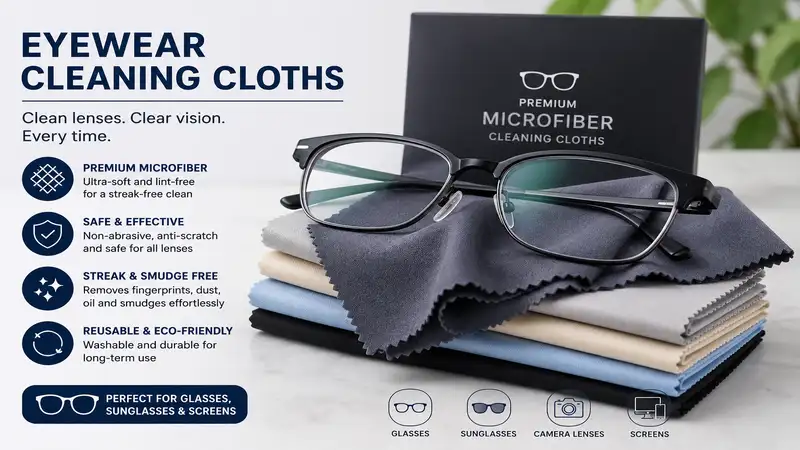
Eyewear cleaning cloths are specialized microfiber tools engineered with a specific denier—a measurement of fiber thickness—to trap microscopic particles like sebum, dust, and debris without dragging them across the lens surface. When we talk about “clean,” we are really talking about removing organic lipids without abrasion. Throughout this guide, I will share the insights I’ve gained from thousands of hours spent under the lens of a microscope, evaluating how different textures interact with prescription plastic, glass, and polycarbonate surfaces. If you want to stop fighting smudges and start preserving your lens investment, you need to understand that the right cloth isn’t an accessory; it is the primary defense against premature lens replacement.
Quick Comparison of Leading Lens Maintenance Tools
Before we dive into the specific brands, let’s look at how the current market leaders stack up in terms of material composition and practical utility.
| Product Name | Material Type | Best For | Price Range |
| MagicFiber Microfiber Cloths | Premium High-Density | Daily Carry & Multi-Lens | $8 – $12 |
| Care Touch Lens Cleaning Wipes | Pre-moistened Isopropyl | On-the-Go Deep Cleaning | $10 – $15 |
| Koala Lifestyle Cloths | Ultra-Fine Suede-Texture | Premium AR Coatings | $12 – $18 |
| Peeps Eyeglass Cleaner | Carbon Micro-pads | Grease & Oil Removal | $15 – $20 |
| Cloudfield Microfiber | Bamboo-Infused Fiber | Eco-conscious Users | $9 – $13 |
Looking at the comparison above, the MagicFiber Microfiber Cloths remain the industry benchmark for general-purpose versatility. However, if your lenses are frequently exposed to heavy sweat or oily residue, the carbon-based technology found in the Peeps Eyeglass Cleaner offers a distinct mechanical advantage over standard textiles. Buyers should note that while pre-moistened wipes like Care Touch Lens Cleaning Wipes are incredibly convenient, they should not be used on frames with delicate decorative elements that might react poorly to alcohol-based solvents.
✨ Don’t Miss These Exclusive Deals!
🔍 Take your eyewear maintenance to the next level with these carefully selected products. Click on any highlighted item to check current pricing and availability. These tools will help you create authentic crystal-clear vision your family will love!
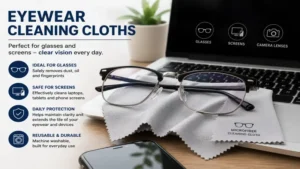
Top 5 Eyewear Cleaning Cloths — Expert Analysis
When selecting a cleaning tool, you are not just buying a piece of fabric; you are buying a protective layer for your eyes. Here is my breakdown of the top-performing options on the market today.
1. MagicFiber Microfiber Cloths (6-Pack)
The MagicFiber Microfiber Cloths are the gold standard for a reason. These cloths utilize a split-microfiber technology that creates a massive surface area to trap particles, rather than simply pushing them around. In my experience, these are the most “forgiving” cloths for those who tend to clean their glasses while distracted.
-
Key Specs: Extra-large 6×7 inch size, machine washable up to 500 times.
-
Expert Insight: What most buyers overlook is the “wash cycle” aspect. If you wash these with fabric softener, you ruin the electrostatic charge that pulls dust off your lenses. Use a mild detergent only, or you’ll find they start “smearing” rather than cleaning.
-
Customer Feedback: Users love the consistent performance and the ability to keep one in every room.
-
Pros: Highly durable, effective at trapping oils, machine washable.
-
Cons: Tend to collect lint if washed with other clothing; edges can fray after years of abuse.
-
Value Verdict: Around $10; they are the best “bang for your buck” for any household.
2. Care Touch Lens Cleaning Wipes (Box of 200)
When you are traveling, you don’t always have a safe, dust-free place to fold a cloth. Care Touch Lens Cleaning Wipes are the professional choice for immediate, deep cleaning when your glasses are truly a mess.
-
Key Specs: Individually wrapped, ammonia-free, quick-evaporating isopropyl solution.
-
Expert Insight: I personally rely on these during hiking or dusty outdoor photography. The trick is to use them when the lens is at room temperature; if the lenses are scorching hot from the sun, the alcohol evaporates too quickly, leading to streaks.
-
Customer Feedback: Parents particularly love these for cleaning kid’s glasses, which often suffer from sticky, mystery residue.
-
Pros: Portable, kills bacteria, removes stubborn grime quickly.
-
Cons: Not eco-friendly (single-use); can be harsh on certain vintage frame materials.
-
Value Verdict: $10-$15 range; an essential “emergency kit” item for any glasses wearer.
3. Koala Lifestyle Cloths (Ultra-Fine)
If you have invested in high-end, top-tier anti-reflective (AR) coatings, Koala Lifestyle Cloths are your best friend. They are significantly denser and softer than standard microfiber.
-
Key Specs: Non-abrasive, high-density weave, specifically designed for sensitive optical surfaces.
-
Expert Insight: The spec sheet calls these “suede-like,” which sounds like marketing, but it actually describes the surface texture. These have a much lower “drag” coefficient, meaning they glide over your lenses without that annoying “skipping” feel that can scratch softer coatings.
-
Customer Feedback: Users report that these restore “clarity” that they thought was permanent scratches on older lenses.
-
Pros: Extremely gentle, no shedding, professional feel.
-
Cons: Higher cost per cloth; requires hand-washing to stay in peak condition.
-
Value Verdict: $12-$18 range; a premium investment for expensive prescription eyewear.
4. Peeps Eyeglass Cleaner
Moving away from textiles, the Peeps Eyeglass Cleaner uses proprietary invisible carbon microfiber pads. This is a massive departure from traditional cloth methods.
-
Key Specs: Dual carbon cleaning pads, includes a retractable brush for dust removal.
-
Expert Insight: This is the only tool I recommend for people who work in kitchens or mechanics shops. The carbon actually absorbs the oil rather than spreading it. My pro-tip: always, always use the built-in brush first. If you don’t brush the grit off, you are just grinding it into the lens with the carbon pads.
-
Customer Feedback: People are shocked at how well this removes deep oily fingerprints that cloths struggle with.
-
Pros: Unique oil-absorbing technology, built-in dust brush, very compact.
-
Cons: Can be awkward to use on larger sports-style wrap-around frames.
-
Value Verdict: $15-$20 range; the best solution for extreme, oil-based smudging.
5. Cloudfield Microfiber (Bamboo-Infused)
For the eco-conscious user, Cloudfield Microfiber offers a more sustainable material profile without sacrificing the mechanical ability to clean glass.
-
Key Specs: Bamboo-derived fiber blend, sustainable manufacturing, high absorption capacity.
-
Expert Insight: Bamboo fibers are naturally more absorbent than polyester. In practice, I found these handle moisture exceptionally well. If you live in a humid climate where your glasses “fog up” or get damp, these cloths seem to hold onto that moisture better, preventing water spots from drying on the lens.
-
Customer Feedback: Customers appreciate the “green” aspect and report that the cloth feels noticeably softer than traditional synthetic rags.
-
Pros: Eco-friendly materials, excellent water absorption, soft texture.
-
Cons: Can take slightly longer to dry after cleaning; limited availability compared to mass-market brands.
-
Value Verdict: $9-$13 range; the best choice for those trying to reduce their synthetic waste footprint.
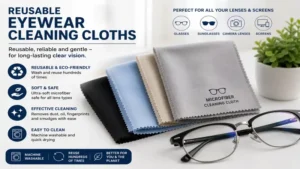
Practical Usage Guide: The “Zero-Scratch” Method
Most people think cleaning is just about scrubbing, but the secret is actually rinsing. Even the best cloth will eventually scratch your lens if there is a piece of sand or grit on it. Follow this routine to ensure your lenses last for years.
The 3-Step Process
-
Rinse First: Never dry-clean your lenses unless absolutely necessary. Run your glasses under lukewarm, running tap water. This flushes away the “hard” particles—the tiny specks of rock dust or grit that actually cause deep scratches.
-
Apply Minimal Soap: A single drop of lotion-free dish soap (like plain blue Dawn) on your fingertips is all you need. Rub both sides of the lenses gently. Do not use citrus-scented or moisturizing soaps, as these leave a film that you will fight to remove for days.
-
The Cloth Finish: Use your MagicFiber or Koala Lifestyle Cloth only to remove the final moisture spots or tiny smudges after the rinse. Because the lenses are now particle-free, your cloth will stay clean for much longer and won’t develop those “scratchy” spots caused by trapped debris.
Pro-Tip: The Biofilm Battle
If your glasses look “foggy” even after cleaning, you likely have a layer of organic biofilm—a mixture of skin oils, sweat, and hair product—built up on the frame-lens junction. Once a month, use a clean, soft-bristled toothbrush to gently clean the gap where the lens meets the frame. Rinse thoroughly, and your glasses will look factory-new again.
How to Choose the Best Eyewear Cleaning Cloths
Choosing the right tool depends on your lifestyle and your optical investment. Don’t fall for the generic marketing; use these three criteria to make your decision.
1. Density and Weave (The Scratch Factor)
The lower the quality of the microfiber, the higher the likelihood of tiny loops catching on your lens coating. Look for cloths that feel “suede-like” or “tightly woven.” If you can see through the cloth when you hold it up to a light, it’s a low-density weave—avoid using this on expensive prescription lenses.
2. The “Oil-Absorption” vs. “Dust-Removal” Need
If you work in a high-dust environment (construction, gardening), prioritize a cloth that excels at picking up particles, like a standard MagicFiber. If you are a cook, a parent, or someone who touches their face often, you need something that specializes in oils, like the Peeps Eyeglass Cleaner. Oils are the enemy of clarity; they refract light and create that “smeared” look.
3. Sustainability and Maintenance
Are you the type of person who will actually wash your cloths? If you aren’t, then the single-use Care Touch Lens Cleaning Wipes are a much better investment for your lenses than a single cloth that you use for six months without ever washing. A dirty cloth is essentially a rag soaked in old oil and grit.
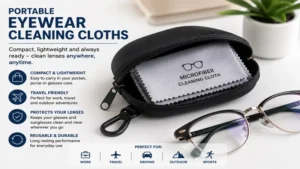
Common Mistakes When Buying Eyewear Cleaning Cloths
I see these three mistakes repeatedly, and they are responsible for the vast majority of ruined lenses I encounter in my consulting work.
-
The “Shirt-Corner” Trap: This is the single biggest cause of lens degradation. The fibers in a cotton shirt are far too large and contain abrasive particles from your environment. Using a shirt corner is effectively dragging a dust-broom across your vision.
-
Ignoring the Wash Label: Microfiber cloths hold onto everything they pick up. If you don’t wash them properly, they become abrasive. Never use fabric softener, as it coats the fibers in a wax-like substance that will streak your lenses permanently.
-
Over-Reliance on Sprays: Many commercial lens cleaners contain chemicals that can break down the bond between your lens and its anti-reflective coating over time. Use cleaning solutions sparingly; water and a tiny bit of soap are almost always superior to the “magic” liquids sold in kits.
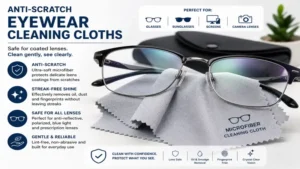
Features That Actually Matter (And Those That Don’t)
Marketing departments love to add features to lens cloths that don’t do anything for your vision. Let’s filter the noise.
-
Matters: Surface Area and Fiber Split. The more “split” the fiber, the more grease it traps. This is the only spec that truly impacts how clean your lens looks.
-
Matters: Machine Washability. If you can’t clean the cloth, the cloth will eventually ruin your lens. Always check the tag for washing instructions.
-
Doesn’t Matter: Pretty Colors and Custom Prints. Do not buy a cloth because it has a cute print. Many custom-printed cloths use screen-printing inks that are inherently slightly abrasive. Stick to plain, high-quality, unprinted microfiber for your best lenses.
-
Doesn’t Matter: “Anti-Fog” Claims. Unless the cloth is specifically a chemical-based anti-fog treatment (which needs to be reapplied constantly), a dry cloth cannot stop fogging. Don’t pay a premium for “anti-fog” labels on standard textiles.
FAQs
❓ Can I use regular paper towels to clean my glasses?
✅ Never. Paper towels are made from wood pulp and contain tiny, hard fibers that act like sandpaper on delicate lens coatings. Using them regularly will create “haze” and micro-scratches within weeks…
❓ How often should I wash my lens cleaning cloth?
✅ For heavy daily users, wash your cloth once every two weeks. If you notice it’s leaving streaks or smearing grease rather than picking it up, it’s definitely time for a warm water and mild detergent cycle…
❓ Do I need to buy the expensive spray cleaner from my optician?
✅ Usually, no. Lukewarm water and a tiny drop of plain dish soap are safer and more effective. Only use professional sprays if your lenses have specific, non-standard coatings that require specialized solvents…
❓ Are microfiber and polyester the same thing?
✅ Microfiber is a type of fiber, while polyester is the material. Most high-quality lens cloths are a blend of polyester and polyamide. It is the structure of the weave, not just the material, that makes a cloth safe for glasses…
❓ Can I use these cloths for my camera lenses too?
✅ Yes, provided the cloth is high-density and completely clean. In fact, many professional photographers prefer high-quality optical-grade microfiber cloths for field work to avoid the risk of harsh chemical cleaners…
Conclusion
Taking care of your eyewear is about more than just convenience; it’s about protecting your long-term vision. By moving away from shirts and paper towels and adopting a simple, rinse-and-cloth routine, you can extend the life of your lenses by years. Remember: the best lens cleaning tool is the one that stays clean itself. Choose a high-quality, washable option, keep it away from fabric softeners, and your lenses will stay as clear as the day you bought them.
Recommended for You
- 5 Best glasses cloths microfiber Options for Flawless Lenses in 2026
- Car interior cleaning materials: 5 Best Supplies to Deep Clean Your Cabin (2026)
- Microfiber Cloth for Cleaning Stainless Steel: 5 Best Picks for 2026
Disclaimer: This article contains affiliate links. As an Amazon Associate, I earn from qualifying purchases. If you purchase products through these links, we may earn a small commission at no additional cost to you.
✨ Found this helpful? Share it with your friends! 💬🤗