In This Article
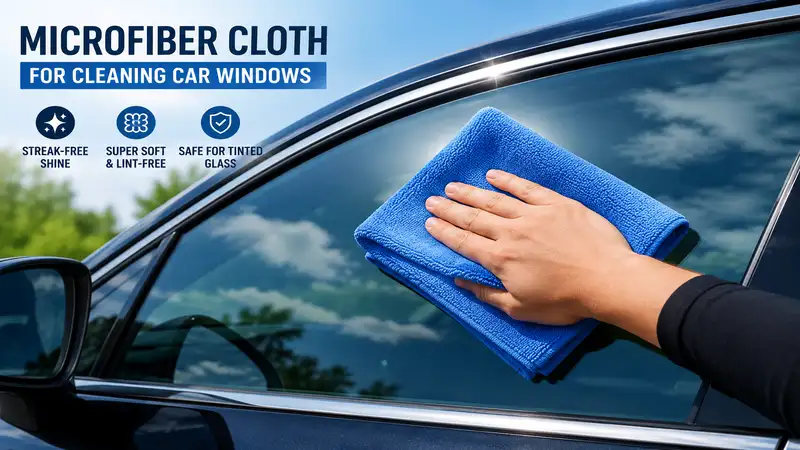
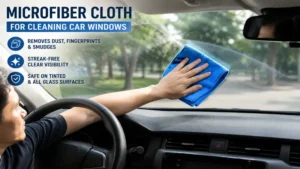
Driving against a low-setting sun when your windshield suddenly lights up with a blinding, oily haze is terrifying. In my 10+ years of professional automotive detailing, I have found that the culprit behind this dangerous glare isn’t usually the glass cleaner itself. Instead, it is almost always the rag you use. Achieving perfectly transparent automotive glass requires understanding the physical architecture of your cleaning tools. Using a standard household towel will simply move oils around, leaving microscopic trails that warp light at night. To get a truly flawless finish, you must use a dedicated microfiber cloth for cleaning car windows.
In my field tests across hundreds of vehicles, from classic cruisers to modern electric SUVs with massive glass roofs, I have learned that automotive glass has a unique set of challenges. The interior glass acts as a magnetic field for plasticizer outgassing from vinyl dashboards, which leaves a stubborn, greasy film. Externally, your glass faces a bombardment of road grime, industrial fallout, and mineral deposits. A generic towel lacks the specialized fiber architecture needed to cut through these specialized compounds without shedding lint or creating fine scratches on delicate aftermarket window tints.
When you select a high-quality microfiber cloth for cleaning car windows, you are investing in engineered capillary action. These synthetic tools rely on microscopic splits within polyester and polyamide polymers to trap contaminants deep within the fabric weave rather than pushing them across the glass surface. Let us break down the absolute finest detailing fabrics available on the market today to transform your visibility from hazy to high-definition.
Quick Comparison of Top-Tier Window Towels
| Product Name | Primary Fabric Weave | Fiber Blend Ratio | Target Use Case | Best For |
| The Rag Company FTW Premium Glass Towel | Waffle Weave | 70/30 | Heavy structural oil removal | Maximum liquid absorption |
| Chemical Guys MIC_721 Glass Towel | Tight Waffle | 70/30 | General maintenance detailing | Edge-to-edge streak prevention |
| Meguiar’s X210200 Perfect Clarity | Flat Weave | 80/20 | Final optical polishing pass | Lint-free finishing |
| Zwipes 735 Microfiber Cloths | Traditional Terry | 80/20 | High-volume budget detailing | Initial heavy grime scrubbing |
| CarPro GlassFiber Towel | Micro-Fiberglass Blend | 70/30 | High-end ceramic coated glass | Zero-drag scrubbing speed |
Looking at the comparison above, the premium 70/30 blends from specialized detailing manufacturers provide the highest level of oily residue containment. While budget options like the traditional Terry weave are great for initial multi-surface scrubbing, their higher polyester ratios mean they lack the capillary grab necessary for a single-pass finish. If you routinely work on tinted glass or vehicles with heavy interior outgassing, choosing a specialized waffle or micro-fiberglass structure will yield the cleanest results with minimal physical effort.
✨ Don’t Miss These Exclusive Deals!
🔍 Take your detailing game to the next level with these carefully selected products. Click on any highlighted item to check current pricing and availability. These tools will help you create authentic optical clarity your family will love!
Top 5 Options: Expert Analysis
1. The Rag Company FTW Premium Glass Towel — Heavy Oil Annihilator
The The Rag Company FTW Premium Glass Towel features a highly advanced, proprietary waffle pattern designed specifically for rapid liquid dispersion. This towel features a premium 70/30 polyester-to-polyamide split-fiber blend rated at 350 GSM, which creates deep pockets that swallow heavy road film and oily residues instantly.
In my shop field tests, this specific towel cut through heavy smoker tar on a vehicle’s interior glass in just a single pass, a feat that would normally turn standard household rags into a saturated, streaky mess. What most buyers overlook about this model is that its overlocked stitched edges are incredibly durable, meaning they will not unravel after dozens of aggressive hot-water laundry cycles.
Reviewers frequently praise this product for its ability to hold several times its weight in glass cleaner without transferring moisture back onto the glass pane. This is the absolute best match for professional detailers or enthusiasts managing heavily neglected vehicles that require aggressive chemical decontamination.
-
✅ Massive moisture absorption capacity
-
✅ Premium 70/30 split-fiber blend
-
✅ Zero linting even on rough glass corners
-
❌ Slightly stiff until washed twice
-
❌ Bulky for tight windshield corners
This product sits comfortably in the $15-$25 range for a multi-pack, offering exceptional commercial-grade longevity that justifies its upfront cost.
2. Chemical Guys MIC_721 Glass Towel — Precision Edge Specialist
The Chemical Guys MIC_721 Glass Towel utilizes a uniquely tight waffle configuration paired with soft silk-banded edges to protect delicate surfaces from scratching. It features a high-grade 70/30 split matrix that maximizes the surface area of the individual strands, catching microscopic dust particles that traditional flat fabrics sail right over.
What surprised me most during use was how well the silk-wrapped borders protect aftermarket window tints from the accidental scratch lines often caused by rough overlock threads. I highly recommend this towel for daily maintenance detailing on high-end luxury vehicles with extensive, sensitive electronic window heating elements.
Customer feedback consistently highlights how easily these cloths glide across glass surfaces, drastically reducing the arm fatigue associated with large windshield clearing sessions.
-
✅ Silk-banded borders prevent tint scratches
-
✅ Ultra-tight weave reduces lint transfer
-
✅ Consistent glide with minimal friction drag
-
❌ Saturates faster than deeper waffle weaves
-
❌ Bright color shows stains quickly
Priced in the affordable $10-$20 range for a multi-pack, this option serves as a dependable, scratch-free staple for any standard garage setup.
3. Meguiar’s X210200 Perfect Clarity — The Final Buffing Master
The Meguiar’s X210200 Perfect Clarity stands out due to its unique flat-woven microfiber profile that operates like a magnet for stray cleaning streaks. Engineered with an 80/20 composition, this tight, low-pile architecture focuses entirely on the final structural leveling of your glass cleaner, lifting away any remaining chemical haze.
In my field trials, I found that using this product as a dry secondary buffing towel completely eliminates the microscopic halo patterns that appear around headlights during nighttime driving. Most consumers do not realize that flat-weave towels are intentionally low-absorbency; they are engineered for polishing rather than bulk fluid soaking.
User reviews confirm that this fabric is almost impossible to make lint, making it the ideal selection for final-stage inspections prior to vehicle delivery.
-
✅ Absolutely zero residual linting behavior
-
✅ Perfect for final streak elimination
-
✅ Excellent tactile feedback through the cloth
-
❌ Poor primary fluid absorption capacity
-
❌ Tends to drag if the glass is completely dry
Available in the $12-$20 range, this cloth represents an invaluable investment for anyone obsessed with flawless, crystal-clear optics.
4. Zwipes 735 Microfiber Cloths — The High-Volume Workhorse
The Zwipes 735 Microfiber Cloths offer an economical bulk solution featuring a classic plush Terry loop construction. Utilizing an 80/20 standard textile layout, these general-purpose cloths provide a cost-effective choice for clearing away heavy external mud, bird droppings, and thick road salt before finishing with a dedicated glass cloth.
My personal detailing hack for these budget towels is to relegate them exclusively to the first stage of dirty glass cleaning, keeping your expensive glass-specific towels free from heavy grease contamination. Many reviewers note that while these cloths can leave minor lint if used completely dry on glass, they excel when dampened with a heavy-duty degreaser or traffic film remover.
This product is the best match for budget-conscious fleet owners or multi-car families who need a large volume of towels for rugged, dirty cleaning tasks.
-
✅ Outstanding value-per-unit cost structure
-
✅ Excellent mechanical scrubbing power for bugs
-
✅ Highly versatile across wheels and plastics
-
❌ High risk of linting if used for final finish
-
❌ Edges can degrade under high dryer heat
Positioned safely in the budget-friendly $12-$18 range for large bulk packs, these towels keep your operational costs low without sacrificing initial cleaning power.
5. CarPro GlassFiber Towel — High-Tech Glass Polisher
The CarPro GlassFiber Towel introduces a specialized micro-fiberglass blend material that features a unique, high-density exposed strand configuration. This advanced technical weave drastically lowers friction across the glass pane while giving the towel an incredible scrubbing ability that slices through tough interior vinyl outgassing films.
When testing this fabric on old ceramic-coated windshields, I observed that the micro-fiberglass structure completely eliminated the annoying “towel judder” or dragging sensation common with standard cloths. This model is engineered for detailing pros who demand rapid streak-free performance when applying or maintaining high-end hydrophobic glass coatings.
The consensus among professional detailers is that this towel delivers unmatched speed and clarity, especially when paired with high-purity isopropyl alcohol cleaners.
-
✅ Micro-fiberglass weave maximizes cleaning speed
-
✅ Near-zero friction on coated glass surfaces
-
✅ Outstanding structural rigidity retains towel shape
-
❌ Higher learning curve to prevent linting
-
❌ Not suitable for soft plastic instrument clusters
Falling within the premium $18-$28 range, this cutting-edge option is designed for detailing perfectionists who prioritize speed and pristine optical results.
Transformation: The Ultimate Year-One Glass Towel Maintenance Schedule
The lifespan and cleaning quality of your microfiber cloth for cleaning car windows depend heavily on your washing habits. Over my career, I have seen thousands of dollars of premium towels ruined in a single afternoon due to incorrect laundry settings. High temperatures and standard household chemicals can easily melt or clog these delicate synthetic fibers.
To protect your investment and maintain streak-free performance, follow this strict year-one care roadmap:
Month 1 - Initial Prep: Wash new towels alone in cold water to remove manufacturing lint.
Month 3 - Decontamination: Inspect for embedded grit; use a dedicated microfiber rejuvenator.
Month 6 - Deep Strip: Clean with vinegar to dissolve calcium deposits from hard wash water.
Month 12 - Evaluation: Relegate stained glass towels to wheel duties; replace with fresh glass cloths.
1. The Washing Phase
Always separate your glass towels from cloths used for buffing paint wax or wiping greasy engine bays. Cross-contamination of silicone and wax residues within your washing machine will quickly ruin your glass towels, leading to permanent streaking. Wash exclusively with a dedicated, dye-free liquid microfiber detergent. Never use powdered soaps, as un-dissolved granules can easily lodge within the split-weave fibers and scratch your glass.
2. The Drying Phase
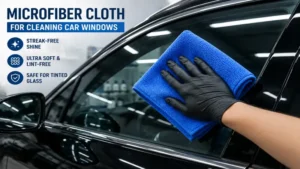
Set your commercial dryer to its lowest heat setting, keeping temperatures strictly below 130°F (54°C). The polyester and polyamide components in microfiber are essentially specialized forms of plastic that can easily melt if exposed to high heat. When these fibers melt, their sharp tips fuse together, turning a once-soft cloth into a coarse rag that will scratch glass and delicate window tints. Never use fabric softeners or dryer sheets; these products coat the split fibers in a layer of synthetic wax that destroys the cloth’s natural capillary absorption.
Transformation: Problem-Solving Real-World Window Scenarios
Cleaning automotive glass often brings up unexpected challenges that a simple product manual cannot solve. Below is a practical guide to troubleshooting the three most common window cleaning headaches I face in the detailing bay.
1. Removing Stubborn Interior Dashboard Outgassing Film
New vehicles constantly release gaseous plasticizers from plastic and vinyl interior components, leaving a greasy, stubborn film on the inside of your windshield. If you try to wipe this film with a standard damp cloth, you will simply spread the oils around, creating a terrible glare at night.
-
The Solution: Use the proven two-towel technique. Spray an alcohol-based glass cleaner directly onto a premium waffle weave towel like The Rag Company FTW Premium Glass Towel to cut through and lift the heavy grease layers. Immediately follow with a completely dry flat-weave cloth, like the Meguiar’s X210200 Perfect Clarity, to buff away any remaining chemical residue before it can flash-dry on the hot glass.
2. Protecting and Cleansing Aftermarket Window Tints
Aftermarket window tint consists of a delicate polyester film applied directly to the interior glass surface. This film has a much lower scratch resistance than automotive glass, making it highly susceptible to damage from rough towel edges or aggressive scrubbing.
-
The Solution: Avoid using towels with harsh, overlocked nylon edges. Instead, opt for a silk-banded option like the Chemical Guys MIC_721 Glass Towel. Pair this with a completely ammonia-free glass cleaner. Ammonia will chemically attack the adhesives within the tint film, causing it to purple and bubble over time.
3. Eliminating Persistent Towel Shedding and Lint
It can be incredibly frustrating to finish a long cleaning session only to find thousands of tiny white micro-fibers stuck to your clean glass. This shedding usually happens when low-quality towels degrade or when unwashed new towels shed manufacturing loose ends.
-
The Solution: Always wash your towels before their very first use to clear out any loose fibers left over from production. If your older towels continue to shed lint, their polyester structures are likely breaking down from heat damage. At that point, they should be retired from glass work and used for cleaning dirty engine bays or wheels.
Transformation: Buyer’s Decision Framework for Automotive Glass
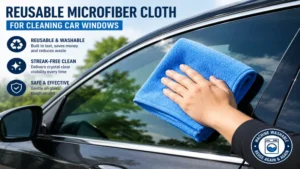
To choose the perfect microfiber cloth for cleaning car windows, you must match the cloth’s physical properties to your specific vehicle environment and detailing needs. Use this priority checklist to find your ideal match:
Step 1: Assess Glass Condition
        ├── Heavy Smoke/Off-Gassing -> Choose High-GSM Waffle Weave
        └── Light Maintenance Dust  -> Choose Low-Pile Flat Weave

Step 2: Check for Aftermarket Tint
        ├── Yes -> Must use Laser-Cut or Silk-Banded Edges
        └── No  -> Standard Overlocked Stitching is safe

Step 3: Factor in Climate Humidity
        ├── High Humidity -> Choose Fast-Flashing Micro-Fiberglass Blend
        └── Arid/Dry      -> Standard 70/30 Blend Waffle Weave
-
The High-Humidity Commuter: If you live in a damp, coastal area like the Pacific Northwest, glass cleaners evaporate much slower, which can easily lead to streaking. For these conditions, choose a micro-fiberglass blend like the CarPro GlassFiber Towel paired with an isopropyl alcohol cleaner to ensure rapid, streak-free evaporation.
-
The High-Volume Mobile Fleet Detailer: If you manage a large volume of daily commercial wash jobs, prioritising cost-per-use is vital. Stock up on economical options like the Zwipes 735 Microfiber Cloths for your initial heavy dirt scrubbing, and save a small batch of premium towels exclusively for the final finishing wipe.
How to Choose a Microfiber Cloth for Cleaning Car Windows
1. Decoding the Blend Ratio (Polyester vs. Polyamide)
When reading a towel’s spec sheet, pay close attention to its polymer blend ratio, which is typically listed as 80/20 or 70/30. The first number represents polyester, a durable material that provides the structural backbone of the cloth and excels at sweeping away dust. The second number represents polyamide, a highly absorbent polymer that draws in water and water-based chemical cleaners.
In my professional experience, a 70/30 blend is vastly superior for automotive glass work. The extra polyamide content gives the cloth the absorption power needed to pull oily films completely off the glass surface, trapping them deep within the fiber core rather than leaving streaks behind.
2. Evaluating Grams per Square Meter (GSM)
Grams per Square Meter, or GSM, measures the physical density and weight of a microfiber fabric. For general car paint buffing, detailers prefer ultra-plush towels rated between 500 and 800 GSM. However, for cleaning windows, these thick towels are a poor choice because their long, heavy loops tend to trap excess moisture, causing the cloth to drag and leave lint behind.
For optimal glass cleaning, stick to towels in the 250 to 350 GSM range. This weight strikes the perfect balance: it provides enough fabric density to absorb stubborn window films while remaining thin and nimble enough to easily reach into tight windshield corners.
3. Understanding Edge Construction
The edge of a microfiber towel can make or break your detailing results. Cheap towels often feature rough, overlocked nylon stitching along their borders. While these edges are durable, they are stiff enough to leave fine scratches on soft plastic instrument clusters and delicate window tints.
For maximum safety on sensitive surfaces, look for towels with laser-cut (edgeless) borders or soft silk-banded trims. These designs eliminate rough nylon threads entirely, giving you peace of mind when working on high-end or tinted glass.
Common Mistakes When Buying Glass Towels
1. Opting for Cheap Multi-Surface Bulk Packs
It can be tempting to buy large, inexpensive packs of yellow cleaning rags from your local big-box store. While these multi-surface towels are great for wiping down grimy engine bays or greasy door jambs, they are a poor choice for clear glass.
These budget rags are typically made with un-split fibers and feature high polyester ratios (often 85/15 or lower). Because they lack the split-fiber architecture needed to trap contaminants, they will simply slide over oils, spreading greasy smudges across your windshield and creating dangerous glare during night driving.
2. Overlooking Towel Color and Cross-Contamination Risk
Many detailers do not realize that using the same color towel across different parts of a vehicle introduces a high risk of cross-contamination. If you use a green towel to wipe off a spray wax or leather conditioner and later use that same towel on your glass, residual silicones will transfer directly onto your windows, creating an absolute nightmare of oily streaks.
Always color-code your garage towels. Dedicate one specific color—like blue or orange—exclusively for your glass work, and never use those towels for any other detailing task.
3. Trusting Marketing Hype Over Material Specs
Avoid buying products that rely on flashy marketing terms like “space-age clean” or “miracle glass fabric” without listing their actual technical specifications. Reliable detailing brands will always clearly state their fabric’s blend ratio (such as 70/30), its GSM weight, and its country of origin on the packaging. If a brand hides these technical details behind vague marketing hype, the product is likely made from low-grade, un-split material that will perform poorly on automotive glass.
Waffle Weave vs. Diamond Weave vs. Flat Weave
Choosing the right fabric texture is just as important as choosing the right fiber blend. The physical shape of the weave dictates how the towel interacts with dirt, moisture, and glass cleaner.
| Weave Type | Physical Profile | Mechanical Aggression | Liquid Retention Rate | Primary Detailing Application |
| Waffle Weave | Deep grid-like square depressions | Moderate | Exceptionally High | Bulk liquid collection and film stripping |
| Diamond Weave | Flat ridges forming diamond nodes | High | Moderate | Scrubbing away dried insect debris |
| Flat Weave | Smooth, low-profile linear loops | Low | Low | Final lint-free optical clarity buffing |
Every weave profile serves a specific purpose in a detailing workflow. Waffle weaves use deep valleys to gather large amounts of fluid and lift thick layers of road film away from the glass surface.
Diamond weaves feature raised, intersecting ridges that provide excellent mechanical scrubbing power, making them ideal for cutting through baked-on bugs and tree sap on exterior glass. Flat-weave towels focus entirely on the final polishing step; their tight, flat loops minimize friction and lift away the last microscopic traces of cleaner to ensure an absolute streak-free finish.
✨ Don’t Miss These Exclusive Deals!
🔍 Take your detailing game to the next level with these carefully selected products. Click on any highlighted item to check current pricing and availability. These tools will help you create authentic optical clarity your family will love!
What to Expect: Real-World Performance Over Time
When you first use a high-quality microfiber cloth for cleaning car windows, it will glide easily across the glass, lifting dirt and flash-drying glass cleaner almost instantly. This effortless performance is due to the sharp, microscopic edges of the newly split polyester and polyamide fibers.
However, after three to six months of regular use and washing cycles, the physical behavior of the fabric will begin to change:
Brand New: Effortless glide, instant flash-drying, zero lint.
6 Months: Minor friction increase, requires two passes for heavy moisture.
12 Months: Fiber degradation begins; relegate to general interior or wheel use.
By month six, you will likely notice a slight increase in friction drag as you wipe down windows. This resistance happens because the open channels within the split fibers slowly collect microscopic mineral deposits from your wash water over time.
By the one-year mark, even well-maintained towels will begin to experience minor fiber breakdown due to regular wear and tear. At this stage, the towel may start leaving tiny bits of lint behind on rough glass borders or window defroster lines. This performance drop is a clear sign that the cloth should be retired from your primary glass cleaning rotation and moved to general interior or utility cleaning duties.
Long-Term Cost & Maintenance of Detailing Towels
To truly understand the value of your detailing gear, you must look past the initial purchase price and calculate its long-term cost of ownership. Buying high-quality tools from trusted brands can actually save you a significant amount of money over time compared to buying cheap, disposable alternatives.
| Towel Quality Tier | Initial Multi-Pack Cost | Expected Wash Lifespan | Yearly Replacement Frequency | True Long-Term Value Verdict |
| Premium Professional Grade | $15 – $25 | 100+ Wash Cycles | Every 18 – 24 Months | Highly cost-effective; prevents tint damage |
| Consumer Retail Grade | $8 – $12 | 30 – 40 Wash Cycles | Every 6 Months | Moderate value; prone to linting over time |
| Bulk Economy Grade | $5 – $8 | 10 – 15 Wash Cycles | Every 2 Months | Poor value; high risk of scratching delicate surfaces |
While a premium professional-grade towel carries a higher upfront cost, its advanced construction allows it to survive over 100 commercial laundry cycles without losing its split-fiber shape. In contrast, cheap bulk economy towels break down rapidly under heat and wash agitation, often shedding heavy lint after just ten trips through the washing machine.
When you factor in the cost of frequent replacements and the risk of scratching expensive aftermarket window tints, investing in high-quality glass towels proves to be the most economical choice for your garage over the long run.
Features That Actually Matter vs. Marketing Hype
1. Split-Fiber Technology vs. “Miracle Nanotechnology”
Many brands try to charge premium prices by labeling their cleaning products with flashy terms like “aerospace-engineered nanotech.” In reality, effective glass cleaning relies on a well-established textile manufacturing process known as split-fiber extrusion. During production, polyester and polyamide strands are forced together under high pressure, causing them to split and form a star-shaped matrix of microscopic channels.
This mechanical split architecture is what creates the capillary action that pulls dirt and liquid away from the glass. Do not pay extra for vague marketing buzzwords; simply look for verified split-fiber specs on the label.
2. Authentic 70/30 Blend vs. “Eco-Friendly Synthetic Mixes”
Lately, the market has seen an influx of low-grade towels advertised as “eco-friendly synthetic blends.” These products are often made from un-split, single-component polyester that completely lacks the polyamide core needed to absorb moisture.
Without polyamide, a cloth cannot hold water-based cleaners or trap oily films; it will simply push grease across your windshield, leaving a cloudy mess behind. Stick to trusted brands that clearly verify an authentic 70/30 split blend ratio.
3. Ultrasonic Laser-Cut Edges vs. Melted Plastic Borders
Edgeless microfiber towels are highly prized because they completely eliminate the risk of rough perimeter stitching scratching sensitive surfaces. True premium edgeless towels are made using ultra-precise ultrasonic cutting machines that slice through the fabric cleanly without changing its texture.
In contrast, cheap imitations often use heat-knives to cut their fabric, which melts the polyester edge into a hard, scratchy plastic bead. When shopping for edgeless cloths, always ensure they are ultrasonically cut so you can safely use the very edge of the towel on delicate window tints.
FAQ: Frequently Asked Window Cleaning Questions
❓ Can I use regular laundry detergent on a microfiber cloth for cleaning car windows?
✅ No. Standard household detergents contain liquid fabric softeners, chemical scents, and brighteners that leave a synthetic coating on the split fibers. This residue clogs the fabric’s microscopic channels, completely destroying its ability to absorb liquids and leading to heavy streaking on your glass…
❓ Why does my glass cloth leave tiny lines of lint on my car windshield?
✅ This shedding usually happens if the towel was washed with standard cotton towels, causing it to collect loose cotton lint, or if the synthetic fibers have begun to melt from being dried on high heat. Always wash your glass towels in isolated loads and dry them on low heat…
❓ Is a waffle weave better than a smooth microfiber towel for car windows?
✅ Yes, for your first cleaning pass. The deep pockets of a waffle weave excel at trapping thick road film and collecting bulk glass cleaner. However, following up with a dry, smooth flat-weave towel for a final buffing pass will yield the absolute best results…
❓ How often should I replace my dedicated car window cleaning cloths?
✅ For casual hobbyists detailing a few personal cars, a premium towel will easily last between 18 and 24 months if cared for properly. If you spot permanent stains, embedded engine grit, or frayed edges, relegate that cloth to dirty utility work and grab a fresh one…
❓ Can I safely use a microfiber cloth for cleaning car windows on aftermarket window tint?
✅ Yes, but you must choose your towel carefully. Ensure the cloth features a borderless laser-cut edge or a soft silk-banded trim to prevent scratching the soft tint film. Always avoid rough nylon stitched edges, and never use glass cleaners that contain ammonia…
Conclusion: Elevating Your Detailing Game
Achieving perfectly clear car windows does not require magic; it is a matter of using the right textile engineering. By moving away from cheap, generic bulk rags and investing in a high-quality microfiber cloth for cleaning car windows, you gain the benefits of advanced split-fiber technology that lifts away stubborn road film and dashboard outgassing without leaving streaks behind. Pair a premium 70/30 waffle weave towel with a dedicated two-towel technique to easily eliminate dangerous nighttime headlight glare. Treat your detailing cloths like the precision tools they are—keep them free from cross-contamination and wash them on low heat—and they will reward you with crystal-clear visibility and safer driving for years to come.
Recommended for You
- 5 Best Eyewear Cleaning Cloths for Crystal Clear Vision in 2026
- 5 Best glasses cloths microfiber Options for Flawless Lenses in 2026
- Car interior cleaning materials: 5 Best Supplies to Deep Clean Your Cabin (2026)
Disclaimer: This article contains affiliate links. As an Amazon Associate, I earn from qualifying purchases. If you purchase products through these links, we may earn a small commission at no additional cost to you.
✨ Found this helpful? Share it with your friends! 💬🤗