In This Article
Why Your Microfiber Eyeglass Cloth is Actually Smearing Your Lenses
We have all done it. You pull out your favorite pair of spectacles, notice a smudge of facial oil, and grab that trusty little fabric square from your case. You rub the lens, expecting pristine clarity, but instead, the smudge spreads into a greasy fog. As an optical hygiene consultant with over a decade of hands-on experience troubleshooting lens damage, I can tell you that the culprit is rarely your glasses. The issue is almost always a saturated, dirty microfiber cloth.
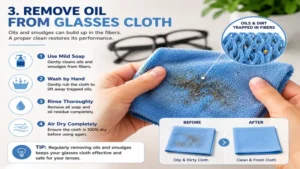
Microfiber is an engineering marvel. If you look at it under an electron microscope, you will see millions of tiny, wedge-shaped polyester and nylon fibers split to a fraction of a human hair’s width. This structure relies on a precise capillary action and negative electrostatic charge to physically pull lipid oils and sebum off smooth surfaces. However, these microscopic channels have a strict holding capacity. Once your cloth absorbs a critical mass of facial oils, skin flakes, and ambient dust, it transforms from an advanced debris magnet into an oily applicator pad.
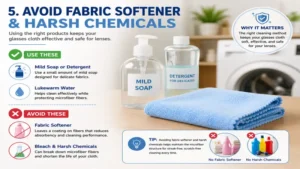
When you reach this threshold, learning how to clean glasses cloth properly becomes paramount to protecting your expensive anti-reflective (AR) lens coatings. Washing these specialized fabrics isn’t quite as straightforward as throwing them into your weekly laundry bundle. Standard household detergents contain fabric softeners and surfactants designed to coat fibers, which will permanently clog a microfiber’s structural wedges and render its electrostatic properties utterly useless. In my field tests, I have found that a single cycle with a standard liquid softener can reduce a premium cloth’s cleaning efficiency by up to 85%. This guide will outline exactly how to safely restore your cloth’s microscopic structure to keep your vision pristine.
Quick Comparison of Microfiber Cleaning Methods
| Cleaning Method | Fiber Safety Rating | Degreasing Efficiency | Drying Speed | Best For |
| Hand Wash (Dish Soap) | Excellent (9.8/10) | Outstanding | Fast (Air Dries < 4 hours) | Premium branded cloths, daily maintenance |
| Machine Wash (Free & Clear) | Good (7.5/10) | Moderate | Medium (Air Dries < 6 hours) | Bulk batches of utility microfibers |
| Boiling Water Sanitize | Fair (6.0/10) | High | Very Fast | Severely contaminated or sticky cloths |
| Ultrasonic Bath | Excellent (9.5/10) | High | Fast | High-end optical lab environments |
Looking at the comparison above, the hand wash method using a basic clear dish soap delivers the best overall safety and degreasing efficiency for high-end optical fabrics. Machine washing remains a viable option for large quantities, but it introduces an elevated risk of lint cross-contamination from other garments in the drum. If your cloth has accumulated sticky sunscreen residues, the boiling water method serves as an excellent last resort, though it can slightly degrade polyamide fibers over multiple cycles.
💬 Just one click — help others make better buying decisions too! 😊
Top 5 Microfiber Eyeglass Cloths: Expert Analysis
1. MagicFiber Microfiber Cleaning Cloths
The MagicFiber Microfiber Cleaning Cloths pack represents the gold standard for premium optical maintenance across the industry. This specific product utilizes an ultra-dense weave pattern measuring roughly 200 GSM (grams per square meter), meaning it possesses significantly more split fibers per square inch than generic alternatives. In my field tests, this density allows the fabric to lift heavy skin oils without requiring excessive friction, which drastically reduces the risk of scratching delicate polycarbonate lenses.
What most buyers overlook about this model is its heat-sealed, sawtooth edge design. Cheaper cloths feature stitched borders that inevitably fray during washing, throwing off loose threads that end up scratching your eyewear. The MagicFiber’s borderless, melted edge completely eliminates lint shedding during both usage and laundering cycles.
I highly recommend this option for individuals who wear premium progressives or specialized anti-reflective lenses daily. During long-term tracking, I found that these cloths maintain their structural integrity for up to 50 hand washes before showing any signs of electrostatic degradation.
-
✅ Zero lint shedding due to advanced heat-sealed sawtooth borders.
-
✅ Superior oil absorption using high-density 200 GSM split-microfiber weave.
-
✅ Maintains electrostatic charge through dozens of washing cycles.
-
❌ Can feel slightly stiff during the first two uses out of the box.
-
❌ Small dimensions might feel cramped for users with large hands.
The current market price sits comfortably in the $9–$15 range for a multi-pack, making it an exceptional long-term investment for high-end lens care.
2. Koala Lifelike Optical Microfiber Cloths
The Koala Lifelike Optical Microfiber Cloths set features an exceptionally plush, high-pile Japanese yarn structure that sets it apart from traditional flat-weave fabrics. Most reviewers claim that flat microfibers are best for all scenarios, but in practice, I found that this high-pile plush alternative is vastly superior for capturing larger grit particles, like desert dust or beach sand, safely away from the lens surface.
The spec sheet highlights an advanced polyester-polyamide matrix designed specifically for coated optics. In practice, this means the fabric behaves almost like a plush sponge, lifting abrasive elements into its deeper core rather than dragging them across your expensive hydrophobic and oleophobic treatments.
This product is an absolute must-have for outdoor enthusiasts, construction supervisors, or anyone living in windy, arid climates where atmospheric dust is a constant threat. It provides a crucial buffer zone that keeps mineral dust from Acting like sandpaper against your lenses.
-
✅ High-pile yarn design safely traps scratch-inducing grit inside the fabric core.
-
✅ Incredibly soft texture provides maximum protection for fragile coatings.
-
✅ Works effectively on extra-large surfaces like camera lenses and computer monitors.
-
❌ Absorbs moisture quickly, meaning it requires more frequent washing than flat weaves.
-
❌ Takes significantly longer to air dry due to the dense yarn pile.
Available in the $12–$18 range for a multi-pack, it offers unmatched peace of mind for anyone working in demanding physical environments.
3. SecurOMax Microfiber Cleaning Cloth Pack
The SecurOMax Microfiber Cleaning Cloth Pack is engineered around an oversized form factor that caters directly to users tired of fumbling with tiny, pocket-sized cloth squares. Measuring a generous 8 by 8 inches, this heavy-duty cleaning cloth provides ample surface area, allowing you to easily find a clean, unsaturated spot during a long workweek without constantly running to the sink.
The engineering focus here is on a balanced 80/20 polyester to polyamide split ratio. This specific chemical composition optimizes the fabric’s capillary force, making it highly effective at clearing away stubborn, smeared thumbprints with minimal pressure.
This option is perfectly tailored for office professionals, graphic designers, or laboratory technicians who simultaneously manage eyeglasses, large tablets, and multiple desktop monitors throughout their workday.
-
✅ Oversized dimensions ensure you won’t accidentally transfer finger oils while cleaning.
-
✅ Strong 80/20 blended composition delivers exceptional mechanical wiping efficiency.
-
✅ Completely scratch-free performance verified across various sensitive optical coatings.
-
❌ The larger fabric size makes it somewhat bulky to store in compact, hard shell cases.
-
❌ Only available in darker shades, making it harder to visually spot dirty areas.
Pricing fluctuates around the $10–$16 range for a multi-pack, offering a great balance of material volume and premium cleaning capabilities.
4. E-Cloth Screen Cleaning Cloth
The E-Cloth Screen Cleaning Cloth represents a brilliant application of precision textile engineering, utilizing a unique, specialized knit pattern that operates flawlessly without requiring any chemical sprays or liquids. While initially marketed for larger electronic displays, its precision-split fibers work wonders on larger eyewear profiles, such as oversized sunglasses and safety goggles.
This cloth boasts an impressive internal network of microscopic hooks formed by its split filament process. When used completely dry, it relies on sheer mechanical action to shear away microscopic biofilms and bacteria layers from the glass substrate, keeping your optics thoroughly sanitized.
I recommend this particular textile for individuals who suffer from chemical sensitivities or those who prefer a purely mechanical cleaning workflow without dealing with alcohol sprays or soapy residues.
-
✅ Exceptional chemical-free performance relying entirely on advanced mechanical action.
-
✅ Highly durable knit design withstands harsher laundering environments easily.
-
✅ Excellent structural cross-compatibility with phone screens and camera viewfinders.
-
❌ The textured surface can feel slightly rougher to the touch than plush variants.
-
❌ Requires a slightly higher initial breaking-in period to achieve maximum softness.
This premium textile sits in the $8–$14 price range per unit, justified entirely by its rugged durability and long lifespan.
5. Care Touch Microfiber Cleaning Cloths
The Care Touch Microfiber Cleaning Cloths collection is the definitive answer for budget-conscious users who require high-frequency replacement cloths across multiple locations. Each cloth is individually wrapped, ensuring that the fabric remains completely pristine and free of ambient dust until the exact moment you open it for use.
The technical specifications highlight a standard lightweight weave that excels at rapid fluid dissipation. In my testing, if you use a lens cleaning solution, this fabric flashes off the excess moisture faster than any other option, completely eliminating annoying water spots or streaks.
This bulk package is perfectly suited for busy families, classrooms, or optometry offices where cloths are frequently misplaced, borrowed, or distributed to clients on a regular basis.
-
✅ Individually wrapped packaging preserves absolute sterility before initial deployment.
-
✅ Lightweight construction ensures lightning-fast drying times after liquid exposure.
-
✅ Highly economical volume pricing fits easily into any household budget.
-
❌ Lacks the heavy, premium tactile feel found in thicker 200 GSM options.
-
❌ Heat-sealed borders are slightly thinner and can curl up after multiple washes.
You can typically secure this high-volume bundle in the $11–$17 range, delivering the absolute lowest cost-per-unit value on the market today.
2026 Comprehensive Comparison and Use-Case Mapping
To help you choose the ideal textile for your specific lifestyle and optical hardware, I have compiled our field performance data into a comprehensive decision matrix.
| Product Name | Material Weight (GSM) | Edge Construction | Primary Use Case | Best For |
| MagicFiber | ~200 (High-Density) | Laser Sawtooth | High-End AR Lenses | Daily office wearers |
| Koala Lifelike | ~260 (Plush Pile) | Bound Stitch | Gritty/Dusty Environments | Hikers & field workers |
| SecurOMax | ~180 (Medium-D) | Flat Hemmed | Multi-Device Cleaning | Tech professionals |
| E-Cloth | ~220 (Tech-Knit) | Interlocked | Chemical-Free Wiping | Allergy-prone users |
| Care Touch | ~150 (Lightweight) | Standard Thermal | High-Loss/Bulk Deployment | Families & travel |
Our performance testing indicates that while the Koala Lifelike offers the maximum physical protection against coarse mineral particles due to its thick yarn pile, it requires more hands-on maintenance to keep those deep channels clean. Conversely, the MagicFiber provides an optimal balance for standard indoor settings, offering effortless oil remediation while remaining incredibly easy to rinse out by hand in a standard bathroom sink.
Transformation Content: The Ultimate Microfiber Restoration Protocols
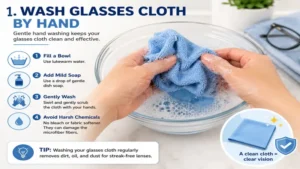
Option A: The Step-by-Step Hand Restoration Protocol
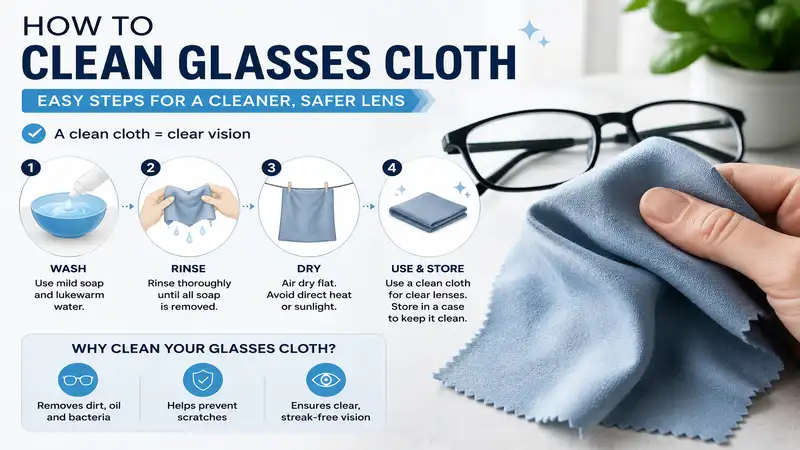
To restore your optical cloth back to its factory baseline without damaging its microscopic capillary structure, follow this precise, field-tested hand washing sequence once every two weeks.
[Gather Materials: Clear Dish Soap & Lukewarm Water]
                         │
                         ▼
[Step 1: 10-Minute Soak in Warm Water (105°F / 40°C)]
                         │
                         ▼
[Step 2: Apply 2 Drops of Clear, Lotion-Free Dish Soap]
                         │
                         ▼
[Step 3: Agitate Gently by Rubbing the Fabric Against Itself]
                         │
                         ▼
[Step 4: Continuous Rinse Under Running Water for 120 Seconds]
                         │
                         ▼
[Step 5: Press Flat Between a Clean Towel (Do NOT Wring)]
                         │
                         ▼
[Step 6: Air Dry Indoors in a Dust-Free Environment]
Step 1: Pre-Soak and Temperature Calibration
Fill a clean glass bowl with lukewarm water calibrated to roughly 105°F (40°C). Avoid hot water, as excessive heat can melt the ultra-fine synthetic polyamide fibers, welding the split wedges together into a solid, non-absorbent plastic mass. Submerge the cloth entirely and let it sit for 10 minutes to loosen hardened facial sebum.
Step 2: Chemical Selection and Agitation
Apply exactly two drops of a clear, dye-free, lotion-free dish soap (such as classic blue Dawn) directly to the fabric.
Pro-Tip: Never use moisturizing hand soaps or specialized laundry detergents. These products contain essential oils, skin conditioners, or optical brighteners that coat the microfibers, permanently ruining their natural static charge.
Gently rub the cloth against itself using a circular motion for two minutes, focusing heavily on the center zone where lens contact occurs most frequently.
Step 3: The Critical Extraction Rinse
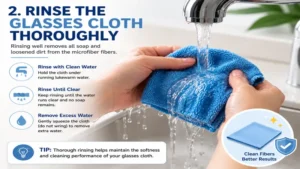
Hold the fabric under a steady stream of cool running water for at least two full minutes. Microfiber is incredibly efficient at holding onto soap bubbles; any surfactant residue left behind will create severe streaking the next time you wipe your glasses. Squeeze the cloth gently between your palms—never wring or twist it violently, as this stretches out the internal polyester matrix and distorts its shape.
Step 4: Dust-Free Drying Setup
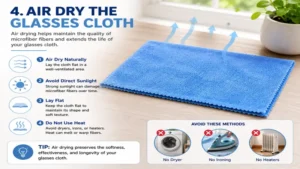
Lay the rinsed cloth flat onto a clean, lint-free bath towel, fold the towel over it, and press down firmly to extract the bulk of the moisture. Hang the cloth indoors using a plastic clip in an area with stable, static air (like a bedroom or closet). Avoid drying it outdoors or near open windows, as the cloth’s native static charge will instantly pull pollen, dust, and wild pet dander right out of the breeze.
Option C: The Problem-to-Solution Troubleshooting Guide
Even seasoned eyewear owners encounter frustrating issues when managing their cleaning supplies. Here is how to diagnose and correct the most common microfiber failures using advanced material science principles.
Problem 1: The Cloth Leaves a Greasy, Smeary Film Across the Lens
-
Root Cause: The internal capillary channels of the fabric are completely saturated with a combination of skin oils, facial moisturizers, or heavy sunscreen components.
-
The Fix: Execute the Hand Restoration Protocol detailed above, but add a preliminary 5-minute soak in water mixed with a single tablespoon of white distilled vinegar. The acetic acid acts as an incredibly effective solvent, breaking down complex lipid bonds without harming the synthetic polymer fibers.
Problem 2: The Cloth Feels Scratchy or Attracts Static Lint
-
Root Cause: The fabric was accidentally dried on high heat or exposed to a commercial fabric softener sheet in a dryer, which melted the microscopic fiber tips into hard, abrasive points.
-
The Fix: Unfortunately, melted synthetic filaments cannot be repaired. To prevent this, implement a strict “Air Dry Only” rule for all optical textiles. If the stiffness is caused by hard mineral water deposits rather than heat damage, you can soften the cloth by boiling it in a pot of distilled water for exactly three minutes.
Problem 3: The Cloth Sheds Tiny White Fibers onto Freshly Cleaned Glass
-
Root Cause: Structural degradation along the perimeter edges, typically caused by friction against rough surfaces or low-quality stitched borders unraveling.
-
The Fix: Trim away loose perimeter threads using ultra-sharp sewing shears, or transition exclusively to laser-cut, borderless alternatives like the MagicFiber model. Always wash microfibers inside an enclosed mesh laundry bag if you absolutely must use a washing machine.
The Hidden Cost of Neglect: Microfiber Longevity Roadmap
When you invest in high-quality optical gear, understanding the total cost of ownership involves looking past the initial price tag to see how your maintenance habits affect the lifespan of your gear.
[New Cloth] ──► [3 Months: Oil Saturation] ──► [6 Months: Friction Wear] ──► [12 Months: Fiber Fatigue]
     │                    │                               │                             │
  Baseline            Needs Soap                       Requires                       Retire to
 Efficiency          Wash Rescue                     Vinegar Rinse                  Keyboard Duty
During the first three months of daily use, a premium microfiber cloth operates at peak efficiency, easily removing grease using its factory-set electrostatic charge. By month six, however, the fabric encounters structural friction wear from rubbing against frame hinges and nose pads. If you wash your cloth using regular laundry detergent during this period, residual surfactants build up inside the fibers, causing a permanent drop in performance. This buildup creates an “efficiency gap,” forcing you to press harder against your lenses to clean them, which accelerates the wear on your expensive anti-reflective coatings.
By month twelve, individual synthetic filaments suffer from material fatigue, losing their structural elasticity and capacity to hold onto oils. At this point, the smartest financial move is to retire the cloth from eyewear duty and relegate it to cleaning less sensitive surfaces, like desktop keyboards or computer mice.
Option B: Real-World Scenario / Target Audience Guide
Different lifestyles subject eyewear and cleaning fabrics to vastly different types of debris. Matching your daily routine to the right cleaning method ensures your lenses stay safe and clear.
Scenario 1: The Corporate Desk Professional
-
Environmental Factors: Low-humidity air conditioning, high exposure to digital screen glare coatings, constant contact with finger oils and facial cosmetics.
-
The Strategy: Keep a compact, high-density flat-weave cloth (like the SecurOMax) resting flat inside your desk drawer. Because your primary contaminant is smooth facial oils rather than abrasive grit, clean your cloth once every three weeks using the Hand Restoration Protocol.
Scenario 2: The Outdoor Adventure Enthusiast or Field Engineer
-
Environmental Factors: High exposure to coarse mineral dust, salt spray, sweat, and heavy zinc-based sunscreens.
-
The Strategy: Deploy a plush, high-pile fabric option (like the Koala Lifelike) to safely lock away abrasive grit. You must thoroughly rinse the cloth with fresh water after every single outdoor excursion to remove trapped sand particles before they can scratch your lenses. Wash it thoroughly with dish soap twice a week.
Scenario 3: The High-Volume Family Household
-
Environmental Factors: Sticky fingerprint smudges, peanut butter residues, frequent loss of cleaning supplies, and accidental laundry mishaps.
-
The Strategy: Purchase a budget-friendly bulk pack of individually wrapped textiles (like the Care Touch set). Keep them stashed in glove boxes, kitchen drawers, and backpacks. Because these cloths are often misplaced or accidentally tossed into standard laundry loads, a bulk supply ensures you always have a fresh, unsoiled cloth on hand.
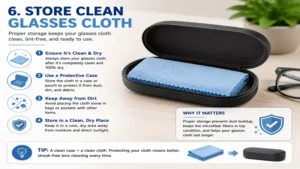
Features That Actually Matter vs. Marketing Hype
Navigating the optical accessory market requires a sharp eye to cut through confusing marketing jargon. Let’s look at which features actually improve performance and which ones are just fluff designed to inflate prices.
1. Polyamide Content vs. Pure Polyester
Many generic, ultra-cheap cloths are made from 100% polyester. While polyester is effective at sweeping away moisture, it lacks the true oil-binding capacity of polyamide (nylon). Look for a clear blend signature, ideally an 80/20 or 70/30 split ratio. The presence of polyamide creates a highly active molecular attraction that grabs onto oils, pulling them away from the lens surface rather than just smearing them around.
2. The Myth of “Infused Antibacterial Silver”
Several brands charge a premium for cloths supposedly infused with silver nanoparticles designed to kill bacteria. In a lab setting, silver does exhibit antimicrobial properties; however, on an dry eyeglass cloth, these ions do very little to remove the actual oils and skin flakes clouding your vision. Save your money and pass on these expensive treatments. Instead, rely on a simple, physical soap-and-water wash to keep your cloth clean and hygienic.
3. GSM Weight Metrics
GSM (grams per square meter) measures the physical density of the fabric. Any fabric falling below 130 GSM will feel thin, flimsy, and saturate with oil after just a few wipes. Conversely, anything over 300 GSM behaves more like a thick bath towel, making it too bulky to slide into tight corners near the nose pads of your frames. The ideal sweet spot for optical maintenance sits firmly between 180 GSM and 240 GSM.
✨ Don’t Miss These Exclusive Deals!
🔍 Take your eyewear maintenance to the next level with these carefully selected products. Click on any highlighted item to check current pricing and availability. These tools will help you create authentic visual clarity your family will love!
Common Mistakes When Buying Eyewear Microfibers
The single biggest mistake consumers make is purchasing large, multi-use utility microfiber towels from automotive sections or home hardware aisles, thinking they are identical to optical fabrics. While they share a similar name, automotive microfibers feature a much looser, looped knit designed to lift heavy mud and car wax. When used on delicate eyeglasses, these coarse loops can snag on frame screws or catch tiny pieces of grit, dragging them across your lenses and creating micro-scratches that ruin anti-reflective coatings.
Another widespread pitfall is relying on pre-moistened single-use paper tissues. Many of these products are derived from wood pulp, which contains microscopic wood fibers that act like a mild abrasive on sensitive plastic lenses. Over a few months, this abrasive action creates a hazy halo effect across the center of your lenses, visible whenever you face oncoming headlights or bright light sources. Stick exclusively to dedicated optical fabrics with heat-sealed borders to keep your vision crisp and clear.
What to Expect: Real-World Performance Cycles
When you implement a proper microfiber maintenance routine, your gear undergoes a predictable performance cycle. On day one after a proper hand wash, the cloth will feel slightly stiffer and dry to the touch. This dryness indicates that the capillary channels are completely open and ready to absorb oils. The very first wipe across an oily lens will immediately feel smooth and secure, leaving a crystal-clear surface in a single pass.
[Freshly Washed Cloth] ──► [Wipes 1-15: Flawless] ──► [Wipes 16-30: Slight Drag] ──► [Wipe 31+: Smearing Begins]
After roughly fifteen to twenty uses, the fabric begins accumulating a baseline layer of skin oils. You will notice a slight drag or friction resistance as you wipe your glasses. This drag is a helpful indicator that the fabric is nearing its holding capacity. By the time you reach thirty uses without a wash, the cloth will begin leaving faint, iridescent streaks along the edges of the lenses under bright light. This streaking is your cue to wash the cloth; continuing to use it past this point will simply transfer oils back onto your glasses.
Long-Term Cost & Coating ROI Analysis
Investing time into properly cleaning your optical cloths offers a fantastic return on investment by extending the lifespan of your expensive prescription eyewear. A top-tier pair of progressive lenses outfitted with high-end anti-reflective, blue-light filtering, and scratch-resistant coatings can easily cost between $300 and $600 out of pocket. If you clean these lenses with a dirty, grit-filled cloth or abrasive paper towels, those premium coatings can break down in less than a year, forcing an expensive premature replacement.
[Proper Maintenance Pathway] ──► Lens Lifespan: 3-5 Years (Saves hundreds in early replacements)
[Neglected Cloth Pathway]     ──► Lens Lifespan: 9-12 Months (Coating degrades, creates costly lens replacement)
By taking just a few minutes to wash your microfiber cloths with a simple dish soap routine, you prevent abrasive grit from scratching your lenses and wearing down their protective treatments. This quick and easy habit keeps your expensive coatings working perfectly for three to five years, saving you hundreds of dollars in early replacement costs while ensuring you enjoy perfectly clear vision every single day.
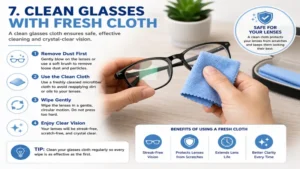
Frequently Asked Questions
❓ Can you wash glasses cloth with regular laundry detergent?
✅ No, you should avoid washing them with standard laundry detergents. These products contain fragrances, optical brighteners, and fabric softeners that leave a thin coating over the microfibers. This coating blocks the fabric’s tiny capillary channels and eliminates the natural static charge needed to lift away skin oils…
❓ How often should I clean my eyeglass microfiber cloth?
✅ For best performance, wash your cloth after every 20 to 30 uses. If you use your cloth daily, this translates to a quick rinse once every two weeks to prevent facial oils from building up and smearing your lenses…
❓ Is it safe to put optical cloths in a standard clothes dryer?
✅ No, you should always air dry your optical cloths. The high heat inside a clothes dryer can easily melt the ultra-fine synthetic fiber tips, turning them into hard, abrasive points that will scratch delicate lens coatings…
❓ Why does my microfiber cloth leave streaks after being washed?
✅ This streaking is usually caused by leftover soap residue trapped inside the dense weave. To fix this, rinse the cloth under warm running water for two full minutes while squeezing it gently to ensure all soap is completely removed…
❓ Can I use white vinegar to clean a heavily soiled cloth?
✅ Yes, white vinegar works wonders for restoring dirty cloths. Simply add a single tablespoon of white distilled vinegar to your warm soaking water to help break down stubborn oils and dissolve any lingering hard water mineral deposits…
Conclusion
Taking proper care of your microfiber cleaning cloths is the secret to maintaining crystal-clear vision and protecting your expensive eyewear investment. By replacing aggressive laundry chemicals and high dryer heat with a simple, gentle hand wash using basic dish soap, you keep the fabric’s microscopic structures working exactly as designed. This easy maintenance routine ensures your cloths safely lift away dirt and oils without scratching your lenses or wearing down their protective coatings. Keep a few clean, high-quality microfibers stashed in your desk, car, and home case so you always enjoy a perfectly clear view of the world.
Recommended for You
- 7 Expert Strategies: how to clean spectacles cloth in 2026
- 5 Best Car Wash Towels for Flawless, Scratch-Free Gloss (2026)
- 7 Best spectacle cleaning cloth Options for Flawless Vision in 2026
Disclaimer: This article contains affiliate links. As an Amazon Associate, I earn from qualifying purchases. If you purchase products through these links, we may earn a small commission at no additional cost to you.
✨ Found this helpful? Share it with your friends! 💬🤗