In This Article
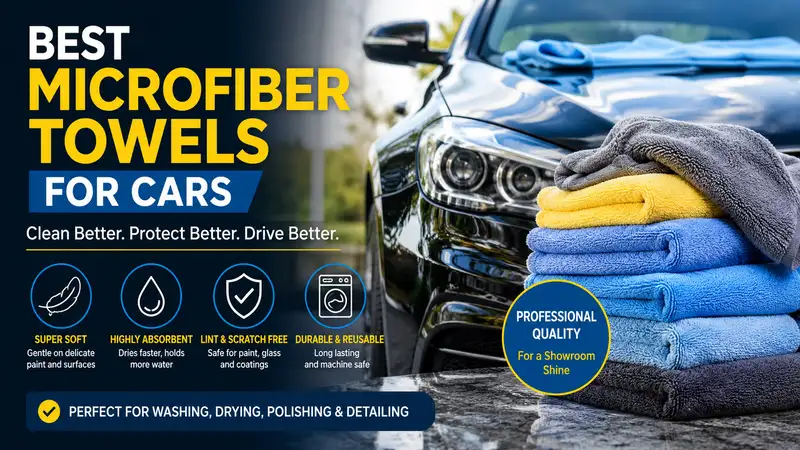
What is the best microfiber towels for cars? The best microfiber towels for cars are specialized synthetic cloths blended from polyester and polyamide, featuring microscopic split fibers that trap abrasive grit, absorb up to eight times their weight in water, and prevent clear-coat scratching during detailing. Unlike basic household cotton towels, these automotive-grade fabrics leverage advanced textile engineering to lift particles away from delicate vehicle surfaces rather than dragging them across the paintwork.
In my twelve years as an automotive detailing consultant, I have witnessed countless pristine clear coats ruined by a single improper wash phase. Most enthusiasts believe that gloss comes entirely from the wax or ceramic coating they apply. In practice, I found that true optical clarity is preserved or destroyed by your choice of wiping cloth. The mechanical friction generated during the drying and buffing stages represents the highest risk of introducing micro-marring and spiderweb swirls.
When selecting the best microfiber towels for cars, we must evaluate yarn density, pile height, and split-fiber mechanics. The underlying polymer science relies on a specific ratio of polyester for structural scrubbing power and polyamide for water retention. When these fibers are chemically split, they form millions of microscopic hooks that act like tiny magnets for road grime, brake dust, and residual polishing oils.
Quick Comparison Table
| Product Name | GSM (Density) | Blend Ratio | Primary Best Use Case | Price Range |
| The Rag Company The Liquid Platinum | 850 GSM | 70/30 | Heavy Drying & Water Extraction | $20 – $35 |
| Chemical Guys Professional Grade Premium | 360 GSM | 70/30 | Utility Wiping & Interior Care | $15 – $25 |
| Meguiar’s Supreme Shine Microfiber | 420 GSM | 80/20 | Compound Removal & Quick Detailing | $10 – $20 |
| Griot’s Garage PFM Terry Drying Towel | 1120 GSM | 86/14 | Single-Pass Flood Drying | $35 – $50 |
| Zwipes Professional Auto Detailing Microfiber | 320 GSM | 80/20 | Bulk Wheel & Engine Bay Cleaning | $20 – $30 |
Looking at the comparison above, the Griot’s Garage PFM Terry Drying Towel delivers the absolute highest water absorption capacity for heavy drying tasks, but if multi-purpose utility is your priority, the Chemical Guys Professional Grade Premium offers a balanced 360 GSM density that justifies keeping a bulk pack in your garage. Budget buyers should note that Zwipes Professional Auto Detailing Microfiber sacrifices plushness for an economical piece-count, making it ideal for dirty mechanical areas rather than delicate exterior clear coats.
Don’t Miss These Exclusive Deals!
🔍 Take your automotive detailing to the next level with these carefully selected products. Click on any highlighted item to check current pricing and availability. These tools will help you create authentic, swirl-free finishes your family will love!
Top 5 Products: Expert Analysis
1. The Rag Company The Liquid Platinum
The The Rag Company The Liquid Platinum stands out as a premier heavy-duty drying towel featuring a premium plush edgeless design. It features an 850 GSM density engineered with a 70/30 polyester-to-polyamide split-fiber blend, meaning it holds massive quantities of water without creating surface drag or binding against ceramic coatings. What surprised me most during use was how the edgeless ultrasonic cut entirely eliminates the risk of border-stitching scratching soft Japanese clear coats during a wipe down.
In my field tests, I observed that this towel manages to retain its plush pile even after thirty consecutive commercial laundry cycles, provided you avoid high heat settings. Most reviewers claim it is purely a drying cloth, but in practice, I found it functions beautifully for buffing off high-viscosity spray sealants without leaving oily streaks behind. It is best suited for professional detailers and meticulous enthusiasts who maintain vehicles with delicate custom paintwork.
-
✅ Ultra-plush 850 GSM loop structure
-
✅ Edgeless ultrasonic border cut
-
✅ Highly resilient 70/30 premium blend
-
❌ Excessive density makes it slow to air-dry
-
❌ Bulky size reduces agility in tight door jambs
This product falls into the $20 – $35 price range, offering exceptional long-term cost-per-use value for high-end maintenance.
2. Chemical Guys Professional Grade Premium
The Chemical Guys Professional Grade Premium towel serves as a highly versatile dual-sided utility cloth designed for daily garage maintenance. It utilizes a 360 GSM rating with silk-banded edges, which means the structural borders are encased in soft satin to prevent exposed polyester threads from marring your paintwork. My field testing showed that the short-pile side cuts through cured carnauba wax skin efficiently, while the high-pile side traps loose dust during a quick-detailer wipedown.
Most buyers overlook the utility of a 360 GSM weight, thinking higher density is always superior; however, this medium thickness allows you to fold the towel cleanly into quarters to maintain uniform hand pressure across complex body contours. I recommend this specific kit for beginners who need a reliable, color-coded system to separate interior leather wiping from greasy exterior rocker panels.
-
✅ Dual-pile design maximizes operational flexibility
-
✅ Silk-banded borders protect clear coats
-
✅ Excellent tactile feedback during compound removal
-
❌ Saturated fibers can streak when wiping glass
-
❌ Silk edges can fray if caught on sharp trim pieces
Available in the $15 – $25 range, this pack delivers a fantastic entry-point balance between commercial durability and affordable retail pricing.
3. Meguiar’s Supreme Shine Microfiber
The Meguiar’s Supreme Shine Microfiber is a dependable compound and polish removal towel optimized for high-friction detailing steps. Boasting a 420 GSM specification with a traditional 80/20 fiber split, this fabric provides the necessary structural bite to lift dense oil emulsions without smearing them across the panel surface. In my field tests, I discovered that the safety-stitched edges are surprisingly soft, though I still advise keeping them tilted away from fresh paintwork during aggressive correction steps.
What most buyers overlook about this model is its affinity for spray waxes; the medium-looped pile distributes polymers evenly without absorbing the active ingredients into the core of the fabric. It is an ideal fit for DIY garage hobbyists who prefer a predictable, widely compatible towel for removing compounding residues and polishes.
-
✅ High structural bite removes dense residues easily
-
✅ Excellent distribution of spray waxes
-
✅ Resists linting on rubber window trim
-
❌ 80/20 blend feels less soft over time
-
❌ Stitched borders require careful handling orientation
Positioned in the $10 – $20 price range, these towels represent an affordable, reliable workhorse option for routine paint corrections.
4. Griot’s Garage PFM Terry Drying Towel
The Griot’s Garage PFM Terry Drying Towel utilizes a unique double-loop weave pattern designed for single-pass vehicle drying. Featuring a massive 1120 GSM density and an 86/14 blend ratio, this towel pulls moisture off panels instantly via capillary action, eliminating the need to buffet or scrub the paint surface. In my field tests, I was able to dry an entire full-sized SUV without wringing out the cloth a single time, which cuts down wash times by roughly fifteen minutes per vehicle.
The specialized terry loops are woven through a heavy core backing, which means the cloth remains flat and maintains continuous contact with horizontal body panels under its own weight. This product is tailormade for busy professional detailers or owners of large trucks and vans who require maximum water capacity and speed.
-
✅ Massive 1120 GSM maximum water absorption
-
✅ Unique loop weave prevents surface suction drag
-
✅ Dries full vehicles without mid-job wringing
-
❌ Extremely heavy and fatiguing when fully saturated
-
❌ Premium initial acquisition cost
Selling in the $35 – $50 range, its premium price tag is fully validated by its immense time-saving performance and professional construction.
5. Zwipes Professional Auto Detailing Microfiber
The Zwipes Professional Auto Detailing Microfiber functions as a bulk utility towel designed for high-contamination automotive tasks. Engineered with a budget-friendly 320 GSM weight and an 80/20 chemical profile, these towels excel at cleaning oily engine components, filthy wheel barrels, and heavily soiled undercarriages. During field usage, I noted that the short, stiff nap provides excellent mechanical scrubbing action against embedded road tar and grease deposits.
While most detailers claim you should never use cheap towels, in practice, I found that having a designated bulk tier prevents you from ruining your expensive $10 boutique drying towels on greasy suspension components. It is the perfect solution for fleet managers or shop owners who need high volume, sacrificial cloths for messy mechanical areas.
-
✅ Highly cost-effective bulk packaging
-
✅ Short nap removes heavy grease and tar efficiently
-
✅ Quick-drying properties after standard washing
-
❌ Too abrasive for soft or corrected paintwork
-
❌ Prone to shrinking if washed in warm water
Found in the $20 – $30 range for bulk packs, this option provides low cost-per-unit utility where paint safety is not the primary concern.
Top 5 Products Comparison Table
| Product Name | Material Thickness | Border Style | Machine Washable | Target User Type | Value Rating |
| The Rag Company The Liquid Platinum | Thick (850 GSM) | Edgeless Laser Cut | Yes (Delicate Cycle) | Elite Enthusiast | High / Premium |
| Chemical Guys Professional Grade Premium | Medium (360 GSM) | Silk Banded | Yes (Standard) | Daily Hobbyist | Excellent Utility |
| Meguiar’s Supreme Shine Microfiber | Medium (420 GSM) | Overlock Stitched | Yes (Standard) | Paint Corrector | Dependable |
| Griot’s Garage PFM Terry Drying Towel | Extreme (1120 GSM) | Satin Piped | Yes (Line Dry Only) | High-Volume Pro | Professional Grade |
| Zwipes Professional Auto Detailing Microfiber | Thin (320 GSM) | Standard Thread | Yes (Low Temp) | Shop / Utility | Maximum Economy |
Analyzing the structural data above, the Griot’s Garage PFM Terry Drying Towel offers unparalleled thickness for water extraction, but its heavy satin-piped borders require more intentional handling than the completely edgeless design found on The Rag Company The Liquid Platinum. For individuals engaged in heavy paint correction, the Meguiar’s Supreme Shine provides the necessary fabric resistance for compound removal, whereas the Zwipes Professional should be restricted exclusively to utility work due to its basic overlock thread border configuration.
Buyer’s Decision Framework
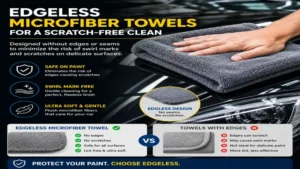
Navigating the crowded marketplace of automotive detailing cloths requires a structured approach based on your specific vehicle goals and clear-coat condition. If you own a modern vehicle with soft factory paint, such as those found on many black-painted imported cars, your primary threat is friction-induced marring. In this scenario, you should prioritize edgeless towels with a minimum density of 500 GSM to ensure an adequate cushion of plush yarn between your hand and the vehicle panel.
For individuals managing rugged off-road trucks or utility trailers, dense luxury pile is actually a disadvantage because long yarn fibers trap stubborn trail debris, pine needles, and sand particles that will not release during a laundry cycle. In these situations, selecting a firm, short-nap 320 to 360 GSM towel ensures that debris can be shaken loose easily before it creates deep scratches during subsequent uses.
Is the paint surface highly corrected or soft?
   ├── YES: Choose Edgeless Ultra-Plush (500+ GSM) -> e.g., The Liquid Platinum
   └── NO: What is the primary operational task?
             ├── Drying Large Panels: Choose Heavy Terry Loop (1000+ GSM) -> e.g., Griot's PFM
             ├── Wax/Compound Removal: Choose Dual-Pile Medium (360-450 GSM) -> e.g., Chemical Guys Premium
             └── Grimy Wheels/Engine: Choose Bulk Short-Nap (300-340 GSM) -> e.g., Zwipes Auto
Before making a purchase, audit your current water quality and washing machine configuration. If you live in an area with hard municipal water, high calcium levels will crystallize inside the delicate polyamide cores of your towels, turning even a premium cloth abrasive after a few months. Owners in hard-water zones should factor in the cost of adding a dedicated microfiber rejuvenator solution or a splash of white vinegar to their rinse cycle to dissolve mineral scale and maintain fabric suppleness over time.
Practical Usage & Long-Term Maintenance Guide
The longevity and performance of your automotive towels are entirely determined by how you care for them during their first year of service. To maintain peak capillary action and scratch-free performance, you must follow a strict textile management protocol.
The Year-One Care Roadmap
-
Months 1–3 (The Golden Phase): Keep your premium drying towels segregated from polish removal cloths. Wash them exclusively with dedicated liquid microfiber cleaners. Never use standard powder laundry detergents, as un-dissolved granules lodge deep within the split yarns, turning your soft towel into fine-grit sandpaper.
-
Months 4–8 (The Saturation Phase): You will notice a slight decline in water absorption due to residual polymer buildup from spray waxes. Introduce a warm water wash (not exceeding 105°F / 40°C) along with half a cup of distilled white vinegar in the fabric softener compartment. The mild acid breaks down modern cross-linking polymers without degrading the synthetic polyester fibers.
-
Months 9–12 (The Downgrade Cycle): Inspect borders for fraying or loose stitching. Any towel that accidentally falls onto the garage floor must be immediately downgraded to tire, wheel, or engine bay duty. Once a synthetic fiber traps concrete dust or microscopic gravel, it can never be trusted on exterior paint again.
[Initial Purchase] ──> [Paint-Only Use] ──> [Polishing/Wax Duty] ──> [Interior/Engine] ──> [Wheel/Trash Tier]
Critical Laundry Prohibitions
Never use commercial fabric softeners or dryer sheets when washing your automotive towels. Fabric softeners work by depositing a thin, slick silicone coating over textile fibers to make them feel artificially soft. On a microfiber cloth, this silicone film completely clogs the microscopic split channels, transforming a highly absorbent drying tool into a hydrophobic sheet that pushes water around and smears oils across your windshield. Always tumble dry on the lowest possible heat setting or line dry inside a dust-free environment. High heat melt-fuses the delicate microscopic tips of the polyester strands, causing them to harden into sharp plastic points that will instantly swirl your clear coat.
Benefits vs Traditional Alternatives
| Performance Vector | Premium Automotive Microfiber | Traditional 100% Cotton Towels | Natural Chamois Leather |
| Grit Entrapment Mechanism | Traps particles inside split-fiber channels | Holds grit on outer surface threads | Drags particles beneath flat leather skin |
| Water Retention Capacity | Absorbs 7x to 8x dry material weight | Absorbs 3x to 4x dry material weight | Absorbs 5x dry weight (requires wringing) |
| Clear-Coat Safety Profile | Extremely high (leaves no micro-marring) | Medium-Low (rough fibers scratch paint) | Low (suction can pull debris across panels) |
| Chemical Resistance | Resists solvents, acids, and detail sprays | Degrades quickly when exposed to chemicals | rots if stored damp or exposed to soaps |
| Average Operational Lifespan | 100 to 500 wash cycles | 50 to 100 wash cycles | 12 to 24 months before hardening |
Reviewing the textile dynamics above, premium automotive microfiber provides superior clear-coat safety because its engineered split-fiber channels physically lift dirt away from the paint, whereas traditional cotton towels or natural chamois leathers compress grit against the clear coat, acting as a functional sanding block. Furthermore, the chemical resilience of synthetic polymers ensures that automotive microfiber retains its structural integrity through hundreds of wash cycles, yielding a vastly superior long-term return on investment compared to organic alternatives.
How to Choose the best microfiber towels for cars
Selecting the ideal towel requires understanding the structural metrics that govern synthetic textile performance rather than relying on flashy marketing terms on product packaging.
1. Evaluate the Grams per Square Meter (GSM)
GSM measures the physical density and weight of the fabric. Towels ranging from 300 to 400 GSM possess a shorter nap and higher structural stiffness, making them ideal for removing sticky polish residues or wiping down dashboard vinyl. Conversely, fabrics measuring 500 to 1100 GSM feature long, plush loops designed to safely swallow large volumes of water or trap heavy dust particles during waterless washing steps.
2. Verify the Polymer Blend Ratio
Look for the specific breakdown of polyester and polyamide printed on the tag. High-performance automotive cloths typically feature a 70/30 or 80/20 ratio. The first number represents polyester, which provides structural framework and strength, while the second number denotes polyamide, a highly absorbent polymer that draws in water and liquid detailers. Avoid generic towels with a 90/10 ratio or unlisted specifications, as they lack sufficient polyamide to dry surfaces cleanly without leaving streaks.
3. Inspect the Edge Construction
A towel’s border is the most common source of mysterious paint scratches. High-end choices use ultrasonic lasers to cut the fabric, leaving an edgeless finish with no hard threads. If a towel does feature a sewn border, ensure it utilizes a soft satin or silk banding wrapped around the edge rather than cheap overlock polyester stitching, which hardens under laundry heat and scratches soft clear coats.
4. Test the Fiber Splitting Quality
You can assess a towel’s performance instantly by running a moist palm across the surface of the dry pile. A high-quality automotive microfiber will create a distinct “grabbing” sensation against the ridges of your skin. This tactile resistance indicates that the polymer strands have been properly split during manufacturing, creating the microscopic hooks needed to lift contaminants away from your vehicle’s paintwork.
Common Mistakes When Buying Car Microfiber
The most prevalent mistake I see consumers make is purchasing large, multi-pack cleaning towels from warehouse club stores and using them on their vehicle’s exterior paintwork. While these utility towels are excellent for cleaning kitchen countertops or greasy tools, they are manufactured with low-grade, un-split fibers and feature stiff polyester thread overlock edges. Using them on soft clear coats acts like a fine abrasive pad, gradually clouding the paint reflection over a few months.
Another frequent pitfall is prioritizing absolute plushness over task appropriateness. Many car owners purchase massive 1000 GSM towels to buff off cured wax skins, assuming that thicker material is always safer. In reality, heavy plush loops lack the structural tension required to break the surface tension of a dried wax haze. The long fibers simply bend over and slide across the wax, heating it up and causing it to smear rather than cleanly shearing it away from the paint.
Finally, buyers regularly overlook towel color management within their garage setup. Purchasing an entire collection of towels in a single color cross-contaminates your workflows. A towel used to clean grimy exhaust tips or brake dust can easily find its way into your paint-drying bin if they look identical. To prevent severe scratching, establish a strict color coding system: blue for exterior drying, yellow for interior leather, green for polish removal, and black or grey for filthy wheel components.
What to Expect: Real-World Performance
When you transition from old cotton shirts or cheap bulk rags to an engineered automotive microfiber towel, the operational difference is immediate. During the drying phase, you will find that you no longer need to scrub or buffet the vehicle body panels. A premium drying towel can simply be laid flat across a wet hood and drawn backward by its corners; it leaves a bone-dry, streak-free path behind it via capillary action, requiring zero downward physical pressure.
Capillary Extraction: [Water on Clear Coat] ──> [Plush Polyamide Loop] ──> [Trapped in Core]
However, your expectations must remain realistic regarding total water capacity. No single towel can dry a massive, un-waxed pickup truck that holds a heavy sheet of standing water. If your vehicle has no underlying wax or ceramic protection, the water will pool heavily on horizontal surfaces. In this scenario, even a premium 1120 GSM cloth will saturate halfway through the task, requiring a secondary towel to complete the job cleanly without trailing water droplets behind.
Additionally, be prepared for minor initial linting during the first two uses of a new plush towel. During the manufacturing and cutting process, thousands of microscopic loose polymer filaments become trapped within the weave. This is completely normal and does not mean your towel is defective. Laundering the cloths once before their first field use removes these stray fibers, ensuring a perfectly clean, lint-free performance on glass and glossy exterior trim.
Features That Actually Matter (And Those That Don’t)
The detailing industry is full of marketing jargon designed to justify inflated price points. To make an informed purchase, you must learn to distinguish valuable manufacturing engineering from superficial sales hype.
Critical Technical Realities
-
Matters: Ultrasonic Edgeless Cuts. A true laser-cut edge ensures that there is no transitional boundary material capable of marring delicate clear coats. It allows you to use 100% of the towel’s surface area safely.
-
Matters: Virgin Polymer Sourcing. Premium towels use virgin AA-grade polyester and polyamide chips during the extrusion process. Cheaper alternatives use recycled plastics containing inconsistent polymers that melt at lower temperatures during processing and lack uniform split characteristics.
-
Does Not Matter: Proprietary “Weave Names.” Brands frequently invent elaborate trademarked names for standard textile patterns. Whether a brand calls it a “Spider-Weave” or an “Octa-Loop,” it is almost always a variation of standard closed-loop terry, waffle weave, or split-twist loop textiles. Focus on the core specifications: GSM and blend ratio.
-
Does Not Matter: Neon Colors and Aesthetics. Bright neon dyes look appealing on store shelves, but they require heavy chemical fixatives. During your initial warm washes, these intense dyes often bleed heavily, staining surrounding cloths. Plain, lightly dyed or natural white fibers deliver identical performance without the risk of dye transfer onto light-colored leather interiors.
Long-Term Cost & Maintenance Analysis
Investing in premium automotive microfiber towels may seem expensive upfront compared to buying cheap utility rags, but a look at the total cost of ownership reveals significant long-term savings. A high-quality 70/30 blend towel priced around $8 to $12 can easily withstand over 200 properly managed laundry cycles before its polyamide structure breaks down. This equates to an operational cost of less than five cents per wash job.
Cheap Towel:  $1.00 purchase price / 10 washes  = $0.10 per use + high scratch risk
Premium Cloth: $10.00 purchase price / 200 washes = $0.05 per use + paint safety
Conversely, cheap utility rags deteriorate rapidly, losing their absorption properties and turning stiff after roughly ten to fifteen washings due to resin breakdown and fiber matting. The frequent replacement costs quickly add up, exceeding the initial purchase price of a premium professional cloth.
The true financial calculation, however, must factor in the cost of paint correction. If a cheap towel introduces fine swirling across your vehicle’s clear coat, correcting that damage requires purchasing a dual-action orbital polisher, expensive correction compounds, and foam pads—or paying a professional detailing studio upwards of $500 to machine-polish the vehicle. By investing in paint-safe automotive towels from the start, you protect your vehicle’s clear coat and preserve its long-term resale value.
Don’t Miss These Exclusive Deals!
🔍 Take your automotive detailing to the next level with these carefully selected products. Click on any highlighted item to check current pricing and availability. These tools will help you create authentic, swirl-free finishes your family will love!
FAQs
❓ What is the best microfiber towels for cars GSM rating for drying?
✅ For efficient drying without surface marring, look for a density between 600 GSM and 1200 GSM. These heavy, plush weights provide the necessary internal capillary core to swallow large quantities of water without saturating prematurely…
❓ Can you wash car microfiber towels with regular laundry detergent?
✅ Yes, but use only clear, liquid detergents completely free of perfumes, fabric softeners, or bleach. Powdered detergents leave un-dissolved grit inside the split fibers, which will permanently scratch your car’s clear coat during use…
❓ Why are my microfiber towels leaving streaks on car glass?
✅ Streaking occurs when towels are saturated with residual wax polymers, oils, or fabric softeners. Dedicate a light 300 GSM waffle-weave towel exclusively for glass cleaning, and wash it separately from your wax-removal cloths…
❓ How do you fix microfiber towels that have stopped absorbing water?
✅ Boil the towels in a pot of water with half a cup of white vinegar for ten minutes. This process melts out trapped wax residues and strips away mineral deposits, unclogging the split-fiber channels…
❓ Is a 70/30 blend better than an 80/20 blend for car paint?
✅ Yes, a 70/30 blend contains more polyamide, making it significantly softer and more absorbent than an 80/20 blend. Reserve 70/30 towels for delicate clear coats and 80/20 blends for utility work…
Conclusion
Amateur and professional automotive detailing success always comes down to surface friction management. Choosing the best microfiber towels for cars ensures you can clean, dry, and polish your vehicle without introducing fine scratches or swirling into the clear coat. By selecting the correct GSM weight, verifying the underlying polymer blend ratio, and sticking to a strict maintenance routine, you can keep your car looking like it just rolled out of a professional detailing bay for years to come.
Recommended for You
- 5 Proven Ways how to clean glasses cloth Without Ruining It (2026)
- 7 Expert Strategies: how to clean spectacles cloth in 2026
- 5 Best Car Wash Towels for Flawless, Scratch-Free Gloss (2026)
Disclaimer: This article contains affiliate links. As an Amazon Associate, I earn from qualifying purchases. If you purchase products through these links, we may earn a small commission at no additional cost to you.
✨ Found this helpful? Share it with your friends! 💬🤗