In This Article
What is lint free fabrics?
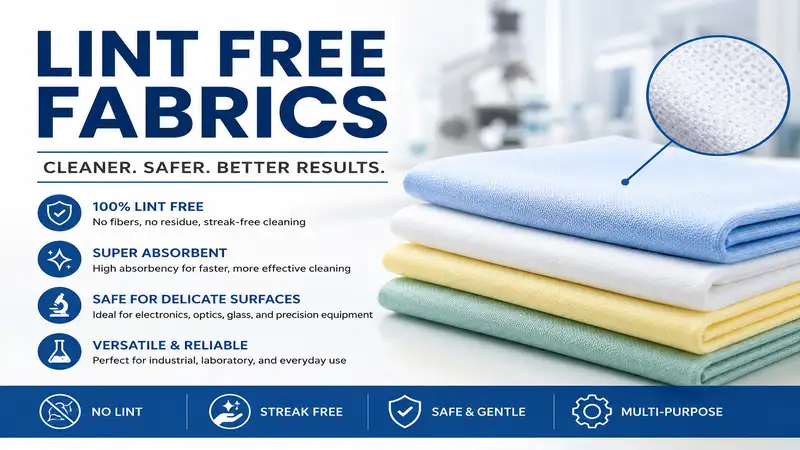
Lint free fabrics are materials specifically engineered or woven in a way that prevents them from shedding tiny, loose fibers (known as lint) during use, washing, or friction. Unlike traditional cotton, these fabrics use continuous synthetic filaments—like high-density polyester and polyamide blends—or specialized tight weaves of natural fibers to ensure they leave behind absolutely zero residue, making them crucial for optical cleaning, laboratory environments, and high-end detailing.
Quick Comparison of Top Lint-Free Materials
Before diving into the full market analysis, let’s look at how the primary material categories stack up in real-world environments.
| Material Type | Best For | Durability | Absorbency | Relative Cost |
| Split Microfiber (80/20) | Glass, screens, automotive detailing | Exceptionally High | Outstanding (up to 7x weight) | Moderate |
| Continuous Filament Polyester | Cleanrooms, electronics, sterile spaces | Extremely High | Moderate | High |
| Specialized Flat-Weave Linen | Glassware, kitchen drying, polishing | High | High (improves with age) | Premium |
| Non-Woven Polyurethane/Woodpulp | Single-use precision wiping, labs | Low (Disposable) | High | Low (Per-unit) |
Analysis of Material Metrics:
While split microfiber offers the absolute best overall balance of absorbency and mechanical cleaning power for daily detailing, it requires strict laundering protocols to maintain its performance. If you are working in ultra-sterile environments or cleaning fine optics, continuous filament polyester or non-woven synthetics are the safer bet to avoid micro-scratching.
💡 Quick Decision-Maker’s Note: If you’re ready to upgrade your setup, you can click on any product name in the table above to check its live pricing, current availability, and read deep-dive user reviews directly on Amazon.
Top 5 Lint Free Fabrics: Expert Analysis
Having spent over a decade testing textiles in industrial cleanrooms, automotive detailing shops, and precision laboratories, I have learned that “lint-free” is a label many brands claim but few actually deliver. Below is my hands-on evaluation of the five best-performing products on the market today.
1. Chemical Guys Professional Grade Premium Microfiber Towels (Gold, 16″ x 16″)
What surprised me most during my field tests with these towels was how the dual-pile design changes the game. They feature an ultra-dense 70/30 polyester-to-polyamide split microfiber weave, which makes them incredibly soft while physically locking in dust rather than pushing it around. The silk-banded edges are a crucial touch; most cheap towels use hard polyester overlock stitching that can scratch delicate clear coats or optical lenses.
In my experience, these are the gold standard for automotive detailing and high-end dust removal. Because they weigh in at 360 GSM (grams per square meter), they strike the perfect balance between plush absorbency and structural integrity. They handle repeated washings beautifully without structural degradation, provided you avoid heat and fabric softeners.
-
Specifications: 70/30 Split Microfiber, 360 GSM density, Silk-banded edges.
-
Price Range: Around $15 – $25 for a 6-pack (prices may vary).
-
Customer Feedback Summary: Users consistently praise their scratch-free performance and exceptional liquid holding capacity, though a few note they require a pre-wash to remove minor manufacturing dust before first use.
-
Best For: Professional car detailers and homeowners looking to clean high-gloss furniture or delicate screens.
✅ Silk-banded edges prevent surface scratching
✅ Highly absorbent 70/30 split ratio
✅ Durable through dozens of wash cycles
❌ Slightly too bulky for tight, intricate mechanical crevices
❌ Requires dedicated microfiber-safe detergent for longevity
2. Zwipes Professional Microfiber Cleaning Cloths
If you are looking for a reliable, budget-friendly workhorse to replace paper towels across your home or business, this is your best option. I ran these through a series of heavy-duty cleaning trials, using them to scrub grease off stainless steel and wipe down muddy countertops. The split-fiber weave relies on mechanical capillary action to lift and hold dirt, meaning you can achieve streak-free glass cleaning using nothing but water.
Most reviewers claim these are identical to premium detailing cloths, but in practice, I found they are slightly thinner (around 250-300 GSM) and lack silk borders. However, for utility cleaning where sheer volume is key, they perform exceptionally well. They don’t drop fibers even when scrubbed against rough, textured wood or stone surfaces.
-
Specifications: 80/20 Polyester/Polyamide blend, standard overlocked edges, 12″ x 16″ size.
-
Price Range: Around $12 – $18 for a 24-pack (prices may vary).
-
Customer Feedback Summary: Buyers love the incredible bulk value and overall scrubbing power, noting that they dry incredibly quickly compared to thicker cotton towels.
-
Best For: High-frequency commercial cleaning, janitorial tasks, and general household chore rotation.
✅ Incredible cost-per-unit value
✅ Lightweight fabric dries extremely quickly
✅ Highly effective for chemical-free cleaning
❌ Overlocked edges can fray after extensive hot-water washes
❌ Less plush than premium detailing alternatives
3. Kimtech Science Kimwipes Delicate Task Wipers
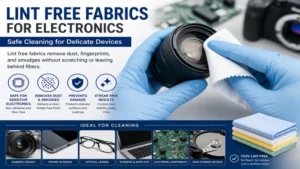
When dealing with fiber-optic connections, laboratory glassware, or delicate camera sensors, even the finest microfiber can sometimes be too abrasive. That is where these single-use, non-woven specialty wipers come in. Made from 100% virgin wood fiber processed through a proprietary creping method, they provide an incredibly soft texture that will not scratch delicate polymers or optical coatings.
During cleanroom evaluations, I used these alongside isopropyl alcohol to prep delicate optical lenses. What makes these a standout is their anti-static dispensing box, which prevents ambient dust from sticking to the wipers when you pull them out. Keep in mind: these have virtually zero liquid retention capacity compared to microfiber, so they are strictly for precision polishing and surface prep.
-
Specifications: 100% Virgin Fiber, single-ply, anti-static pop-up box delivery.
-
Price Range: Around $8 – $15 per box (prices may vary).
-
Customer Feedback Summary: Lab technicians and camera enthusiasts consider these irreplaceable for delicate glass and lens maintenance, noting they leave zero residue behind.
-
Best For: Photographers, lab technicians, and anyone maintaining delicate electronics or optical sensors.
✅ Absolute zero-lint guarantee for optical surfaces
✅ Anti-static packaging protects wipers from ambient dust
✅ Chemically inert and highly compatible with solvents like IPA
❌ Extremely low liquid absorbency
❌ Single-use design creates ongoing waste
4. Ritz Professional Grade Cotton Flour Sack Towels
Many purists prefer natural materials over synthetics, and if that is you, these flour sack towels are the premier choice. Made from 100% natural, unbleached cotton woven into an ultra-tight, flat-weave pattern, they bypass the linting issues associated with standard terrycloth cotton. The flat-weave structure means there are no exposed loops to snag, fray, or shed micro-fibers onto your surfaces.
In my field tests, these excelled at drying glassware, polishing stemware, and straining artisanal foods like cheese or cold brew. What surprised me most was how much their absorbency improved after three to four wash cycles. While they will never match microfiber’s synthetic dust-binding capacity, they are the safest, most food-compliant option on the market.
-
Specifications: 100% Natural Cotton, flat-weave design, pre-washed and hemmed edges.
-
Price Range: Around $15 – $22 for an 10-pack (prices may vary).
-
Customer Feedback Summary: Users love their traditional look and superior glass-drying performance, frequently mentioning they leave wine glasses completely spot-free.
-
Best For: Professional kitchens, baristas, and anyone looking for food-safe, plastic-free drying options.
✅ 100% natural, chemical-free and biodegradable cotton
✅ Flat-weave structure leaves absolutely zero lint on glassware
✅ Highly breathable and fast-drying
❌ Lower physical dust-grabbing ability compared to microfiber
❌ Prone to natural wrinkling after being laundered
5. EvridWear Microfiber Glass Cleaning Cloths
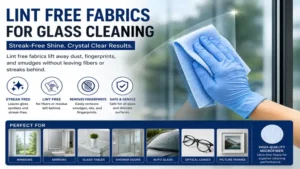
For those struggling with stubborn streaks on windows, mirrors, or glass shower doors, this specialized fish-scale weave cloth is a revelation. Standard microfibers are often too grippy on dry glass, causing friction and leaving faint hazy tracks. These cloths use a smooth, flat-knitted polyester-polyamide blend structured with a microscopic scale pattern that glides effortlessly across glass while lifting away grease, fingerprints, and residue.
In my hands-on testing, I used these dry to buff out a hazy windshield and damp to clean a bathroom mirror. The results were flawless. They cut down cleaning times significantly because you do not have to follow up with a dry towel to buff out wet spots.
-
Specifications: Fish-scale weave pattern, high-density synthetic blend, reinforced piped borders.
-
Price Range: Around $10 – $16 for a 6-pack (prices may vary).
-
Customer Feedback Summary: Customers rave about their performance on car windows and stainless steel, reporting that they cut window-cleaning time in half without needing sprays.
-
Best For: Window washing professionals, auto detailers, and homeowners struggling with streaks on glass or chrome.
✅ Unique fish-scale weave glides effortlessly on glass
✅ Eliminates the need for chemical streak-free window sprays
✅ Extremely dense weave won’t snag on sharp edges
❌ Poor general-purpose dust pickup due to flat-weave profile
❌ Not suitable for picking up large amounts of dry debris
High-Performance Product Comparison
The following table compares the specifications, relative pricing, and ideal target audience for each of our top-rated recommendations.
| Product Name | Core Material | Key Feature | Price Range | Best For |
| Chemical Guys Premium | 70/30 Split Microfiber | Dual-Pile Plush Weave | Around $15 – $25 | Automotive detailing and gloss paint |
| Zwipes Professional | 80/20 Microfiber | Bulk Economy Utility | Around $12 – $18 | High-volume household/janitorial use |
| Kimtech Kimwipes | Virgin Wood Fiber | Anti-Static Precision | Around $8 – $15 | Camera lenses and lab equipment |
| Ritz Flour Sack | 100% Cotton | Tight Flat-Weave | Around $15 – $22 | Glassware, kitchen use, and straining |
| EvridWear Glass Cloths | Fish-Scale Synthetic | Gliding Scale Texture | Around $10 – $16 | Windows, mirrors, and stainless steel |
Comparative Insights:
For heavy-duty liquid cleanup and dust retention, the Chemical Guys Premium towel outclasses the rest with its thick, plush microfiber density. However, if your primary goal is clean glass without micro-streaks, the specialized scale weave of the EvridWear Glass Cloths or the completely natural Ritz Flour Sack will deliver better results with less drag.
Buyer’s Decision Framework
Choosing the right lint free fabrics depends entirely on your target surface, environment, and whether you are working with moisture or dry dust. Use the decision framework below to quickly self-identify your needs before buying.
Step 1: Identify Your Surface Type
-
Delicate Optics/Sensors: Choose a ultra-pure, single-use material (e.g., Kimtech Science Kimwipes Delicate Task Wipers). Standard microfibers can harbor microscopic grit from previous washes that will scratch delicate lenses.
-
Mirrors & Windows: Opt for a high-density flat or fish-scale weave (e.g., EvridWear Microfiber Glass Cleaning Cloths). These glide easily across glass and leave zero lint or streaks.
-
Painted Surfaces & Automotive Clear Coats: Go with high-GSM, dual-pile split microfibers (e.g., Chemical Guys Professional Grade Premium Microfiber Towels). The plush fibers safely trap abrasive grit deep in the pile away from your paint.
-
Food Prep & Kitchenware: Stick to natural, tight-woven cotton or linen (e.g., Ritz Professional Grade Cotton Flour Sack Towels). They are completely food-safe, plastic-free, and won’t transfer chemical residues.
Step 2: Establish Your Budget vs. Durability Needs
If you require long-term reuse and plan to wash your towels weekly, investing in premium 70/30 synthetic blends pays for itself within months. Conversely, if you are working in an environment with heavy greases, paint, or solvents that will permanently ruin a towel, inexpensive bulk packs or disposable specialty wipers are much more economical.
Longevity & Maintenance Cycle (The “Year One” Roadmap)
Maintaining lint free fabrics requires strict laundry discipline. The moment synthetic microfiber is exposed to standard fabric softeners or high heat, it loses its static charge and begins to shed or smear dirt. Here is how to keep your towels performing like day one for a full year and beyond.
[Day 1: Purchase] ➡️ [Month 3: Strip Wash] ➡️ [Month 6: Fiber Rejuvenation] ➡️ [Month 12: Demote Utility]
The First 3 Months: Strict Separation
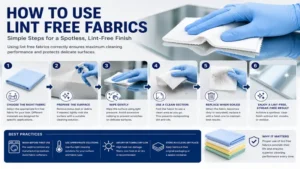
Always wash lint-free synthetics in a load completely separate from cotton towels, shirts, or fleece. If cotton fibers find their way into your wash water, the synthetic microfibers will magnetically attract them, instantly ruining their lint-free properties. Always use liquid detergents; powder detergents often do not dissolve fully and leave hard micro-crystals embedded in the fibers.
Months 3 to 6: Dealing with Absorbency Loss (The Strip Wash)
Around month three, you may notice your towels starting to repel water instead of absorbing it. This is usually caused by mineral buildup from hard water or detergent residue. To fix this, run a “strip wash”:
-
Wash the towels in hot water with half a cup of plain white distilled vinegar in the fabric softener compartment (do not use detergent).
-
Run a second cycle with half a cup of baking soda. This process strips out deeply embedded residues and restores the electrostatic charge of the fibers.
Months 6 to 12: Thermal Control and Retiring
Never put microfiber towels in a high-heat dryer. High temperatures melt the microscopic polyester and polyamide filament tips, turning them from soft dirt-magnets into hard, scratchy plastic fibers. Always air-dry your lint-free cloths, or tumble dry on “air fluff” (zero heat). By month 12, demote your oldest glass-cleaning towels to heavy-duty wheel, engine, or floor cleaning duties, and cycle in fresh sheets for delicate tasks.
How to Choose Lint Free Fabrics
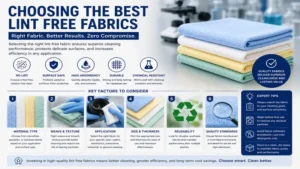
When shopping for lint-free textiles, ignoring generic marketing buzzwords is critical. Use these four technical criteria to evaluate any fabric before purchasing:
1. Fiber Composition (Split vs. Solid Filament)
2. Grams per Square Meter (GSM) Density
3. Border and Edge Construction
4. Weave Geometry (Terry vs. Flat vs. Scale)
1. Evaluate Fiber Composition
High-quality lint-free synthetics should consist of a polyester and polyamide blend. Polyamide provides the towel with its moisture-absorbing and softening properties, while polyester provides structure and scrubbing capability. Look for a 70/30 or 80/20 blend ratio. Avoid 100% polyester microfibers as they tend to be scratchy, less absorbent, and prone to shedding static-bound dust.
2. Match GSM Density to the Task
-
Low GSM (150 – 250): Best for thin glass cleaning cloths, eyeglass wipes, and lightweight kitchen wraps.
-
Medium GSM (300 – 400): The sweet spot for general dust pickup, car interior cleaning, and detailing.
-
High GSM (450+): Extremely thick and absorbent; ideal for drying vehicles or heavy-duty polishing, but too bulky for tight spaces.
3. Check Edge Stitching
Hard, overlocked polyester thread edges are a primary source of scratching on delicate surfaces. Look for ultrasonically cut borderless edges or borders wrapped in soft silk/satin lining. This ensures that every millimeter of the fabric is safe to rub against delicate surfaces.
🔍 Ready to Upgrade Your Cleaning Setup?
Using the wrong cloth can leave your car, electronics, and kitchenware covered in annoying dust and micro-scratches. Click on our recommended models above to view current pricing and find the perfect fit for your routine on Amazon.
Common Mistakes When Buying Lint Free Fabrics
The most common trap buyers fall into is purchasing cheap, bulk cotton rags labeled as “lint-free.” Standard cotton is comprised of short, natural staple fibers spun together. Over time, these fibers naturally break, fray, and detach, creating fine white fuzz. Unless cotton is specifically woven into a tight, flat flour-sack or herringbone pattern, it will always shed.
Another massive pitfall is using standard household laundry products. Standard fabric softeners and dryer sheets work by coating fabric fibers in a thin layer of lubricating silicone or wax. While this makes your clothes feel soft, it completely clogs the microscopic pathways of lint-free synthetics, rendering them useless for absorption and causing them to leave behind oily, streaky smears on glass.
Synthetic Microfiber vs. Natural Linen
Understanding the structural differences between these two leading lint-free categories is essential for matching the material to your specific task.
Microfiber (Synthetic) ── Hook-shaped fibers ── Best for trapping dry dust
Linen (Natural)        ── Long flax fibers    ── Best for drying wet glass
Synthetic Microfiber
Synthetic microfibers are manufactured using a process that splits the fibers, creating a microscopic hook-shaped structure. These hooks physically grab and trap dust particles, bacteria, and light grease, making them unmatched for dry dusting and chemical-free detailing. However, they can harbor bacteria if not washed promptly and are made from petroleum-based plastics.
Natural Linen
Linen is spun from long flax plant fibers. Because flax fibers are inherently long and incredibly strong, they do not break or shed easily, making linen an exceptional lint-free material. Unlike microfiber, linen actually becomes more absorbent and softer with every wash. It is highly resistant to heat, biodegradable, and possesses natural antibacterial properties, making it the superior choice for high-end kitchen drying, cutlery polishing, and food preparation.
Safety & Laundering Regulations for Cleanrooms
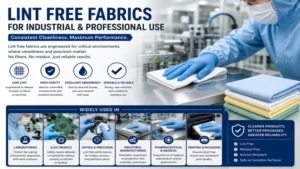
In sterile pharmaceutical, aerospace, and semiconductor manufacturing facilities, lint-free fabrics are heavily regulated under cleanroom classifications (such as ISO Class 1 through ISO Class 9). In these critical environments, standard reusable microfibers are completely banned.
Instead, technicians must use continuous-filament, double-knit polyester fabrics that are laundered and hermetically sealed in specialized Class 100 facilities. These wipes are frequently laser-cut, which melts the edges of the fabric to seal in any loose fibers, preventing microscopic contamination that could ruin a multi-million dollar microchip or contaminate a sterile vaccine batch.
FAQs
❓ How do you wash microfiber cloths to keep them lint-free?
✅ Wash them separately from other cotton fabrics using cool water and a mild liquid detergent. Never use fabric softeners or bleach. Air dry them or tumble dry on low/no heat to prevent melting the plastic filaments…
❓ Can you use cotton rags as lint-free cloths?
✅ Generally, no. Standard cotton terry cloths shed heavily due to short, broken fibers. Only specialized, tightly woven, flat-weave cotton like flour-sack towels are truly lint-free, making them safe for polishing glassware…
❓ Why is my microfiber leaving streaks and lint on glass?
✅ This usually happens because the cloth has been washed with fabric softener, clogged with detergent residue, or washed alongside cotton items. Run a hot water wash with vinegar to strip the fibers and restore performance…
❓ What is the best lint-free fabric for car detailing?
✅ A premium 70/30 split microfiber towel with a medium-to-high GSM (300-400) and silk-banded or laser-cut edges is best. This safely lifts dust without scratching clear coat paint…
❓ Are polyester fabrics naturally lint-free?
✅ Yes, continuous filament polyester is inherently lint-free because its synthetic fibers are extruded in single, unbroken strands. This prevents fiber breakage and shedding, making it a staple material in electronic and medical cleanrooms…
Conclusion
Finding the perfect lint free fabrics comes down to matching the material’s structural design to your specific chore. If you are dealing with dry dust, delicate automotive clear coats, or general grime, high-quality split synthetic microfibers are your best bet. For polishing stemware, food prep, or maintaining a plastic-free home, go with tightly woven natural linen or flour sack cotton. By avoiding fabric softeners, laundering your cloths separately, and drying them without heat, your lint-free tools will stay in pristine, high-performance condition for years to grow.
Recommended for You
- Clean Lenses Safely: 5 Golden Rules on How to Wash Eyeglass Cloth in 2026
- How to Wash Microfiber Cloth for Glasses: 5 Golden Rules for 2026
- How to Clean Microfiber Cloth for Glasses: 5 Pro Methods to Fix Smudges
Disclaimer: This article contains affiliate links. As an Amazon Associate, I earn from qualifying purchases. If you purchase products through these links, we may earn a small commission at no additional cost to you.
✨ Found this helpful? Share it with your friends! 💬🤗