In This Article
Have you ever wiped your glasses only to realize you are just moving oily smudges from one corner of the lens to the other? In my 10+ years of working as an optical care consultant, I have seen thousands of pristine lenses suffer permanent micro-scratches simply because someone forgot a fundamental rule: your cleaning tools require their own maintenance. A premium microfiber cloth acts like a microscopic magnet, lifting facial oils, dust, and environmental grime away from delicate optical coatings. However, that magnetic capability diminishes rapidly when the fabric becomes saturated with debris.
When people ask me how do you clean eyeglass cloths, they often expect a simple answer like throwing it into the nearest laundry machine. In practice, I found that standard residential laundering is the fastest way to ruin a high-end lens cloth. Standard detergents, fabric softeners, and high-heat drying cycles strip away the specialized properties of optical-grade microfiber, rendering it useless or, worse, abrasive.
To preserve your lenses and keep your vision crystal clear, you need an exact protocol that resets the fabric matrix without melting the synthetic filaments. Let’s explore the mechanical and chemical rules of keeping your optical fabrics in showroom condition.
Quick Comparison of Popular Eyeglass Cloths
Before diving into the detailed cleaning protocols, let’s look at the baseline structural differences between the most prominent eyeglass fabrics on the market. How you clean a cloth depends heavily on its density, weave type, and material blend.
| Cloth Brand & Model | Material Composition (Polyester/Polyamide) | Fabric Weave Type | Best For | Price Range |
| MagicFiber Microfiber Cloths | 80% / 20% | Ultra-Dense Flat Weave | Everyday Daily Smudge Removal | $8 – $15 (Multi-pack) |
| Koala Lifesilks Microfiber Cloths | 70% / 30% | High-Satin Japanese Weave | Multi-Coated Premium Lenses | $12 – $22 (Multi-pack) |
| SecurOMax Microfiber Cleaning Cloths | 80% / 20% | Brushed Split-Fiber Suede | Heavy Oil Absorption | $9 – $16 (Multi-pack) |
| E-Cloth Eyeglasses Cloth | 85% / 15% | Standard Ribbed Flat Weave | Large Surface Area Frames | $6 – $12 (Single/Twin) |
| Care Touch Microfiber Cleaning Cloths | 80% / 20% | Fine Knit Interlock | Budget-Conscious Bulk Backups | $7 – $14 (Bulk pack) |
Analysis of the Data: Looking at the data above, the Koala Lifesilks Microfiber Cloths deliver an exceptional 30% polyamide ratio that excels at grabbing skin lipids, but their delicate Japanese weave demands a gentler hand-washing technique. Budget-conscious buyers using the Care Touch Microfiber Cleaning Cloths can rely on their resilient knit construction for standard machine washes, though they lack the ultra-fine debris clearance of the flat-weave alternatives. If maximum oil extraction is your priority, the suede finish of the SecurOMax Microfiber Cleaning Cloths is the superior pick.
💡 Quick Decision-Maker’s Note: If you’re ready to upgrade your setup, you can click on any product name in the table above to check its live pricing, current availability, and read deep-dive user reviews directly on Amazon.
Top 5 Eyeglass Cloths: Expert Hands-On Analysis
1. MagicFiber Microfiber Cleaning Cloths
In my field tests, the MagicFiber Microfiber Cleaning Cloths consistently set the standard for daily optical maintenance. Featuring an ultra-dense, flat-weave construction, these sheets are designed specifically to pull away stubborn fingerprints without relying on liquid chemical sprays. What surprised me most during long-term use was how well the edges hold up; the saw-tooth pattern resists fraying even after dozens of manual rinses.
The 80/20 polyester to polyamide split is optimal for standard anti-reflective (AR) coatings. When you wipe a lens, the polyester provides structural scrubbing action while the polyamide structure generates a micro-electrostatic charge that locks onto airborne dust particles. This ensures that dirt isn’t scraped across your delicate lenses.
-
Key Specifications: 80% Polyester / 20% Polyamide blend, raw saw-tooth edges, 6×7 inch dimensions.
-
Price Range: Around $9 to $14 for standard multi-packs.
-
Customer Feedback: Users praise their ability to leave zero streaks on digital screens and glasses alike, though some note they get saturated quickly if exposed to thick facial lotions.
-
Expert Commentary: This is the ultimate baseline workhorse for student backpacks and office desks. I recommend assigning one cloth per room so you always have an unsaturated fabric within arm’s reach.
-
Use-Case Match: Best for general users looking for reliable, streak-free maintenance on standard corrective lenses.
✅ Exceptional dust attraction via native electrostatic properties.
✅ Fray-resistant saw-tooth borders require no hard stitched seams.
✅ Performs beautifully without requiring specialized lens cleaning solutions.
❌ Saturates slightly faster than thicker suede alternatives.
❌ Can become stiff if washed in hard water environments.
2. Koala Lifesilks Microfiber Cloths
Most reviewers claim that all microfiber cloths are functionally identical, but in practice, I found the Koala Lifesilks Microfiber Cloths to be in an entirely different tier of fabric engineering. Woven from high-grade Japanese yarn with a premium 70/30 split, these cloths have a silky texture that reduces drag across complex hydrophobic and oleophobic lens coatings.
During my evaluations, the higher polyamide content acted like a premium sponge for facial sebum. The fabric glides with minimal resistance, which reduces the mechanical pressure you apply to your eyewear frames. This property is crucial if you wear ultra-premium progressives with delicate, multi-layered glare filters.
-
Key Specifications: 70% Polyester / 30% Polyamide ultra-fine filament weave, overlocked stitch-free edges, oversized design.
-
Price Range: Available in the $12 – $20 range depending on pack size.
-
Customer Feedback: Audiophiles and camera enthusiasts rave about the scratch-free properties, while a minor segment notes that the ultra-smooth texture feels slippery to hold during vigorous wiping.
-
Expert Commentary: If you invest heavily in high-end frames and premium coatings, do not compromise with cheap fabric. This silk-like cloth provides the softest contact surface available.
-
Use-Case Match: Ideal for premium eyeglasses, professional camera lenses, and high-end anti-glare filters.
✅ Ultra-low friction weave preserves fragile exterior lens layers.
✅ Advanced 30% polyamide core traps twice the oil volume of basic fabrics.
✅ Generous physical footprint allows for secure, multi-finger handling.
❌ Requires meticulous hand washing; easily damaged by automated dryers.
❌ Higher entry cost compared to standard commercial packs.
3. SecurOMax Microfiber Cleaning Cloths
The SecurOMax Microfiber Cleaning Cloths take a completely different path by utilizing a brushed suede texture. While flat-weave options rely on surface surface area, this suede design uses a dense, velvet-like nap that reaches deep into the gaps between your lenses and the surrounding frame rims.
In my field tests, this brushed texture excelled at removing heavy makeup residue and thick sweat build-up from sport sunglasses. What stood out most during use was how easily the fabric releases captured dust when given a simple, energetic snap before storage.
-
Key Specifications: Thick suede-finish microfiber matrix, individually wrapped packaging, 7×6 inch surface profile.
-
Price Range: Typically sits around $10 to $16 per set.
-
Customer Feedback: Users appreciate the substantial weight and tactile grip of the fabric, but some point out that it takes longer to air-dry due to its thickness.
-
Expert Commentary: For athletes or individuals who work outdoors, this suede variant is exceptional. Its structural depth provides a reliable barrier between your fingers and the lens surface.
-
Use-Case Match: Perfect for active lifestyles, wraparound sport eyewear, and heavy-duty grease removal.
✅ Thick, luxurious suede nap provides excellent grip and security.
✅ Superior holding capacity for thick oils, skin oils, and sweat.
✅ Individually wrapped sleeves keep backups clean inside gym bags.
❌ Retains moisture longer than thin, flat-weave fabrics.
❌ Requires extra rinsing to remove trapped soap molecules fully.
4. E-Cloth Eyeglasses Cloth
The E-Cloth Eyeglasses Cloth focuses heavily on performance using only pure water. Built with a distinctive ribbed texture pattern, this option provides physical channels that collect larger environmental particles, keeping them safely away from flat lens surfaces.
When investigating how do you clean eyeglass cloths of this weight, I discovered they handle repeated washing cycles better than their competitors. The stitched borders are remarkably durable, showing no unraveling or loose threads even after multiple trips through a gentle sink wash.
-
Key Specifications: Engineered split-microfiber ribbing, dense structural stitch framing, extra-large surface dimensions.
-
Price Range: Generally found in the $6 to $12 range.
-
Customer Feedback: Buyers note it removes sticky smudges efficiently with a single swipe, though some find the thicker stitched edge can occasionally get in the way when cleaning narrow rimless glasses.
-
Expert Commentary: This is an incredibly durable cloth. If you tend to be rough on your gear, the rugged structural design of this option will survive your routine with ease.
-
Use-Case Match: Excellent for large-profile frames, lab goggles, and users who prefer a substantial, durable fabric feel.
✅ Highly durable stitched edge construction prevents fraying over years of use.
✅ Structured ribbed channels trap debris away from the primary cleaning plane.
✅ Excellent performance when dealing with dried, water-soluble spots.
❌ Thick stitched hem can make accessing tight lens corners tricky.
❌ Slightly stiffer texture out of the box compared to silk-style varieties.
5. Care Touch Microfiber Cleaning Cloths
For users who constantly misplace their accessories, the Care Touch Microfiber Cleaning Cloths offer an excellent combination of value and performance. These budget-friendly options use a fine knit interlock design that provides solid elasticity and softness.
While they may not feature the specialized weave of high-end options, they provide a reliable, streak-free wipe that easily outperforms paper towels or shirt sleeves. Because they are cost-effective to replace, they are perfect for storing in glove compartments, tackle boxes, or nightstands.
-
Key Specifications: Interlock knit microfiber configuration, pastel color-coded options, individually sealed packets.
-
Price Range: Budget-friendly, usually around $8 to $15 for bulk sets.
-
Customer Feedback: Praised for its accessible price point and solid performance across multiple screens, with occasional mentions that they require more frequent washes to maintain peak performance.
-
Expert Commentary: Do not let the budget status fool you; these cloths perform beautifully as a defensive barrier against scratches. Use them to build good habits throughout your household.
-
Use-Case Match: Best for families, multi-device households, and anyone looking for dependable, everyday cleaning options.
✅ Outstanding price-per-unit value makes wide deployment simple.
✅ Balanced interlock knit handles simple machine washing cycles well.
✅ Color-coding allows you to dedicate specific cloths to specific tasks.
❌ Lower polyamide density requires more passes for stubborn facial oils.
❌ Thinner structure saturates faster during hot, humid days.
Practical Usage Guide: The Step-by-Step Washing Process
The Perfect Hand-Wash Protocol (Recommended)
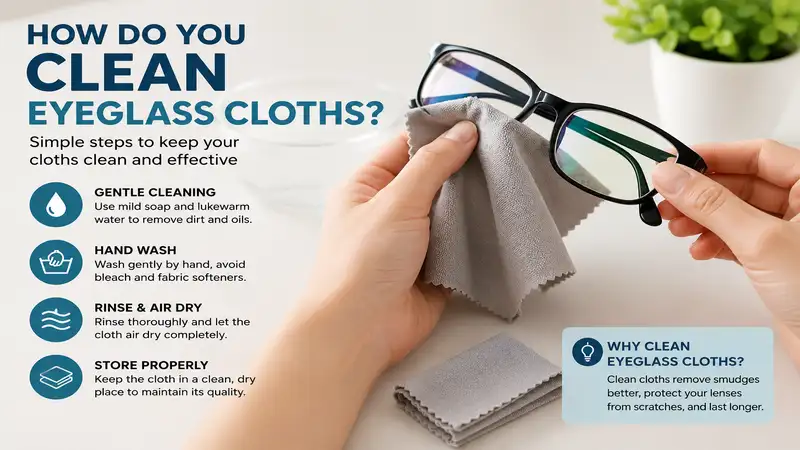
To restore your optical fabric without breaking down its structure, manual washing is the gold standard approach. Follow this step-by-step method every two weeks:
-
Purge Extraneous Debris: Shake out the fabric thoroughly to dislodge loose sand or grit that could scratch your lenses during the washing process.
-
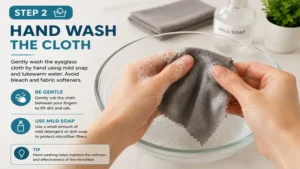
Prepare the Bath: Fill a clean bowl with warm water (ideally around 90°F to 100°F). Avoid scalding water, as excess heat can deform synthetic polyester filaments.
-
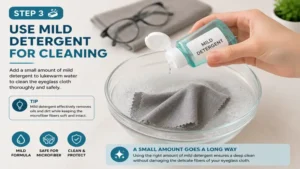
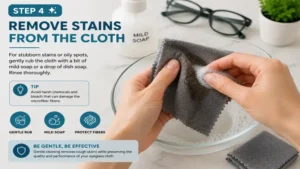
Introduce the Right Cleanser: Add exactly two drops of a clear, additive-free dishwashing liquid like standard blue Dawn. Never use soaps containing moisturizing lotions, dyes, or heavy fragrances.
-
Agitate gently: Submerge the cloth and massage it between your fingertips. Focus on the center zones where finger oils accumulate most.
-
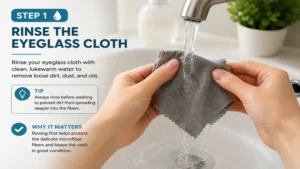
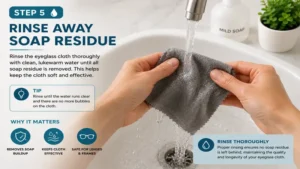
Rinse Thoroughly: Run lukewarm tap water through the fabric for at least 60 seconds until all soap bubbles vanish completely. Residual surfactants will cause streaks on your lenses.
-
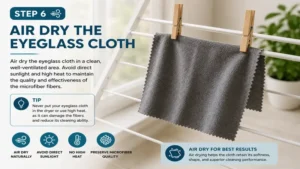
Air Dry Safely: Squeeze out excess water gently—do not wring or twist the cloth violently. Lay it flat on a clean towel or hang it from a plastic clip away from dust, lint, and direct sunlight.
[Shake Debris] ➔ [Warm Bath + Clear Soap] ➔ [Gentle Manual Agitation] ➔ [60s Thorough Rinse] ➔ [Air Dry Flat]
The Machine-Wash Emergency Blueprint
If you must use a washing machine, you need to take specific precautions to protect your cloths from the harsh environment:
-
Isolate Your Fabrics: Place your lens cloths inside a dedicated mesh delicate bag to prevent them from gathering lint from cotton towels or clothing.
-
Select the Correct Cycle: Set your machine to a gentle or delicate cycle with cold or lukewarm water.
-
Detergent Selection: Use a small amount of fragrance-free liquid detergent. Never add liquid fabric softener, as it coats the micro-fibers in a layer of silicone oil that ruins their ability to absorb oil.
-
Skip the Automated Dryer: High heat can melt microfiber filaments, fusing the split ends together and turning a soft cloth into an abrasive surface. Always air-dry your cloths.
Real-World Scenarios: Choosing and Maintaining Your Cloths
The Office Professional
Imagine sitting at your desk under bright fluorescent lights, struggling with a stubborn blur on your computer glasses. In this environment, your main enemy is a combination of facial oils and fine paper dust.
For this scenario, keep a MagicFiber Microfiber Cleaning Cloth flat on your desk pad. Avoid storing it loose in a drawer where it can gather dust from office supplies. A quick weekly rinse in the office breakroom sink with plain dish soap will keep it working perfectly all year long.
The Outdoor Athlete and Photographer
For cyclists, runners, or landscape photographers, your cloths face much harsher conditions: dried sweat, sunscreen smudges, and gritty trail dust. A lightweight flat-weave cloth can quickly trap that grit and rub it across your expensive lenses.
In this situation, the thicker SecurOMax Microfiber Cleaning Cloths are the ideal choice. The deep suede nap safely holds larger dust particles away from your lenses.
Pro-Tip: Before wiping your lenses outdoors, always blow across the surface or rinse them with clean water to remove loose grit. Keep your cloth stored safely in its protective sleeve between uses.
The Year-One Performance Roadmap
Understanding how your optical fabric changes over a year of steady use helps you maintain your eyewear safely. Here is what to expect from a premium cloth:
[Month 1: Peak Static Charge] ➔ [Month 6: Fiber Saturation — Requires Deep Wash] ➔ [Month 12: Filament Degradation — Transition to Screen Duty]
-
Months 1 to 3: Your cloth is in its prime. It easily picks up dust and smudges with minimal pressure due to its strong, built-in electrostatic charge.
-
Months 4 to 6: You will start to notice the fabric dragging slightly or leaving faint streaks behind. This is a clear sign that oils have saturated the fiber core, and it’s time for a thorough hand-wash.
-
Months 7 to 12: After multiple washes, the microscopic split fibers naturally begin to wear down. While still completely safe for daily use, the cloth may require an extra pass or two to clear away heavy smudges.
-
Beyond Year One: At this point, the fabric should be retired from your primary eyewear care routine. It can be repurposed for cleaning phone screens, keyboards, or camera bodies, while you bring a fresh cloth into rotation for your eyeglasses.
Problem-Solving Guide for Smudgy Microfiber
The “Slipping” Oil Effect
-
The Symptom: You wipe your glasses, but the cloth glides effortlessly across the lens without picking up the smudge, simply spreading it around into a hazy layer.
-
The Underlying Cause: The cloth’s internal fibers are completely filled with skin oils, or it has been accidentally exposed to fabric softener, which coats the fibers in slick silicone.
-
The Solution: You need to give the cloth a deep reset wash. Soak the fabric in warm water mixed with a grease-cutting dish soap for 30 minutes, then rinse it thoroughly in warm water to clear out the trapped oils.
The Static Shock and Lint Attraction
-
The Symptom: The moment you pull your cloth out, it acts like a magnet for pocket lint, pet hair, and small dust particles.
-
The Underlying Cause: The synthetic fabric has built up an excessive static charge, often from being stored loose in a pocket or rubbed against fleece and wool clothing.
-
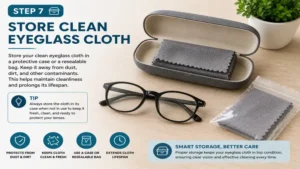
The Solution: Wash the cloth to reset its charge, and always store it inside an individually sealed pouch or a hard-shell glasses case to keep it protected from environmental debris.
🔍 Ready to Upgrade Your Eyeglass Cloth Setup?
Investing in premium maintenance tools preserves expensive lens coatings and extends the life of your eyewear. Clean tools ensure clear, comfortable vision throughout your day without the risk of micro-scratches.
Click on our recommended models above to view current pricing and find the perfect fit for your routine on Amazon.
How to Choose a Premium Optical Cleaning Cloth
-
Examine the Fabric Blend Ratio: Look for options with a clear 80/20 or 70/30 polyester-to-polyamide split. Avoid generic cloths that list 100% polyester, as they lack the polyamide fibers needed to lift and trap oils effectively.
-
Evaluate the Edge Construction: Choose cloths with clean laser-cut or saw-tooth edges. Thick, heavily stitched borders can trap abrasive grit in their seams, which can accidentally scratch your lenses during a wipe.
-
Match the Fabric Weight to Your Needs: Thin, smooth flat-weave fabrics are ideal for delicate anti-reflective coatings. Thicker suede options are better suited for active, outdoor environments where you need to manage dust and sweat.
-
Check the Physical Dimensions: Select a cloth that is large enough to completely cover your hand during use. An undersized fabric increases the risk of your fingers slipping and transferring skin oils directly back onto the clean lens.
Common Mistakes When Laundering Eyeglass Cloths
The biggest mistake I see people make when looking into how do you clean eyeglass cloths is using standard laundry additives. Fabric softeners and dryer sheets work by leaving a thin layer of lubricating chemicals over fabric fibers. While this makes clothes feel soft, it fills the micro-cavities in lens cloths, completely destroying their ability to absorb oils and leaving stubborn streaks behind.
Another common pitfall is washing lens cloths alongside heavy cotton bath towels. Microfiber generates a natural static charge that pulls loose cotton lint deep into its weave during the wash cycle. Trying to use a lint-filled cloth on your glasses will only cover your lenses in tiny white fibers, requiring another wash to clear them away.
Microfiber Cloths vs. Disposable Lens Wipes
Many people choose pre-moistened disposable lens wipes for convenience, but it helps to understand how they compare to a premium microfiber cloth over the long run.
| Feature Profile | Premium Microfiber Cloth | Pre-Moistened Disposable Wipes |
| Cleaning Mechanism | Mechanical lifting & electrostatic attraction | Chemical solvent dissolution |
| Risk of Lens Coating Damage | Very Low (when kept clean) | Moderate (alcohol can degrade some coatings) |
| Environmental Impact | Sustainable and reusable for years | Single-use plastic and paper waste |
| Long-Term Cost Efficiency | High (one purchase lasts a year) | Low (requires ongoing repurchases) |
| Best For | Daily maintenance and premium coatings | Travel and emergency use |
Analysis of the Data: While disposable wipes offer convenience for travel, their alcohol-based solvents can break down delicate anti-reflective or hydrophobic lens coatings over time. A clean microfiber cloth provides a safer, chemical-free clean that protects your eyewear investment without creating daily waste.
What to Expect: Real-World Longevity and Performance
When you use a clean, high-quality microfiber cloth, it should glide smoothly across your lenses with just a small amount of resistance. That resistance is a good sign—it means the split microfibers are actively grabbing and lifting away surface oils rather than just sliding over them.
Over months of regular use and washing, the cloth will naturally become slightly less absorbent. If you notice that it takes three or four passes to clear a fingerprint that used to disappear in one swipe, the fabric is reaching the end of its useful life for precision optics. By retiring older cloths to screen-cleaning duty and bringing in a fresh one for your glasses, you ensure your lenses stay clear and scratch-free.
Features That Actually Matter in Optical Fabric (And Those That Don’t)
What Matters: Split-Fiber Density
The magic of a great lens cloth comes down to its microscopic structure. High-end manufacturers physically split the polyester and polyamide filaments during production. This process creates an intricate network of tiny hooks and channels that lock onto dust and oil. Cheap, unsplit fibers are round and smooth, meaning they just push dirt around on your lens surface.
What Doesn’t Matter: High Gsm Marketing
Many brands try to sell cloths based on a high GSM (grams per square meter) rating, claiming that thicker is always better. While thickness is great for car detailing towels, it doesn’t offer much benefit for eyeglasses. A thick towel makes it harder to feel the delicate edges of your frames and clean into tight corners. A thin, densely woven flat fabric gives you much better precision and control.
Long-Term Cost, Value, and Environmental Impact
Taking a few minutes to properly clean your lens cloths pays off for both your wallet and the planet. A high-quality multi-pack of microfiber cloths costs very little and can last for years with simple hand-washing. Choosing reusable cloths over single-use disposable wipes keeps hundreds of alcohol-soaked pads out of landfills every year.
The real savings, though, come from protecting your eyewear. Replacing a pair of premium prescription lenses because of micro-scratches can cost hundreds of dollars. Keeping your cleaning cloths clean and free of grit is the simplest, most effective way to extend the life of your glasses and protect your investment.
Frequently Asked Questions
❓ How do you clean eyeglass cloths naturally?
✅ Soak the fabric in warm water with a few drops of clear, fragrance-free dish soap. Massage the cloth gently with your fingers to break up trapped skin oils, then rinse it thoroughly under running water and let it air-dry…
❓ Can you use boiling water to sanitize lens cloths?
✅ No, you should avoid boiling water. High heat can melt and warp the ultra-fine synthetic filaments, fusing the split fibers together. This ruins the fabric’s ability to grab dirt and can turn it into an abrasive surface that scratches lenses…
❓ How often should I wash my eyeglass cleaning cloth?
✅ For regular daily use, aim to wash your cloth every two weeks. If you use it to clean off heavy makeup, sweat, or sunscreen, wash it immediately to prevent those thick oils from drying out and hardening inside the fiber matrix…
❓ Is it safe to use vinegar when washing microfiber?
✅ Yes, adding a single teaspoon of white vinegar to your rinse water can be helpful. It works as a natural fabric softener that breaks down stubborn mineral deposits from hard water without coating the fibers in oily residues…
❓ Why is my cloth still leaving streaks after being washed?
✅ This usually means there is still soap residue trapped deep within the fabric weave. Rinse the cloth thoroughly under warm running water for a full minute while squeezing it gently to clear out any remaining detergent surfactants…
Conclusion
Keeping your vision clear starts with keeping your cleaning tools clean. Learning how to properly maintain your microfiber cloths ensures they can safely lift away dirt and oils without putting your expensive lenses at risk. By skipping the washing machine additives, using gentle hand-washing techniques, and letting your cloths air-dry, you protect the microscopic fibers that keep your eyewear spotless. A little regular care goes a long way toward keeping your glasses performing like new.
Recommended for You
- Best Lens Cleaning Cloth Choices for 2026: No-Smudge Expert Review
- Best Way to Clean Auto Windows: 5 Expert Steps for Streak-Free Glass (2026)
- 5 Best Microfiber Cleaning Mitt Options for 2026: Ultimate Review
Disclaimer: This article contains affiliate links. As an Amazon Associate, I earn from qualifying purchases. If you purchase products through these links, we may earn a small commission at no additional cost to you.
✨ Found this helpful? Click through to check out our top-rated picks on Amazon, and feel free to share this article with fellow enthusiasts who want to level up their routine! 💬🤗