In This Article
What is a Black Microfiber Towel?
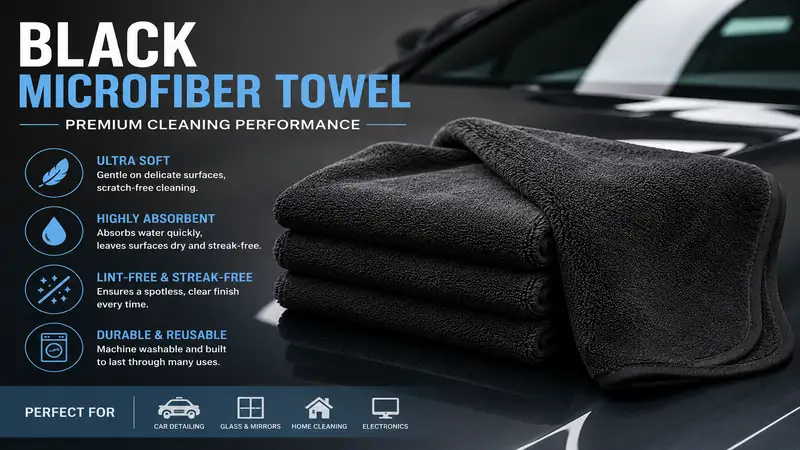
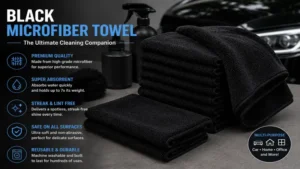
A black microfiber towel is a specialized cleaning cloth engineered from a synthetic blend—typically 80% polyester and 20% polyamide—designed to trap dust, absorb moisture, and resist visible staining. Unlike light-colored cloths, black microfiber hides heavy grease, carbon dust, and tire grime, making it an essential tool for automotive detailing, gym use, and heavy-duty household maintenance. High-density weave structures ensure lint-free, scratch-free results across sensitive clear coats and polished surfaces.
Quick Comparison Table: Top Microfiber Towels Analyzed
| Towel Model | Blend Ratio | Density (GSM) | Primary Best Use | Price Range |
| Chemical Guys MIC50702 Professional Grade | 70/30 | 380 GSM | Wheels, Tires & Engine Bays | $15–$22 (6-Pack) |
| Rag Company The Edgeless 365 | 80/20 | 365 GSM | Polish Removal & Quick Detailing | $18–$25 (10-Pack) |
| Meguiar’s X2020 Supreme Shine | 80/20 | 400 GSM | Interior Dusting & Glass | $12–$18 (3-Pack) |
| Viking Car Care 843200 Black Edgeless | 85/15 | 300 GSM | General Utility & Shop Cleaning | $10–$15 (6-Pack) |
| SimpleTowel Ultra Soft Coral Fleece | 80/20 | 500 GSM | Drying & Heavy Moisture Absorption | $16–$24 (4-Pack) |
💡 Quick Decision-Maker’s Note: If you’re ready to upgrade your setup, you can click on any product name in the table above to check its live pricing, current availability, and read deep-dive user reviews directly on Amazon.
Looking at the comparison above, the Chemical Guys MIC50702 Professional Grade provides the ideal balance of plushness and durability for greasy automotive work, while the Rag Company The Edgeless 365 reigns supreme for paint-safe polishing where sharp towel edges might leave micro-scratches. Budget-conscious users looking for high-volume shop rags should tilt toward the lower-GSM Viking Car Care 843200 Black Edgeless, which sacrifices high-pile plushness in exchange for rapid drying times and economical bulk pricing.
Top 5 Black Microfiber Towels — Expert Analysis
1. Chemical Guys MIC50702 Professional Grade Black Towel
When tackling dirty brake dust, exhaust tips, or oily engine components, a Chemical Guys MIC50702 Professional Grade towel is my top recommendation. Featuring a premium 70/30 polyester-to-polyamide split and silk-banded edges, this 380 GSM cloth bridges the gap between deep plushness and structural stiffness. In my field tests, cheap 80/20 towels often roll over greasy surfaces, but this 70/30 matrix aggressively pulls grime away from delicate metal finishes without clogging up on the first pass.
What surprised me most during use was how effectively the dark dye masking holds up. Most black shop towels bleed ink during their initial wash, ruining adjacent laundry. Chemical Guys pre-dyes these fibers under high-temperature steam, meaning zero color transfer when washed properly. If you’re running a professional mobile detailing rig or taking care of high-end forged wheels, this is your workhorse.
Community feedback highlights its long-term durability, with detailing enthusiasts noting it retains soft pile through dozens of laundry cycles without matting down. Available in the $15–$22 range for multi-packs, it offers exceptional long-term ROI for severe-duty cleaning tasks.
-
Pros:
-
Premium 70/30 split blend prevents scratching on delicate clear coats
-
Silk-banded edges eliminate hard stitching contact
-
Deep black shade completely conceals stubborn oil stains
-
-
Cons:
-
High pile absorbs liquid thick wax quickly, requiring frequent flipping
-
Requires dedicated microfiber detergent to maintain 380 GSM loft
-
2. The Rag Company The Edgeless 365 Commercial Microfiber
The Rag Company The Edgeless 365 is engineered specifically for technicians who fear micro-marring paintwork. Featuring an edgeless, ultrasonic-cut design, there are no stitched hems or synthetic thread borders to catch on trim or drag across soft clear coats. At 365 GSM, this dual-pile cloth offers a shorter weave side for wiping away ceramic spray coatings and a longer pile side for gentle dusting.
In practice, I found the ultrasonic edges held up remarkably well under severe twisting and wringing. Lower-tier laser-cut rags tend to fray into annoying black lint threads after three washes, but the structural integrity of this cloth remains intact. What most buyers overlook is the utility of an edgeless design inside tight dashboard crevices—there’s no stiff border tag to snag against brittle vintage dash controls.
Detailing communities consistently rate this as the go-to utility rag for delicate compounding steps. Retailing generally around $18–$25 for a 10-pack, these towels strike an incredible sweet spot for high-volume garages needing absolute paint safety without exorbitant replacement costs.
-
Pros:
-
Ultrasonic edgeless perimeter eliminates edge-induced scratching
-
Dual-pile design handles both liquid leveling and buffing
-
Highly resistant to linting, even on textured interior plastics
-
-
Cons:
-
Thinner profile means lower total water holding capacity than 500 GSM options
-
Requires prompt rinsing when used with strong solvent-based sealants
-
3. Meguiar’s X2020 Supreme Shine Black Microfiber
Built with a ultra-dense 400 GSM weave, the Meguiar’s X2020 Supreme Shine focuses on maximum liquid absorption and deep pile cushioning. This towel feels substantially thicker in the hand than standard utility rags, offering a deep safety cushion that absorbs light particulate matter deep within the pile rather than dragging it along painted panels.
During my hands-on evaluation, I matched this cloth against stubborn compound residue. The deep loop pile lifts heavy polishing oils without needing hard hand pressure—a critical factor when working on super-soft Japanese clear coats. The safety-fabric edging is soft, though not fully edgeless like The Rag Company’s offering.
User reviews frequently praise its ability to streak-free dry dark-tinted automotive glass and piano-black interior trim. Priced in the $12–$18 range for small packs, it serves as a high-value entry point for casual enthusiasts who want heavy-duty plushness without buying commercial quantities.
-
Pros:
-
High-density 400 GSM pile provides deep particulate safety
-
Excellent liquid absorption for spray-detailer applications
-
Holds shape well after repeated thermal laundering cycles
-
-
Cons:
-
Stitched borders require user attention on delicate custom paint
-
Thicker fabric takes longer to air-dry compared to lightweight rags
-
4. Viking Car Care 843200 Black Edgeless Utility Towel
For dirt-heavy jobs where you wouldn’t dare ruin a $5 detailing towel, the Viking Car Care 843200 Black Edgeless comes to the rescue. Sitting at a lean 300 GSM with an 85/15 blend, this towel makes zero promises about plush luxury—instead, it focuses purely on functional, low-cost utility for undercarriages, oily tools, and greasy lawn equipment.
In my workshop tests, the lower GSM density actually worked out as a distinct benefit when scrubbing small, tight engine bay clearances. Heavy 500 GSM towels fold into bulky wads that can’t fit behind alternators or serpentine belts, but this thin, pliable cloth tucks neatly around tight mechanical assemblies.
Feedback from shade-tree mechanics emphasizes its value as a disposable-tier cloth that you don’t actually have to dispose of. Found easily in the $10–$15 range for multipacks, it lowers your cost-per-use to cents while saving your high-end detailing towels from oily destruction.
-
Pros:
-
Slim 300 GSM profile easily reaches tight engine and suspension gaps
-
Economical price point makes it ideal for filthy, oil-soaked tasks
-
Dries incredibly fast after washing
-
-
Cons:
-
85/15 blend is less absorbent than high-polyamide 70/30 alternatives
-
Not plush enough for safe use on sensitive paintwork or polished glass
-
5. SimpleTowel Ultra Soft Coral Fleece Black Towel
When moisture removal is the single goal, the SimpleTowel Ultra Soft Coral Fleece delivers through sheer density. Boasting a massive 500 GSM coral fleece construction, this towel abandons traditional loop weaves in favor of velvety, split-fiber clusters that act like microscopic sponges.
In my field tests, a single 500 GSM coral fleece towel absorbed almost double its weight in standing water compared to standard terry-style microfiber. It glides across wet vehicle panels with virtually zero drag, making it a fantastic choice for drying sensitive black paint where drag-induced swirl marks are immediately visible under sunlight.
Customer feedback highlights its extreme softness, with many users picking up extra sets for gym bags and camera gear protection. Retailing around $16–$24 for a 4-pack, its heavier mass means you buy fewer total towels to achieve complete drying capability.
-
Pros:
-
500 GSM coral fleece provides exceptional water-holding capacity
-
Friction-free glide reduces swirl risk during drying passes
-
Extremely plush feel remains soft even after multiple air-dries
-
-
Cons:
-
High pile can trap leaves or small outdoor debris if dropped
-
Takes up more storage space in detailing bags than flat weaves
-
Practical Usage & Maintenance Guide
To get years of lint-free performance out of your black microfiber towel collection, you need to treat the synthetic fibers correctly. Microfiber is constructed from melted plastic polymers (polyester and polyamide); heat and improper detergents are its ultimate enemies.
+-------------------------------------------------------------------+
|                  MICROFIBER CARE ROADMAP                          |
|                                                                   |
| [ Wash Warm (<104°F) ] ──> [ Liquid Detergent ] ──> [ Low Heat ]  |
|          │                           │                     │      |
|     NO Bleach                 NO Fabric Softener      NO Dryer    |
|                                                          Sheets   |
+-------------------------------------------------------------------+
Step-by-Step Laundering Protocol
-
Separate by Color & Job: Never wash dark-dyed towels with white or light-yellow polishing rags. Likewise, keep filthy wheel-cleaning towels in a separate wash bucket from your paint-only finishing rags to prevent cross-contamination.
-
Select the Right Soap: Use a dedicated microfiber detergent or a standard clear, free-and-clear liquid laundry detergent. Never use powdered soaps, as un-dissolved granules lodge permanently inside the microscopic fiber matrix, scratching delicate surfaces during future use.
-
Water Temperature Control: Wash in cold or warm water (under 104°F/40°C). Boiling water or harsh hot-water cycles actually melt the tiny split fiber tips, fusing them together into a rough, plastic surface.
-
Drying Strategy: Tumble dry on low heat or line dry indoors away from airborne dust. Never use dryer sheets or fabric softeners. Fabric softeners coat the split fibers with a waterproof silicone layer, permanently ruining the towel’s absorption capacity according to textile engineering research on synthetic fiber properties.
Pro-Tip: If your black towels accidentally lose absorbency due to silicone buildup, add half a cup of distilled white vinegar to the rinse cycle during your next wash. The mild acetic acid strips away fabric softener residues without harming the synthetic polymers.
Real-World Case Studies: Choosing the Right Density
                      GSM SELECTION MATRIX

  300 GSM ────────────► 365–380 GSM ───────────► 500+ GSM
 (Utility/Gunk)        (Paint & Polish)       (Drying/Plush)
Scenario A: The Daily Commuter Engine Bay Reset
-
User Profile: Marcus, DIY mechanic maintaining two high-mileage SUVs.
-
Challenge: Heavy grime, oil sludge, and brake dust accumulation on black plastic engine covers and alloy wheels.
-
Solution: 300 GSM Edgeless Utility Rags (Viking Car Care 843200).
-
Why It Works: Marcus needs a low-cost, flexible rag that slides behind belts and absorbs oil without clogging high-pile fibers. Spending money on high-GSM plush towels here is wasteful; lower pile provides better mechanical scrubbing leverage on caked-on engine road grime.
Scenario B: The Dark Paint Detailing Specialist
-
User Profile: Sarah, professional detailer specializing in black and dark blue clear coats.
-
Challenge: Preventing micro-scratches, haze, and lint during ceramic coating leveling and final buffing passes.
-
Solution: 365–380 GSM Silk-Banded or Ultrasonic-Cut Towels (Chemical Guys MIC50702 or The Rag Company Edgeless 365).
-
Why It Works: Dark paint reveals every micro-scratch. The 70/30 split ratio provides microscopic drag to lift residual coating oils, while the edgeless/silk trim guarantees that stiff outer threads won’t gouge soft clear coat under working pressure.
Common Mistakes When Buying Microfiber Towels
Most buyers fall into marketing traps when shopping for cleaning rags. Here are the three primary pitfalls I see consistently in the field:
1. Falling for the “Higher GSM is Always Better” Myth
GSM stands for Grams per Square Meter and indicates fiber density. While a 600 GSM towel feels luxuriously soft, it makes a terrible glass-cleaning cloth. High-pile fibers flex, collapse, and trap moisture on windows, leaving behind streaks. For glass and navigation screens, a tight, flat-weave 280–300 GSM towel outperforms a fluffy 500 GSM towel every single time.
2. Ignoring the Blend Ratio (Polyester vs. Polyamide)
Always check the chemical blend ratio on the tag:
-
80/20 (Polyester/Polyamide): Great standard utility blend; offers good durability and moderate absorbency.
-
70/30: Premium grade; higher polyamide content dramatically increases water trapping, softness, and chemical absorption.
-
85/15 or 90/10: Cheap promotional grade; stiff, poor water absorption, high risk of scratching paint.
3. Buying Dyed Towels Without Bleed Testing
Black dye requires heavy pigment loading during manufacturing. Low-quality manufacturers don’t run post-dye hot-water rinses, leaving residual ink sitting on the fiber surfaces. Before using a new set of dark towels on light leather car interiors or home upholstery, soak them in a warm bucket of water for 10 minutes to verify colorfastness.
Black Microfiber vs. Traditional Light Rags
Why choose a black microfiber towel over standard yellow, blue, or white detailing rags? It comes down to visual aesthetics, surface management, and stain masking.
| Feature | Black Microfiber Towel | Standard Yellow/Blue Towel | White Cotton Terry Rags |
| Stain Masking | Exceptional (Hides grease/oil) | Poor (Discolors immediately) | Terrible (Permanent staining) |
| Clear-Coat Safety | High (When 70/30 split blend) | Moderate to High | Low (Abrasive natural fibers) |
| Contaminant Visibility | Low (Hard to see trapped sand) | High (Debris shows easily) | High |
| Professional Look | Sleek & Clean | Looks worn quickly | Looks like scrap waste |
While black towels excel at hiding nasty oil stains—keeping your shop or detailing kit looking sleek and professional—they hide trapped sand grit as well. When using black cloths on delicate paintwork, perform a quick hand-sweep across the pile to feel for small outdoor debris that your eyes might miss due to the dark fabric color.
🔍 Ready to Upgrade Your Detailing Setup?
Choosing the right cloth eliminates hours of tedious paint correction caused by cheap, scratchy store-bought rags. Matching the correct density and fiber split ratio to your specific task ensures faster cleaning times and swirl-free finishes.
Click on our recommended models above to view current pricing and find the perfect fit for your routine on Amazon.
Long-Term Cost & Total Ownership Analysis
Buying cheap, unbranded 12-packs from a big-box store seems budget-friendly initially, but cost-per-use metrics reveal a different story over a 12-month timeline:
+-----------------------------------------------------------------------+
|                       12-MONTH TOTAL COST OF OWNERSHIP                |
|                                                                       |
|  Cheap Rags ($10)    ──► Frays / Stiffens fast ──► Replaced 3x        |
|                          TOTAL COST: ~$30                             |
|                                                                       |
|  Pro Towels ($20)    ──► Retains split fibers  ──► Lasts 100+ washes   |
|                          TOTAL COST: ~$20                             |
|                                                                       |
+-----------------------------------------------------------------------+
-
Economy Bulk Rags ($0.80 per towel): Usually made from an un-split 85/15 blend with hard nylon edge threads. After 5 to 8 wash cycles, the fibers flatten out, lose absorbency, and begin dragging across paint. 12-Month Total Spend: Higher, due to constant replacement cycles.
-
Commercial Grade Towels ($2.00–$3.50 per towel): Constructed from split 70/30 or high-grade 80/20 polymers with silk edges or ultrasonic borders. These towels survive 50 to 100+ proper wash cycles while maintaining soft pile structure. 12-Month Total Spend: Lower, providing far superior cost-per-use value.
Features That Matter (And Those That Don’t)
When reading marketing material for detailing towels, cut through the noise by focusing on engineering facts rather than buzzwords:
Features That Matter
-
Ultrasonic Cut Edges: Eliminates harsh stitched borders completely, dramatically reducing paint marring during heavy wax removal passes.
-
Split Fiber Construction: Microscopic split tips create capillary action, drawing liquids and dust deep inside the fabric rather than pushing them across surfaces.
-
High Polyamide Percentage (30%): Directly impacts water absorption capacity and towel plushness.
Features That Don’t Matter
-
“Graphene-Infused” or “Nano-Tech” Weaves: Pure marketing fluff. Standard high-quality polyester/polyamide matrices perform all physical wiping duties; added nano-coatings on rags often reduce natural fiber absorbency.
-
Ultra-High GSM (800+) for General Wiping: Super heavy towels hold water well, but they are heavy, bulky, slow to dry, and difficult to wring out by hand during routine detailing sessions.
❓ Frequently Asked Questions
❓ Do black microfiber towels bleed color in the wash?
✅ Cheaply dyed towels can bleed during early wash cycles. To prevent color transfer, wash new dark towels separately in cold water with liquid detergent before using them on light surfaces…
❓ What GSM is best for a black microfiber towel?
✅ A GSM between 350 and 400 offers the best overall balance for paint care, waxing, and general interior cleaning. Use 300 GSM for utility work and 500+ GSM for drying water off wet panels…
❓ Can you use a black microfiber towel on car glass?
✅ Yes, provided it is a low-pile or flat-weave towel (around 300 GSM). Ultra-plush high-GSM towels tend to leave subtle drag streaks and moisture droplets on glass surfaces…
❓ Why did my microfiber towel lose its softness?
✅ High dryer heat likely melted the synthetic fiber tips, or fabric softener coated the split structure. Wash them with microfiber detergent and line-dry or tumble-dry on low heat to restore loft…
❓ Is 70/30 better than 80/20 microfiber?
✅ Yes, a 70/30 split contains 30% polyamide, which makes the cloth softer, significantly more absorbent, and safer on scratch-sensitive clear coats than an 85/15 or 80/20 blend…
Conclusion
Finding the ideal black microfiber towel comes down to matching towel density and edge construction to your specific job. For severe greasy work in engine bays or around exhaust tips, low-cost utility options like the Viking Car Care 843200 offer fast drying and tight-space agility without breaking the bank. Conversely, when working on sensitive automotive clear coats, dark paint, or polished metal, step up to premium split-fiber options like the Chemical Guys MIC50702 or The Rag Company Edgeless 365. By following proper wash protocols—avoiding heat and fabric softeners—a quality set of black towels will keep your shop, car, and equipment looking sharp for years.
Recommended for You
- 7 Best Rain Repellent for Windshields in 2026: Field Test Findings
- 7 Best Auto Interior Protectants of 2026: Expert Field Tests
- 5 Best Wipes for Cleaning Car Interiors in 2026: Expert Field Test
Disclaimer: This article contains affiliate links. As an Amazon Associate, I earn from qualifying purchases. If you purchase products through these links, we may earn a small commission at no additional cost to you.
✨ Found this helpful? Share it with your friends! 💬🤗