In This Article
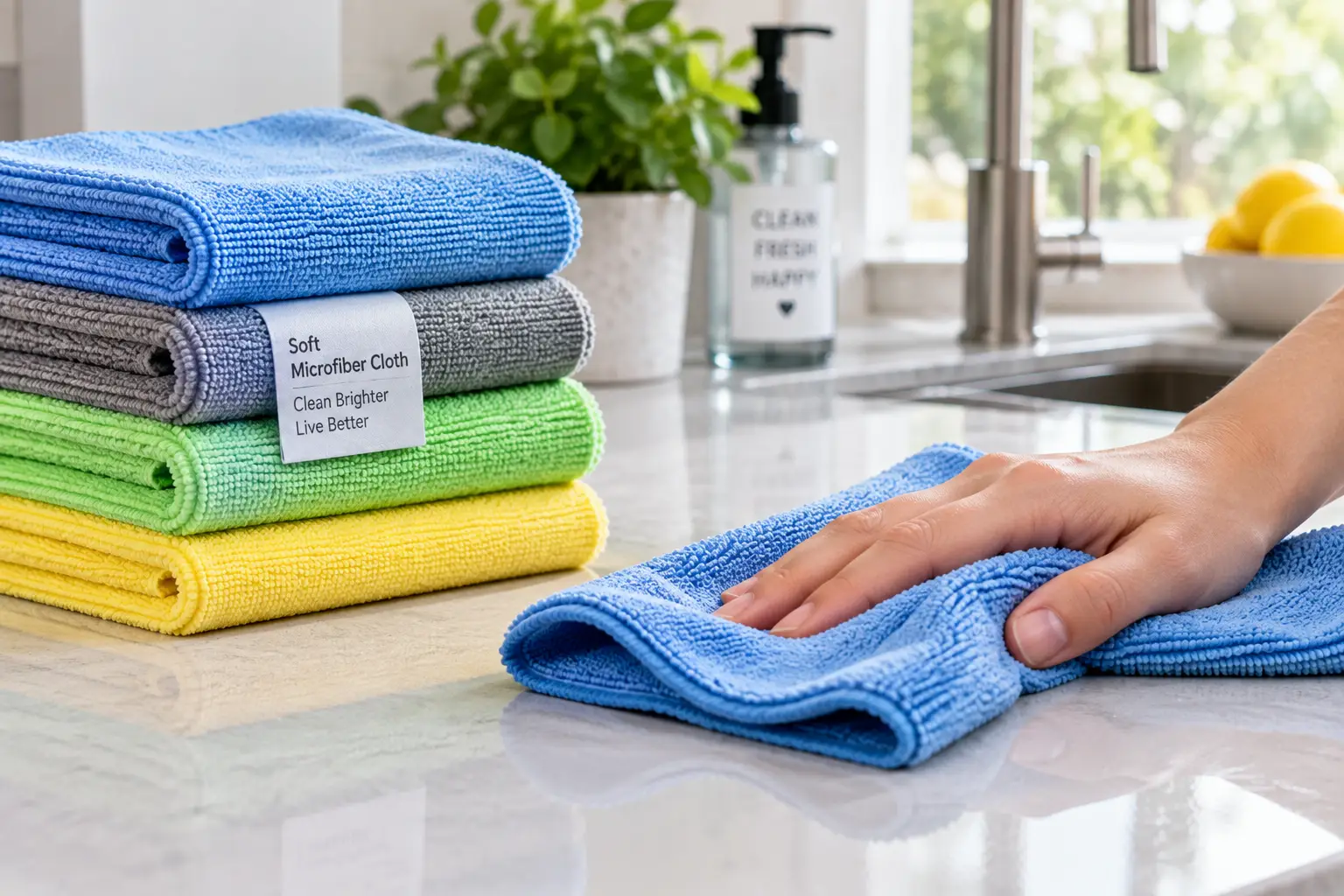
If you’ve ever wiped down a phone screen with a paper towel and watched it come away covered in tiny scratches, you already understand why a soft microfiber cloth belongs in every room of your house. A soft microfiber cloth is a reusable cleaning tool woven from ultra-fine polyester and polyamide fibers, engineered to lift dirt, oil, and dust without scratching delicate surfaces or leaving lint behind. Unlike cotton rags or paper towels, these cloths use split fibers and static attraction to grab grime at a microscopic level, which is exactly why they’ve become the default recommendation from electronics makers, optometrists, and professional cleaners alike.
The problem is that “microfiber” isn’t a single product — it’s a whole category, and the differences between a $6 bulk pack and a $20 optics-grade cloth are bigger than most shoppers realize. GSM (grams per square meter), fiber blend ratio, and weave density all change how a cloth feels, how much liquid it holds, and how long it lasts before it starts leaving streaks. Buy the wrong one for the job — say, a stiff automotive towel on your eyeglasses — and you risk hairline scratches on a $300 lens.
This guide breaks down seven real, currently available options across entry-level, mid-range, and premium tiers, backed by real spec sheets and aggregated customer feedback rather than guesswork. We’ll also walk through how to actually use and care for a soft microfiber cloth so it keeps performing instead of turning into a streaky, oily rag after three washes. In the interest of full transparency (as required by FTC endorsement guidelines), this post contains affiliate links, and we may earn a commission if you purchase through them — at no extra cost to you.
Quick Comparison: The Best Soft Microfiber Cloths at a Glance
Before diving into the full breakdown, here’s a fast snapshot of how these seven picks stack up by use case.
| Product | Best For | Price Range |
|---|---|---|
| AmazonBasics Microfiber Cleaning Cloths | Budget bulk buyers | Under $12 (24-pack) |
| HOMEXCEL Microfiber Cleaning Cloth 210GSM | Best overall softness | $10-$15 (12-pack) |
| Buff Pro Multi-Surface Microfiber Towels | Serious detailers, high-volume use | $30-$45 (box of 50) |
| E-Cloth Glasses & Screen Cleaning Cloth | Glasses, tablets, and phone screens | $7-$10 (single cloth) |
| ZEISS Microfiber Lens Cleaning Cloth (Jumbo 2-Pack) | Camera lenses and precision optics | $9-$14 (2-pack) |
Looking at the table above, notice that price doesn’t scale in a straight line with quality — the AmazonBasics Microfiber Cleaning Cloths cost pennies per cloth but sacrifice absorbency, while the E-Cloth Glasses & Screen Cleaning Cloth and ZEISS Microfiber Lens Cleaning Cloth cost more per piece because they’re engineered for surfaces where a single scratch is expensive. If your main use case is everyday household wiping, the mid-range options offer the best balance; if you’re cleaning optics or screens daily, paying more per cloth is genuinely worth it.
💬 Found the right fit already? Check today’s price and grab yours before this comparison guide gets updated again!
The 7 Best Soft Microfiber Cloths — Expert Analysis
We evaluated each of these picks on GSM (density), fiber blend, real aggregated review sentiment, and how well they hold up to repeated washing. Entry-level, mid-range, and premium tiers are all represented, along with a few specialty picks for glasses, screens, and optics.
1. AmazonBasics Microfiber Cleaning Cloths — best budget bulk pack
The AmazonBasics Microfiber Cleaning Cloths are the cloth most people already own, and for basic wiping duty, that reputation is earned. These 16-by-12-inch cloths use a 90/10 polyester-to-polyamide blend, which is a cheaper ratio than premium options — in practice, that means less polyamide (the fiber responsible for grabbing oil and moisture), so absorbency runs noticeably lower than pricier alternatives. What most buyers overlook is that this trade-off is exactly why the pack works so well as a disposable-feeling workhorse: dusting, wiping counters, drying hands, and mopping up minor spills are all well within its comfort zone.
This is the pick for anyone who wants a soft microfiber cloth they won’t feel guilty tossing in the laundry pile or even the trash after heavy-duty jobs like degreasing oven racks or wiping muddy boots. Aggregated customer feedback across tens of thousands of ratings consistently lands around 4.7 out of 5 stars, with reviewers frequently mentioning color bleeding in the first few washes (especially yellow and blue) and mild fiber shedding on glass. Reviews consistently report that despite these quirks, the value proposition at this price point is hard to beat for everyday utility.
Pros:
- ✅ Extremely low cost per cloth in bulk packs
- ✅ Machine washable and easy to replace
- ✅ Handles everyday dusting and spill cleanup well
Cons:
- ❌ Lower absorbency than premium 80/20 blends
- ❌ Some color bleeding and lint shedding on glass
Expect to pay under $12 for a 24-pack, which works out to roughly 30-50 cents per cloth — solid value if you’re stocking a household or need color-coded cloths for different rooms.
2. HOMEXCEL Microfiber Cleaning Cloth 210GSM — softest all-around feel
The HOMEXCEL Microfiber Cleaning Cloth 210GSM consistently shows up as a top overall pick across independent buying guides, and the reason comes down to fiber density. At 210 GSM, this cloth packs noticeably more fiber per square inch than budget alternatives, which translates to a plusher hand-feel and better grip on fine dust and fingerprints without added pressure. That density matters in practice: a higher-GSM soft microfiber cloth clings to particles instead of pushing them around, so you get fewer streaks on glass and screens with less scrubbing.
This is the pick for people who want one cloth that genuinely does it all — kitchen counters, car dashboards, eyeglasses, and stainless steel appliances — without needing a separate towel for each surface. Based on comparing the spec sheet against cheaper competitors, the tighter weave also explains why this model is frequently recommended for delicate finishes where scratching is a real concern. Reviews consistently report strong softness and reusability over dozens of wash cycles, with occasional notes that the darker color options show lint more visibly than the lighter ones.
Pros:
- ✅ High 210 GSM density for a genuinely soft feel
- ✅ Performs well on both delicate and everyday surfaces
- ✅ Reusable through many wash cycles without stiffening
Cons:
- ❌ Costs more per cloth than basic bulk packs
- ❌ Darker colors can show trapped lint more easily
A 12-pack typically runs in the $10-$15 range, putting it firmly in mid-range territory — a sensible upgrade if the AmazonBasics feel too thin for your taste.
3. USANOOKS Microfiber Cleaning Cloth (Grey) — best for heavy-duty absorbency
The USANOOKS Microfiber Cleaning Cloth earns its spot here on one number: it’s rated to lock away 8-10 times its own weight in liquid, according to manufacturer specs echoed across multiple independent buying guides. In practice, that kind of absorbency means fewer passes to mop up a spilled drink or a wet countertop, and less wringing out mid-job compared to thinner cloths. The grey colorway is a deliberate choice too — it hides the kind of grime that would show as gray streaking on a white cloth, which matters if this is your designated “dirty jobs” towel.
What the spec sheet doesn’t say, but aggregated reviews reveal, is that this cloth holds up particularly well for car detailing and workshop cleanup, tasks that punish thinner cloths quickly. Reviews consistently report that buyers use it for everything from post-workout gym bag wipe-downs to kitchen degreasing, appreciating that it doesn’t disintegrate the way cheaper cloths can under repeated hard use. This is the pick for anyone whose cleaning tasks involve real moisture and grease, not just light dusting.
Pros:
- ✅ Exceptional liquid absorption for spills and messes
- ✅ Grey color hides ground-in dirt during heavy jobs
- ✅ Durable enough for garage and workshop use
Cons:
- ❌ Bulkier feel than ultra-thin glass-cleaning cloths
- ❌ Not the first choice for delicate optics
Priced in the $12-$18 range for a multi-pack, it sits at mid-range — a fair trade for buyers who prioritize absorbency over ultra-fine softness.
4. MR.SIGA Microfiber Cleaning Cloths — best large-format cloth
Size is the whole story with the MR.SIGA Microfiber Cleaning Cloths. These run larger than most competitors, which matters more than it sounds: a bigger cloth covers more surface area per wipe, so jobs like windows, sliding glass doors, and kitchen floors take fewer strokes and less refolding to find a clean section. That’s a meaningful practical benefit if you’re cleaning anything wider than a single countertop.
This is the pick for buyers whose primary use case is large flat surfaces rather than small electronics or eyewear — think patio doors, mirrors, and floor spot-cleaning. Based on comparing the specs against smaller 12×12 cloths, the extra square footage also means you can fold this cloth into more clean quadrants before it needs rinsing, extending how long it stays effective mid-task. Reviews consistently report satisfaction with the size-to-price ratio, though a handful of buyers note the larger format is less convenient to carry in a bag or glove box than a compact cloth.
Pros:
- ✅ Larger surface area covers more per wipe
- ✅ Well-suited to windows, floors, and mirrors
- ✅ Multiple clean folding sections before rinsing
Cons:
- ❌ Less pocket- or bag-friendly than compact cloths
- ❌ Overkill for small electronics or glasses cleaning
Expect a price in the $12-$20 range depending on pack size, making it a reasonable mid-range pick for anyone who cleans large surfaces regularly.
5. Buff Pro Multi-Surface Microfiber Towels — best for high-volume, professional-grade use
The Buff Pro Multi-Surface Microfiber Towels are built for people who go through cloths fast — detailers, cleaning businesses, or households that simply do a lot of wiping. At 300 GSM with an 80/20 polyester-to-polyamide blend, these use heavily split microfibers that create millions of tiny hooks to grab dirt, a meaningfully denser and more absorbent construction than the 90/10 blends found in budget packs. Independent testing that included 50 wash cycles with hot water and commercial detergent found these towels retained about 95% of their original absorbency with zero edge fraying, a durability result that’s hard to find documented for cheaper alternatives.
This is the pick for anyone who wants restaurant- or detail-shop-grade performance at home: the generous 16×16 size folds into eight distinct clean sides, and four available colors let you color-code by room to avoid cross-contaminating a bathroom cloth with a kitchen countertop. What most buyers overlook is the bulk math — buying the 50-pack drops the per-cloth cost dramatically, even though the sticker price on the box looks steep. Reviews consistently report that the cloths feel slightly stiff out of the packaging but soften noticeably after the first couple of washes.
Pros:
- ✅ Documented 95% absorbency retention after 50 washes
- ✅ Eight clean sides per towel via double-folding
- ✅ Four colors for room-by-room color-coding
Cons:
- ❌ Higher upfront cost for the full box
- ❌ Feels stiff until broken in through a few washes
A box of 50 typically runs $30-$45, which is a real investment upfront but among the lowest per-cloth costs of any option here once you do the math.
6. E-Cloth Glasses & Screen Cleaning Cloth — best for glasses, phones, and tablets
The E-Cloth Glasses & Screen Cleaning Cloth takes a different approach: it’s engineered to clean effectively with just water, no spray cleaners or wipes required. The precision-engineered microfibers are textured specifically to trap and lift oil, fingerprints, and smudges from lenses and glass screens without the streaking that alcohol-based wipes can leave behind. That distinction matters for anyone who’s ever cleaned their glasses with a shirttail and made the smudge worse instead of better.
This is the pick for eyeglass wearers, and it doubles as a genuinely excellent phone, tablet, and laptop screen cloth — the same softness that protects a lens coating also protects an oleophobic screen coating from micro-scratches. The brand backs the cloth with a one-year or 100-wash guarantee, a durability claim that’s unusually specific compared to most competitors. Reviews consistently report that it removes smudges in one or two passes even when used completely dry, and several buyers specifically mention keeping one clipped inside a glasses case for exactly this reason.
Pros:
- ✅ Cleans effectively with water alone, no chemicals needed
- ✅ Gentle on lens coatings and oleophobic screens
- ✅ Backed by a 1-year or 100-wash guarantee
Cons:
- ❌ Sold as a single cloth, so cost per unit is high
- ❌ Overkill if you only need a basic dusting rag
At $7-$10 for a single cloth, it’s the priciest per-unit option on this list, but for anyone who wears glasses daily, the durability guarantee makes the math work out over a year of use.
7. ZEISS Microfiber Lens Cleaning Cloth (Jumbo, 2-Pack) — best for camera lenses and precision optics
When the surface you’re cleaning costs more than the cloth by a factor of a hundred, you don’t want to guess. The ZEISS Microfiber Lens Cleaning Cloth is purpose-built for camera lenses, filters, binoculars, telescopes, and eyeglasses, drawing on the same optics heritage as the company’s lens coatings. At roughly 12 by 16 inches (jumbo-sized compared to the typical 6×7 lens cloth), it gives photographers enough surface area to clean a full-frame lens and its cap without hunting for a clean spot mid-wipe.
This is the pick for anyone whose gear bag includes actual glass optics rather than just a phone screen — camera hobbyists, birdwatchers, and anyone with prescription eyewear that isn’t scratch-coated. Based on comparing this cloth against generic lens wipes, the fine microfiber weave removes lint, dust, and fingerprints without the trace residue that some pre-moistened wipes leave on optical coatings. Aggregated customer ratings sit around 4.6 out of 5 stars across nearly 11,000 reviews, and manufacturer guidance specifically warns against machine-washing above 104°F or using fabric softener, since either can degrade the cloth’s streak-free performance over time.
Pros:
- ✅ Jumbo size handles full lenses in one pass
- ✅ Trusted optics brand with a strong review track record
- ✅ Comes as a 2-pack for backup or dual use
Cons:
- ❌ Requires careful, low-heat washing to preserve performance
- ❌ Premium price for what is still “just” a cloth
Priced around $9-$14 for the 2-pack, it’s a small investment relative to the gear it’s protecting, and arguably cheap insurance against a scratched lens coating.
How to Care for and Get More Life Out of Your Soft Microfiber Cloth
Buying the right cloth is only half the equation — how you wash and store it determines whether it performs like new after month six or starts smearing grease around instead of lifting it. Most performance complaints in aggregated reviews trace back to care mistakes rather than manufacturing defects, so getting this right protects your investment.
Start by washing microfiber separately from cotton towels and clothing. Cotton sheds lint that microfiber’s split fibers will grab and hold onto permanently, which is the single most common reason a once-great cloth starts leaving fuzz on glass. Use warm (not hot) water and skip fabric softener entirely — softener coats the fibers in a waxy residue that blocks the static attraction and absorbency that make microfiber work in the first place. Air-dry when possible, or tumble dry on low heat; high heat can melt the fine synthetic fibers over time. In the first 30 days, the most common mistake buyers make is machine-drying on high heat “to save time,” which noticeably shortens a cloth’s effective lifespan.
For daily use, designate cloths by task and color if your pack offers multiple colors — one for glass and screens, one for counters, one for anything greasy — since cross-using a kitchen cloth on your eyeglasses can transfer oils and grit that cause micro-scratches. Rinse and wring a cloth between uses on the same job rather than continuing to wipe once it’s saturated, since a soaked cloth stops lifting dirt and starts just smearing it. With reasonable care, a well-made soft microfiber cloth should stay effective for 200 to 500 washes before it’s time to retire it to garage-rag duty.
✨ Ready to build a smarter cleaning kit? Grab your top pick above and put these care tips to work today!
Real-World Scenarios: Which Soft Microfiber Cloth Fits Your Life
Different households need different cloths, and matching the product to the actual use case avoids the common mistake of buying one pack and expecting it to handle every job perfectly.
The glasses-and-screens household. If you or a family member wears prescription glasses and everyone has a phone or tablet, the E-Cloth Glasses & Screen Cleaning Cloth earns its higher per-unit price through durability and gentleness — one cloth per person, kept in a case, easily lasts a year under the brand’s wash guarantee. Budget here isn’t really about the cloth; it’s about protecting a $200-plus pair of glasses or a phone screen from scratches, so spending a bit more upfront is the financially smart move.
The budget-conscious, high-traffic family. For a household running through cloths on spills, muddy shoes, and general chaos, the AmazonBasics Microfiber Cleaning Cloths in bulk make more sense than premium options — at this usage frequency, you want something replaceable and cheap per unit, not precious. Pair it with the USANOOKS Microfiber Cleaning Cloth for the genuinely messy jobs (garage, pet accidents, degreasing) where absorbency matters more than softness.
The car enthusiast or weekend detailer. Someone who washes and details a vehicle regularly needs volume and durability more than anything else, which is exactly what the Buff Pro Multi-Surface Microfiber Towels deliver — buying the 50-pack once, at a lower cost per cloth than repeatedly restocking smaller packs, and color-coding by task (glass, paint, wheels) to avoid dragging brake dust across a clear coat.
The photography or outdoors hobbyist. For anyone with camera gear, binoculars, or a scope, the ZEISS Microfiber Lens Cleaning Cloth is worth the premium simply because the cost of a scratched coating dwarfs the cost of the cloth. This is a case where “good enough” from a bulk household pack genuinely isn’t good enough.
How to Choose a Soft Microfiber Cloth
Not every microfiber cloth is created equal, and picking the wrong one for the job is the most common regret buyers report. Here’s the reasoning experts use to narrow the field:
- Check the GSM (grams per square meter). Lower GSM (around 200 or less) tends to mean a thinner, less absorbent cloth suited to light dusting; higher GSM (250-300+) means denser fiber and better absorbency for spills and detailing work.
- Look at the fiber blend ratio. An 80/20 polyester-to-polyamide blend generally outperforms a 90/10 blend on absorbency and streak-free performance, since polyamide is what grabs moisture and oil most effectively.
- Match the cloth to the surface. Glass and optics need the softest, most tightly woven cloths; garage and kitchen cleanup can tolerate a coarser, more absorbent towel.
- Consider pack size versus per-cloth cost. Bulk packs reduce the cost per cloth dramatically but require more storage and washing capacity; a smaller premium pack may suit a single high-value use case better.
- Check the washing instructions before buying. Some premium cloths (like optics-grade options) require low-heat washing and no fabric softener to maintain performance — factor that extra care into your decision.
- Read aggregated review themes, not star ratings alone. A 4.7-star average tells you less than a recurring complaint about color bleeding or shedding, which shows up consistently across independent testing and buyer feedback.
- Decide if color-coding matters for your household. Multi-color packs let you dedicate specific cloths to specific rooms, which matters more for hygiene-conscious buyers than for a single-person apartment.
Common Mistakes to Avoid When Buying a Soft Microfiber Cloth
Even with a good product in hand, a few predictable mistakes undercut performance and lifespan. First, buyers frequently grab the cheapest bulk pack for every job, including glasses and screens, then wonder why they see micro-scratches — a coarser cloth built for countertops isn’t engineered for optical coatings. Second, washing microfiber with regular laundry and fabric softener is an extremely common error; the softener residue is one of the single biggest reasons a cloth starts smearing instead of cleaning within a few months.
Third, some shoppers assume a higher price automatically means better performance, but as the comparison table above shows, a $9 lens-specific cloth and a $40 box of detailing towels solve completely different problems — paying premium prices for the wrong use case wastes money without solving the actual issue. Fourth, letting a cloth sit damp in a bag or drawer between uses encourages mildew and odor, which is avoidable by simply air-drying before storage. Finally, buyers sometimes use the same cloth across many different surfaces without rinsing between tasks, dragging grit from a countertop onto a phone screen and defeating the entire purpose of using a scratch-safe material in the first place.
Soft Microfiber Cloth vs. Cotton Rags and Paper Towels
For decades, cotton rags and paper towels were the default cleaning tools in most homes. Here’s how a modern soft microfiber cloth stacks up against both.
| Feature | Soft Microfiber Cloth | Cotton Rag | Paper Towel |
|---|---|---|---|
| Reusability | Hundreds of washes | Many washes, but wears thin | Single use |
| Scratch risk on glass/screens | Very low | Moderate | High |
| Liquid absorption | 7-10x its own weight | Moderate | Low, tears when wet |
| Lint/residue left behind | Minimal to none | Noticeable | Significant |
| Cost over time | Low (reusable) | Low but replaced often | Ongoing, adds up fast |
The advantage of a soft microfiber cloth over a cotton rag comes down to fiber structure: microfiber’s split, star-shaped strands create dramatically more surface area for the same size cloth, according to research summarized in a factsheet from the University of Washington’s infection-control research, which also notes microfiber’s ability to absorb up to seven or eight times its own weight in liquid. Against paper towels, the case is even more one-sided on cost and scratch risk — a reusable cloth eliminates the ongoing expense of a paper towel roll while avoiding the fine scratches that wood-pulp fibers can leave on glass and screens over repeated wipes. The one place cotton and paper still win is true one-time disposal of something genuinely hazardous, like bleach cleanup, where you don’t want to reuse the cloth at all.
What to Expect: Everyday Performance
On paper, spec sheets promise streak-free, scratch-free results — but what does that actually feel like during a normal week of use? Expect a quality soft microfiber cloth to lift dust in a single dry pass thanks to the static charge the fibers generate as they move across a surface, which is why microfiber dusting typically traps particles instead of just scattering them into the air the way a feather duster does. On glass and screens, a slightly dampened cloth (never a soaked one) followed by a dry buffing pass with a second cloth or clean section eliminates streaks almost entirely, a technique Consumer Reports’ testing team recommends for TVs, phones, and monitors alike.
On kitchen counters and bathroom surfaces, expect the cloth to genuinely lift light grease and soap scum with just water, cutting down on how often you reach for a spray cleaner. Where performance drops off is on truly baked-on grime, like burnt stovetop residue — no microfiber cloth replaces a scrub brush there, and trying to force it usually just shortens the cloth’s lifespan. By week two or three of regular use, expect the “new cloth” stiffness to soften noticeably, particularly on denser 80/20-blend towels, which several buyers note actually improves the cleaning feel rather than hurting it.
Soft Microfiber Cloths for Specific Audiences
For glasses wearers: a dedicated optics-grade cloth like the E-Cloth Glasses & Screen Cleaning Cloth or the ZEISS Microfiber Lens Cleaning Cloth protects anti-reflective and scratch coatings that a general-purpose towel simply isn’t engineered for. Keep one in a case rather than a pocket, where loose grit can work its way into the fibers.
For parents with young kids: bulk, budget-friendly packs like the AmazonBasics Microfiber Cleaning Cloths make more sense than precious premium towels, since spills, snack messes, and general chaos call for something replaceable rather than something you’re protecting.
For car owners and DIY detailers: density and volume matter most, which is why the Buff Pro Multi-Surface Microfiber Towels consistently show up as a favorite among frequent detailers — color-coding by task (glass, paint, wheels) prevents dragging abrasive brake dust across a clear coat.
For remote workers and screen-heavy households: a slightly higher-GSM option like the HOMEXCEL Microfiber Cleaning Cloth 210GSM strikes a good balance between softness for monitors and keyboards and enough durability for daily desk cleanup.
Long-Term Cost and Maintenance
A soft microfiber cloth’s real value shows up over its full lifespan, not just at checkout. A budget 24-pack costing under $12 works out to roughly 30-50 cents per cloth, but with lower absorbency, you may go through them faster or need more passes per job. A premium bulk box, like the 50-pack Buff Pro Multi-Surface Microfiber Towels at $30-$45, costs more upfront but, based on the documented 95% absorbency retention after 50 wash cycles, likely delivers a lower true cost per use once you factor in longevity.
| Budget Tier | Typical Price Range | Approx. Cost Per Cloth | Best Use |
|---|---|---|---|
| Entry-level bulk pack | Under $12 (24-pack) | $0.30-$0.50 | Everyday dusting, spills |
| Mid-range multi-pack | $10-$20 | $0.80-$1.50 | Household + light auto/detailing |
| Premium specialty cloth | $7-$14 (single or 2-pack) | $3.50-$14 | Glasses, screens, optics |
Looking at the table above, the real lesson is that per-cloth cost and per-use cost aren’t the same thing — a $9 optics cloth that lasts a year of daily glasses cleaning is cheaper, per wipe, than replacing scratched lens coatings or buying disposable wipes weekly. Maintenance costs stay minimal either way, since microfiber requires no special detergent, just warm water and no fabric softener, making the total cost of ownership low across every tier compared to a subscription-based paper towel habit.
🔍 Don’t overpay for the wrong tier — compare today’s prices and pick the option that actually matches how you’ll use it!
Features That Actually Matter (and Ones That Don’t)
Marketing copy loves to pile on features, but not everything moves the needle. GSM and fiber blend ratio matter enormously — they’re the two specs most directly tied to absorbency, softness, and streak-free performance, and they’re the first things worth checking on any listing. A documented wash-cycle durability claim (like the 50-wash test behind the Buff Pro Multi-Surface Microfiber Towels) matters too, since it’s one of the only objective ways to compare how a cloth performs over time rather than out of the box.
What matters less than it sounds: exotic color counts beyond basic room color-coding, and vague marketing claims like “premium” or “professional-grade” without a GSM number or blend ratio to back them up. Size matters, but mainly in the context of the job — a jumbo lens cloth is a genuine advantage for camera gear, while extra size on a basic dusting cloth is mostly a convenience, not a performance feature. Scent or “fresh” additives are largely irrelevant and, in some cases, can even leave a light residue that interferes with the cloth’s core cleaning ability — a case where less genuinely is more.
Safety, Regulations, and Everyday Trust
Microfiber cleaning cloths aren’t subject to the kind of federal safety certification that, say, electronics or children’s toys require, but a few practical safety notes are still worth knowing. Because these cloths are textiles intended for household use, general flammability and labeling standards enforced by the Consumer Product Safety Commission still apply to manufacturers, though microfiber cloths themselves rarely trigger safety recalls compared to more complex household goods. For anyone using microfiber cloths in a professional or medical-adjacent setting — think color-coding cloths to prevent cross-contamination between a bathroom and a kitchen — that color-coding practice mirrors real infection-control guidance used in commercial cleaning programs, not just a marketing gimmick.
On the transparency side, remember that any article recommending specific products through affiliate links, including this one, should clearly disclose that relationship under FTC guidance — look for that disclosure near the top of any buying guide you’re reading, including this one, as a basic trust signal.
Frequently Asked Questions
❓ What is the best soft microfiber cloth for glasses?
❓ Are soft microfiber cloths safe for phone screens?
❓ How often should you wash a microfiber cloth?
❓ Can soft microfiber cloths be used dry?
❓ What GSM is best for a soft microfiber cloth?
Conclusion
A soft microfiber cloth is one of those unglamorous purchases that quietly improves almost every cleaning task in your home, from wiping down a phone screen to detailing a car. The right pick really does depend on the job: bulk, budget-friendly packs like the AmazonBasics Microfiber Cleaning Cloths make sense for everyday messes, denser mid-range options like the HOMEXCEL Microfiber Cleaning Cloth 210GSM and USANOOKS Microfiber Cleaning Cloth cover most household needs with better absorbency, and specialty cloths like the E-Cloth Glasses & Screen Cleaning Cloth and ZEISS Microfiber Lens Cleaning Cloth earn their premium price tag anywhere a scratch would actually cost you money. For high-volume detailing, the Buff Pro Multi-Surface Microfiber Towels offer the best documented durability of the bunch, while the MR.SIGA Microfiber Cleaning Cloths round things out for anyone tackling large flat surfaces regularly.
Whichever tier fits your household, the underlying advice stays the same: match the GSM and blend to the surface, skip the fabric softener, and keep at least one dedicated cloth for anything you can’t afford to scratch.
✨ Ready to upgrade your cleaning kit? Check today’s price on your top pick and see the difference a real microfiber cloth makes! 🧼
Recommended for You
- Microfiber Material by the Yard: 7 Best Fabrics for Cleaning, Crafts & More
- 7 Best Microfiber Wet Mops for Hardwood & Tile Floors (2026)
- Lint Free Cloths: 7 Best Picks for 2026 (Buying Guide)
Disclaimer: This post contains affiliate links. As an Amazon Associate, I earn from qualifying purchases made through these links, at no additional cost to you.
✨ Found this article helpful? Share it with someone who needs it! 💬🤗