
In This Article
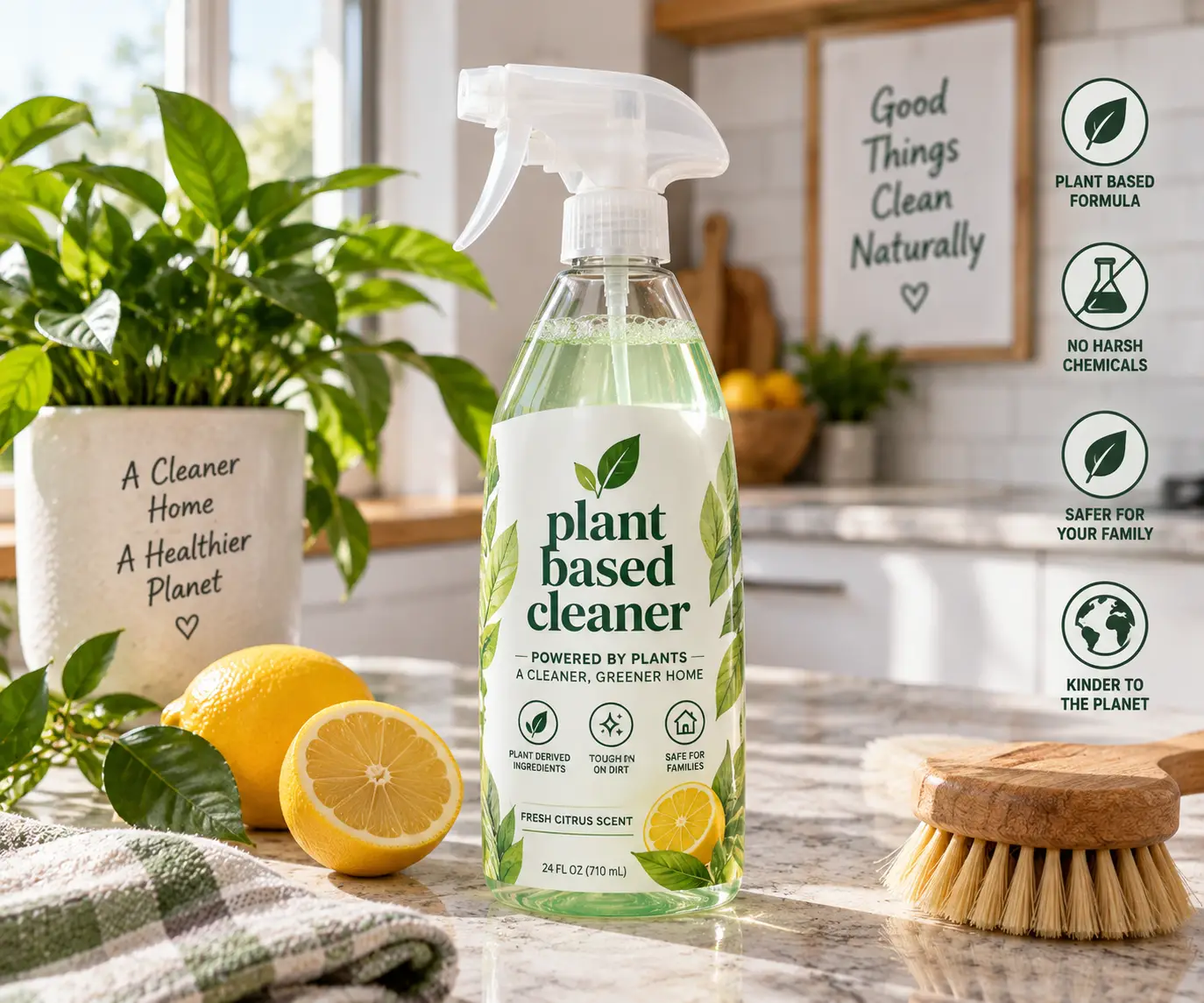
Somewhere between the bleach fumes and the “10 Ingredients Ending in -ate” on the back of your old spray bottle, most of us start wondering if there’s a better way to wipe down a kitchen counter. A plant based cleaner swaps petroleum-derived surfactants and synthetic fragrance for ingredients pulled from coconuts, corn, citrus, and sugar — and the category has grown from a niche health-store item into a full aisle at most major US grocery chains. That shift matters because what you spray on a countertop where your toddler eats breakfast, or your dog naps in a sunbeam, ends up on skin, in lungs, and eventually in wastewater.
This guide is built on real spec sheets, real EPA and manufacturer disclosures, and aggregated customer sentiment — not marketing copy. We researched seven genuinely plant-derived, US-available cleaners spanning budget fragrance-free sprays to refillable whole-home systems, and we’ll walk through what actually separates a legitimately “green” formula from a bottle with a leaf on the label and not much else behind it. By the end, you’ll know exactly which plant based cleaner fits your household, your budget, and your tolerance for scent.
As an Amazon Associate, this post may contain affiliate links, and we may earn a commission from qualifying purchases at no extra cost to you.
What Is a Plant Based Cleaner?
A plant based cleaner is a household cleaning product whose active cleaning agents — the surfactants that lift dirt and grease — are derived primarily from plant or plant-adjacent sources like coconut, corn, sugar beet, or soap bark, rather than petroleum. Most also skip synthetic dyes, phosphates, and harsh solvents, though formulas vary widely in how “clean” their full ingredient list actually is.
That variation is the whole reason a comparison guide like this one is useful: “plant based” isn’t a regulated term in the US, so two products carrying that label can have very different real-world safety and performance profiles. The EPA’s Safer Choice certification is one of the few third-party checks that actually verifies every ingredient in a formula, not just the marketing-friendly ones, and several of the products below carry it.
Quick Comparison: Plant Based Cleaners at a Glance
Before diving into the full breakdown, here’s a snapshot of how the seven products stack up on format, certification, and typical cost.
| Product | Format | Key Certification | Price Range | Best For |
|---|---|---|---|---|
| Seventh Generation Free & Clear | Ready-to-use spray | EPA Safer Choice | around $5–$7 | Budget, fragrance-sensitive homes |
| ECOS Plant Powered All-Purpose | Ready-to-use spray | EPA Safer Choice | around $4–$6 | Simplest ingredient list |
| Mrs. Meyer’s Multi-Surface Cleaner | Ready-to-use spray | Leaping Bunny | around $4–$6 | Scent variety, wide availability |
| Better Life All-Purpose Cleaner | Ready-to-use spray | Cruelty-free | around $6–$9 | Heavier grease and grime |
| Puracy Natural Multi-Surface | Spray + concentrate | EWG “A” rated | around $7–$16 | Streak-free glass and electronics |
| Dr. Bronner’s Sal Suds | Ultra-concentrate | EWG Verified | around $11–$16 | Stretching one bottle the furthest |
| Branch Basics Starter Kit | Concentrate system | Plant & mineral-based | around $60–$90 | Replacing your entire cleaning cabinet |
Looking at the table, a clear pattern emerges: the ready-to-use sprays in the $4–$9 range are the easiest on-ramp if you’ve never tried a plant based cleaner, while the concentrate-based options from Dr. Bronner’s Sal Suds and Branch Basics cost more upfront but dilute down to pennies per bottle. If disinfecting is a priority, note that none of these seven are EPA-registered disinfectants — they clean and degrease, but killing viruses and bacteria on contact requires a separate product.
💬 One click helps other shoppers make an informed choice too! 😊
Top 7 Plant Based Cleaners: Expert Analysis
We picked these seven to cover entry-level, mid-range, and premium options, plus a couple of lesser-known alternatives that punch above their price point. Every product below is genuinely available on amazon.com at the time of writing; check the current listing for exact pricing and package size, since both shift often.
1. Seventh Generation Free & Clear All-Purpose Cleaner — best budget fragrance-free pick
Seventh Generation built this cleaner around a short ingredient list: water, plant-derived glucoside surfactants, and a citrate-based water softener, with zero added fragrance or dye. That matters in practice for anyone with asthma or scent sensitivities, since fragrance is one of the most common triggers in conventional sprays. The formula carries the EPA Safer Choice certification, is a USDA Certified Biobased Product at 95%, and ships in a bottle made from post-consumer recycled plastic. Based on comparing the specs against pricier competitors, this is one of the few sub-$7 options that’s genuinely EPA-vetted rather than just marketed as “natural.” It’s the pick for renters, budget-conscious families, and anyone who wants a no-frills workhorse rather than a lifestyle brand. Reviews consistently report strong grease-cutting on kitchen surfaces and a streak-free finish on glass and stainless, with the main complaint being that the unscented formula feels less “fresh” to shoppers used to heavily perfumed sprays — which, for a fragrance-free product, is really a feature working as intended.
Pros:
- ✅ EPA Safer Choice certified at a budget price point
- ✅ Zero synthetic fragrance or dyes
- ✅ Bottle made from recycled plastic
Cons:
- ❌ Unscented formula reads as “plain” to some shoppers
- ❌ Ready-to-use only, no concentrate refill option
Seventh Generation typically runs in the $5–$7 range for a single 23-ounce bottle, and multi-packs bring the per-bottle cost down further. For the certification and ingredient transparency you get, it’s excellent value.
2. ECOS Plant Powered All-Purpose Cleaner — simplest ingredient list on this list
Earth Friendly Products, the company behind the ECOS line, builds this cleaner from as few as six ingredients: water, a coconut- and corn-derived glucoside surfactant, citric acid, a food-grade preservative, and a plant-derived solvent. What that short list means in practice is fewer unknowns — there’s no fragrance blend hiding dozens of undisclosed compounds, which is a common gap even in other “natural” cleaners. ECOS also holds EPA Safer Choice certification and is manufactured in solar- and wind-powered US facilities, a detail that speaks to the brand’s broader sustainability claims beyond just the bottle’s contents. This is the pick for ingredient-list purists and anyone buying for a household with young kids or a chemically sensitive family member. Aggregated customer sentiment on the Orange and Parsley scent variants skews positive for grease-cutting on kitchen counters, with occasional notes that the scent fades faster than synthetic-fragrance competitors — again, a tradeoff of skipping synthetic fixatives rather than a formulation flaw.
Pros:
- ✅ Only six to seven disclosed ingredients
- ✅ EPA Safer Choice certified and made with renewable energy
- ✅ Women-owned, family-operated US manufacturer
Cons:
- ❌ Natural scent fades faster than synthetic-fragrance cleaners
- ❌ Smaller 22-ounce bottle size than some competitors
Expect to pay around $4–$6 per bottle, making ECOS one of the most affordable Safer Choice–certified options available.
3. Mrs. Meyer’s Clean Day Multi-Surface Everyday Cleaner — widest scent selection, easiest to find
Mrs. Meyer’s built its reputation on garden-inspired scents like lavender, basil, and rosemary layered over a base of plant-derived surfactants and essential oils. The brand discloses that its formulas are at least 97–99% naturally derived and made without parabens, phthalates, or glycol solvents, and it’s Leaping Bunny certified cruelty-free. What most buyers overlook with this model is that it’s genuinely everywhere — big-box stores, grocery chains, drugstores — which makes it the easiest plant based cleaner to restock without planning ahead or waiting on a shipment. It’s the pick for households that want a “step one” swap away from conventional cleaners without hunting down a specialty brand. Reviews consistently praise the scent range and note the formula performs comparably to mainstream sprays on everyday kitchen and bathroom messes, though a handful of reviewers flag that heavier grease buildup may need a second pass compared to degreaser-focused formulas.
Pros:
- ✅ Widest scent selection of any cleaner on this list
- ✅ Available at nearly every US retailer
- ✅ At least 97% naturally derived formula
Cons:
- ❌ Strong scents can bother fragrance-sensitive users
- ❌ Less effective on heavy, baked-on grease than degreaser-style formulas
A single 16-ounce bottle typically runs around $4–$6, with multi-packs bringing the per-unit price down into the $3–$4 range.
4. Better Life All-Purpose Cleaner — strongest grease-cutting from soap bark and coconut
Better Life’s formula leans on quillaja saponaria (soap bark) extract alongside coconut- and corn-derived glucosides, which the brand states adds up to 100% plant-derived cleaning agents with no SLS, SLES, or petroleum solvents. In practice, that soap bark base is what gives this cleaner a noticeably sudsier, more aggressive feel against grease compared to the lighter glucoside-only formulas earlier on this list — useful if your household does a lot of stovetop cooking. Based on comparing ingredient decks, Better Life sits closer to a “performance-first” plant based cleaner than a minimalist one, and its citrus and clary sage scent options come from real plant extracts rather than a single synthetic fragrance compound. This is the pick for anyone who felt underwhelmed switching to a gentler natural cleaner and wants something that feels closer to a conventional degreaser. With over 20,000 Amazon reviews averaging 4.6 stars, aggregated sentiment is strongly positive on cleaning power, streak-free glass performance, and scent, with occasional reviews noting the trigger sprayer can be finicky over time.
Pros:
- ✅ Soap bark base gives noticeably stronger grease-cutting
- ✅ 100% plant-derived cleaning agents, no SLS or SLES
- ✅ Over 20,000 reviews averaging 4.6 stars
Cons:
- ❌ Sprayer mechanism reported to wear out on some bottles
- ❌ Pricier per ounce than Seventh Generation or ECOS
Better Life typically costs around $6–$9 for a 24–32-ounce bottle, positioning it as a mid-range pick.
5. Puracy Natural Multi-Surface Cleaner — the streak-free pick independent testers preferred
Puracy was formulated by a team of PhD chemists in Austin, Texas, and it’s the only cleaner on this list to have been independently tested and named a top pick by a major US product-review outlet after side-by-side testing against other household cleaners on oil, baked-on sauce, and crayon marks. The formula combines decyl glucoside and other plant-derived surfactants with citric acid and natural botanical extracts, and it carries an “A” safety rating from the Environmental Working Group’s cleaning product database. What that independent testing means in practice: this is the pick if streak-free performance on glass, stainless steel, and electronics is your top priority, since that’s specifically what it was recognized for. It’s also available as a concentrate — one 16-ounce bottle makes roughly a gallon of ready-to-use cleaner, which meaningfully lowers the cost per use versus buying pre-mixed sprays repeatedly. Reviews consistently mention the lack of residue on dark countertops and glass, which is a common complaint about other “natural” cleaners.
Pros:
- ✅ Independently tested and recognized for streak-free performance
- ✅ EWG “A” safety rating
- ✅ Concentrate option stretches one bottle into a full gallon
Cons:
- ❌ Ready-to-use spray costs more per ounce than budget picks
- ❌ Some scent variants (green tea and lime) aren’t for everyone
Ready-to-use sprays run around $7–$9 for 25 ounces, while the concentrate version costs more upfront (around $13–$16) but dramatically lowers your cost per gallon over time.
6. Dr. Bronner’s Sal Suds Biodegradable Cleaner — most concentrated, stretches the furthest
Sal Suds isn’t a spray bottle at all — it’s a thick, highly concentrated liquid you dilute yourself, anywhere from a teaspoon per quart for glass cleaning to a few tablespoons for a full mop bucket. The formula blends plant-derived surfactants with Siberian fir needle and spruce essential oils for scent, and Dr. Bronner’s reports it shows more than 60% biodegradation within 28 days under ISO testing standards, with EWG Verified status. What most buyers overlook with this model is just how far one 32-ounce bottle goes: because you’re diluting to a fraction of a percent for most tasks, a single bottle can realistically replace a dozen bottles of ready-to-use spray over its lifespan. That makes it the pick for anyone who wants to minimize plastic waste and doesn’t mind a little extra hands-on mixing. Reviews consistently describe it as a “one bottle does everything” cleaner — floors, dishes, laundry, cars — though several note the piney scent is polarizing and the lack of a spray-ready format is a hurdle for first-time buyers.
Pros:
- ✅ Extreme dilution ratio means exceptional cost-per-use value
- ✅ EWG Verified and rapidly biodegradable
- ✅ Works across nearly every surface and laundry too
Cons:
- ❌ Requires manual dilution — no ready-to-use spray version
- ❌ Piney fir-and-spruce scent isn’t universally loved
At around $11–$16 for a 32-ounce bottle, Sal Suds looks pricier than a spray upfront, but the effective cost per gallon of usable cleaner is among the lowest on this list.
7. Branch Basics Premium Starter Kit — replaces your entire cleaning cabinet
Branch Basics takes a different approach entirely: one 33.8-ounce concentrate, built from decyl glucoside, sodium citrate, and chamomile flower extract in purified water, dilutes into all-purpose spray, bathroom cleaner, streak-free glass cleaner, foaming hand wash, and laundry detergent using the color-coded bottles included in the kit. The formula is completely fragrance-free by design — the brand’s position is that “fragrance” as a labeling term can legally hide hundreds of undisclosed compounds, so they simply leave it out. Here’s what to weigh: the starter kit costs more upfront than any single spray bottle, but it’s genuinely replacing five or more separate products, and refill concentrate afterward works out to just a few dollars per finished bottle. This is the pick for households fully committing to a plant-based cleaning overhaul, especially anyone managing allergies, asthma, or a newborn where fragrance-free matters most. Aggregated reviews are strongly positive on effectiveness for everyday messes, with the most common critique being that it doesn’t perform like a heavy-duty disinfectant — which, as a non-disinfecting cleaner, is expected rather than a shortfall.
Pros:
- ✅ One concentrate replaces five-plus separate cleaning products
- ✅ Completely fragrance-free formula
- ✅ Refillable bottles cut long-term plastic waste
Cons:
- ❌ Highest upfront cost of any product on this list
- ❌ Requires mixing bottles yourself rather than grabbing a ready spray
The Premium Starter Kit typically runs $60–$90 depending on bundle size, with refill concentrate afterward costing a fraction of that per bottle produced.
How to Choose a Plant Based All Purpose Cleaner
With so many bottles claiming to be “natural,” here’s how to actually evaluate one before you buy:
- Check for third-party certification, not just marketing language. A Safer Choice or EWG Verified badge means an outside body reviewed every ingredient — a green leaf on the label means nothing on its own.
- Read the full ingredient list, including “fragrance.” A single word like “fragrance” can legally represent dozens of undisclosed compounds; fragrance-free formulas from brands like Seventh Generation or Branch Basics avoid this gap entirely.
- Match the format to your habits. Ready-to-use sprays win on convenience; concentrates like Sal Suds or Branch Basics win on long-term cost and reduced plastic if you’re willing to dilute yourself.
- Consider your household’s sensitivities first. If anyone at home has asthma, eczema, or fragrance sensitivity, prioritize a fragrance-free plant based cleaner over a scented one, regardless of how “natural” the scent claims to be.
- Weigh grease-cutting power against gentleness. Soap bark and coconut-surfactant formulas like Better Life clean tougher messes faster; simpler glucoside-only formulas are gentler but may need a second pass on baked-on grime.
- Don’t expect disinfection from a plant based cleaner. None of the products above are EPA-registered disinfectants — if you need to kill viruses or bacteria on a surface, that’s a separate purchase.
- Price per use, not price per bottle. A $16 concentrate that makes a gallon is often cheaper long-term than a $5 spray you rebuy every few weeks.
What most people overlook is that “features” and “ingredients” tell only half the story — how a formula performs on your specific surfaces (butcherblock, matte black fixtures, unsealed stone) is where reviews and your own trial bottle matter more than any spec sheet.
Plant Based Cleaner vs Conventional Chemical Cleaners
The biggest practical difference between a plant based cleaner and a conventional one isn’t cleaning power on light, everyday messes — it’s what’s in the bottle and how it behaves once it goes down the drain.
| Factor | Plant Based Cleaner | Conventional Chemical Cleaner |
|---|---|---|
| Primary surfactant source | Coconut, corn, sugar, soap bark | Petroleum-derived (e.g., alkylbenzene sulfonates) |
| Fumes | Minimal to none; many are VOC-free | Often noticeable, especially with ammonia or bleach formulas |
| Biodegradability | Typically rapid, often 28-day tested | Varies widely, often slower |
| Disinfecting claims | Rare; most clean but don’t disinfect | Common, especially bleach and quat-based products |
| Grease-cutting on heavy buildup | Good to very good, format-dependent | Often stronger on baked-on grease |
Looking at the table, conventional cleaners still have an edge in raw degreasing power and in disinfecting claims, since EPA-registered disinfectants generally rely on chemistries like quaternary ammonium compounds or bleach that plant-derived surfactants don’t replicate. But for the vast majority of everyday cleaning — countertops, glass, floors, bathroom surfaces — the gap in actual cleaning performance has narrowed considerably as brands like Puracy and Better Life have refined their surfactant blends specifically to compete on grease-cutting. The tradeoff buyers should understand clearly: if you need to disinfect a surface after someone in the house has been sick, a plant based cleaner isn’t the tool for that job, and pairing one with a dedicated EPA-registered disinfectant for those specific moments is the more honest approach than expecting one bottle to do both.
✨ Ready to make the switch? Check today’s price on your top pick and start with just one room. 🌿
How to Switch to Plant Based Cleaning Products: A Room-by-Room Guide
Switching an entire home over to plant based cleaning products at once is how most people end up with five half-used bottles under the sink within a month. A more sustainable approach:
Week 1 — Kitchen first. This is the highest-traffic surface in most homes and where grease buildup makes the performance difference most obvious. Start with a ready-to-use spray like Mrs. Meyer’s or Better Life so you’re not also learning a dilution ratio on day one.
Week 2 — Bathroom. Swap your glass and mirror cleaner for a streak-free formula like Puracy, since bathroom mirrors and glass shower doors are the surfaces where residue is most visible.
Week 3 — Floors and general surfaces. If you haven’t tried a concentrate yet, this is a low-stakes place to start: a capful of Dr. Bronner’s Sal Suds in a mop bucket costs pennies and covers an entire floor.
Week 4 — Evaluate and consolidate. By now you’ll know whether you prefer sprays or concentrates. This is the point where a whole-home system like Branch Basics makes the most financial sense — you’ll already know it performs, rather than gambling on a full starter kit before trying the brand.
A common mistake in the first 30 days is over-diluting concentrates to “make the bottle last longer,” which just means re-cleaning surfaces twice. Follow the label’s dilution ratio exactly, especially with a product as concentrated as Sal Suds, where the difference between a capful and a full cap is significant.
Real-World Scenarios: Which Plant Based Cleaner Fits Your Household
The budget-conscious renter. If you’re moving every year or two and want an effective cleaner without much investment, Seventh Generation or ECOS deliver EPA Safer Choice certification at the lowest price point on this list — ideal for a household cleaning on a tight monthly budget who still wants ingredient transparency.
The family with a newborn or asthma diagnosis. Fragrance is one of the most common airborne irritants in a home, so Branch Basics or unscented Seventh Generation eliminate that variable entirely, at the cost of a higher upfront investment for the former.
The home cook who fries and roasts often. Grease is the real test of any all-purpose cleaner, and Better Life‘s soap bark formula or Puracy‘s independently tested performance are the two most likely to keep up with a kitchen that sees heavy use several times a week.
The sustainability-focused household. If minimizing plastic waste and bottle count matters as much as ingredients, Dr. Bronner’s Sal Suds offers the best ratio of packaging to finished cleaning solution of anything on this list, since one bottle dilutes into dozens of uses.
The household replacing everything at once. For buyers ready to commit fully and stop juggling five different cleaner types, the Branch Basics starter kit’s one-concentrate-does-it-all approach removes decision fatigue at checkout, even though it carries the highest sticker price.
Common Mistakes to Avoid When Buying a Natural Plant Based Cleaner
Even well-intentioned shoppers fall into a few predictable traps:
- Trusting “natural” or “green” on the front label alone. Under the FTC’s Green Guides on environmental marketing claims, broad, unqualified terms like “eco-friendly” aren’t required to be substantiated the way a specific certification is — flip the bottle over and check the actual ingredient list instead.
- Assuming plant-derived means hypoallergenic. Essential oils and plant extracts can still trigger allergies or skin sensitivity in some people; if you have known sensitivities, fragrance-free is the safer starting point regardless of the ingredient source.
- Buying a concentrate without reading the dilution instructions first. Products like Sal Suds are potent enough that using it at full strength on skin or delicate surfaces can be too harsh; always check the specific dilution for your task.
- Expecting disinfection from a cleaning-only formula. None of the seven products in this guide are EPA-registered disinfectants, so don’t rely on them alone after illness in the household.
- Overpaying for a starter kit before confirming you like the formula. If you’re new to a brand like Branch Basics, consider a smaller trial size or the standalone concentrate before committing to a full multi-bottle kit.
Long-Term Cost and Maintenance of an Eco Friendly Plant Based Cleaner
Sticker price on the shelf is a poor predictor of what an eco friendly plant based cleaner actually costs you over a year. A $5 ready-to-use spray that lasts three weeks in a busy kitchen works out to roughly $85 annually; a $55 concentrate like Branch Basics that makes three all-purpose bottles plus bathroom and glass cleaner from a single fill can stretch across two to four months of typical household use, which often lands in a similar or lower annual range once you factor in reduced bottle purchases. Dr. Bronner’s Sal Suds pushes this further: because dilution ratios run as low as half a tablespoon per quart, a single 32-ounce bottle can realistically replace a dozen bottles of pre-mixed spray.
Maintenance is minimal across the board — none of these formulas require refrigeration or special storage, though concentrates should be kept away from direct sunlight to preserve the essential oil components. The main long-term consideration is refill logistics: subscribe-and-save options exist for most of these brands on Amazon, and concentrate systems specifically benefit from setting a recurring refill order, since running out mid-dilution is more disruptive than grabbing a backup spray bottle.
Safety, Regulations, and Standards
Cleaning product safety in the US sits in a regulatory gap that’s worth understanding before you shop. Unlike food or cosmetics, manufacturers aren’t required to disclose every ingredient on a cleaning product label, and the government doesn’t pre-review formulas before they hit shelves — a point the Environmental Working Group has documented extensively in its ongoing product database. That’s exactly why third-party programs matter: EPA’s Safer Choice label requires every intentionally added ingredient to pass agency review, not just the ones a company chooses to highlight, and several products in this guide (Seventh Generation, ECOS) carry that certification specifically.
For households with specific concerns, a few standards worth knowing: “biodegradable” claims tested under ISO 14593 (as Dr. Bronner’s discloses) mean a formula broke down significantly within a set timeframe under controlled conditions — a more rigorous claim than an unqualified “biodegradable” on a label with no testing standard cited. USDA Certified Biobased Product percentages, seen on Seventh Generation and Mrs. Meyer’s, indicate what portion of the formula (by weight, excluding water) comes from renewable biological sources rather than petroleum. None of this replaces basic safety practice: keep any cleaner, plant-derived or not, out of reach of small children, avoid mixing products, and always spot-test on unsealed stone, unfinished wood, or delicate finishes before full use.
Plant Based Cleaner for Sensitive Households: Kids, Pets, and Allergies
Households with young kids, pets, or anyone managing allergies or asthma face a slightly different calculus than the average shopper. The biggest variable isn’t the surfactant — it’s fragrance and residue. A cleaner that’s wiped off a high chair tray or a countertop where a dog’s food bowl sits should ideally leave nothing behind that could be licked or mouthed, which is exactly what the “food-safe” and “safe for high chairs” claims on products like Puracy and Better Life are addressing directly.
For pet owners specifically, keep in mind that cats in particular can be sensitive to certain essential oils, including some citrus and tea tree compounds used in natural fragrance blends — if you share a home with cats, a fragrance-free option like Seventh Generation or Branch Basics sidesteps that risk entirely rather than requiring you to research each scent’s specific oil content. For families managing asthma or eczema, the same logic applies: fragrance, not the plant-derived surfactant base itself, is the more common trigger, so prioritize disclosed, minimal-ingredient formulas over heavily scented ones regardless of how “natural” the scent source is marketed to be.
Frequently Asked Questions
❓ What is the best plant based cleaner for sensitive skin?
❓ Are plant based cleaners as effective as regular cleaners?
❓ How much does a plant based cleaner cost?
❓ Can plant based cleaners disinfect surfaces?
❓ Where can I buy plant based cleaner online?
Conclusion
Choosing a plant based cleaner really comes down to three questions: what’s your budget, does anyone in your home need a fragrance-free formula, and do you want the convenience of a ready-to-use spray or the long-term savings of a concentrate? Budget shoppers and fragrance-sensitive households land well with Seventh Generation or ECOS. Anyone wanting the widest scent selection and easiest restocking should look at Mrs. Meyer’s. Households battling serious kitchen grease do best with Better Life or the independently tested Puracy. And for buyers ready to minimize plastic waste or overhaul their entire cleaning cabinet, Dr. Bronner’s Sal Suds and the Branch Basics starter kit both deliver real long-term value once you factor in cost per use.
None of these are magic bullets — a plant based cleaner won’t disinfect a surface after the flu goes through your house, and “natural” on a label still means it’s worth reading the ingredients yourself. But for the vast majority of everyday cleaning most households actually do, these seven formulas offer a genuinely safer, better-documented alternative to what’s been sitting under most American sinks for decades.
✨ Don’t miss these exclusive deals! 🔍 Take your home cleaning routine to the next level with this carefully curated lineup. Click a highlighted product to check current pricing and availability. These picks will help you get a cleaner, fresher home the whole family — pets included — will enjoy!
Recommended for You
- Large Microfiber Towels: 7 Best Picks for 2026 (Tested Guide)
- 7 Best Soft Microfiber Cloths for 2026: Which One Wins?
- Microfiber Textile: 7 Best Picks & Buying Guide (2026)
Disclaimer: This post contains affiliate links. As an Amazon Associate, I earn from qualifying purchases made through these links, at no additional cost to you.
✨ Found this article helpful? Share it with someone who needs it! 💬🤗