In This Article
Why Your Face Cloth Matters More Than Your Cleanser Thinks
You spent real money on that cleanser. You read the ingredient list, compared pH levels, and maybe even watched a dermatologist break it down on video. Then you wiped it all off with a scratchy washcloth that has been hanging damp on the shower rail since Tuesday. Sound familiar?
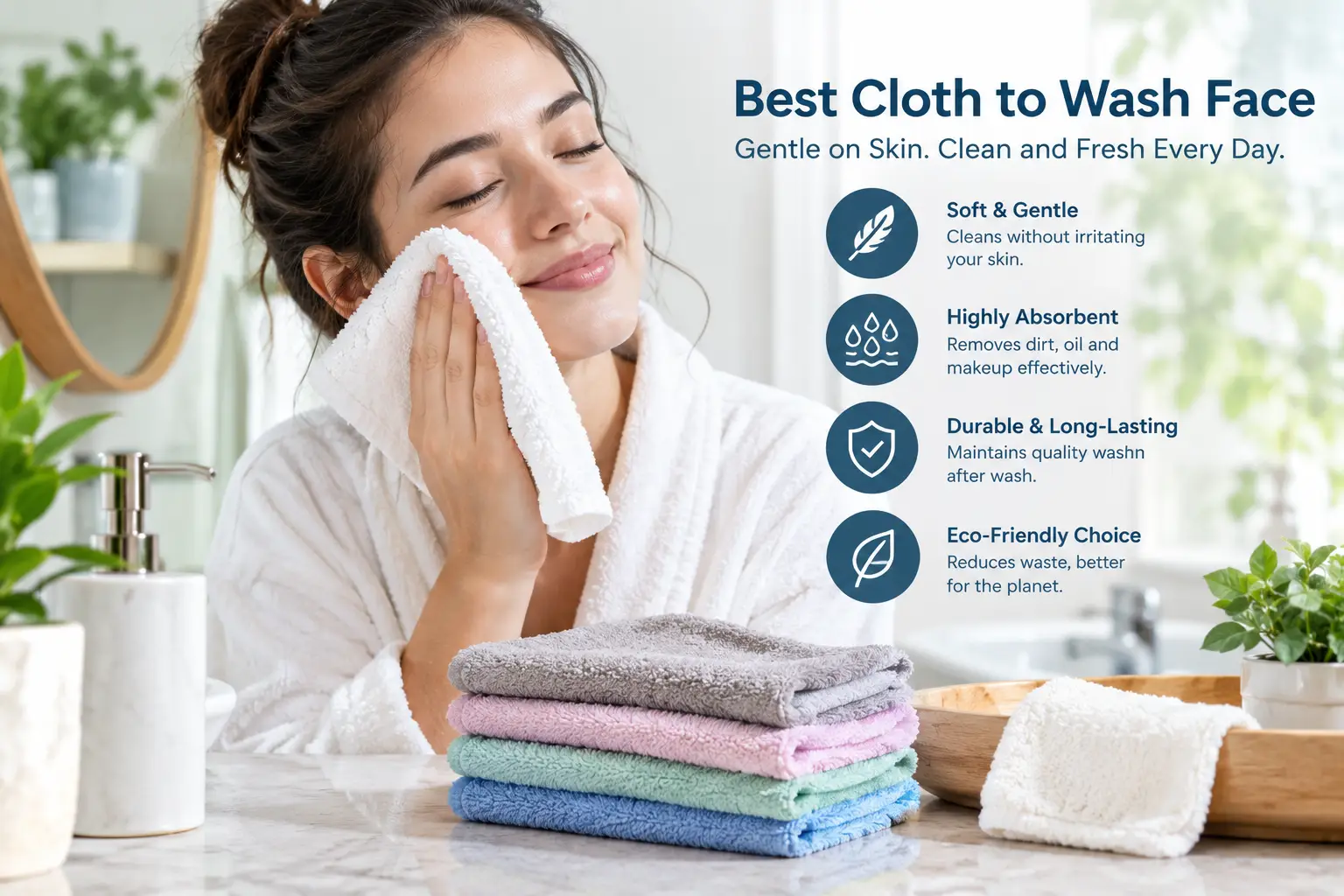
Here’s the thing: the best cloth to wash face with is not a luxury accessory. It’s the last thing that touches your skin during cleansing, and it decides whether your routine ends gently or with friction, leftover residue, and a fresh round of bacteria. A cloth that’s too rough can leave sensitive skin red and tight. A cloth that’s too thin can smear makeup around instead of lifting it. And a cloth that never fully dries can turn into a tiny petri dish.
The good news? Picking the best cloth to wash face with is easier once you understand what each fabric actually does. Microfiber grabs makeup and oil. Muslin gives a light polish that pairs beautifully with cleansing balms. Viscose from bamboo feels silky and low-friction. Plain cotton terry is cheap, familiar, and easy to replace. Single-use towels trade reusability for guaranteed freshness.
In this guide, you’ll find seven real products available on Amazon, each analyzed on spec sheets and aggregated customer feedback, plus practical advice on technique, laundering, and matching a cloth to your skin type. We’ll also cover secondary questions shoppers ask constantly: what’s the best washcloth for face care if you have acne, whether a microfiber face cloth is too harsh, and when a muslin face cloth beats everything else.
No fluff, no invented testimonials. Just clear reasoning so you can buy once and get it right.
What Is the Best Cloth to Wash Face?
The best cloth to wash face with is a soft, clean, low-friction fabric that removes cleanser and makeup without scrubbing. For most people, that means a microfiber, muslin, or viscose-from-bamboo cloth used with lukewarm water and light pressure, swapped for a fresh one daily and laundered without fabric softener.
That definition lines up with the face-washing guidance from the American Academy of Dermatology, which recommends a gentle, non-abrasive cleanser, lukewarm water, and resisting the urge to scrub because scrubbing irritates skin. In other words, the cloth should do the work through its fibers, not through your elbow grease.
It’s worth separating two jobs a face cloth can do. The first is cleansing assistance: removing makeup, sunscreen, and cleanser residue. The second is drying: patting the face dry after rinsing. Some cloths excel at one and are merely fine at the other. A makeup remover cloth with dense fibers is a star at job one, while a single-use towel shines at job two. Knowing which job matters most to you is the fastest way to narrow down the list below.
Quick Comparison: Best Cloth to Wash Face at a Glance
| Product | Material | Best for | Price range (at time of writing) |
|---|---|---|---|
| The Original MakeUp Eraser | Polyester microfiber, dual-sided | Water-only full makeup removal | Around $20–$25 |
| Face Halo Original | Ultra-fine microfiber rounds (3-pack) | Travel and precise makeup removal | Around $20–$25 |
| SINLAND Microfiber Face Cloths | Microfiber, 12″ x 12″ (6-pack) | Budget makeup removal | Under $20 |
| Utopia Towels Cotton Washcloths | 100% ring-spun cotton (12-pack) | Daily fresh-cloth rotation on a budget | Around $10–$20 |
| KeaBabies Deluxe Washcloths | Viscose from bamboo, 500 GSM, 10″ x 10″ | Sensitive, easily flushed skin | Around $15–$25 |
| GingerChi Organic Muslin Face Cloths | 100% organic cotton muslin (2-pack) | Cleansing balms and gentle exfoliation | Under $20 |
| Clean Skin Club Clean Towels XL | Single-use bio-based viscose (50 count) | Acne-prone skin and hygiene-first drying | Around $25–$35 |
Looking at the table, the split is clear: three microfiber options dominate makeup removal, while cotton, bamboo viscose, and muslin serve cleansers and gentle routines. The Original MakeUp Eraser and Face Halo Original cost more per cloth but replace disposable wipes, whereas Utopia Towels Cotton Washcloths win purely on quantity. If breakouts are your main concern, Clean Skin Club Clean Towels XL stands apart because a fresh surface every time removes the “is this cloth clean?” guesswork.
💬 One click helps other shoppers make an informed choice too! 😊
Top 7 Best Cloth to Wash Face Picks: Expert Analysis
1. The Original MakeUp Eraser — erases full makeup with just water
The Original MakeUp Eraser earned its cult status for one reason: it’s designed to remove a full face of makeup with warm water alone. It’s a polyester cloth with two textures, short fibers on one side for lifting makeup and longer fibers on the other for gentle buffing. In practice, those tightly packed short fibers work like thousands of tiny squeegees that trap pigment, oil, and sunscreen instead of pushing them across your cheek. The brand says a single cloth can go through up to 1,000 washes, which is where the long-term value story comes from.
Based on the specs, this is best for daily makeup wearers who hate the greasy film of oil removers or the waste of wipes. It’s less ideal if you have very reactive skin, because longer polyester fibers feel “grippier” than muslin or bamboo viscose.
Across published reviews, the sentiment is mostly enthusiastic about how much foundation and mascara comes off, and several reviewers note the cloth dries quickly. A recurring counterpoint is that some people still reach for a remover for stubborn eye makeup, and a few sensitive-skin users describe the texture as harsh.
Pros:
- ✅ Removes most makeup without any cleanser
- ✅ Dries fast, which helps limit musty smells
- ✅ Replaces a large volume of disposable wipes
Cons:
- ❌ Can feel rough on very sensitive skin
- ❌ One cloth means frequent laundry for daily users
Typically around $20–$25 (check the current price); strong value if it fully replaces wipes in your routine.
2. Face Halo Original — best for travel and precision
Face Halo Original takes the same water-only idea and shrinks it into palm-sized rounds sold in packs of three. The brand describes the fibers as far finer than a human hair, and the round shape matters more than it looks: you can fold it to a point for the lash line or around the nose, which a big square cloth handles clumsily. Face Halo states each pad can be washed around 200 times.
On paper, this is the most “precise” cloth in the lineup, which makes it ideal for people who wear eye makeup or tinted sunscreen and want something that fits in a toiletry bag. Three pads also means you can rotate them while one is in the wash.
Aggregated reviews are warm about how well the pads lift makeup and sunscreen with water. The most common complaint concerns cleaning: some users report makeup stains that don’t fully wash out of the white pads, especially if they aren’t rinsed right after use.
Pros:
- ✅ Compact rounds reach tricky spots easily
- ✅ Three-pack allows a simple rotation
- ✅ Handles tinted sunscreen and light makeup well
Cons:
- ❌ White surface can hold visible makeup stains
- ❌ Too small for drying your whole face
Usually around $20–$25 for three (prices may vary); good value for travelers and eye-makeup wearers.
3. SINLAND Microfiber Face Cloths — budget microfiber that punches above its price
SINLAND Microfiber Face Cloths give you the core microfiber advantage for a fraction of the premium brands’ per-cloth cost. The 12″ x 12″ six-pack is thin, lightweight, and designed to be used with warm water or with your favorite cleanser. Being thin is a practical plus: the cloth wrings out almost completely and dries quickly, which reduces the damp window where bacteria multiply. If you want to understand why these fibers grip oil and pigment so well, Wikipedia’s overview of microfiber explains how fibers finer than one denier create a huge surface area.
Here’s what to weigh: six cloths let you use a fresh one every day and still do laundry just once a week, which is exactly the habit dermatologists encourage.
Aggregated customer sentiment, as summarized by review-analysis tools, praises softness and makeup removal with just warm water. A smaller group reports that makeup stains linger after washing and that some colors lose vibrancy, with mixed opinions on long-term durability.
Pros:
- ✅ Six cloths support a fresh-cloth-daily habit
- ✅ Thin weave dries quickly between uses
- ✅ Very low cost per cloth
Cons:
- ❌ Light colors can show lasting makeup stains
- ❌ Durability reports are mixed across reviews
Usually under $20 for six (check the current price); arguably the best budget makeup remover cloth here.
4. Utopia Towels Cotton Washcloths — the no-nonsense daily rotation
Utopia Towels Cotton Washcloths are exactly what they sound like: a 12-pack of 12″ x 12″ ring-spun cotton washcloths, with double-stitched hems. Ring-spun cotton is twisted into a finer, stronger yarn than basic open-end cotton, which usually translates to a softer hand-feel and fewer loose fibers. One detail worth noticing is that Utopia lists different fabric weights across its washcloth listings, anywhere from roughly 410 to 600 GSM, so a “flannel” set and a “premium” set may feel noticeably different.
This is the pick for people who mainly use their cloth to remove cleanser, not makeup, and want enough cloths to grab a new one every single day. Cotton terry doesn’t grip pigment like microfiber does, so heavy makeup wearers should pair it with a remover.
Utopia’s own listing advises against applying cosmetics or scrubs directly with the towel to avoid discoloration, and it notes slight shrinkage after the first wash. The shopping site mybest named a Utopia cotton flannel set its favorite face towel for softness.
Pros:
- ✅ Twelve cloths make daily swaps effortless
- ✅ Familiar cotton feel that most skin tolerates
- ✅ Machine washable and easy to replace
Cons:
- ❌ Brand warns cosmetics may discolor the fabric
- ❌ Weaker at lifting makeup than microfiber
Generally around $10–$20 for twelve (prices may vary); the best washcloth for face routines built on volume.
5. KeaBabies Deluxe Washcloths — silky softness for reactive skin
KeaBabies Deluxe Washcloths are marketed as baby washcloths, and that’s precisely why they’re interesting for adult faces: products built for newborn skin prioritize low friction. They’re 10″ x 10″, made from viscose derived from bamboo, and listed at 500 GSM, which means a plush, dense pile that holds warm water well. Quick labeling note: under U.S. rules, “bamboo” textiles are almost always rayon or viscose, as the FTC’s business guidance on bamboo labeling explains, so don’t assume natural bamboo properties survive processing.
What matters in practice is the smooth, round fiber surface of viscose, which glides rather than drags. That makes these a smart face cloth for sensitive skin, rosacea-prone cheeks, or anyone who flushes after touching their face.
Customer reviews on the brand’s site frequently mention adults buying them specifically for face washing, with repeated praise for softness and less post-wash redness. We couldn’t verify a consistent pattern of complaints.
Pros:
- ✅ Very low-friction feel on reactive skin
- ✅ Dense 500 GSM pile holds warm water
- ✅ Compact size suits face-only use
Cons:
- ❌ Thick pile dries slower than microfiber
- ❌ Doesn’t grip makeup as well as microfiber
Around $15–$25 for six (check the current price); excellent value for sensitive skin.
6. GingerChi Organic Muslin Face Cloths — the balm cleanser’s best friend
GingerChi Organic Muslin Face Cloths are two-ply cloths woven from 100% organic cotton muslin. Muslin’s loose, open weave is the whole point: it’s thin enough to rinse clean in seconds, yet textured enough to give a very mild polish as you wipe away an oil or balm cleanser. The brand also suggests a classic esthetician trick, holding a warm, wrung-out cloth over the face briefly before wiping, which helps soften balm and makeup.
Here’s what most buyers overlook: the listed size isn’t consistent. The Amazon listing describes a larger 18″ x 12.5″ cloth, while the brand site says roughly 12″ x 12″ and warns about shrinkage in hot water. Expect some variation and wash on warm, not hot.
Customer reviews on the brand site highlight the thin, soft feel and repeat purchases by people who pair the cloths with oil cleansers. Because it’s a two-pack, you’ll need a stricter laundry rhythm than with bigger sets.
Pros:
- ✅ Ideal texture for removing balm cleansers
- ✅ Organic cotton with a quick-rinsing weave
- ✅ Very gentle exfoliation without scrubbing
Cons:
- ❌ Only two cloths per pack
- ❌ Listed dimensions vary; may shrink
Usually under $20 for two (prices may vary); the best muslin face cloth for double cleansers.
7. Clean Skin Club Clean Towels XL — a fresh surface every single time
Clean Skin Club Clean Towels XL solve the biggest hygiene problem with any reusable cloth: you never have to wonder if it’s truly clean. Each box holds 50 single-use towels measuring about 10″ x 12″, made from bio-based viscose sourced from eucalyptus or bamboo depending on the version. They can be used wet with cleanser or dry for patting, and the brand says to toss any towel that touched your skin directly.
Based on the concept, this is the strongest option for acne-prone skin, anyone recovering from irritation, and travelers who don’t want a damp cloth in a suitcase. The brand cites a clinical study of 33 adults showing fewer minor skin issues over six weeks; keep in mind it’s company-sponsored.
Aggregated reviews describe the towels as soft, absorbent, and non-irritating, and many people use them to replace bath towels on the face. Some reviewers say heavy mascara took extra effort to remove.
Pros:
- ✅ Guaranteed fresh towel for every wash
- ✅ Large XL size handles full-face drying
- ✅ Travel-friendly, no damp laundry to carry
Cons:
- ❌ Ongoing cost adds up over a year
- ❌ Creates more waste than reusable cloths
Typically around $25–$35 per 50-count box (check the current price); worth it if breakouts are your top concern.
Head-to-Head Specs: How the 7 Picks Really Differ
| Product | Size / count | Reusable? | Stated lifespan | Best for |
|---|---|---|---|---|
| The Original MakeUp Eraser | Full-size cloth, 1 | Yes | Up to 1,000 washes (brand claim) | Heavy makeup, water-only removal |
| Face Halo Original | Round pads, 3 | Yes | About 200 washes (brand claim) | Travel, eye area |
| SINLAND Microfiber Face Cloths | 12″ x 12″, 6 | Yes | Not clearly stated on main listing | Budget makeup removal |
| Utopia Towels Cotton Washcloths | 12″ x 12″, 12 | Yes | Not stated | Daily cleanser removal |
| KeaBabies Deluxe Washcloths | 10″ x 10″, 6 | Yes | Not stated | Sensitive skin |
| GingerChi Organic Muslin Face Cloths | ~12″ x 12″ (varies), 2 | Yes | Not stated | Balm and oil cleansers |
| Clean Skin Club Clean Towels XL | 10″ x 12″, 50 | Single use | One use per towel | Acne-prone skin, hygiene |
The spec comparison shows that “reusable” isn’t one category: The Original MakeUp Eraser and Face Halo Original publish lifespan claims, while the multipacks rely on quantity for longevity. If you want the fewest decisions, a multipack like SINLAND Microfiber Face Cloths or KeaBabies Deluxe Washcloths lets you rotate without thinking. Meanwhile, Clean Skin Club Clean Towels XL is the only pick where hygiene doesn’t depend on your laundry habits at all.
✨ Don’t miss these skin-friendly picks!
🔍 Take your skincare routine to the next level with this carefully curated lineup. Click a highlighted product to check current pricing and availability. The right cloth will help you get a calmer, cleaner complexion you’ll actually notice in the mirror!
Fabric Showdown: Microfiber vs Cotton vs Muslin vs Bamboo Viscose
Choosing the best cloth to wash face with starts with fabric, because the fiber structure determines how a cloth behaves before any brand name enters the picture.
Microfiber
Microfiber is a synthetic, usually polyester or a polyester-nylon blend, split into extremely fine strands. That fineness creates massive surface area and tiny gaps that trap oil and pigment. It’s the reason The Original MakeUp Eraser and SINLAND Microfiber Face Cloths can remove makeup with water. The trade-off: microfiber can feel slightly “sticky” against dry skin, and it’s a plastic textile, so sustainability-minded buyers may weigh that.
Cotton terry
Cotton terry uses loops that soak up water. It’s breathable, familiar, and cheap, which is why Utopia Towels Cotton Washcloths sell in twelve-packs. However, loops can snag and harbor residue, and cotton dries slower than thin microfiber.
Muslin
Muslin is a plain, loosely woven cotton. It holds less water than terry but rinses clean almost instantly, and its gentle texture provides light exfoliation, which is why cleansing-balm fans love GingerChi Organic Muslin Face Cloths.
Viscose from bamboo
Viscose is regenerated cellulose with a smooth, round fiber profile. It feels silky and glides, making KeaBabies Deluxe Washcloths a comfortable choice for reactive skin.
| Option | Removes makeup | Friction on skin | Dry time | Best for |
|---|---|---|---|---|
| Microfiber cloth | Excellent | Low to medium | Fast | The Original MakeUp Eraser fans, makeup wearers |
| Cotton terry cloth | Fair | Medium | Slow | Cleanser removal on a budget |
| Muslin cloth | Good with balm | Low (light polish) | Very fast | Double cleansing |
| Bamboo viscose cloth | Fair | Very low | Medium | Sensitive skin |
| Fingertips only | Poor for makeup | Lowest | N/A | Minimal routines |
| Old bath towel | Poor | High | Slow | Nobody, honestly |
The takeaway: no fabric wins every category, but every dedicated face cloth beats a shared bath towel on hygiene and friction. Microfiber is the makeup specialist, viscose is the comfort specialist, and muslin sits in the middle for cleanser-first routines. Fingertips remain perfectly fine for bare-faced days, which is a reminder that a cloth is a tool, not a requirement.
How to Choose the Best Cloth to Wash Face
Follow these seven steps to narrow the field fast:
- Define the job. If you mainly remove makeup, prioritize microfiber. If you remove cleanser, cotton, muslin, or viscose works well.
- Match your skin type. Sensitive or rosacea-prone skin does best with low-friction viscose or muslin; oily skin tolerates microfiber’s grip.
- Check fabric weight (GSM). Higher GSM feels plusher but dries slower; lower GSM dries fast and suits humid bathrooms.
- Count the cloths. You want enough for a fresh cloth daily between laundry days, typically six or more.
- Pick a color strategically. Dark or patterned cloths hide makeup stains; white shows when a cloth needs retiring.
- Read the care label. Avoid cloths requiring hot washes if you launder with cold water, and skip any that need fabric softener.
- Look for textile safety labels. A certification such as OEKO-TEX STANDARD 100 adds confidence for skin-contact textiles.
These steps sound simple, yet most disappointing purchases skip step one. A makeup remover cloth bought for cleanser removal feels like overkill, while a cotton washcloth bought for waterproof mascara feels useless. Decide on the job first, and the rest falls into place.
How to Use a Face Cloth the Right Way (Step by Step)
Even the best cloth to wash face with can irritate skin if you use it like a kitchen sponge. Here’s a routine that respects your skin barrier.
Before first use
Wash every new cloth before it touches your face. Manufacturing residues and loose fibers come out in the first cycle, and some microfiber brands say washing “opens up” the fibers. Use a fragrance-free detergent and skip fabric softener, since softener coats fibers and reduces their ability to grab oil.
The daily routine
- Wet the cloth with lukewarm water and wring it out until it’s damp, not dripping.
- Apply cleanser with your fingertips, massaging for 30–60 seconds.
- Wipe with light, upward strokes or gentle circles. Let the fibers do the work; no pressure needed.
- For eye makeup, hold the cloth against the closed eye for a few seconds, then wipe downward and outward.
- Rinse your face with lukewarm water and pat dry.
- Rinse the cloth immediately, wring it hard, and hang it to dry spread out, not bunched.
Maintenance schedule
- Daily: Grab a fresh reusable cloth, or rinse and fully dry a water-only cloth.
- Weekly: Launder all face cloths together on warm with fragrance-free detergent.
- Monthly: Inspect for pilling, stiffness, or lingering smells.
- Every 6–12 months: Retire worn cotton or viscose cloths; microfiber cloths with lifespan claims may last longer.
Common mistakes in the first 30 days
The biggest early mistake is scrubbing. New users often assume a textured cloth needs pressure, when gentle contact is the point. Another is letting cloths dry in a heap, which invites mildew. Finally, many people use one cloth for a whole week; a daily swap is the simplest upgrade you can make.
Real-World Scenarios: Matching the Right Cloth to Your Routine
Specs are helpful, but routines are personal. Here are three realistic profiles and the reasoning behind each match.
Scenario 1: The full-glam commuter
Maya wears foundation, long-wear concealer, and waterproof mascara five days a week. Her budget is around $25, and she hates the oily film from cleansing balms. The Original MakeUp Eraser is her logical first pick, because its short-fiber side is built for water-only makeup removal. On weekends, when she only wears sunscreen, a gentle cleanser with fingertips is enough. If laundry access is limited, a set of SINLAND Microfiber Face Cloths gives her backup cloths so she’s never reaching for a damp one.
Scenario 2: The sensitive-skin minimalist
Jordan has rosacea-prone cheeks, uses a creamy cleanser twice daily, and wears no makeup. He needs friction control more than cleaning power. KeaBabies Deluxe Washcloths fit his routine best because viscose glides and the six-pack supports daily swaps. He should wipe once, not repeatedly, and pat dry rather than rub.
Scenario 3: The breakout-prone college student
Priya shares a bathroom with three roommates, sweats through daily workouts, and battles recurring breakouts along the jawline. Her budget allows an ongoing expense of about $30 a month or less. Clean Skin Club Clean Towels XL make sense here: a single-use towel removes the risk of a roommate borrowing her cloth or a towel staying damp. When money is tight, Utopia Towels Cotton Washcloths are a solid backup, provided she uses a fresh one each time and washes them weekly.
Notice the pattern: frequency of use and living situation matter as much as skin type.
Problem → Solution: Fixing Common Face Cloth Frustrations
Problem 1: “My cloth smells musty after a few days.”
Solution: Musty smells mean the cloth stays wet too long. Wring it hard, hang it flat, and switch to thinner fabrics like SINLAND Microfiber Face Cloths or muslin if your bathroom is humid. Launder weekly and never store damp.
Problem 2: “My skin looks red after washing.”
Solution: Redness usually comes from friction or hot water. Move to a low-friction fabric such as KeaBabies Deluxe Washcloths, lower the water temperature to lukewarm, and cut back to a single wipe instead of repeated passes.
Problem 3: “Makeup stains won’t come out.”
Solution: Rinse the cloth with a drop of gentle soap right after use, before pigment sets. Choose darker colors next time. Staining is a known theme for Face Halo Original and some microfiber cloths, so immediate rinsing matters.
Problem 4: “I keep breaking out even with a clean routine.”
Solution: Consider whether your cloth is truly fresh every time. A single-use option like Clean Skin Club Clean Towels XL, or a strict one-cloth-per-day rotation with Utopia Towels Cotton Washcloths, removes one variable. If breakouts persist, see a board-certified dermatologist.
Problem 5: “My cleansing balm leaves a greasy film.”
Solution: Emulsify the balm with water, then remove it with a warm, damp muslin cloth. GingerChi Organic Muslin Face Cloths are designed for exactly this.
Face Cloth for Sensitive Skin, Acne, and Rosacea
Different skin concerns change which cloth is the best cloth to wash face with, so let’s get specific.
Sensitive or reactive skin
Prioritize a low-friction surface and short contact time. Viscose from bamboo and fine muslin are gentler than looped cotton terry or long-fiber polyester. A face cloth for sensitive skin should also be laundered with fragrance-free detergent, because residual fragrance is a frequent irritant.
Acne-prone skin
Hygiene trumps texture. Bacteria and residue in a reused cloth can aggravate breakouts, so the rule is one clean cloth per use. Avoid aggressive exfoliating textures on active, inflamed breakouts; scrubbing can worsen irritation. Single-use towels or a large rotation of inexpensive cloths are the most practical tools.
Rosacea and eczema
Heat and friction are common triggers. Lukewarm water, a soft viscose or muslin cloth, and gentle patting are the safest combination. If you’re managing a diagnosed condition, ask your dermatologist whether a cloth fits your plan at all; some people do better with fingertips only.
Oily and combination skin
Microfiber’s oil-grabbing structure can help lift sebum and sunscreen. SINLAND Microfiber Face Cloths are an affordable way to test whether you like that feel before investing in pricier options.
Mature and dry skin
Dry skin benefits from minimal friction and quick moisturizing. Pat, don’t wipe, and apply moisturizer while the skin is still slightly damp.
Features That Actually Matter (and Ones That Don’t)
Marketing copy for face cloths is loud. Here’s how to cut through it.
Features that matter
- Fiber type: This is the single biggest factor in feel and performance. Microfiber grabs, viscose glides, muslin polishes.
- Quantity per pack: A daily-fresh habit needs at least six cloths. This matters more than almost any premium feature.
- Dry time: Faster drying means less bacterial growth between uses. Thin microfiber and muslin lead here.
- Hanging loop: A small detail that makes flat drying easy. SINLAND Microfiber Face Cloths include one on several listings.
- Color: Dark or patterned cloths hide stains and stay presentable longer.
Features that matter less than you’d think
- “Antibacterial bamboo” claims: As the FTC has pointed out, processing bamboo into viscose eliminates the plant’s natural properties. Treat such claims skeptically.
- “Chemical-free” labels: Every textile is made of chemicals; what counts is safety testing, not the slogan.
- Extremely high GSM: Plushness feels luxurious but slows drying. For faces, moderate weight is often better.
- Replaces X thousand wipes: These are useful for rough comparison but assume perfect care. Real lifespan depends on your laundry habits.
In short, buy for fiber, quantity, and dry time, and let the rest be a tiebreaker.
Long-Term Cost and Maintenance
Sticker price and real cost are two different numbers. Here’s a rough annual picture assuming daily face washing.
| Product | Approx. upfront range | Estimated yearly spend | Cost per use trend | Best for |
|---|---|---|---|---|
| The Original MakeUp Eraser | Around $20–$25 | Low if one or two cloths last all year | Very low over time | Wipe replacement |
| Face Halo Original | Around $20–$25 | Low to moderate (200-wash claim) | Low | Travel users |
| SINLAND Microfiber Face Cloths | Under $20 | Low | Very low | Budget rotation |
| Utopia Towels Cotton Washcloths | Around $10–$20 | Low | Very low | High-volume households |
| Clean Skin Club Clean Towels XL | Around $25–$35 per 50 | High (roughly seven boxes a year for daily use) | Highest | Hygiene-first routines |
The numbers make the trade-off obvious: reusable cloths cost pennies per use once purchased, while Clean Skin Club Clean Towels XL turn face drying into a recurring expense. For many people, a blended approach works best, such as reusable cloths at home and single-use towels for travel or active breakouts. Hidden costs matter too, since reusable cloths add detergent, water, and energy to your laundry, though those extra costs are small when you wash them with a regular load.
Maintenance tips that extend lifespan
- Wash microfiber without fabric softener and, ideally, apart from lint-heavy cotton towels.
- Dry on low heat or air dry; high heat can stiffen fibers.
- Replace any cloth that stays stiff, smells after washing, or pills heavily.
Common Mistakes to Avoid When Buying a Face Cloth
Even careful shoppers fall into these traps.
Buying one cloth for a daily routine
A single cloth means reusing a damp, dirty surface or doing laundry constantly. Unless you’re buying The Original MakeUp Eraser as a dedicated makeup remover with a strict rinse-and-dry habit, choose a multipack.
Choosing texture for “deep cleaning”
Rougher isn’t cleaner. Aggressive textures can strip the skin barrier and trigger redness. Gentle fibers and good technique remove more grime with less irritation.
Ignoring color
White cloths look spa-fresh on day one and stained by week two. For makeup removal, dark or patterned colors age more gracefully.
Trusting every label
Terms like “100% bamboo” on a soft washcloth almost always mean viscose or rayon made from bamboo. That doesn’t make the product bad; it just means eco and antibacterial claims deserve scrutiny.
Skipping the care label
Some cloths shrink in hot water, as GingerChi notes for its muslin. If you wash everything hot, buy a fabric that tolerates it.
Forgetting the drying job
Many people buy a great makeup remover cloth and then dry their face with a shared bath towel. Plan for both jobs.
Safety, Labels, and Standards to Know
Face cloths aren’t medical devices, but a few labels and rules help you shop smarter.
Fiber content labeling
In the U.S., the Textile Fiber Products Identification Act requires accurate fiber labeling. That’s why legitimate listings describe bamboo-derived cloths as “viscose from bamboo” or “rayon made from bamboo.” If a listing claims pure bamboo fiber for a soft washcloth, be cautious.
Textile safety certification
The OEKO-TEX STANDARD 100 label means an item was tested for harmful substances, with stricter limits for products that have intense skin contact and the strictest for baby items. When a face cloth carries this certification, it’s a meaningful trust signal, and you can verify a label’s certificate number through OEKO-TEX’s Label Check tool.
“Dermatologist tested” and clinical claims
These phrases vary widely in meaning. A claim like the Clean Skin Club study is informative, but brand-sponsored studies with small groups are a starting point, not proof. Weigh them alongside independent reviews and your own skin’s response.
Hygiene basics
The simplest safety step is personal: don’t share face cloths, don’t leave them damp, and don’t use one cloth for both body and face. A dedicated best washcloth for face use reduces cross-contamination from body products and bacteria.
FAQs
❓ What is the best cloth to wash face with for acne-prone skin?
❓ Is a microfiber face cloth good for sensitive skin?
❓ How often should I replace a reusable face cloth?
❓ Can I use a muslin face cloth every day?
❓ Which makeup remover cloth works without cleanser?
Conclusion: Find the Best Cloth to Wash Face for Your Routine
The best cloth to wash face with isn’t the fanciest or the most expensive; it’s the one that fits your skin, your makeup habits, and your laundry reality. If you wear full makeup and want to skip oily removers, The Original MakeUp Eraser is the most proven water-only option, while Face Halo Original offers a compact, travel-friendly alternative. For budget-friendly microfiber, SINLAND Microfiber Face Cloths deliver strong performance per dollar.
If your routine centers on cleanser rather than makeup, Utopia Towels Cotton Washcloths make a daily fresh-cloth habit effortless. Sensitive skin types should look first at KeaBabies Deluxe Washcloths, and balm devotees will appreciate GingerChi Organic Muslin Face Cloths. When breakouts are the main battle, Clean Skin Club Clean Towels XL remove the hygiene guesswork entirely.
Whatever you choose, technique matters as much as fabric: lukewarm water, gentle pressure, a fresh cloth daily, and proper drying. Get those basics right, and even a simple cloth becomes one of the most effective tools in your skincare routine.
✨ Ready to upgrade your routine tonight?
🔍 Pick the cloth that matches your skin and makeup habits from the lineup above. Click any highlighted product to check current pricing and availability, and give your cleanser the gentle finish it deserves!
Recommended for You
- Clean Car Spray: 7 Best Picks That Actually Work in 2026
- Dusting Supplies: 7 Best Picks That Actually Trap Dust in 2026
- Best Cloth to Clean Windows: 7 Streak-Free Picks for 2026
Disclaimer: This post contains affiliate links. As an Amazon Associate, I earn from qualifying purchases made through these links, at no additional cost to you.
✨ Found this article helpful? Share it with someone who needs it! 💬🤗