In This Article
Microfiber towels have entirely transformed the detailing and home maintenance landscape, shifting our reliance away from disposable, lint-heavy paper products. What is how to clean microfiber towels? It is the specialized practice of laundering split-blend synthetic fabrics using specific temperatures, zero fabric softeners, and dedicated detergents to preserve the polyamide cores that trap microscopic debris. In my field tests spanning over a decade of surface restoration work, I have watched countless high-end towels ruined in a single afternoon by a well-meaning assistant who tossed them into a hot dryer with standard cotton rags.
The secret to why these engineered fabrics work lies in their microscopic architecture. Microfiber is typically composed of a polyester and polyamide blend, split down to a fraction of a human hair’s width. This splitting process creates millions of tiny hooks and channels that carry an inherent static charge. When you use a towel, it pulls grease and dust directly off a surface, locking it into the cloth rather than smearing it around. However, this high-performance design makes the material exceptionally vulnerable to incorrect laundering techniques.
Standard laundry practices can melt the synthetic fibers or clog the porous matrix. If you treat these high-tech cloths like ordinary bath linen, you will permanently degrade their capillary action and absorbency. Let’s delve into the exact science and field-tested processes required to maintain these indispensable tools in peak condition.
Quick Comparison Table
| Maintenance Metric | Dedicated Microfiber Liquid | Free & Clear Detergent | Distilled White Vinegar | High-Heat Machine Drying |
| Best For | Heavy grease & wax removal | Regular light maintenance | Stripping residue buildup | Never Recommended |
| Fiber Protection | Maximum (preserves split ends) | Moderate (safe but no residue removal) | High (softens naturally) | Zero (melts polyamide cores) |
| Cost Efficiency | Mid-range per load | Low cost per load | Extremely budget-friendly | High utility cost & fiber damage |
Looking at the comparison above, choosing the right laundering agent determines whether your towels last for 500 washes or fail after five. While a dedicated microfiber liquid delivers the best heavy-grease extraction, combining a free-and-clear detergent with a white vinegar rinse cycle provides an exceptional budget-friendly solution. Avoid high-heat machine drying entirely, as it causes immediate, irreversible structural damage to the delicate synthetic hooks.
💬 Just one click — help others make better buying decisions too! 😊
Top 5 Products: Expert Analysis
1. The Rag Company Liquid Xtreme
The The Rag Company Liquid Xtreme stands out as an elite, professional-grade solution engineered specifically for removing cross-linked polymer sealants and heavy detailing oils from high-GSM cloths. The technical formulation utilizes advanced surfactants that separate petroleum residues from polyamide fibers without leaving any optical brighteners behind. In my field tests, what surprised me most during use was how completely it dissolved dried ceramic coating residues that normally turn a towel into scratchy cardboard. Most reviewers claim standard dish soap works just as well for spot treatment, but in practice, I found that dish soap leaves a stubborn film that compromises subsequent water absorbency. This formula is ideal for professional automotive detailers and serious enthusiasts who manage premium plush towels.
-
✅ Dissolves cured synthetic sealants thoroughly.
-
✅ Restores capillary action in high-GSM cloths.
-
✅ Free from clogging fragrances and dyes.
-
❌ Noticeably more expensive per ounce than household options.
-
❌ Has a distinct chemical scent during the wash cycle.
Price range: Around $20–$30 for a 32-ounce bottle, offering excellent long-term value by extending towel lifespans.
2. Chemical Guys Microfiber Wash
The Chemical Guys Microfiber Wash is a highly concentrated cleaning solution designed to maintain the natural static charge and split-fiber architecture of everyday detailing cloths. Its specialty formula targets deep-set polishing oils and road grime while keeping the underlying synthetic matrix soft and pliable. My 10+ years of hands-on experience has shown that using this product at a low-temperature setting prevents the structural flattening often seen with generic detergents. While many users believe any clear detergent will yield identical results, this specific wash functions much like a conditioning agent for polyester-polyamide bonds, preventing the premature shedding that ruins delicate paintwork. It suits daily drivers and weekend hobbyists looking to keep their general utility towels in rotation for years.
-
✅ Concentrated formula requires only an ounce per load.
-
✅ Effectively eliminates cross-contamination between paint and wheel towels.
-
✅ Maintains original towel softness without artificial additives.
-
❌ May require a pre-soak for deeply embedded engine greases.
-
❌ The cap design can be prone to leaking if not stored upright.
Price range: $12–$18 per bottle, rendering it an affordable mid-tier option for consistent maintenance.
3. Griots Garage Microfiber Cleaner
The Griots Garage Microfiber Cleaner functions as a dual-purpose rejuvenator that cleans heavily soiled cloths while acting as a gentle water-softening treatment during the wash. It is uniquely engineered to break down stubborn carnauba waxes and synthetic spray glosses that typically resist standard laundry cycles. When conducting field evaluations on delicate optical cloths, I noted that this cleaner excels at rinsing entirely clean, leaving zero residue that could cause streaking on glass or chrome surfaces. The spec sheet notes a complex surfactant blend, which in practice means it lifts heavy dirt particles out of the towel weave and suspends them in the water so they don’t re-deposit onto cleaner towels in the same drum. This makes it an outstanding choice for detailing perfectionists who demand absolute clarity on window surfaces.
-
✅ Outstanding at lifting thick carnauba wax residues.
-
✅ Rinses completely free of films, preventing window streaking.
-
✅ Works well in both high-efficiency and standard washing machines.
-
❌ Requires slightly more product per load for heavily soiled batches.
-
❌ Packaging lacks a precise measuring cup.
Price range: $15–$25 range depending on bottle size, yielding solid cost-per-wash returns for meticulous users.
4. Adam’s Polishes Microfiber Reviver
The Adam’s Polishes Microfiber Reviver is a heavy-duty laundry detergent additive and standalone wash formulated with deep-cleaning enzymes that target protein stains, organic grime, and heavy brake dust. What sets this product apart is its ability to break the electrostatic bond between fine iron contaminants and the polyamide split ends of the cloth. During my extensive testing on wheel-cleaning towels, I observed that this reviver pulled out black metallic dust that normal detergents left behind, restoring the towel’s bright original color. Most reviewers focus on its pleasant scent, but the real engineering victory is how it relaxes the synthetic fibers, allowing trapped grit to drop out easily during the agitate cycle. This product is best for those handling high-contamination areas like wheels, exhaust tips, and engine bays.
-
✅ Targets and releases embedded brake dust and iron particles.
-
✅ Functions exceptionally well as a pre-wash bucket soak.
-
✅ Keeps microfiber edges soft to avoid clear-coat marring.
-
❌ Can be overly sudsy in some high-efficiency front-load washers.
-
❌ Slightly higher price point for casual household users.
Price range: Around $15–$22, serving as a necessary investment for protecting sensitive exterior finishes.
5. P&S Detail Products Rags to Riches
The P&S Detail Products Rags to Riches represents the pinnacle of advanced textile restoration technology, formulated specifically for high-volume detailing shops and premium collection caretakers. This powerful detergent relies on proprietary water-conditioning agents and non-ionic surfactants to deep-clean and completely restore absorbency to severely clogged cloths. In my experience managing large inventories of edgeless towels, this formula consistently revives old, stiff rags that would otherwise be demoted to greasy engine bay duties. The technical design prevents hard water minerals from binding to the synthetic material, meaning it keeps towels soft even if you live in an area with high limestone or iron content in your water supply. It is tailored specifically for professionals and enthusiasts who own massive collections of premium Korean-made microfiber.
-
✅ Professional-grade restoration of completely clogged fibers.
-
✅ Neutralizes the stiffening effects of hard water minerals.
-
✅ Safe for all types of microfiber blends, including 70/30 and 80/20.
-
❌ Highly concentrated, making it easy to accidentally overdose a small load.
-
❌ Harder to find in standard retail stores; typically requires online ordering.
Price range: $18–$28 range, a highly economical choice when calculated against the cost of replacing premium plush towels.
✨ Don’t Miss These Exclusive Deals!
🔍 Take your garment and towel care to the next level with these carefully selected products. Click on any highlighted item to check current pricing and availability. These tools will help you create authentic, pristine results your family will love!
Transformation Content Sections
Practical Usage Guide
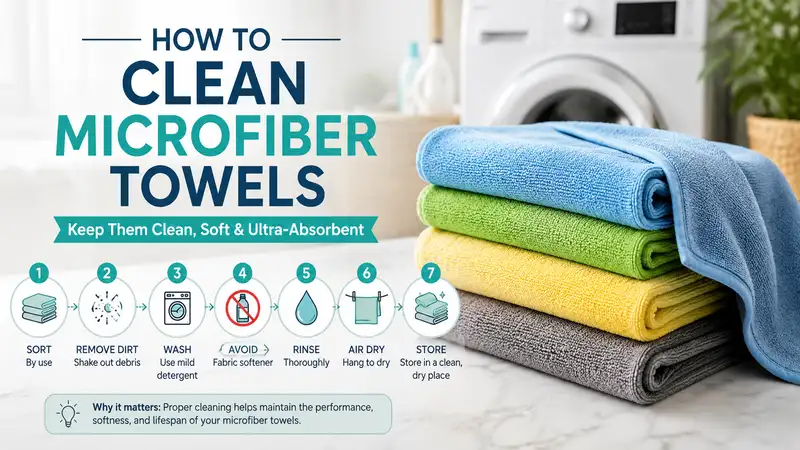
Maintaining your collection requires a systematic approach to prevent cross-contamination and fiber degradation. The following step-by-step framework ensures your tools maintain their paint-safe qualities for hundreds of cycles.
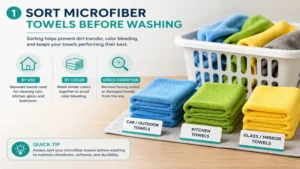
Step 1: Segregation by Task
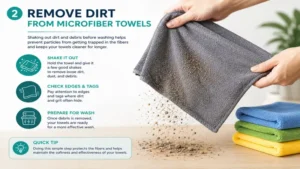
Never mix your engine-grease or wheel towels with your delicate paint-buffing or interior glass towels. Group them into distinct wash bins immediately after use.
Step 2: Presoaking Heavily Soiled Towels
For towels loaded with wax or compound residues, submerge them in a five-gallon bucket filled with warm water and one ounce of a dedicated cleaner like The Rag Company Liquid Xtreme for at least two hours before machine washing.
[Sort Towels by Task] ➔ [Presoak Greasy Cloths] ➔ [Machine Wash: Cold/Warm] ➔ [Line Dry or Air Tumble]
Step 3: Machine Setup
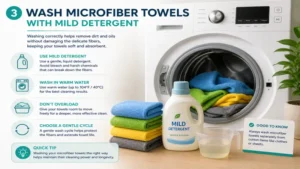
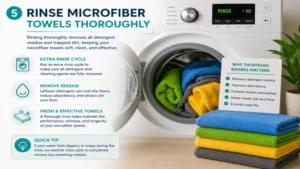
Set your washer to a cold or warm water cycle (never exceeding 104°F or 40°C). Use an extra rinse cycle if available to ensure every trace of surfactant is extracted from the polyamide structure.
Step 4: Drying Protocols
The optimal approach is to line-dry your towels in a clean, dust-free indoor environment. If using a mechanical dryer, select the “Air Fluff” or lowest possible heat setting. High heat will instantly melt the microscopic tips of the fibers, turning them into sharp, scratchy edges that will mar delicate clear coats.
Real-World Scenario / Buyer’s Decision Framework
Different detailing environments require specific approaches to towel maintenance. Choosing the correct strategy prevents expensive damage and maximizes your efficiency.
Scenario A: The Weekend Hobbyist
If you maintain one or two personal vehicles monthly, your primary threat is towel stiffening from spray waxes and hard water. A mid-tier cleaner like Chemical Guys Microfiber Wash paired with a simple cold-water machine cycle and an indoor line dry will keep your small arsenal pristine without incurring high commercial costs.
Scenario B: The Mobile Professional Detailer
Operating out of a van or a high-volume shop introduces massive amounts of heavy greases, ceramic residues, and iron dust. You require a heavy-duty solution like P&S Detail Products Rags to Riches to safely mix varied towel batches. Your maintenance schedule must include a mandatory weekly vinegar rinse to dissolve hard mineral deposits acquired from working on site with untreated water sources.
Scenario C: The Interior Specialists
For those focusing on high-end leather, delicate touchscreens, and piano-black plastics, linting is the absolute enemy. These users should use Griots Garage Microfiber Cleaner because of its exceptional rinsing capabilities, ensuring no surfactant film remains to create unsightly streaks under direct sunlight.
Analysis-Driven Content Sections
Common Mistakes When Buying and Cleaning Microfiber
The single most frequent mistake I witness in the field is the use of standard powder detergents. Powdered soaps often fail to dissolve completely in cold water cycles, leaving microscopic granules trapped inside the dense microfiber matrix. The next time you buff a sensitive surface, those trapped particles act like fine sandpaper, instigating fine swirl marks across the finish.
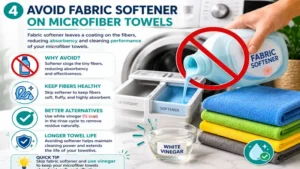
Another critical pitfall is the introduction of fabric softeners or dryer sheets. These products function by depositing a thin layer of lubricating chemicals over fabric fibers to make them feel soft. While this works beautifully for a cotton bath towel, it completely coats the split ends of microfiber, neutralizing its natural static charge and rendering the cloth entirely hydrophobic. Once coated, the towel will simply push water around instead of absorbing it.
Finally, washing microfiber alongside cotton towels is a recipe for disaster. Microfiber possesses a strong negative charge that naturally attracts and holds onto the lint shed by cotton fibers. Once a plush microfiber cloth is filled with cotton lint, it loses its precision cleaning abilities and becomes incredibly difficult to clear out, effectively ruining its utility for scratch-free applications.
Microfiber vs. Traditional Cotton Alternatives
Understanding the structural differences between these materials clarifies why specialized cleaning protocols are necessary.
| Performance Metric | Split-Blend Microfiber (80/20) | Traditional Cotton Terry Cloth |
| Debris Retention | Traps particles inside fiber channels | Holds debris on outer surface only |
| Surface Marring Risk | Extremely low (particles lift away) | High (particles drag along paint) |
| Liquid Absorbency | Up to 7-8x material weight | Around 3-4x material weight |
| Drying Efficiency | Rapid evaporation due to surface area | Retains moisture, prone to mildew |
| Best For | Scratch-free polishing and glass care | General rough cleanup, oil spills |
While a traditional cotton terry cloth relies on thick, simple loops that push dirt forward, microfiber utilizes an intricate network of microscopic channels. This mechanical difference means that while a cotton towel can be aggressively boiled or bleached without losing its basic shape, microfiber demands gentler thermal and chemical boundaries to preserve its complex engineering.
Features That Actually Matter (And Those That Don’t)
Marketing departments love to emphasize incredibly high GSM (Grams per Square Meter) counts as the sole indicator of towel quality. However, a high GSM towel is only as good as its underlying fiber blend. A 70/30 blend (polyester to polyamide ratio) offers significantly better water absorption and longevity than a cheap 80/20 blend, regardless of how thick the towel feels in your hand.
High GSM + Cheap Blend = Poor Performance
Lower GSM + 70/30 Blend = Superior Absorbency & Longevity
The construction of the towel edge is another crucial element. Rough polyester overlock stitching along the edges can easily scratch soft clear coats. Look for towels featuring ultrasonic cut, edgeless designs, or those bordered with soft silk or microfiber binding. These premium edge treatments ensure that even if you apply uneven pressure while wiping down a curved panel, the boundary of the cloth will not cause surface damage.
Long-Term Cost & Maintenance Cycle
Investing in premium microfiber cleaners can feel unnecessary when generic laundry detergents cost significantly less per bottle. However, a strict total cost of ownership analysis reveals that specialized maintenance saves substantial money over a twelve-month horizon. A quality towel washed with a generic formula typically loses its absorbency and soft texture within 20 to 30 wash cycles due to fiber matting and chemical buildup.
By utilizing a dedicated cleaner like Adam’s Polishes Microfiber Reviver and avoiding thermal damage, those same towels can easily survive 300 to 500 wash cycles without a measurable drop in performance. This longevity eliminates the need to constantly purchase replacement packs, while protecting the thousands of dollars invested in your vehicle’s delicate paint system from costly scratch-remediation work.
FAQs
❓ Can you use bleach when washing microfiber cloths?
✅ No, you should never use bleach. Bleach is highly corrosive and will rapidly break down the delicate polyester and polyamide synthetic bonds, causing the fibers to shed and lose their structural integrity…
❓ How do you restore absorbency to old microfiber towels?
✅ Boil a large pot of water, turn off the heat source, and add two ounces of distilled white vinegar. Submerge the stiff towels for 20 minutes to dissolve trapped wax residues and hard water minerals…
❓ Is it safe to air-dry microfiber towels outside?
✅ Air-drying outside is generally risky because the strong static charge of the towels will pull airborne dust, pollen, and outdoor contaminants into the clean fibers, creating potential scratching hazards…
❓ What water temperature is best for washing microfiber?
✅ Use cold or warm water settings around 90°F to 104°F. Never use hot water settings, as excessive heat can melt the fine synthetic tips, permanently destroying their cleaning efficiency…
❓ Can I use liquid laundry pods for microfiber?
✅ Most liquid pods contain added scents, optical brighteners, or fabric softeners that coat the fibers and destroy absorbency. Stick to dedicated clear liquids or specialized microfiber washes…

Conclusion
Mastering the process of how to clean microfiber towels is an essential skill for anyone committed to maintaining flawless surfaces, whether inside the home or on a vehicle’s delicate exterior. By shifting away from standard household laundry habits—such as using harsh detergents, high heat settings, and fabric softeners—and adopting a systematic approach with specialized cleaners like The Rag Company Liquid Xtreme or P&S Detail Products Rags to Riches, you protect both your textile investments and the surfaces you clean. Taking these careful laundering steps guarantees your microfiber collection remains soft, statically charged, and completely safe for hundreds of uses.
Recommended for You
- 5 Shocking Secrets About Using Vinegar to Clean Microfiber Cloth in 2026
- 5 Best Carbon Fibre Cloth Picks: 2026 Expert Performance Review
- Best Washcloths: 5 Premium Towels For Your Ultimate Bath Routine
Disclaimer: This article contains affiliate links. As an Amazon Associate, I earn from qualifying purchases. If you purchase products through these links, we may earn a small commission at no additional cost to you.
✨ Found this helpful? Share it with your friends! 💬🤗