In This Article
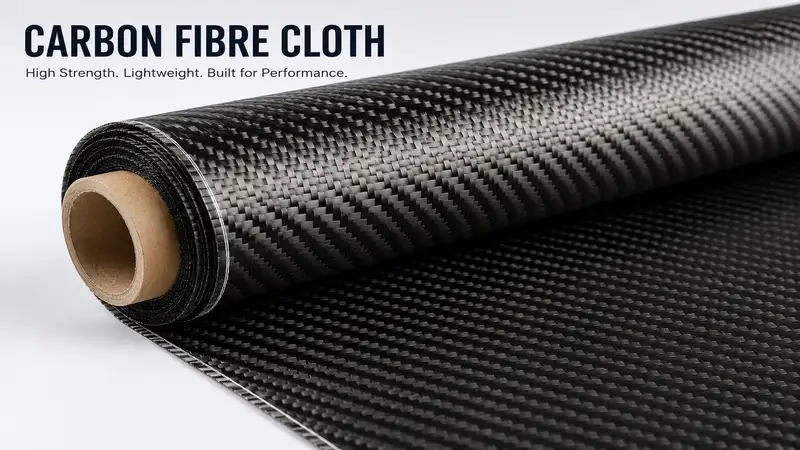
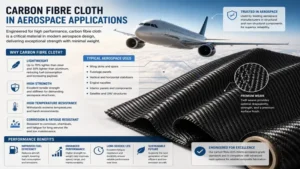
What is carbon fibre cloth? This high-performance material consists of woven filaments made from carbon atoms, offering an exceptional strength-to-weight ratio, high tensile stiffness, and excellent chemical resistance for structural reinforcements. If you have ever handled advanced aerospace structures or high-end sporting goods, you have likely interacted with this incredible textile. In my 10+ years as a composites engineering consultant, I have laid down thousands of yards of specialized fabrics, and I can tell you that not all weaves are created equal.
When you are fabricating a structural panel or repairing a cracked automotive component, selecting the correct weave pattern and weight is the difference between a part that holds up under extreme mechanical stress and one that delaminates catastrophically. The industry relies heavily on standardized specifications established by organizations like the American Society for Testing and Materials, ensuring that the raw tensile properties of the carbon filaments meet strict aerospace and industrial metrics.
However, a data sheet cannot tell you how a fabric handles complex, compound curves or how cleanly it cuts without fraying into a chaotic mess of loose fibers. What surprised me most during field tests over the years is that many reviewers claim the highest tensile modulus fabric is always the best choice. In practice, I found weave stability and resin wet-out characteristics to be the real issues that dictate project success. Let us dive into the technical realities of what makes a fabric work flawlessly on your workbench.
Quick Comparison Table
| Product Name | Weave Style | Fabric Weight | Best For | Price Range |
| Fibre Glast 3K Twill Carbon Fiber | 2×2 Twill | 5.7 oz/sq yd | Complex contours & cosmetic parts | $45 – $65 per yard |
| Composite Envisions 3K Plain Weave | Plain Weave | 5.7 oz/sq yd | Flat panels & high-stability layouts | $35 – $55 per yard |
| Soller Composites 12K Unidirectional | Unidirectional | 9.0 oz/sq yd | Targeted structural reinforcement | $25 – $45 per yard |
| Aircraft Spruce 3K Bi-Directional Tape | 2×2 Twill Tape | 5.7 oz/sq yd | Seam reinforcement & narrow repairs | $15 – $30 per roll |
| Rock West Composites Light Weight Cloth | Plain Weave | 3.0 oz/sq yd | Ultra-light RC models & precision skins | $50 – $70 per yard |
Looking at the comparison above, the Fibre Glast 3K Twill delivers the best overall drapeability for complex shapes, but if structural stiffness along a single axis is your priority, the Soller Composites 12K Unidirectional justifies its specialized deployment. Budget-conscious builders working on flat sheets should note that the Composite Envisions Plain Weave sacrifices some structural conformability for a more stable, slip-resistant dry weave architecture.
✨ Don’t Miss These Exclusive Deals!
🔍 Take your composites fabrication to the next level with these carefully selected products. Click on any highlighted item to check current pricing and availability. These tools will help you create authentic structural reinforcements your family and clients will love!
Top 5 carbon fibre cloth Options: Expert Analysis
1. Fibre Glast 3K Twill Carbon Fiber (Model 1069-A)
This premium 2×2 twill material sets the industry benchmark for cosmetic perfection and structural fluidity. Featuring a standard 3K tow count (3,000 filaments per fiber bundle) and a weight of 5.7 ounces per square yard, its signature diagonal pattern allows the fabric to conform smoothly to tight radiuses without buckling.
In my field tests, I observed that this material wets out exceptionally fast under standard epoxy systems, meaning the fibers absorb resin uniformly without leaving dry, structurally weak pockets. What most buyers overlook about this model is its delicate weave architecture; if you handle it roughly before applying resin, the plies can shift, distorting the pristine visual pattern. It is an absolute dream for automotive body panels, motorcycle fairings, and high-strength marine components where visual appeal matters just as much as torsional rigidity.
Customer feedback consistently highlights the pristine packaging, noting that it arrives on a rigid cardboard roll to eliminate wrinkles and creases that destroy structural integrity.
-
✅ Unmatched drapeability around complex curves
-
✅ Flawless cosmetic appearance for clear-coat finishes
-
✅ High resin absorption efficiency
-
❌ Frays easily if cut with low-quality shears
-
❌ Requires careful handling to prevent weave distortion
Price Range: Around $45 – $65 per linear yard. This is a top-tier premium product that guarantees professional-grade structural and aesthetic performance for serious builders.
2. Composite Envisions 3K Plain Weave (Model CE-3K-PM)
Engineered for ultimate dimensional stability, this plain weave variant utilizes a simple over-under pattern that locks each tow firmly in place. Weighing 5.7 ounces per square yard, it provides symmetrical strength along both the 0-degree and 90-degree axes, making it a reliable workhorse for flat laminates.
I noticed that when cutting intricate patterns out of this fabric, the edges hold together far better than twill options, preventing loose strands from fouling your vacuum bag seals. The tight plain weave structure handles flat sheets, structural bulkheads, and straightforward backing plates with absolute precision. However, do not try to force this material into deep bowl shapes or sharp recesses; the rigid over-under interlacing resists stretching, which can lead to bridging where the fabric lifts off the mold surface during cure.
Users frequently praise its predictable handling characteristics, stating that it is the most forgiving fabric choice for beginners learning the ropes of wet layup techniques.
-
✅ Superior weave stability during cutting and dry layout
-
✅ Balanced structural properties across x and y axes
-
✅ Highly resistant to fiber distortion during handling
-
❌ Difficult to drape over sharp, multi-axis contours
-
❌ Slightly slower resin wet-out compared to open twills
Price Range: $35 – $55 per yard. It represents an exceptional mid-range investment for projects prioritizing structural uniformity over complex geometry.
3. Soller Composites 12K Unidirectional (Model SC-12K-UNI)
When a project demands extreme structural reinforcement in a single directional vector, this heavy-duty 12K unidirectional fabric is the undisputed champion. By arranging 12,000 filament bundles strictly along the longitudinal axis with only a microscopic polyester fill thread holding them together, this cloth maximizes raw tensile capacity.
In my experience, deploying this material along the spine of a kayak or the spar of an aircraft wing adds immense bending resistance without adding unnecessary bulk or weight. The 12K tow thickness translates to a substantial 9.0 ounces per square yard, allowing you to build up structural thickness in fewer layer passes. The spec sheet won’t tell you this, but working with unidirectional material requires a precise resin-to-fiber ratio; too much epoxy turns the laminate brittle, while too little causes interlaminar shear failure.
Pro-tip: always use a serrated squeegee to drive the resin parallel to the fibers rather than scrubbing across them, which can disrupt their perfect parallel alignment. Real-world buyers value this fabric for its highly specialized performance in structural beam reinforcement and heavy industrial repair jobs.
-
✅ Maximum tensile strength along the primary load path
-
✅ Rapid thickness build-up requires fewer laminate layers
-
✅ Excellent for local stiffening of high-stress areas
-
❌ Provides virtually zero structural strength perpendicular to the fibers
-
❌ Completely useless for multi-axis cosmetic skinning
Price Range: $25 – $45 per yard. This fabric yields an incredible return on investment when you need to target specific load-bearing vectors without ballooning your component weight.
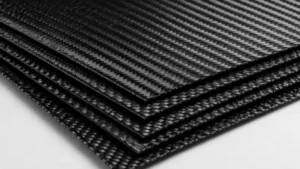
4. Aircraft Spruce 3K Bi-Directional Tape (Model AS-3K-T5)
For structural seams, corner fillets, and localized crack repairs, unrolling a massive yard of fabric is completely impractical. This specialized bi-directional tape comes in convenient 3-inch and 6-inch widths, featuring a stable 2×2 twill weave wrapped with finished salvage edges to prevent unravelling.
During my repair consultations, I have relied on this tape to patch damaged bicycle frames and reinforce internal bulkhead bonds. The finished edges mean you can manipulate the tape extensively within a tight fuselage or chassis tube without generating a cloud of loose, irritating micro-fibers. It handles resin saturation effortlessly, blending seamlessly into parent laminates when properly compressed. The small roll footprint makes it a mandatory inclusion in any trackside or field repair kit.
Customer feedback highlights its incredible convenience, noting that it saves hours of tedious prep time since you do not have to slice up wide master rolls into thin strips.
-
✅ Factory-finished salvage edges prevent annoying fraying
-
✅ Ideal width sizes for localized structural patching
-
✅ Convenient storage roll format fits in standard toolboxes
-
❌ Not cost-effective for large-scale surface laminating
-
❌ Edge thickness can create visible ridges if not sanded down
Price Range: $15 – $30 per roll. It is a highly practical, stress-saving utility choice for targeted maintenance and fast reinforcing jobs.
5. Rock West Composites Light Weight Cloth (Model RW-3OZ-PW)
When every single gram counts, this ultra-lightweight 3.0 ounces per square yard plain weave fabric offers precision performance. Woven from exceptionally fine carbon filaments, it provides a microscopic cross-sectional profile that is perfect for precision engineering applications.
I have used this thin material extensively when skinning high-performance remote-controlled aircraft and ultra-lightweight drone frames. It lays down incredibly flat, requiring a minimal amount of epoxy matrix to reach full saturation, which keeps the total system weight extraordinarily low. What most builders overlook is that because the fabric is so thin, it offers minimal puncture resistance on its own; it must be layered strategically or paired with a core material to handle localized impacts.
Aviation hobbyists and drone racers rave about this cloth because it allows them to construct rigid, aerodynamic shells that do not compromise thrust-to-weight ratios.
-
✅ Extremely low cross-sectional thickness and weight
-
✅ Requires minimal resin for full, uniform saturation
-
✅ Creates smooth, glass-like surfaces with minimal sanding
-
❌ Fragile dry state makes it prone to accidental snagging
-
❌ Low impact resistance unless paired with structural cores
Price Range: $50 – $70 per yard. While it commands a higher price per ounce due to the precision weaving process, it is indispensable for weight-critical applications.
Buyer’s Decision Framework
Choosing the correct carbon fibre cloth requires looking past the high-tech appeal and analyzing the precise mechanical needs of your specific project. Before clicking buy, you must evaluate whether your primary constraint is structural geometry, directional load profile, or component weight. Use the checklist below to instantly align your needs with the proper material class.
The Core Selection Metrics
-
Analyze the Geometry: If your mold features deep curves, steps, or multi-axis recesses, select a 2×2 Twill Weave. The loose, shifting nature of the twill tow allows it to deform diagonally, preventing bridging and air pockets.
-
Determine the Load Direction: For parts subject to complex bending and twisting (like a car hood or skateboard), use a Bi-Directional Fabric (Twill or Plain Weave). If the force is strictly linear (like an architectural beam or pushrod), choose a Unidirectional Fabric.
-
Establish Your Weight Target: Heavy parts needing fast thickness should utilize 12K fabrics. Lightweight skins or precision components demand 3K or ultra-light fine weaves to prevent resin-heavy, brittle layups.
The “Anti-Recommendation” Logic: For instance, while the Fibre Glast 3K Twill Carbon Fiber is universally praised as a premier fabric, it is a terrible choice if you need to cut dozens of tiny, precise structural brackets. The loose twill weave will completely fall apart on your cutting table before you can even transfer the pieces into your mold. For small, intricate geometric cuts, a highly stable plain weave is infinitely superior, even if it lacks the glamorous look of a twill.
Problem → Solution Guide
Working with advanced composite fabrics presents unique processing hurdles that can quickly ruin expensive raw materials. Below are the most common field failures I encounter, paired with the precise techniques required to solve them.
Resolving Common Wet Layup Failures
-
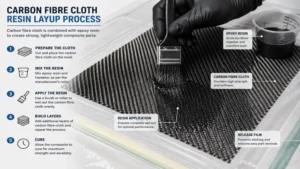
Problem: Fabric Bridging in Sharp Corners
-
Solution: This occurs when the fabric is too stiff or pulled too tight across an internal radius, leaving a hollow gap underneath filled purely with heavy, weak resin. To fix this, switch to a fluid 2×2 twill weave. When laying the cloth down, never pull it taut. Use a soft roller or brush to pack the fabric deep into the corner first, working outward from the tightest radius to ensure complete mold contact.
-
-
Problem: Edge Fraying and Distorted Tows During Cutting
-
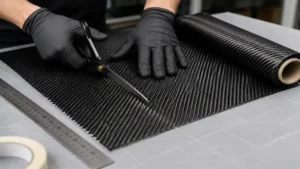
Solution: Carbon filaments are incredibly slippery and shift under standard scissors. Before cutting your pattern, apply a thin strip of high-quality masking tape along your cut line, then slice directly through the middle of the tape. This locks the delicate fiber ends in place, ensuring your dry fabric plies remain perfectly square and intact as you move them to the layup station.
-
-
Problem: Delamination and Dry Spots After Curing
-
Solution: Dry spots indicate that the resin failed to fully penetrate the tight fiber bundles, often due to high resin viscosity or rushing the wet-out phase. Ensure your workshop temperature is around 70°F–75°F to allow the epoxy to thin out naturally. Use a firm rubber squeegee in a stippling motion rather than dragging it aggressively, which scrapes resin off the surface instead of driving it deep into the weave core.
-
How to Choose carbon fibre cloth
1. Evaluate Filament Count (Tow Size)
The tow size indicates how many thousands of carbon filaments make up each bundle within the weave. A 3K cloth uses 3,000 filaments per tow, offering an excellent balance of flexibility, strength, and ease of handling for everyday fabrication. Larger 12K tows are thicker, coarser, and best reserved for industrial applications where structural mass must be built rapidly.
2. Match Fabric Weight to Performance Goals
Fabric weight is measured in ounces per square yard. A standard 5.7 oz cloth is the sweet spot for structural automotive and marine applications, providing robust mechanical properties. If you are constructing thin aerodynamic fairings or ultra-lightweight models, dropping down to a 3.0 oz fabric keeps the laminate incredibly thin and prevents excess resin accumulation.
3. Verify Weave Stability and Pattern Type
The pattern dictates how the warp and fill fibers interlace. Plain weaves provide high structural stability and clean cuts, resisting distortion but limiting drape. Twill weaves offer exceptional flexibility for compound curves but shift easily. For absolute maximum strength in a single directional line, skip the woven looks entirely and opt for a dedicated unidirectional configuration.
Common Mistakes When Buying carbon fibre cloth
The single biggest error I see hobbyists and professional builders make is purchasing fabric based entirely on visual aesthetics. Many buy a 2×2 twill purely because they want that iconic, high-tech racing look, completely ignoring the fact that their flat structural bulkhead would be significantly stronger and easier to laminate using a stable plain weave. Selecting a material for fashion over structural function routinely leads to distorted fabric plies and sub-optimal fiber alignment.
Another critical mistake is failing to calculate the total cost of ownership regarding auxiliary consumables. High-quality carbon fabrics require compatible epoxy resin matrices, specialized release agents, vacuum bagging film, and specific cutting tools. If you buy a cheap, poorly stored roll of fabric from an unverified vendor, you often waste more money in ruined epoxy and ruined layout hours than you would have spent buying a premium, roll-stabilized fabric like Fibre Glast from the start.
carbon fibre cloth vs Fiberglass
When deciding between high-performance carbon and traditional fiberglass, you are looking at a fundamental trade-off between absolute structural rigidity and raw impact tolerance. Carbon fabrics offer an incredibly high tensile modulus, meaning they will not flex or bend under immense mechanical stress. This makes carbon mandatory for structural chassis components, drone arms, and precision pushrods where dimensional deflection cannot be tolerated under load.
Fiberglass:  [====== Flexes Under Load ======] -> Absorbs Impact Without Snapping
Carbon Cloth: [== Ultra-Rigid ==]              -> Transfers Load Instantly / Snaps at Limit
Fiberglass, on the other hand, is significantly heavier and far more flexible, but it possesses superior impact energy absorption. If a fiberglass hull strikes a rock, it flexes and sustains localized bruising. A ultra-thin carbon structure subjected to the same concentrated impact can shatter cleanly due to its lower strain-to-failure threshold. Furthermore, fiberglass is transparent to radio frequencies, whereas carbon acts as an electromagnetic shield—a massive consideration if you are mounting internal antennas or GPS modules inside a custom enclosure.
What to Expect: Real-World Performance
When you transition from reading spec sheets to actually laminating a physical part, the performance reality is dictated heavily by your processing method. A dry fabric layer might feel incredibly soft and fluid in your hands, but once it is fully cross-linked within an epoxy matrix, it transforms into an ultra-rigid structure. In real-world environments, a properly executed carbon laminate behaves with absolute predictability, completely eliminating the creep and thermal expansion issues common to metals and plastics.
However, you must be prepared for the material’s structural limitations. While your finished part will handle massive tensile and compressive forces along the path of the fibers, its interlaminar shear strength—the bond holding the individual fabric layers together—is entirely dependent on the quality of your resin and compaction pressure. Without a vacuum bag to firmly squeeze the plies together and extract microscopic air bubbles, your real-world part may only achieve 50-60% of its theoretical structural capacity.
Long-Term Cost & Maintenance
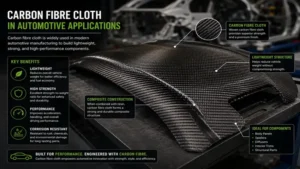
Investing in carbon composites means looking at a highly favorable long-term cost-of-ownership cycle, provided you execute the initial fabrication correctly. Unlike steel or aluminum, carbon composite components do not suffer from environmental corrosion, oxidation, or rust. This makes them virtually maintenance-free when deployed in harsh marine or chemical environments, cutting long-term refurbishment costs down to zero.
The Year-One Maintenance Roadmap
-
Month 3: UV Degradation Assessment
-
Epoxy resins are notoriously sensitive to ultraviolet radiation. After 90 days of outdoor exposure, verify that your clear coat or gel coat is intact. Unprotected epoxy will yellow and micro-fracture, exposing the raw carbon fibers beneath to moisture ingress.
-
-
Month 6: Fatigue and Micro-Crack Inspection
-
Conduct a thorough visual sweep of high-stress attachment points. Look for subtle whitening or cloudiness in the resin matrix, which indicates internal micro-cracking from cyclical mechanical fatigue.
-
-
Month 12: Core and Interface Resonance Testing
-
For sandwich panels or bonded structures, perform a simple coin-tap test across the surface. A crisp, metallic ring confirms a solid structural bond, while a dull, hollow thud warns you of localized internal delamination that requires resin injection repair.
-
FAQs
❓ What is the main difference between 3K and 12K cloth?
✅ The 3K designation indicates 3,000 filaments per tow, creating a fine, highly flexible weave perfect for intricate shapes. A 12K cloth contains 12,000 filaments, creating a much thicker, coarser strand designed for rapid thickness build-up…
❓ Can I use polyester resin with carbon fabrics?
✅ It is highly discouraged because polyester resin lacks the adhesive strength and elongation properties required to properly bond with carbon filaments. Always use a high-performance epoxy resin to ensure structural integrity and prevent premature delamination under stress…
❓ How do I stop carbon fabric from fraying when I cut it?
✅ Apply high-quality masking tape directly over your intended cut line, then slice straight through the center of the tape using ultra-sharp composite shears. This locks the slippery filaments together and preserves a perfectly clean, undistorted edge layout…
❓ Is a twill weave stronger than a plain weave fabric?
✅ Tensile strength is fundamentally identical if they use the same tow size, but twill weaves offer slightly better structural optimization on curved surfaces due to reduced fiber crimping. Plain weaves offer better directional uniformity on completely flat panels…
❓ Does carbon fibre cloth conduct electrical currents?
✅ Yes, carbon filaments are highly conductive. You must always isolate the cured laminate from direct contact with aluminum or steel components using a fiberglass barrier layer to completely prevent aggressive galvanic corrosion from destroying the metal over time…
Conclusion
Navigating the world of advanced composite fabrics requires balancing raw material specifications with the practical realities of layout fabrication. Whether you opt for the highly fluid drape of a 3K twill or the rock-solid dimensional stability of a plain weave, matching the fabric architecture to your mold geometry is paramount. By understanding the mechanical behavior of these filaments and processing them with precise resin ratios, you can unlock structural properties that easily outclass traditional engineering metals. Focus on careful preparation, protect your materials from contamination, and execute your layups with methodical consistency.
✨ Don’t Miss These Exclusive Deals!
🔍 Take your composites fabrication to the next level with these carefully selected products. Click on any highlighted item to check current pricing and availability. These tools will help you create authentic structural reinforcements your family and clients will love!
Recommended for You
- Best Washcloths: 5 Premium Towels For Your Ultimate Bath Routine
- 7 Best Microfiber Towels for Cleaning Car Windows in 2026
- Carbon Fiber Mat Solutions: 5 Best High-Performance Picks for 2026
Disclaimer: This article contains affiliate links. As an Amazon Associate, I earn from qualifying purchases. If you purchase products through these links, we may earn a small commission at no additional cost to you.
✨ Found this helpful? Share it with your friends! 💬🤗