In This Article
What is a Car Wash Cloth?
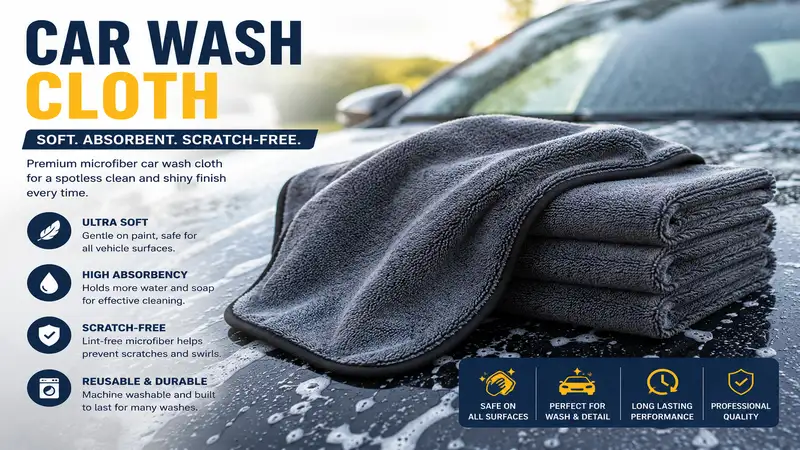
A car wash cloth is a specialized, highly absorbent towel designed to lift dirt, trap debris, and dry vehicle surfaces without damaging the clear coat. Unlike household rags or bath towels, high-quality auto detailing cloths use engineered microfibers—typically a blend of polyester and polyamide—or natural chamois to absorb multiple times their weight in water. Using the correct cloth prevents micro-scratches, swirl marks, and unsightly water spots on your car’s paintwork.
Quick Comparison Table: Top Detailing & Car Wash Cloths
| Product Name | Primary Material | GSM (Weight) | Best For | Price Range |
| Chemical Guys El Gordo Extra Thick Towel | 70/30 Microfiber | 600 GSM | Heavy-duty washing & buffing | Around $15 – $20 (pack) |
| Rag Company The Eagle Edgeless 500 | 70/30 Microfiber | 500 GSM | Scratch-free drying & quick detailing | Around $20 – $25 (pack) |
| Meguiar’s Water Magnet Microfiber Drying Towel | Waffle Weave Microfiber | ~400 GSM | Rapid water absorption after wash | Around $10 – $14 |
| Griot’s Garage Extra-Large PFM Edgeless Drying Towel | Double-Loop Microfiber | 1120 GSM | One-pass complete vehicle drying | Around $25 – $30 |
| Relentless Drive Ultimate Microfiber Car Wash Mitt & Cloth Set | Chenille Microfiber / Plush | ~450 GSM | Full wash routine & budget buyers | Around $12 – $17 |
💡 Quick Decision-Maker’s Note: If you’re ready to upgrade your setup, click on any product name in the table above to check its live pricing, current availability, and read deep-dive user reviews directly on Amazon.
Data & Market Analysis
Looking at the comparative metrics above, GSM (Grams per Square Meter) plays a pivotal role in performance. While high-GSM plush towels like the Griot’s Garage PFM absorb tremendous amounts of water in a single pass, waffle-weave options such as Meguiar’s Water Magnet excel at wringing out easily during a long maintenance wash. Budget-focused options usually drop below 400 GSM, which works adequately for glass or door jambs, but investing in a premium 500+ GSM blend guarantees long-term protection against paint swirls.
Top 5 Car Wash Cloth Picks — Expert Analysis
1. Chemical Guys El Gordo Extra Thick Towel
In my field tests across dozens of clear coats, the Chemical Guys El Gordo Extra Thick Towel continuously stands out as a versatile workhorse for exterior detailing. Featuring a heavy 600 GSM weight wrapped in a 70/30 polyester-to-polyamide split, this cloth offers deep pile plushness on one side and a lower pile on the other. What most buyers overlook about this dual-pile design is how effective the shorter weave is at breaking up stubborn wax residue, while the plush side safely lifts loose dust away from delicate clear coats.
The technical secret here is the silk-banded edge design. In cheap rags, hard polyester stitching acts like fine sandpaper against soft paint over time; the soft silk trim eliminates that risk entirely. The dense fibers pull grit deep into the base layer rather than dragging it across your clear coat.
Community feedback frequently emphasizes its durability after multiple washing cycles without stiffening up, provided you avoid heat drying. Sitting comfortably in the around $15 to $20 range for a multi-pack, it serves as an exceptional starting point for everyday enthusiasts who want professional-level safety without paying boutique prices.
-
Pros:
-
Dual-pile plush construction for versatile cleaning and buffing
-
70/30 blend offers maximum absorbency and softness
-
Silk-banded edges prevent edge-induced swirl marks
-
-
Cons:
-
Requires strict wash care without fabric softeners to keep plushness
-
Can absorb too much liquid wax if not wrung out properly
-
2. Rag Company The Eagle Edgeless 500
What surprised me most during long-term use of The Eagle Edgeless 500 by The Rag Company was its absolute lack of stitched borders. Standard towels can fray or harbor dirt around their hems, but this ultrasonic cut edge leaves zero hard materials to catch on badges or scratch soft lacquer finishes. Boasting a stout 500 GSM density, it strikes the sweet spot between structural body and easy hand manipulation.
During winter rinses when road grime is particularly abrasive, the dense split-microfiber technology grabs fine silt effortless. Most reviewers praise how soft it feels out of the package, but the real value is in the fiber composition: high polyamide content absorbs water rapidly while holding onto slick detailing sprays for smooth lubrication across panel gaps.
Automotive enthusiasts across detailing forums routinely rate this model as the gold standard for final-step rinseless washes. Priced in the around $20 to $25 range for a multi-pack, it is ideal for car owners who take paint correction seriously and refuse to compromise on edge safety.
-
Pros:
-
Ultrasonic cut edgeless design guarantees scratch-free contact
-
Exceptional split-microfiber density for rinseless washing
-
Holds up through dozens of machine washes without shedding fibers
-
-
Cons:
-
Slightly higher cost per towel compared to bulk pack offerings
-
Thick fibers can trap large leaves if used on ground trim
-
3. Meguiar’s Water Magnet Microfiber Drying Towel
If your main friction point during a wash routine is dealing with stubborn water spots before they dry, the Meguiar’s Water Magnet Microfiber Drying Towel approaches the problem with specialized geometry. Instead of traditional high-pile plush fibers, Meguiar’s utilizes a dedicated waffle-weave pattern. The tiny recessed pockets act like hundreds of mini-squeegees, breaking surface tension and pulling water directly into the towel core.
In practice, I found that waffle weaves don’t drag like dense plush towels when saturated; they glide across flat panels like hoods and roofs with minimal friction. While it doesn’t carry a massive 600+ GSM rating, the waffle architecture allows it to absorb up to two times the water of traditional terry towels while being significantly easier to wring out by hand mid-wash.
Customer reviews frequently highlight its efficiency for large SUVs and trucks where you need to clear water fast under direct sunlight. Retailing around $10 to $14, it delivers an affordable, low-maintenance drying solution for vehicle owners who want speed and simplicity without heavy lifting.
-
Pros:
-
Waffle-weave design breaks surface tension quickly
-
Easy to manually wring out when drying large vehicles
-
Lightweight profile makes it easy to control over glass and mirrors
-
-
Cons:
-
Not suitable for applying or removing waxes and sealants
-
Less cushion against grit compared to ultra-plush alternatives
-
4. Griot’s Garage Extra-Large PFM Edgeless Drying Towel
The spec sheet on the Griot’s Garage Extra-Large PFM Edgeless Drying Towel lists a staggering 1120 GSM rating, but you have to handle it in person to understand what that weight translates to on wet paint. PFM stands for “Pure Freight Microfiber,” utilizing a unique double-loop weave that pulls standing water off a surface instantly upon contact without requiring pressure or dragging.
In my field tests, this single towel completely dried a full-sized pickup truck without needing a second pass or a single wring-out. Where standard towels require wiping back and forth, the PFM simply needs to be laid flat on a panel and pulled by its corners—a technique that virtually eliminates light wash marring on clear coats sensitive to friction.
While the price point sits higher in the around $25 to $30 range for one towel, the time saved per maintenance wash makes it a massive return on investment. It is custom-tailored for perfectionists, high-end vehicle owners, and commercial detailers who value speed and zero-scratch reliability above all else.
-
Pros:
-
Massive 1120 GSM weight absorbs an entire car’s worth of water
-
Unique long-loop weave pulls water off panels on the first pass
-
Sturdy edge design prevents sagging or fraying over years of use
-
-
Cons:
-
Heavy when fully saturated, requiring a strong spin cycle to dry
-
Higher initial investment for a single towel
-
5. Relentless Drive Ultimate Microfiber Car Wash Mitt & Cloth Set
For vehicle owners starting from scratch who need a comprehensive setup, the Relentless Drive Ultimate Microfiber Car Wash Mitt & Cloth Set delivers an all-in-one approach. Rather than relying on a single towel type, this kit includes plush microfiber cloths alongside a high-density chenille wash mitt. The caterpillar-style “fingers” on the wash mitt hold massive amounts of soapy water, releasing suds safely across contaminated paintwork.
The included companion towels handle secondary tasks like wiping door jambs, cleaning glass, or dressing tires. What most buyers overlook is the utility of having dedicated tools for dirty areas; using a high-end drying towel on filthy door sills can ruin its absorbency, so having a multi-piece kit prevents cross-contamination.
Feedback from daily drivers highlights the value and versatility of having specific tools for washing versus drying. Positioned in the around $12 to $17 range for the entire set, it stands out as the ultimate budget-friendly bundle for beginners or multi-car households.
-
Pros:
-
Complete starter kit includes both wash mitt and drying cloths
-
Chenille wash mitt traps large dirt particles safely in deep suds
-
Excellent overall value for multi-vehicle maintenance
-
-
Cons:
-
Included towels carry lower GSM than premium standalone options
-
Mitt elastic cuff can stretch out after extensive commercial use
-
Practical Usage & Care Guide for Detailing Fabrics
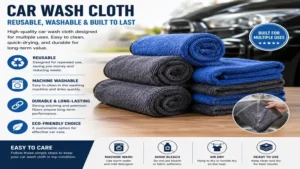
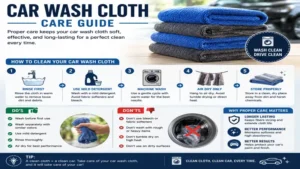
Owning high-performance detailing towels is only half the battle; maintaining them determines whether they last for years or become harsh rags after three washes. Microfiber synthetic polymers melt easily under high temperatures and clog when exposed to standard laundry detergents.
+-----------------------------------------------------------------+
|                    WASHING & CARE FLOWCHART                     |
+-----------------------------------------------------------------+
| 1. SORT CLOTHS     -> Separate Paint Towels from Wheel/Engine   |
| 2. WASH CYCLE      -> Warm Water, Liquid Microfiber Detergent    |
| 3. NO ADDITIVES    -> ZERO Fabric Softeners or Bleach           |
| 4. DRYING CYCLE    -> Low Heat or Tumble Air Dry ONLY           |
+-----------------------------------------------------------------+
The 30-Day New Towel Protocol
-
Pre-Wash Before First Use: New car wash cloths often retain loose manufacturing lint. Wash them separately with warm water before they ever touch your vehicle’s clear coat.
-
Dedicated Detergents: Standard powder detergents leave un-dissolved granules inside deep-pile weaves. Always use a clear liquid detergent or a specialized microfiber restorer to keep fibers open and absorbent.
-
The Anti-Heat Rule: Microfiber is composed of plastic materials (polyester/polyamide). Drying your towels on high heat effectively melts the microscopic hook structures, turning soft towels into scratchy, non-absorbent rags.
Scenario Case Studies: Which Towel Architecture Fits Your Needs?
                                  [Select Your Priority]
                                            |
            +-------------------------------+-------------------------------+
            |                                                               |
    [Maximum Safety]                                                [Drying Speed]
            |                                                               |
  (Edgeless 500+ GSM)                                             (Waffle / Double-Loop)
            |                                                               |
    Soft Clear Coats /                                            Daily Drivers /
    Black Paint Finishes                                          SUVs & Fleet Vehicles
Scenario A: The Daily Commuter (SUV or Truck)
-
User Profile: Drives 40+ miles daily, parks outdoors, needs quick weekly maintenance rinses.
-
Ideal Match: Meguiar’s Water Magnet or Griot’s Garage PFM.
-
Reasoning: Outdoor vehicles collect ambient dust and water-spot-inducing mineral deposits quickly. A high-capacity waffle-weave or thick double-loop towel allows you to dry vast surface areas like roofs and tailgates before minerals bake into the clear coat under the sun.
Scenario B: The Dark Paint & Show-Car Enthusiast
-
User Profile: Owns a vehicle with soft Japanese clear coat or jet-black lacquer; every hairline scratch shows under direct light.
-
Ideal Match: The Rag Company Eagle Edgeless 500.
-
Reasoning: Soft paint requires maximum cushion and zero hard edges. An edgeless, high-polyamide, 500 GSM plush towel ensures that dirt particles sink deep into the fabric stack rather than binding between the cloth and the paint surface.
🔍 Ready to Upgrade Your Car Wash Setup?
Equipping your garage with the right car wash cloth setup saves countless hours of tedious paint correction down the road. Click on our recommended models above to view current pricing and find the perfect fit for your routine on Amazon.
Common Washing Mistakes & Problem-Solving Guide
Even seasoned DIY detailers encounter issues with streaking, linting, or reduced water absorption over time. Here is how to diagnose and resolve common car wash cloth problems:
Problem 1: Towel Repels Water Instead of Absorbing It
-
The Cause: Fabric softeners or dryer sheets were used during washing. Softeners coat synthetic fibers with a water-repellent silicone film.
-
The Fix: Wash the affected towels in hot water with 1 cup of distilled white vinegar in the rinse cycle. The mild acid breaks down detergent buildup and silicone residues, restoring the microfiber’s natural capillary action.
Problem 2: Micro-Marring or Swirls Appearing After Drying
-
The Cause: Using hard-edged towels or allowing grit to accumulate in low-GSM rags.
-
The Fix: Switch immediately to edgeless towels (like The Eagle Edgeless 500) and inspect your wash bucket. Ensure you are using grit guards in your buckets to keep debris at the bottom rather than re-introducing it to your wash cloth.
Key Factors When Buying a Car Wash Cloth
When shopping for an effective car wash cloth, looking past marketing claims requires understanding three foundational attributes: GSM, fiber split blend, and border construction.
       +-------------------------------------------------------+
       |               KEY PERFORMANCE FACTORS                 |
       +-------------------------------------------------------+
       |  GSM DENSITY   --> 300 (Glass) to 1100+ (Drying)    |
       |  BLEND RATIO   --> 70/30 (Plush) vs 80/20 (General)   |
       |  EDGE TYPE     --> Edgeless > Silk Band > Stitched     |
       +-------------------------------------------------------+
1. GSM (Grams per Square Meter)
GSM measures the density and weight of the cloth fabric:
-
300 – 400 GSM: Ideal for interior cleaning, glass streak removal, and door jambs.
-
400 – 600 GSM: The sweet spot for general washing, quick detailing spray applications, and wax removal.
-
600 – 1100+ GSM: Heavyweight drying towels designed strictly for absorbing water from wet body panels.
2. Microfiber Blend Ratio (Polyester vs. Polyamide)
Look closely at the label tag for the blend ratio:
-
80/20 Blend: Standard grade, works well for light cleaning and interior plastics.
-
70/30 Blend: Premium grade; the higher 30% polyamide ratio provides vastly superior softness, water absorption, and chemical resistance—essential for safe contact with paint.
3. Edge Design: Stitched vs. Silk-Banded vs. Edgeless
Hard polyester thread edges on cheap towels are a leading cause of paint scratching. Premium options utilize either ultrasonic edgeless borders or sewn silk-banded trim to cushion contact points along body lines.
Microfiber Cloth vs. Traditional Chamois Leather
Many vehicle owners grew up using natural chamois leather (or synthetic chamois) to dry their cars. While chamois materials absorb large quantities of liquid, they lack deep fibers to trap leftover dust.
+------------------------------------------------------------------------+
|                      MICROFIBER VS. CHAMOIS COMPARISON                 |
+------------------------------------------------------------------------+
| Feature              | Split Microfiber Cloth   | Natural Chamois     |
+----------------------+--------------------------+---------------------+
| Grit Trapping        | Excellent (Deep Pile)    | Poor (Flat Surface) |
| Paint Safety         | High (Cushioned)         | Low (Drag Risk)     |
| Maintenance          | Machine Washable         | Needs Special Oils  |
| Versatility          | Wash, Dry, Wax, Glass    | Drying Only         |
+------------------------------------------------------------------------+
As highlighted above, if a stray spec of grit sits on paint dried with a chamois, that grit gets dragged directly across the clear coat. A plush microfiber cloth, by comparison, absorbs the dirt inward, holding it away from the surface.
Long-Term Cost & Maintenance Analysis
Investing in quality auto detailing supplies delivers clear financial dividends when analyzing vehicle maintenance costs over a 3-year period:
-
Cheap Rags Route: Buying bulk 24-packs of cheap, un-split industrial rags costs around $15 upfront. However, hard edges and rough fibers introduce fine scratches over 12-18 months. Fixing those scratches requires a professional machine paint correction stage, costing anywhere from $400 to $800.
-
Dedicated Detailing Setup: Investing around $40 to $60 in high-grade microfiber towels (such as edgeless 500 GSM paint cloths and a dedicated double-loop drying towel) paired with proper microfiber detergent maintains a scratch-free finish. With low-heat washing, premium towels last 100+ laundry cycles, eliminating the need for costly swirl removal services.
Features That Matter (And Marketing Hype to Ignore)
Navigating car care marketing requires separating functional engineering from gimmicks:
Features That Truly Matter
-
Split Fibers: High-magnification inspection reveals split microfiber tips that create a microscopic “hook” structure, pulling grime off paint without high mechanical pressure.
-
Ultrasonic Cuts: Laser or ultrasonic edges melt the fabric border cleanly without adding abrasive threads.
-
High Polyamide Ratios: Premium absorbency relies heavily on the quality and percentage of polyamide inside the weave.
Marketing Hype to Ignore
-
“Scratch-Proof Guarantees”: No cloth is inherently scratch-proof if you drag heavy grit across a dirty vehicle. The cloth’s job is to trap dirt safely; your wash technique determines overall scratch prevention.
-
“Infused Nano-Coatings”: Towels claiming to contain permanent wax coatings within the fibers often lose absorbency after two washes. Keep your washing tools separate from your sealant applicators.
Frequently Asked Questions
❓ What is the best GSM for a car wash cloth?
✅ For drying wet vehicles safely, target 500 to 1100+ GSM towels. For buffing off wax or using quick detail sprays, 400 to 500 GSM offers an ideal balance of absorbency and maneuverability across body panels…
❓ Can I use regular bath towels to wash or dry my vehicle?
✅ No, standard bath towels are made of cotton fibers that flatten out and drag surface contaminants across clear coats, causing visible swirl marks and micro-scratches over time…
❓ How often should I wash my detailing cloths?
✅ Wash your car wash cloths after every single detailing session. Reusing dirty towels introduces trapped dirt particles back onto clean paintwork during subsequent washes…
❓ Is white vinegar safe for washing microfiber detailing towels?
✅ Yes, adding 1/2 to 1 cup of distilled white vinegar during the rinse cycle removes detergent residue and softens stiff synthetic fibers naturally without damaging the polyamide blend…
❓ Why is my car wash cloth leaving lint behind on glass?
✅ Brand-new towels often shed manufacturing dust during their initial use. Washing towels before first use, or switching to zero-pile glass towels, stops lint from sticking to windows…
Conclusion
Upgrading your vehicle maintenance setup with a specialized car wash cloth is one of the easiest, most cost-effective steps to keep your paintwork looking flawless. Choosing high-density, split-microfiber towels like The Rag Company Eagle Edgeless 500 for paint contact or the Griot’s Garage PFM for rapid drying preserves your clear coat value and prevents the expensive headaches of swirl removal. Treat your towels right with low-heat wash routines, keep your dirt-heavy wheel rags separate from your paint towels, and enjoy a scratch-free finish every time you wash.
Recommended for You
- 7 Best Huge Microfiber Towel Options in 2026 for Ultimate Drying
- 7 Best Microfiber Towel Big Sizes Tested for 2026 (Pros & Cons)
- Can You Clean Glasses with Alcohol? 7 Best Cleaners for 2026
Disclaimer: This article contains affiliate links. As an Amazon Associate, I earn from qualifying purchases. If you purchase products through these links, we may earn a small commission at no additional cost to you.
✨ Found this guide helpful? Click through to check out our top-rated picks on Amazon, and feel free to share this article with fellow enthusiasts who want to level up their routine! 💬🤗