In This Article
Why Your Lens Cleaning Cloth Microfiber Choice Actually Matters
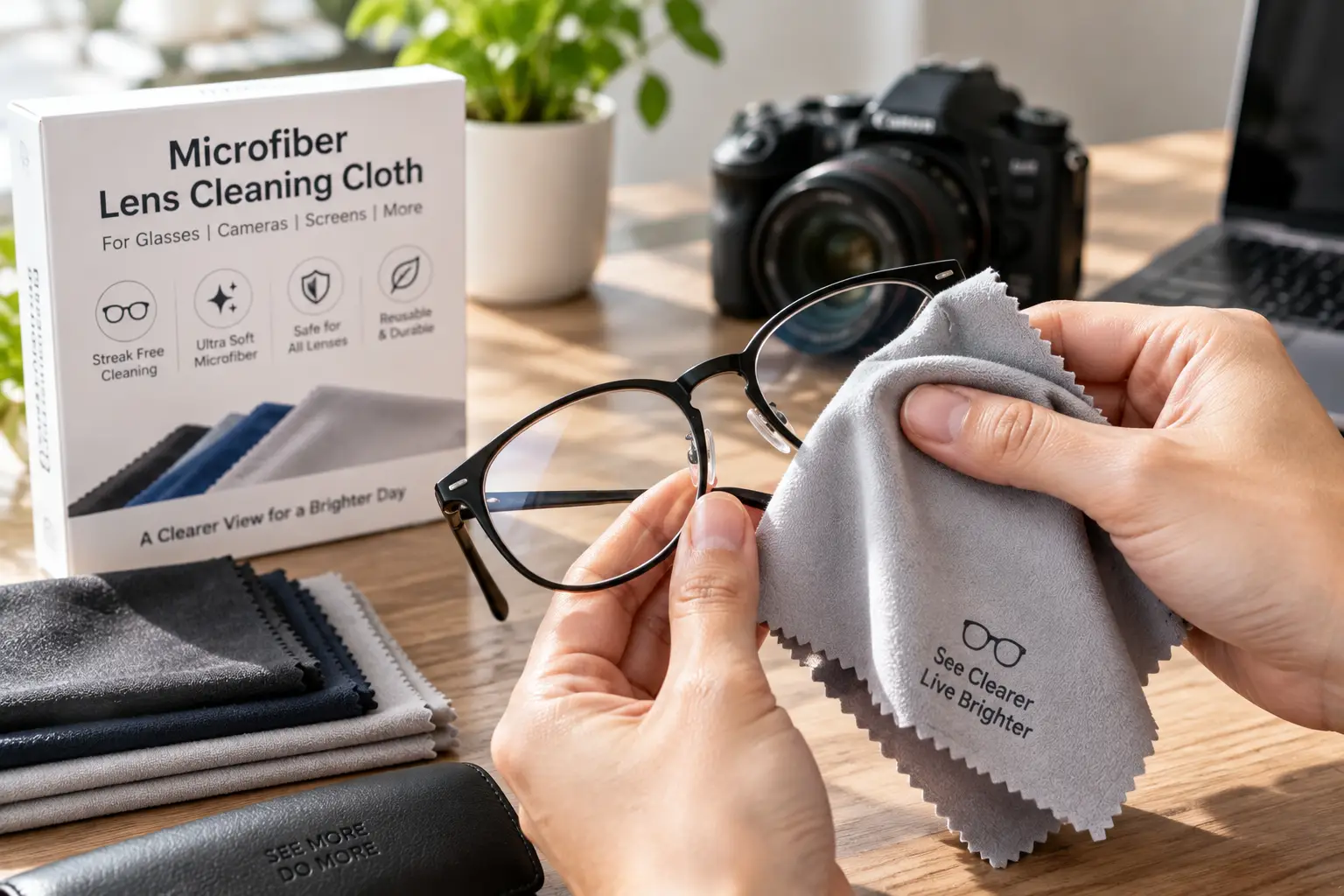
A lens cleaning cloth microfiber option is a specialized textile woven from ultra-fine polyester and polyamide fibers, engineered to lift oil, dust, and fingerprints off delicate optical surfaces without scratching coatings or leaving streaks behind. It sounds like a minor accessory, but the wrong choice can quietly wreck a $300 pair of anti-reflective glasses or a $1,200 camera lens.
Here’s the thing most people never think about: the average pair of eyeglasses gets wiped with whatever’s closest — a shirttail, a paper napkin, a tissue from the glovebox. None of those were built for optical coatings, and over months of use, they leave a fine haze of micro-scratches that no amount of cleaning solution can undo. A proper lens cleaning cloth microfiber pick is cheap insurance against that slow damage, whether you’re protecting prescription lenses, a mirrorless camera, a pair of binoculars, or a phone screen you touch two hundred times a day.
This guide walks through seven real, currently available options — from budget six-packs to premium optical-brand kits — with honest analysis based on published specs and aggregated customer feedback, not fabricated hands-on testing. You’ll also get a buyer’s framework, common mistakes to dodge, and answers to the questions people actually search before they buy. Whether you wear glasses, shoot photos, or just want your phone screen smudge-free, there’s a clear pick below for your situation.
Quick Comparison: Top Lens Cleaning Cloth Microfiber Picks at a Glance
| Product | Best For | Price Range | Pack Size |
|---|---|---|---|
| MagicFiber Microfiber Cleaning Cloth | Best all-around value | Around $8–$10 | 6 cloths |
| ZEISS Jumbo Microfiber Lens Cleaning Cloth | Premium eyewear brand trust | Around $10–$14 | 2 cloths (XL) |
| K&F Concept Microfiber Lens Cleaning Cloth X6 | Camera lenses & filters | Around $8–$11 | 6 cloths |
| Koala Eyeglass Lens Cleaner Spray Kit | Spray + cloth combo | Around $15–$20 | 2 sprays + 2 cloths |
| SPUDZ Classic Microfiber Lens Cleaner | On-the-go / keychain carry | Around $10–$14 | 2 clip-on pouches |
| Kimtech Kimwipes | Labs & high-volume cleaning | Around $15–$25 | 280+ single-use sheets |
| Care Touch Lens Cleaning Wipes + Microfiber Cloths | Value bundle (wipes + cloth) | Around $18–$22 | 200 wipes + 6 cloths |
Looking at the table, there’s a clear split between reusable microfiber cloths and single-use options. If you’re cleaning one or two pairs of glasses at home, the MagicFiber Microfiber Cleaning Cloth or ZEISS Jumbo Microfiber Lens Cleaning Cloth covers most needs without overspending. Photographers juggling multiple lenses and filters get more precision from the K&F Concept Microfiber Lens Cleaning Cloth X6, while anyone who wants zero cross-contamination risk — think shared lab equipment or camera sensors — should lean toward Kimtech Kimwipes instead of a reusable cloth.
💬 Found a pick that fits? Tap through to check today’s price and availability before you decide.
Top 7 Lens Cleaning Cloth Microfiber Picks for 2026
1. MagicFiber Microfiber Cleaning Cloth — best everyday value pack
The six-pack format means you can stash one in your car, one in your bag, and one on your desk without ever hunting for a clean cloth. Each cloth measures roughly 6 x 7 inches and ships in its own resealable polybag, which keeps it free of lint and grit between uses — a small detail that matters more than it sounds, since a dirty cloth is the single fastest way to scratch a lens.
The fine, densely woven fibers are built to lift fingerprints, dust, and facial oils without dragging debris across the surface, and the manufacturer states the cloths can be washed and reused several hundred times before performance drops off. In practice, that means a single six-pack can realistically outlast a year or more of daily eyeglass or phone-screen cleaning. What most buyers overlook is that this same cloth doubles as a safe option for laptop screens and camera bodies, so you’re not buying five different cloths for five different surfaces.
Reviews consistently report strong satisfaction with the lint-free finish and multi-surface versatility, with the cloth frequently cited by independent gear reviewers as a go-to recommendation for electronics and eyewear alike. The main critique that surfaces in aggregated feedback is the relatively small 6×7-inch size, which some users find limiting on larger screens, and the narrow color selection.
Pros:
- ✅ Six cloths cover home, car, and bag simultaneously
- ✅ Individually bagged to stay lint-free between uses
- ✅ Rated safe for coated lenses, screens, and glass
Cons:
- ❌ Smaller 6×7-inch size limits use on large screens
- ❌ Color options are limited across the pack
Priced around $8–$10 for six cloths, this works out to under $2 per cloth — hard to beat for a first purchase, and a smart value pick if you just want reliable daily coverage.
2. ZEISS Jumbo Microfiber Lens Cleaning Cloth — trusted optics brand, XL size
ZEISS built its name on optics — camera lenses, microscopes, ophthalmic lenses — for over a century, and that heritage is the whole pitch behind this jumbo cloth. At roughly 12 x 16 inches, it’s noticeably larger than the standard 6×7 pocket cloth, giving you more clean surface area per wipe before you need to fold to a fresh section.
The cloth is explicitly rated safe for anti-reflective coatings, blue-light-filtering lenses, and polarized sunglass lenses, which matters because not every generic microfiber cloth manufacturer tests against those specific coatings. Made from recycled material and machine washable, it’s positioned as a long-term, sustainable pick rather than a disposable one. Here’s what to weigh: the ZEISS name carries real trust with opticians and camera shops, and that brand confidence is worth something if you’re nervous about damaging an expensive coated lens.
Aggregated customer reviews are genuinely mixed on this one, and honesty matters more than brand loyalty here — reviews consistently report satisfaction with the size and scratch-free feel, but a recurring complaint describes the cloth “swirling” oils around rather than fully lifting them off the lens, and a smaller number of reviewers reported the cloth smudging rather than clearing their glasses. That inconsistency suggests performance may vary by batch or by how oily the lens is to begin with.
Pros:
- ✅ Oversized 12×16-inch surface for fewer wipe passes
- ✅ Explicitly rated for AR and polarized coatings
- ✅ Recognized optics brand with strong shop trust
Cons:
- ❌ Some reviewers report it smears oil instead of lifting it
- ❌ Mixed consistency reported across review batches
Expect to pay in the $10–$14 range for a two-pack. It’s a reasonable value if you weight brand trust heavily, but pair it with a quick water rinse of the lens first for best results based on aggregated feedback.
3. K&F Concept Microfiber Lens Cleaning Cloth X6 — best for camera lenses & filters
K&F Concept built its catalog around camera accessories, and this cloth reflects that focus: high-density weave, individually packaged units, and a “precision cleaning” positioning aimed squarely at photographers who need to keep front elements and filter glass free of dust before a shoot. Each cloth ships sealed, so you’re not pulling a lint-covered cloth out of a camera bag pocket where it’s been rattling around with keys and coins.
The high-density weave is the practical difference here — a denser weave means more fiber tips contacting the glass per square inch, which translates to better oil pickup on stubborn fingerprint smudges without needing extra passes. That matters most on wide-aperture lenses (think f/1.4 primes), where even faint smearing shows up as visible flare or softness in photos. Photographers layering filters — UV, polarizer, ND — also benefit from having a dedicated cloth that never touches a phone screen or car dashboard.
Customer sentiment around the K&F Concept line skews positive for camera-specific use, particularly the individually wrapped packaging that keeps each cloth contamination-free until it’s actually needed — a detail that matters more to photographers protecting coated glass than to someone just wiping a phone screen.
Pros:
- ✅ High-density weave for stubborn fingerprint oil
- ✅ Individually wrapped, so no bag-lint contamination
- ✅ Sized well for filters and front lens elements
Cons:
- ❌ Six-pack costs more per cloth than generic multi-packs
- ❌ Not explicitly marketed for large screens or TVs
At around $8–$11 for six individually packaged cloths, this is a smart, targeted buy for anyone who owns interchangeable-lens camera gear and wants a dedicated cloth that never leaves the camera bag.
4. Koala Eyeglass Lens Cleaner Spray Kit — best spray-and-cloth combo
This kit pairs a Japanese microfiber cloth with a dedicated lens spray, which solves a problem the dry-wipe-only cloths above don’t address: dry wiping alone can’t fully lift baked-on oils, and dragging a dry cloth across a truly dirty lens is exactly how micro-scratches happen over time. The spray is formulated to loosen debris first, so the cloth only has to lift it away rather than scrub it off.
The cloth itself uses a honeycomb matrix weave, which the manufacturer states is compatible with anti-reflective and polarized coatings — a meaningful claim given the mixed AR-coating feedback we saw on the ZEISS pick above. Based on comparing the spec sheets, the honeycomb structure creates more surface contact points than a flat weave, similar in principle to the suede-weave logic used on premium screen cloths. For anyone managing prescription glasses with expensive coatings, pairing a purpose-built spray with the cloth removes the guesswork of “is plain water enough.”
Reviews for combo kits in this category tend to praise the convenience of a one-stop kit over buying spray and cloth separately, though buyers should note the cloth-only portion is smaller than some standalone competitors, so this shines more as a complete system than as a bulk cloth purchase.
Pros:
- ✅ Spray pre-loosens oils before the cloth touches glass
- ✅ Honeycomb weave rated for AR and polarized coatings
- ✅ Two-in-one kit reduces guesswork for coated lenses
Cons:
- ❌ Fewer cloths included than dedicated multi-packs
- ❌ Costs more upfront than cloth-only alternatives
Typically priced around $15–$20 for the full kit, this is the pick for anyone who wants a complete, coating-safe cleaning system rather than piecing one together themselves.
5. SPUDZ Classic Microfiber Lens Cleaner — best for on-the-go carry
SPUDZ solves a different problem entirely: the cloth you own doesn’t help if it’s sitting in a drawer at home when you actually need it. This design clips onto a keychain, backpack strap, or camera bag zipper, and the fabric tucks into its own closable pouch when not in use, which keeps the cleaning surface protected from pocket lint and dust.
What most people overlook with clip-on cloths is that the pouch does double duty: it’s not just storage, it’s what keeps the cloth clean enough to be safe to use days or weeks after you last reached for it. A cloth that’s been rattling loose in a bag picks up grit that can scratch a lens on the very next use — the pouch design directly addresses that failure mode. At 6×6 inches, it’s sized for quick touch-ups on glasses or sunglasses rather than large-surface jobs.
Feedback on clip-on lens cloths in this category consistently highlights the “always have it with you” convenience factor as the main draw, with the trade-off being a smaller cleaning surface compared to jumbo cloths built for stationary, at-home use.
Pros:
- ✅ Clips to keys, bags, or camera straps for constant access
- ✅ Closable pouch keeps the cloth grit-free between uses
- ✅ Compact size fits pockets and small bags easily
Cons:
- ❌ Smaller surface area than jumbo or 12×16-inch cloths
- ❌ Better suited to touch-ups than deep, heavy cleaning
At around $10–$14 for a two-pack, this is the pick for hikers, commuters, and anyone who has ever tried to clean sunglasses with their shirt because the “real” cloth was at home.
6. Kimtech Kimwipes — best for labs and high-volume cleaning
Kimwipes aren’t microfiber — they’re a specialized, lint-free cellulose wiper — and they earn their spot here because photographers, lab technicians, and camera repair sources consistently recommend them for a job reusable cloths aren’t built for: single-use cleaning where cross-contamination is unacceptable. Camera-care guides from major photo retailers specifically call out wrapping a Kimwipe around a wooden applicator for precision front-element cleaning.
The practical logic is simple: a reusable cloth accumulates whatever it picked up on its last use, and if that was grit, the next pass can scratch the glass. A single-use wipe eliminates that risk entirely, which is exactly why they show up on lab benches, in camera repair shops, and in any setting cleaning multiple pieces of optical equipment back-to-back. What the spec sheet doesn’t say outright, but professional use makes clear, is that these excel specifically at precision spot-cleaning — not general-purpose glasses maintenance for someone who just wants one cloth in a coat pocket.
Reviews and professional recommendations for Kimwipes skew heavily toward technical and lab use rather than everyday consumer eyewear, with the main praise centered on genuine lint-free performance and the peace of mind of never reusing a contaminated wiper.
Pros:
- ✅ Single-use design eliminates cross-contamination risk
- ✅ Genuinely lint-free, favored for precision optics work
- ✅ Cost-efficient per wipe at high volume
Cons:
- ❌ Disposable, so it’s less eco-friendly than reusable cloths
- ❌ Overkill and less convenient for casual daily glasses use
Boxes typically run around $15–$25 depending on sheet count, which is genuinely economical per wipe for labs or repair shops, though most everyday glasses wearers will get more convenience from a reusable cloth instead.
7. Care Touch Lens Cleaning Wipes with Microfiber Cloths — best hybrid value bundle
This bundle covers both cleaning styles in one purchase: 200 pre-moistened, individually wrapped wipes for on-the-go smudge removal, plus six reusable microfiber cloths for drying and buffing afterward. The logic mirrors the Koala spray kit above — wipe first to lift oils, then buff dry with microfiber to avoid any streaking left behind by moisture.
For someone who wears glasses daily and also handles a phone screen constantly, this combo means never being caught without a cleaning option, whether that’s a quick wipe at a restaurant table or a proper cloth-and-solution clean at home. Based on comparing the total item count against the price, the per-use cost lands well below buying wipes and cloths separately, since bulk wipe packs and multi-cloth packs are each sold individually at similar price points elsewhere on this list.
Aggregated retail feedback for this bundle skews strongly positive, with reviewers frequently citing the sheer quantity included and the usefulness of having both a wet and dry cleaning method on hand, rather than being limited to one cleaning style.
Pros:
- ✅ 200 wipes plus 6 cloths covers wet and dry cleaning
- ✅ Individually wrapped wipes stay sanitary until used
- ✅ Strong per-use value versus buying separately
Cons:
- ❌ Bulkier to carry than a single pocket cloth
- ❌ Wipes are single-use, adding ongoing waste over time
Priced around $18–$22 for the full bundle, this is the pick for households or offices that go through cleaning supplies fast and want to stock up once.
Comparing All 7 Picks Side by Side
| Product | Material/Format | Best For | Price Range |
|---|---|---|---|
| MagicFiber Microfiber Cleaning Cloth | Reusable microfiber, 6×7 in | Everyday multi-surface use | Around $8–$10 |
| ZEISS Jumbo Microfiber Lens Cleaning Cloth | Reusable microfiber, 12×16 in | Brand-trusted eyewear care | Around $10–$14 |
| K&F Concept Microfiber Lens Cleaning Cloth X6 | Reusable microfiber, high-density | Camera lenses & filters | Around $8–$11 |
| Koala Eyeglass Lens Cleaner Spray Kit | Spray + microfiber cloth | Coated prescription lenses | Around $15–$20 |
| SPUDZ Classic Microfiber Lens Cleaner | Reusable microfiber, clip-on pouch | Travel & daily carry | Around $10–$14 |
| Kimtech Kimwipes | Single-use cellulose wiper | Labs & precision optics work | Around $15–$25 |
| Care Touch Lens Cleaning Wipes + Cloths | Wipes + microfiber bundle | Households needing both formats | Around $18–$22 |
The table makes the core trade-off obvious: reusable microfiber wins on long-term cost and sustainability, while single-use formats like Kimtech Kimwipes win on contamination control for shared or professional settings. If you only buy one item from this list, the MagicFiber Microfiber Cleaning Cloth covers the widest range of everyday surfaces for the lowest entry price, while camera owners are better served stepping up to the K&F Concept Microfiber Lens Cleaning Cloth X6 for its denser weave.
✨ Ready to stop smudging your lenses?
🔍 Compare the picks above, click through to check today’s price and availability, and get a cloth that actually protects your coatings — not one grabbed at random from a junk drawer.
How to Clean Your Glasses, Camera Lens, or Screen the Right Way
Owning the right cloth only solves half the problem — technique matters just as much, and it’s the part most product listings skip entirely. Start by removing loose grit first, whether that’s rinsing eyeglasses under lukewarm water or using an air blower on a camera lens; wiping a dry lens with debris still on it is the single most common way people scratch coatings, cloth quality aside.
Once loose particles are gone, apply your cleaning solution to the cloth itself rather than spraying it directly onto the glass — this prevents liquid from seeping into hinges, filter threads, or camera bodies. Wipe in gentle, circular motions working from the center outward, and rotate to a clean section of the cloth every few passes rather than dragging the same soiled patch back and forth, which just redistributes oil instead of removing it.
For camera lenses specifically, the community reflects standard practice: work from the center of the glass outward in circular motions, moving debris toward the edges rather than across the optical center where it affects image quality most. Finish by holding the surface up to angled light to check for remaining streaks before calling it done — a 10-second check that catches the smudges you’d otherwise only notice once you’re already using the gear.
Maintenance matters too: wash reusable microfiber cloths weekly in cool water with no fabric softener, since softener residue coats the fibers and actually reduces their ability to grab dust. Store cloths in a dedicated pouch or bag rather than loose in a pocket with keys or coins, since that’s the single fastest way a “clean” cloth picks up the grit that eventually scratches a lens.
Real-World Scenarios: Matching the Right Cloth to Your Life
The daily glasses wearer: If you wear prescription glasses eight-plus hours a day and want one reliable, brand-trusted option for anti-reflective coatings, the ZEISS Jumbo Microfiber Lens Cleaning Cloth or the Koala Eyeglass Lens Cleaner Spray Kit makes the most sense. Budget around $10–$20 once, and expect it to last months with weekly washing — cheap insurance for lenses that can run $200 or more with coatings.
The hobbyist photographer: If you’re shooting on weekends with a mirrorless or DSLR body and rotate through two or three lenses and filters, the K&F Concept Microfiber Lens Cleaning Cloth X6 earns its place in your bag specifically because it stays dedicated to optics and never doubles as a phone-screen cloth. Frequency of use here is moderate — maybe once or twice per outing — so a six-pack easily lasts a full season.
The commuter or frequent traveler: If your glasses or sunglasses get smudged on transit, in the car, or hiking, and you’ve learned the hard way that the “good” cloth is always at home when you need it, the SPUDZ Classic Microfiber Lens Cleaner‘s clip-on pouch design solves that specific pain point. It’s a low-cost, high-frequency-use pick — expect near-daily contact for touch-ups.
The household or shared office: Families with multiple glasses-wearers, or offices where several people share cleaning supplies, get the best per-use value from the Care Touch Lens Cleaning Wipes with Microfiber Cloths bundle, since 200 wipes plus six cloths spreads the cost across dozens of uses per person without anyone needing to buy their own separate cloth.
Common Lens-Cleaning Problems and How to Solve Them
Problem: Streaks after wiping. This almost always means the cloth was used dry on an oily lens, or the cloth itself is already saturated with oil from previous uses. Solution: use a spray-and-cloth combo like the Koala Eyeglass Lens Cleaner Spray Kit, or rinse lenses with water before wiping, and rotate to a clean section of cloth.
Problem: The cloth feels gritty or scratchy. This means the cloth has picked up dust or debris and is now actively risking scratches rather than preventing them. Solution: wash microfiber cloths weekly, and store them in a sealed pouch like the one included with the SPUDZ Classic Microfiber Lens Cleaner rather than loose in a bag.
Problem: A cloudy haze that won’t wipe away. This is often a sign of accumulated micro-scratches from years of using non-optical materials like paper towels or clothing. Solution: switching to a dedicated microfiber cloth going forward won’t undo existing damage, but the American Academy of Ophthalmology notes that avoiding abrasive materials is the single best way to prevent it from getting worse.
Problem: Losing or forgetting the cloth. Solution: a clip-on format like the SPUDZ Classic Microfiber Lens Cleaner or keeping a bulk pack like the MagicFiber Microfiber Cleaning Cloth in multiple locations (car, bag, desk) removes the “where did I put it” friction entirely.
Problem: Needing to clean shared or lab equipment safely. Solution: switch to single-use Kimtech Kimwipes for any setting where cross-contamination between users or devices is a real concern, rather than relying on one reusable cloth for everything.
How to Choose a Lens Cleaning Cloth Microfiber Option: 6 Buying Criteria
- Weave density. A denser weave packs more fiber tips per square inch, which lifts oil more effectively on stubborn fingerprint smudges — this is the main difference between a basic cloth and a “precision” one like the K&F Concept pick.
- Coating compatibility. If you own anti-reflective, blue-light, or polarized lenses, confirm the cloth is explicitly rated for those coatings rather than assuming any microfiber is safe.
- Size for your use case. A 6×7-inch cloth is fine for glasses and phones; a 12×16-inch cloth saves time on laptop screens, monitors, or larger camera equipment.
- Reusable vs. single-use. Reusable cloths win on long-term cost; single-use wipes win on contamination control for shared or professional settings.
- Storage and portability. A cloth you never carry is a cloth you’ll never use — clip-on pouches and individually wrapped packs solve this differently than a bulk multi-pack does.
- Real review sentiment, not just star ratings. A 4.6-star average can still hide a recurring complaint (like the oil-smearing feedback on the ZEISS pick) — read a handful of the actual written reviews before buying.
Common Mistakes to Avoid When Buying a Microfiber Lens Cloth
The most common mistake is assuming all microfiber is interchangeable. Weave density and fiber blend vary significantly between a $2 giveaway cloth and a purpose-built optical one, and that difference shows up directly in how well it lifts oil versus just smearing it around. A second frequent mistake is buying based on star rating alone without checking pack size or per-cloth cost — a 4.7-star bulk pack can still be a worse deal than a 4.4-star pack if it’s double the price per cloth.
Buyers also commonly skip checking coating compatibility, assuming “safe for glass” automatically means safe for anti-reflective or polarized coatings specifically — it doesn’t always. Finally, plenty of buyers pick a single format (all reusable or all disposable) when a hybrid approach, like pairing a bulk cloth pack with a clip-on travel cloth, actually fits real-world habits better than one product trying to do everything.
Microfiber Lens Cloths vs. Disposable Wipes and Paper Tissues
| Factor | Microfiber Cloth | Disposable Wet Wipes | Paper Tissue/Towel |
|---|---|---|---|
| Scratch risk | Low (if kept clean) | Low | High |
| Cost per use | Very low over time | Moderate, ongoing | Low, but damaging |
| Coating safety | High (when rated) | Moderate | Poor |
| Cross-contamination | Possible if reused dirty | None (single-use) | Possible |
| Environmental impact | Low (reusable) | Higher (disposable) | Higher (disposable) |
The comparison makes the case pretty clearly: paper towels and tissues embed and drag debris across a lens, which is precisely how permanent micro-scratches form over time, according to eyewear-care guidance. Microfiber cloths like the MagicFiber Microfiber Cleaning Cloth win on long-term cost and sustainability but require regular washing to stay safe, while disposable wipes trade a bit of ongoing cost for guaranteed contamination control — which is exactly why Kimtech Kimwipes remain the standard choice in lab and repair environments.
What to Expect: Everyday Performance
On paper, a “lint-free, scratch-free” claim sounds the same across every listing, but real-world performance diverges based on weave and use pattern. A well-maintained microfiber cloth should clear light dust and fingerprints in one or two passes; if you’re wiping the same spot five or six times, that’s a signal the cloth needs washing, not that you need a fundamentally different product.
Expect reusable cloths to perform consistently for roughly six to twelve months of regular use before fiber density noticeably degrades, assuming weekly washing without fabric softener. Spray-and-cloth kits like the Koala Eyeglass Lens Cleaner Spray Kit will outperform dry cloths specifically on oily, humid-climate use, since the spray does the heavy lifting on oil removal that a dry cloth alone struggles with. Day to day, the biggest performance differentiator buyers actually notice isn’t the brand name — it’s simply whether the cloth was clean before you reached for it.
Long-Term Cost and Maintenance
Run the numbers and reusable microfiber wins decisively over any multi-year horizon. A $9 six-pack of MagicFiber Microfiber Cleaning Cloth cloths, washed weekly and replaced annually, costs roughly $9–$18 a year depending on how many you keep in rotation. Compare that to disposable wipes: even at a modest $20 for 200 wipes, someone using two or three wipes daily burns through that supply in under three months, pushing annual cost well past $80.
The math shifts for professional or shared settings, where Kimtech Kimwipes‘ single-use design removes contamination risk that a reusable cloth simply can’t guarantee across multiple users or pieces of equipment — there, the extra cost buys a real reduction in liability, not just convenience. For most individual households, though, a reusable cloth paired with occasional wipes for travel — exactly the model the Care Touch Lens Cleaning Wipes with Microfiber Cloths bundle offers — delivers the best blend of low ongoing cost and cleaning flexibility.
Features That Actually Matter (and Ones That Don’t)
What actually matters: weave density, documented coating compatibility, and how you’ll realistically store and carry the cloth day to day. What doesn’t move the needle nearly as much as marketing suggests: color options, “antibacterial” claims on dry cloths (bacteria growth on a dry, regularly washed cloth is a minor factor compared to actual cleaning performance), and oversized packaging that just ends up as clutter in a drawer.
One feature that’s genuinely underrated: individually wrapped or bagged cloths, like those in the MagicFiber Microfiber Cleaning Cloth and K&F Concept Microfiber Lens Cleaning Cloth X6 packs. It seems like a minor packaging detail, but it directly prevents the single biggest real-world failure mode — a cloth picking up grit while loose in a bag and then scratching the very lens it was meant to protect.
Safety, Regulations, and Standards
Lens cleaning cloths themselves aren’t subject to heavy federal regulation the way electronics or children’s products are, but a few practical safety notes still apply. The American Academy of Ophthalmology specifically advises against ammonia, bleach, vinegar, and household window cleaners on coated lenses, since these can strip anti-reflective and blue-light coatings — a warning that applies regardless of which cloth brand you use. If you’re pairing a cloth with a spray solution, check that it’s labeled ammonia-free and alcohol-free for coated lenses specifically, which several of the kits above (including the Koala Eyeglass Lens Cleaner Spray Kit) call out directly on their packaging.
Material composition matters too: genuine microfiber is a synthetic blend of polyester and polyamide engineered at a fiber density far finer than cotton, which is what allows it to trap rather than smear particles — a structural difference worth understanding when you’re comparing a $2 no-name cloth to a purpose-built optical one. For camera gear specifically, B&H Photo’s cleaning guidance recommends removing loose dust with a blower before any cloth touches the glass, minimizing the chance that grit gets dragged across a coated front element regardless of how good the cloth itself is.
Frequently Asked Questions
❓ What is the best microfiber cloth for glasses?
❓ Can I wash and reuse a microfiber lens cloth?
❓ Is microfiber better than tissue for cleaning glasses?
❓ How often should I replace my lens cleaning cloth?
❓ Are microfiber cloths safe for anti-reflective coated lenses?
Conclusion
Choosing the right lens cleaning cloth microfiber option really comes down to matching format to habit: reusable multi-packs like the MagicFiber Microfiber Cleaning Cloth cover the widest range of daily needs at the lowest cost, camera owners get more precision from the K&F Concept Microfiber Lens Cleaning Cloth X6, and anyone managing coated prescription lenses benefits from pairing a cloth with a dedicated spray, like the Koala Eyeglass Lens Cleaner Spray Kit.
For travel and daily carry, the clip-on SPUDZ Classic Microfiber Lens Cleaner solves the “it’s always at home” problem, while households or shared offices get the most flexibility from a hybrid bundle like Care Touch Lens Cleaning Wipes with Microfiber Cloths. And for labs, camera repair, or any setting where cross-contamination is a genuine concern, single-use Kimtech Kimwipes remain the professional standard for good reason.
Whichever you choose, the technique matters as much as the product: remove loose grit first, use gentle circular motions, and keep your cloth clean and stored properly between uses. Do that consistently, and even a budget pick will protect your lenses far better than whatever’s currently balled up in your glovebox.
✨ Don’t wait for the next smudge to ruin your view
🔍 Pick the option above that matches your day-to-day — glasses, camera, or both — and check current pricing before you check out. A few dollars now beats replacing scratched coatings later.
Recommended for You
- Custom Microfiber Towels: 7 Best Personalized Picks for 2026
- 7 Best Cruelty Free Household Cleaning Products (2026 Guide)
- Cotton Cleaning Rags: 7 Best Picks for a Spotless Home (2026)
Disclaimer: This post contains affiliate links. As an Amazon Associate, I earn from qualifying purchases made through these links, at no additional cost to you.
✨ Found this article helpful? Share it with someone who needs it! 💬🤗