In This Article
If you’ve ever wiped a mirror with a paper towel and ended up with more streaks than you started with, you already understand why microfiber textile has quietly taken over cleaning closets across the country. This isn’t a marketing gimmick — it’s a genuine shift in how synthetic fabric is engineered to trap dirt, absorb liquid, and leave surfaces spotless without chemical sprays.
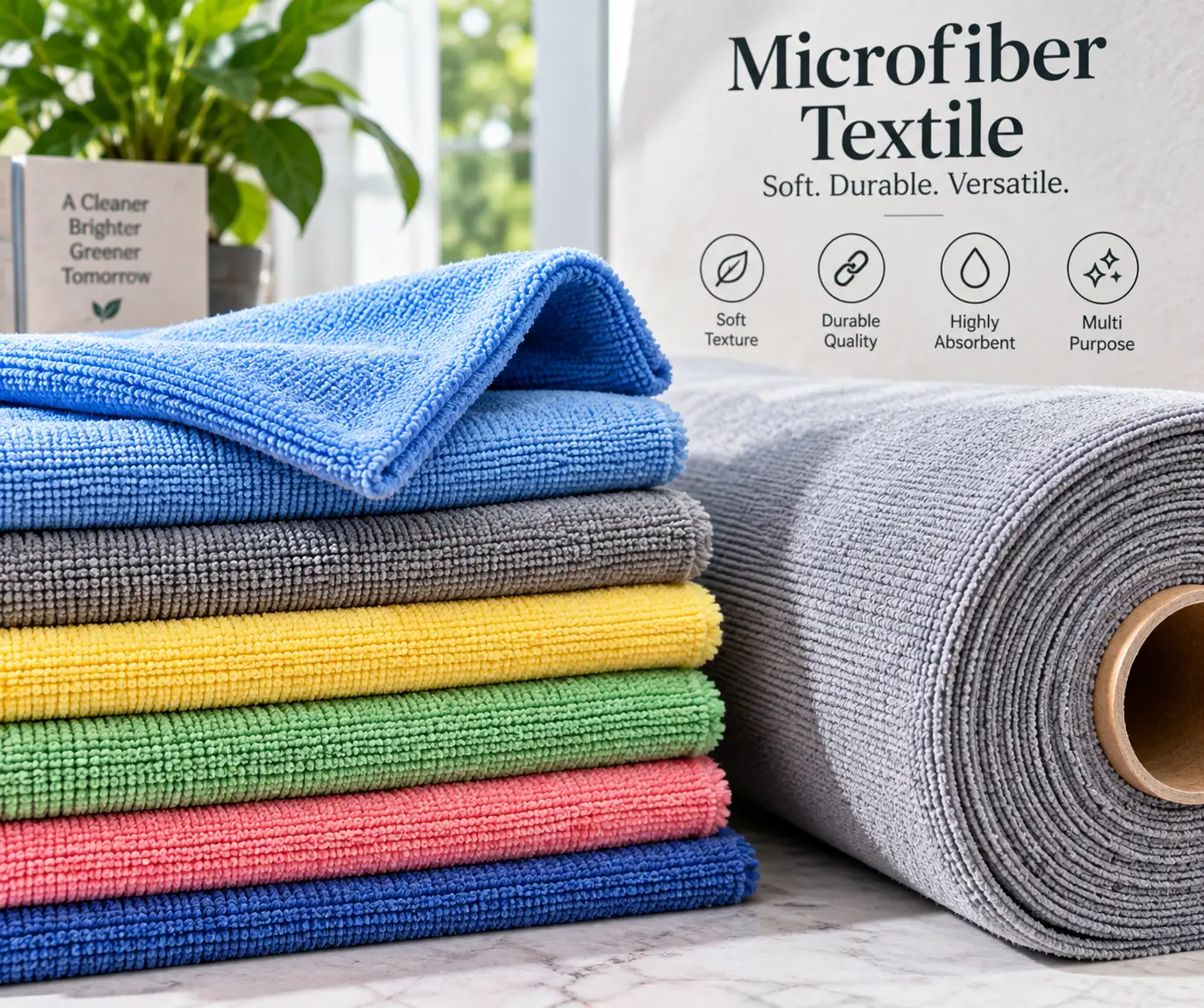
So, what is microfiber textile? It’s a synthetic fiber finer than one denier made from ultra-fine polyester and polyamide strands — roughly a twentieth the width of a human hair. That microscopic structure is what gives microfiber its scrubbing power and lint-free finish, and it’s why the fibers are often woven or knit into cleaning products, apparel, upholstery, and industrial filters.
This guide skips the fluff. We researched real spec sheets, aggregated customer feedback, and manufacturer data to bring you seven genuinely different microfiber textile products — from budget household multipacks to professional-grade auto-detailing towels — plus the buying knowledge you need to avoid wasting money on cloths that pill, streak, or fall apart after a month. Whether you’re stocking a kitchen, detailing a car, or replacing paper towels for good, you’ll find a fit here.
This post contains affiliate links, and as an Amazon Associate, we may earn from qualifying purchases — more on that in the disclaimer below.
What Is Microfiber Textile?
Microfiber textile is a synthetic fabric built from fibers finer than one denier — typically a blend of polyester and polyamide, engineered so the fabric can hold several times its weight in liquid while trapping dust and oils electrostatically. Unlike cotton, quality microfiber leaves no lint behind, which is why it dominates the cleaning-cloth aisle.
The real secret is in the manufacturing. Cheap “microfiber” is often just a single round polyester filament — soft, but not especially effective at grabbing dirt. Premium microfiber textile uses split-fiber construction, where polyester and polyamide filaments are extruded together, then chemically split apart during finishing. Under a microscope, a properly split fiber looks like an asterisk or a tiny star, and each of those “points” creates surface area that grabs onto grease, dust, and grime. That’s the difference between a cloth that smears a countertop and one that actually lifts the mess off it.
Quick Comparison: Top Microfiber Textile Picks at a Glance
| Product | Best For | GSM / Blend | Price Range |
|---|---|---|---|
| Amazon Basics Microfiber Cleaning Cloths | Everyday budget cleaning | ~200 GSM, polyester blend | Under $15 |
| MR.SIGA Microfiber Cleaning Cloth | Whole-home, color-coded use | 85/15 polyester-nylon | Under $15 |
| USANooks Microfiber Cleaning Cloth | Car care on a budget | 300 GSM | Under $20 |
| The Rag Company Eagle Edgeless Towel | Professional auto detailing | 350–600 GSM, 70/30 blend | $20–$40 |
| E-Cloth Home Cleaning Set | Chemical-free surface cleaning | Dual-action fiber weave | $20–$35 |
| O-Cedar Microfiber Cloth Mop | Hard floor cleaning | Microfiber mop head | $15–$30 |
| SOFTSPUN Microfiber Cloth (Silk Edge) | Delicate/automotive paint surfaces | Silk-banded edge, split fiber | Under $20 |
Looking at the table above, the split is really about task specialization rather than one “best” product. Amazon Basics Microfiber Cleaning Cloths and MR.SIGA Microfiber Cleaning Cloth cover general household duty at the lowest per-cloth cost, while The Rag Company Eagle Edgeless Towel and SOFTSPUN Microfiber Cloth (Silk Edge) exist specifically because automotive paint and glass need a gentler, higher-GSM fiber that won’t introduce micro-scratches. If your cleaning needs span multiple rooms and a car, expect to own at least two of these categories rather than one do-it-all cloth.
💬 Found a pick you like already? Check current pricing before it changes!
Top 7 Microfiber Textile Products: Expert Analysis
We narrowed the market down to seven real, currently available products that represent genuinely different price points and use cases — not seven versions of the same 24-pack. Here’s the honest breakdown of each.
1. Amazon Basics Microfiber Cleaning Cloths — best budget multipack
If you just need reliable microfiber textile in bulk without overthinking it, this is where most households should start. The pack ships in a 24-count bundle of 16″ x 12″ cloths in blue, white, and yellow.
Amazon Basics builds these from a non-abrasive polyester-blend fiber rated to absorb up to 8 times its own weight in liquid while staying streak-free and lint-free on glass and hard surfaces. In practice, that absorbency rating matters more than it sounds — it means you can tackle a spill without reaching for a second or third cloth, and the fabric dries fast enough between uses that it doesn’t turn sour in a kitchen drawer. The tradeoff is thickness: at a lower GSM than premium detailing towels, these cloths won’t hold up to years of daily heavy scrubbing the way a 300+ GSM towel will.
Who should buy it: renters, first apartments, or anyone assembling a basic cleaning kit who wants three-colors-for-three-rooms simplicity without spending much. Reviews consistently report strong performance on mirrors, stainless steel, and countertops, with the most common complaint being that the thinner cloths show wear faster than pricier alternatives after heavy, repeated use.
Pros:
- ✅ Absorbs several times its weight in liquid
- ✅ Streak-free and lint-free on glass surfaces
- ✅ Very low cost per cloth in a 24-pack
Cons:
- ❌ Thinner material than premium detailing towels
- ❌ Edges can fray faster with heavy daily use
Typically priced under $15 for the full 24-pack, this is one of the better value-for-money entries in the whole microfiber textile category — you’re paying under a dollar per cloth for genuinely functional, reusable cleaning fabric.
2. MR.SIGA Microfiber Cleaning Cloth — best for color-coded organization
MR.SIGA Microfiber Cleaning Cloth takes the same 24-pack concept and adds a real organizational upgrade: a wider color spread so you can dedicate specific colors to specific rooms or tasks, which matters more than people expect for cross-contamination control (keeping a bathroom cloth away from kitchen counters, for instance).
The cloths measure roughly 12.6″ x 12.6″ and use an 85% polyester and 15% nylon blend that’s noticeably soft against skin while remaining highly absorbent. What that ratio means in practice: the slightly higher polyester share makes these cloths a touch firmer and better at scrubbing than ultra-soft 70/30 blends, while still avoiding scratches on finished surfaces like stainless appliances or painted trim.
For buyers managing a full household — kids, pets, a kitchen, multiple bathrooms — the color-coding system alone justifies choosing MR.SIGA Microfiber Cleaning Cloth over an unsorted multipack. Aggregated reviews describe consistent lint-free results across glass, chrome, and countertops, with reinforced stitched edges holding up over repeated washes; some buyers note the cloths run slightly thinner than dedicated detailing towels, which tracks with their general-purpose (not auto-specific) design.
Pros:
- ✅ Multiple colors enable simple room-by-room organization
- ✅ Soft 85/15 blend resists scratching finished surfaces
- ✅ Machine washable for hundreds of reuses
Cons:
- ❌ Not as plush as dedicated automotive detailing towels
- ❌ Should be washed separately from lint-producing fabrics
Priced under $15 for 24 cloths, this is an easy value pick if organized cleaning matters to your household routine.
3. USANooks Microfiber Cleaning Cloth — best budget pick for car care
Car owners who want dedicated microfiber textile without paying detailing-shop prices should look at this 12-pack. It’s built at 300 GSM, a grade high enough to matter for swirl-free exterior work, and reviewers frequently cite it as a best-selling exterior car-care option.
The higher 300 GSM density (versus the roughly 180–200 GSM of general household cloths) is the whole story here: more fiber mass per square inch means more surface area to trap grit before it drags across paint, which is exactly what prevents the fine swirl marks that cheap cloths can leave in clear coat. That’s a meaningful upgrade in practical terms — a 200 GSM towel dragged across a dusty hood can act like sandpaper, while a well-made 300 GSM towel lifts the dust instead of pushing it.
USANooks Microfiber Cleaning Cloth is a reasonable middle ground between disposable dollar-store rags and $6-per-towel professional detailing brands. Aggregated customer sentiment describes the towels as genuinely swirl- and scratch-free on paint, with strong lint-free performance and longevity rated for up to roughly 1,200 washes when properly cared for. The main drawback buyers mention is that the grey color-only option makes it harder to segregate towels by task the way multi-color packs allow.
Pros:
- ✅ 300 GSM density reduces swirl marks on paint
- ✅ Rated for hundreds of machine washes
- ✅ Strong reputation specifically for exterior car care
Cons:
- ❌ Single-color pack makes task-separation harder
- ❌ Not quite as plush as premium 400+ GSM detailing towels
Expect to pay around $10–$20 for the 12-pack, which lands it firmly in the “best value for regular car owners” bracket.
4. The Rag Company Eagle Edgeless Towel — best for professional-grade detailing
When paint correction and swirl-free results actually matter — think weekend detailers, car enthusiasts, or anyone who’s paid for ceramic coating — The Rag Company Eagle Edgeless Towel is the step up. It’s manufactured with South Korean split microfiber on Karl Mayer knitting equipment, the same production standard used by professional detailing brands.
Here’s what the spec sheet doesn’t fully convey: the “edgeless” design isn’t a marketing term — traditional stitched or serged towel borders are a known source of micro-scratches on soft clear coat, so removing that border entirely eliminates a real risk point during wipe-downs. Combined with a dual-pile weave (longer fibers on one side for lifting loose particles, a tighter terry weave on the other for wiping away product residue), this towel is doing two distinct jobs that cheaper towels ask a single fiber type to handle. GSM options run from 350 up through 600, so buyers can choose a lighter towel for daily maintenance or a plush, high-GSM towel for final finishing steps.
Reviews from the detailing community consistently describe the softness improving with each wash rather than degrading — a genuine mark of quality construction — and cite durability across hundreds of wash cycles without the fabric breaking down. The obvious downside is cost per towel, which runs several times higher than a generic multipack; this is a towel for people who care about paint finish, not a general kitchen rag.
Pros:
- ✅ Edgeless, tag-free design removes a real scratch risk
- ✅ Dual-pile weave handles two cleaning jobs in one towel
- ✅ Gets softer, not weaker, with repeated washing
Cons:
- ❌ Meaningfully more expensive per towel than general multipacks
- ❌ Overkill for basic household dusting or kitchen cleanup
Individual towels typically run in the $20–$40 range for multi-packs depending on GSM and pack size — a legitimate investment for anyone serious about protecting a paint finish.
5. E-Cloth Home Cleaning Set — best for chemical-free cleaning
Not every microfiber textile product is about car paint. E-Cloth Home Cleaning Set is built around a specific promise: clean glass, counters, and surfaces effectively using only water, no sprays or chemicals required.
The engineering behind that claim comes down to fiber density and dual-sided construction — one side uses an ultra-dense weave to scrub and lift grease and grime, while a finer polish-side buffs the surface streak-free without redepositing residue. In practice, that means a damp E-Cloth can genuinely replace a bottle of glass cleaner for most routine cleaning, which matters both for household chemical exposure and for anyone trying to cut down on disposable cleaning-spray bottles.
For buyers specifically motivated by reducing chemical cleaner use — households with small children, pets, or anyone managing fragrance or chemical sensitivities — this is arguably the most differentiated product on this list, because the other six entries are still generally used alongside a spray cleaner. Aggregated reviews describe strong streak-free performance on mirrors and windows and note the cloths hold up well over repeated washing, with occasional feedback that results depend on using genuinely hot water and a thorough wring-out technique rather than a quick rinse.
Pros:
- ✅ Designed to clean effectively with water alone
- ✅ Dual-sided weave scrubs and polishes in one pass
- ✅ Reduces reliance on chemical spray cleaners
Cons:
- ❌ Technique-dependent — needs hot water and a proper wring
- ❌ Premium price relative to standard all-purpose cloths
Sets typically fall in the $20–$35 range depending on cloth count, which is a fair price if cutting chemical cleaners from your routine is genuinely a priority.
6. O-Cedar Microfiber Cloth Mop — best for hard floors
Microfiber textile isn’t limited to hand cloths — floor care is one of its biggest practical applications, and the O-Cedar Microfiber Cloth Mop pairs a machine-washable microfiber head with a telescoping handle that extends up to 56 inches.
What makes this worth a dedicated slot on this list is the mop head’s fiber structure: the same absorbent, electrostatically-charged microfiber that grabs dust off a countertop also removes more than 99 percent of bacteria using nothing but water, according to the manufacturer’s testing claims. That’s a meaningful practical upgrade over a traditional string mop or disposable wet-wipe pad, both of which tend to push dirty water around rather than lifting it off the floor. The head is rated for up to 100 machine washes, which brings the effective cost-per-clean down dramatically compared to disposable mop pads over a year of regular use.
Families with hardwood, tile, or laminate flooring get the most out of this pick, particularly households with pets or young kids where “mop with water only” is a genuine selling point. The most common critique in aggregated reviews is that the mop performs best when paired with a proper wringing bucket — used dry-twisted by hand, it’s noticeably less effective at moisture control.
Pros:
- ✅ Cleans effectively with water only, no chemicals required
- ✅ Machine-washable head rated for up to 100 washes
- ✅ Telescoping handle adjusts for comfortable use
Cons:
- ❌ Works best with a dedicated wringing bucket (sold separately)
- ❌ Replacement heads add to long-term cost
Expect to pay roughly $15–$30 for the mop with handle, with refill heads priced separately in the $10–$15 range — a genuinely cost-effective long-term floor-care solution.
7. SOFTSPUN Microfiber Cloth (Silk Edge) — best for delicate and automotive paint surfaces
Rounding out the list is a lesser-known but genuinely well-built option: SOFTSPUN Microfiber Cloth (Silk Edge), which uses a silk-banded edge specifically to prevent the fraying-edge scratches that plague cheaper towels.
The silk-edge construction solves a specific, narrow problem — standard stitched or overlocked hems can develop loose threads over time, and those threads are exactly what causes fine scratching on sensitive surfaces like automotive clear coat, eyeglass lenses, or camera equipment. By banding the edge in a smoother silk-like material instead, this cloth stays safe for delicate surfaces well past the point where a standard-hem towel would need retiring.
This is a strong pick for buyers who split their cleaning needs between household duty and something more precision-sensitive — interior and exterior car detailing, electronics, or optics — without wanting to buy an entirely separate premium towel line for each. Aggregated reviews describe the fiber quality as genuinely premium for the price point, with strong absorbency and no reported scratching; the main limitation is that, as a less mainstream US brand, availability and colorway options are narrower than bigger names like Amazon Basics or The Rag Company.
Pros:
- ✅ Silk-banded edges reduce scratch risk on delicate surfaces
- ✅ Genuinely versatile across auto, electronics, and household use
- ✅ Strong absorbency relative to its price point
Cons:
- ❌ Smaller brand with fewer size and color options
- ❌ Less widely reviewed than major household-name competitors
Typically priced under $20 for a multi-pack, it’s a smart pickup for anyone who wants one premium-feeling cloth that covers both the car and the coffee table.
How to Care For and Extend the Life of Your Microfiber Textiles
Buying good microfiber textile is only half the equation — how you wash and store it determines whether it lasts two years or two months. Here’s what actually matters in practice.
Wash microfiber separately from cotton, towels, and anything that sheds lint. This isn’t overcautious advice — cotton fibers physically lodge inside microfiber’s split-fiber structure, and once that happens, the cloth’s absorbency and scrubbing power drop permanently. Use a mild, residue-free detergent and skip fabric softener entirely: softener coats the fibers in a waxy film that blocks the microscopic gaps responsible for trapping dirt in the first place, effectively turning a $15 cloth back into a $2 cloth after just one wash.
Heat is the other silent killer. Because microfiber is a polyester-polyamide synthetic, high dryer heat can melt or fuse the fiber tips, flattening the split structure that makes the fabric effective. Air-drying or tumble-drying on low is the safer long-term habit, even though it takes an extra hour. Finally, retire towels for delicate surfaces (car paint, glass, electronics) once they’ve absorbed a heavy grease or wax buildup that washing won’t fully remove — a saturated towel can redeposit residue instead of lifting it, defeating the purpose entirely.
Real-World Scenarios: Matching Microfiber Textile to Your Life
Rather than a generic “it depends,” here’s how three common buyer profiles should actually approach this category.
The apartment renter on a budget: If you’re outfitting your first place and cleaning maybe once a week, a 24-pack like Amazon Basics Microfiber Cleaning Cloths or MR.SIGA Microfiber Cleaning Cloth covers kitchen, bathroom, and general dusting for under $15. There’s no reason to spend more until your cleaning frequency or surface sensitivity increases.
The weekend car detailer: If you own a car you actually care about — recently ceramic-coated, or just kept genuinely clean — the jump from a generic towel to The Rag Company Eagle Edgeless Towel or USANooks Microfiber Cleaning Cloth pays for itself the first time it prevents a swirl mark that would’ve cost real money to polish out. Budget-conscious detailers should start with USANooks and upgrade specific towels (final wipe-down, glass) to premium options over time rather than replacing the whole kit at once.
The household reducing chemical cleaners: Families with kids, pets, or sensitivities to fragranced sprays should prioritize E-Cloth Home Cleaning Set for surfaces and O-Cedar Microfiber Cloth Mop for floors. Together, these two cover the two biggest chemical-cleaner use cases (surfaces and floors) with a water-only routine, which meaningfully cuts both cost and chemical exposure over a year of regular use.
Problem → Solution: Fixing Common Microfiber Cleaning Mistakes
Even good microfiber textile underperforms when it’s used wrong. Here are the five mistakes we see most often, and the fix for each.
Problem: Streaks on glass and mirrors. This is almost always caused by a saturated or overly damp cloth being dragged across the surface instead of buffed. Solution: use one cloth to apply moisture, then a separate, dry cloth (or the dry side of a dual-sided cloth like E-Cloth Home Cleaning Set) to buff it away.
Problem: Cloth feels “greasy” no matter how often it’s washed. Fabric softener or dryer sheets are the near-universal culprit. Solution: strip the cloths with a hot wash using only detergent (no softener), and air-dry going forward.
Problem: Fine scratches appearing on car paint after wiping down. This usually means the towel has picked up grit it can’t hold, or the towel’s edge stitching is fraying. Solution: switch to an edgeless design like The Rag Company Eagle Edgeless Towel or a silk-edged option like SOFTSPUN Microfiber Cloth (Silk Edge), and always rinse the towel mid-job if it’s picked up visible debris.
Problem: Mop leaves floors streaky or hazy. Usually a wringing issue — too much water left in the head. Solution: use a wringing bucket with your O-Cedar Microfiber Cloth Mop, or hand-wring more thoroughly before each pass.
Problem: Cloths losing absorbency after a few months. This is typically mineral buildup from hard water combined with detergent residue. Solution: occasionally wash microfiber textile with just white vinegar and hot water (no detergent) to strip buildup and restore absorbency.
How to Choose the Right Microfiber Textile
Cutting through the marketing, here’s what actually determines whether a microfiber textile product performs well:
- Check the GSM rating. Higher GSM (grams per square meter) generally means thicker, more absorbent, more durable fabric — 300+ GSM is considered high quality for cleaning towels specifically.
- Confirm it’s a split-fiber blend. Look for a stated polyester/polyamide ratio (commonly 70/30 or 80/20) rather than vague “microfiber” branding with no blend disclosed.
- Match the edge construction to the surface. Standard hemmed edges are fine for general cleaning; edgeless or silk-banded edges matter for paint, glass, and optics.
- Consider color-coding needs. Multi-color packs prevent cross-contamination between bathroom, kitchen, and other high-risk surfaces.
- Factor in wash-cycle durability claims. Premium towels rated for hundreds of washes cost more upfront but often work out cheaper per use over a year.
- Match density to task, not just price. A thin, low-GSM cloth is fine for dusting; it’s the wrong choice for scrubbing baked-on kitchen grease.
- Read aggregated review themes, not star ratings alone. Look specifically for recurring mentions of streaking, fraying, or lint — these patterns tell you more than an average rating does.
Microfiber Textile vs. Cotton and Traditional Cleaning Cloths
The comparison people actually care about is microfiber versus the cotton rags and paper towels most households grew up using — and the differences are bigger than marketing suggests.
| Factor | Microfiber Textile | Cotton Cloth | Paper Towels |
|---|---|---|---|
| Absorbency | Up to 7–8x its weight | Moderate | Low, tears when wet |
| Lint/streaking | Minimal to none | Sheds lint | Leaves fibers, streaks |
| Reusability | Hundreds of washes | Dozens of washes | Single use |
| Best for | Glass, electronics, cars | General wiping | Quick, disposable messes |
The core mechanical difference is fiber structure: cotton fibers are round and relatively large, so they push dirt around rather than trapping it, and they shed their own lint in the process — the opposite of what you want on glass or a car finish. Microfiber’s split-fiber design creates far more surface area per strand, which is what allows it to physically grab and hold particles instead of smearing them. Over a year of regular use, the reusability gap also means microfiber typically works out cheaper than a steady stream of paper towels, even accounting for the higher upfront cost.
Features That Actually Matter (and Ones That Don’t)
Marketing copy loves to bury shoppers in buzzwords. Here’s the honest cut.
Actually matters: GSM weight, disclosed fiber blend ratio, edge construction, and machine-wash durability claims backed by a specific wash-cycle number. These are measurable, verifiable specs that correlate directly with real performance.
Doesn’t matter much: Vague claims like “hospital-grade” or “premium ultra fiber” with no supporting spec, color variety (a styling choice, not a performance factor), and pack size alone — a 50-pack of thin, low-GSM cloths isn’t automatically a better deal than a well-made 12-pack.
Genuinely surprising factor: Softness and cleaning performance aren’t the same thing. A very plush, soft-feeling cloth can actually have lower split-fiber density than a slightly firmer one — softness is partly a finishing-process choice, not a reliable proxy for how well the fabric will trap dirt.
Long-Term Cost and Maintenance: Is Microfiber Worth It?
Run the numbers over a year and the value case for microfiber textile becomes obvious. A household using paper towels for general cleaning easily spends more per year on rolls than a quality 24-pack of microfiber cloths costs once, total — and that’s before accounting for the environmental cost of single-use paper waste. Even premium detailing towels, at several dollars each, work out to pennies per use once you factor in a 300–600 wash lifespan.
The real ongoing cost is detergent and occasional replacement — budget for mild, residue-free detergent (avoid the temptation to save money with heavily fragranced or softener-loaded formulas, which actively degrade the fabric) and expect to replace heavily used cloths every one to two years depending on task intensity. For mop systems like O-Cedar Microfiber Cloth Mop, factor in periodic refill-head purchases, which are still meaningfully cheaper than a year of disposable wet-mopping pads.
<div></div>
🔍 Ready to stock up on microfiber textile that actually performs? Click through to compare current pricing on today’s picks and start cleaning smarter!
Safety, Regulations, and Environmental Impact
There’s an important, honest conversation worth having about microfiber textile: it’s a synthetic, petroleum-derived fabric, and washing it does shed microscopic plastic fibers into wastewater. This isn’t a fringe concern — it’s estimated that roughly 640,000 to 1,500,000 plastic microfiber pieces are shed per wash cycle from synthetic textiles generally, and researchers have identified these plastics in fish and shellfish sold for human consumption. Multiple state attorneys general have pushed federal regulators to study filtration solutions, and the EPA’s microfiber pollution research is a useful primer if you want to understand the broader context.
The practical takeaway for consumers isn’t to avoid microfiber entirely — its durability and chemical-free cleaning power genuinely reduce other forms of waste (paper towels, plastic spray bottles, disposable wipes). Instead, consider a laundry microfiber filter bag or an external washing-machine filter if you wash microfiber frequently, wash full loads rather than small ones to reduce fiber shedding per item, and favor durable, long-lifespan towels like The Rag Company Eagle Edgeless Towel over disposable-feeling ultra-cheap alternatives, since a towel that lasts 500 washes sheds far less plastic per use than one replaced every few months. On the regulatory side, look for products that disclose their fiber blend honestly — this kind of labeling transparency is broadly consistent with the FTC’s textile and care labeling guidance for consumer fabric products.
Microfiber Textile for Different Households
Families with young kids: Prioritize chemical-free options like E-Cloth Home Cleaning Set for surfaces kids touch frequently, and keep a dedicated, brightly colored set (via MR.SIGA Microfiber Cleaning Cloth‘s color range) strictly for bathroom use to avoid cross-contamination.
Pet owners: Look for higher-GSM, more absorbent options — USANooks Microfiber Cleaning Cloth or Amazon Basics Microfiber Cleaning Cloths in bulk — since pet hair and dander mean more frequent washing and faster cloth turnover than a pet-free household.
Car enthusiasts: Build a small towel hierarchy rather than one all-purpose towel: The Rag Company Eagle Edgeless Towel for paint, SOFTSPUN Microfiber Cloth (Silk Edge) for glass and trim, and a cheaper multipack for wheels and engine bays where scratch risk is lower priority.
Eco-conscious buyers: Combine O-Cedar Microfiber Cloth Mop and E-Cloth Home Cleaning Set to eliminate most disposable wipes and spray-cleaner bottles from a routine, and pair that with a microfiber-specific laundry filter bag to reduce fiber shedding at the source.
Frequently Asked Questions
❓ What is microfiber textile made of?
❓ Is microfiber textile better than cotton for cleaning?
❓ How often should you replace microfiber cloths?
❓ Can you wash microfiber textile with regular laundry?
❓ Does microfiber textile shed microplastics?
Conclusion
Microfiber textile earns its reputation the practical way: real fiber engineering that traps dirt, absorbs liquid, and skips the streaks and lint that cotton and paper towels leave behind. But “microfiber” isn’t one product — a $2 dusting cloth and a $6 detailing towel are built for entirely different jobs, and matching GSM, fiber blend, and edge construction to your actual task is what separates a cloth that lasts years from one that’s garbage in a month.
Start with a solid all-purpose multipack like Amazon Basics Microfiber Cleaning Cloths or MR.SIGA Microfiber Cleaning Cloth for general household use, then add task-specific upgrades — The Rag Company Eagle Edgeless Towel for car paint, E-Cloth Home Cleaning Set for chemical-free surfaces, O-Cedar Microfiber Cloth Mop for floors — as your needs get more specific. Wash them right, skip the fabric softener, and a good microfiber textile collection will genuinely outlast and outperform the disposable alternatives it replaces.
✨ Don’t miss these exclusive deals! 🔍 Take your cleaning routine to the next level with this carefully curated lineup. Click a highlighted item to check current pricing and availability. These picks will help you get a spotless, streak-free home the whole family will enjoy!
Recommended for You
- Microfiber Material by the Yard: 7 Best Fabrics for Cleaning, Crafts & More
- 7 Best Microfiber Wet Mops for Hardwood & Tile Floors (2026)
- Lint Free Cloths: 7 Best Picks for 2026 (Buying Guide)
Disclaimer: This post contains affiliate links. As an Amazon Associate, I earn from qualifying purchases made through these links, at no additional cost to you.
✨ Found this article helpful? Share it with someone who needs it! 💬🤗