In This Article
Why the Right Car Fiber Cloth Changes Everything
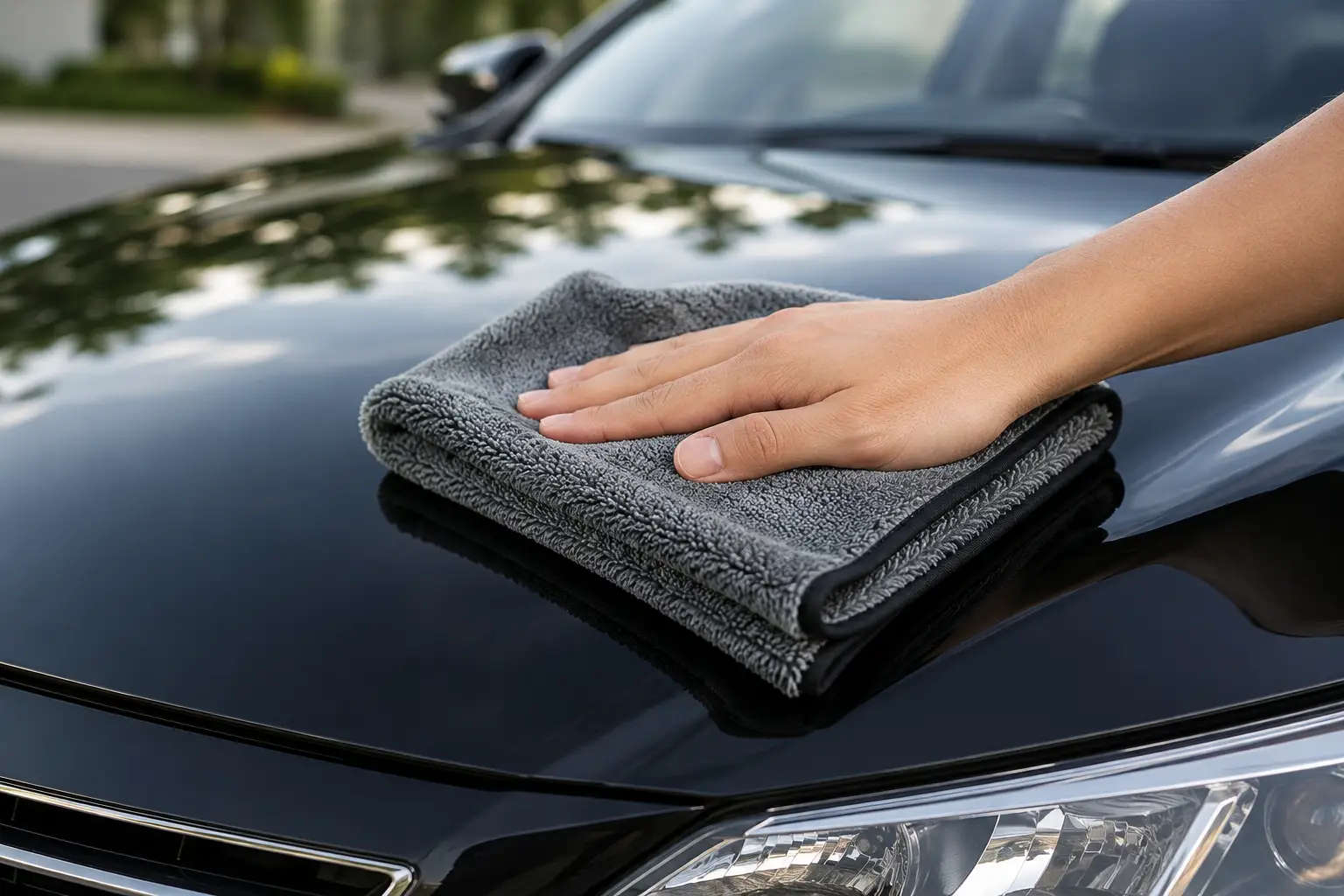
You just spent forty-five minutes washing your car, and now there’s a faint spiderweb of scratches catching the afternoon light across the hood. Nine times out of ten, that’s not bad paint or bad luck — it’s the towel. A cheap, low-quality rag drags grit across your clear coat like sandpaper, while a properly made car fiber cloth lifts dirt away instead of grinding it in. That single difference is why detailers treat towel selection as seriously as the soap or wax they choose.
A car fiber cloth is built from split synthetic fibers — typically a polyester-polyamide blend — that create millions of microscopic hooks per square inch. Those hooks trap dust, grime, and moisture rather than pushing them around the surface, which is exactly what a cotton bath towel or a paper shop rag can’t do. The catch is that not every microfiber towel on the market is made the same way, and the differences in weave, weight, and edge construction directly affect whether your paint stays swirl-free or ends up looking like it’s been through a car wash tunnel from 1998.
This guide breaks down seven real, currently available options — from budget bulk packs to premium plush towels used by professional detailers — along with the specs, honest trade-offs, and practical buying criteria you need to choose confidently. We’ll also cover how to use and care for a car fiber cloth so it lasts for years instead of months, plus the mistakes that quietly ruin good towels before their time.
What Is a Car Fiber Cloth?
A car fiber cloth is a cleaning towel made from split microfiber — ultra-fine synthetic strands, usually a polyester-polyamide blend — engineered to trap dirt, absorb liquid, and buff surfaces without scratching automotive paint, glass, or trim.
Unlike woven cotton, split microfiber fibers are shaped almost like tiny asterisks under a microscope, which multiplies their surface area and lets them hold far more debris and moisture per square inch. According to a fact sheet on commercial cleaning products from UMass Lowell’s Sustainable Manufacturing & Environmental Health program, that fiber structure is also why microfiber cloths pick up more particulate matter than cotton rags using only water — a meaningful advantage when you’re trying to avoid dragging grit across a freshly washed panel. That’s the core engineering behind every product on this list, even though the weight, weave, and edge finishing vary a lot between entry-level and premium towels.
Quick Comparison: Car Fiber Cloths at a Glance
| Product | Weight / Weave | Best For | Price Range |
|---|---|---|---|
| The Rag Company Everest 1100 | 1100 GSM, double-plush | Wax and sealant removal | $25–$40 |
| Adam’s Polishes Ultra Plush Drying Towel | Ultra-plush, twist-loop | Fast, scratch-free drying | $15–$45 (by pack size) |
| Chemical Guys Professional Microfiber Towels (Gold) | Mid-weight terry | All-purpose wash and buff | $15–$28 |
| Meguiar’s Supreme Shine Microfiber Towel | Mid-weight, silk-edged | Beginners, everyday use | $12–$20 |
| Adam’s Borderless Grey Microfiber Towel | 480 GSM, edgeless | Glass, trim, and interiors | $18–$30 |
| Amazon Basics Ultra-Absorbent Microfiber Cleaning Cloths | Lightweight, flat-weave | Budget bulk cleaning | $10–$16 |
| MR.SIGA Microfiber Cleaning Cloths | Mid-weight, color-coded | Value multi-surface use | $10–$15 |
Looking at the table, the split is pretty clean: the Rag Company Everest 1100 and Adam’s Polishes Ultra Plush Drying Towel sit at the premium end because their density directly translates into softer contact with paint and faster moisture pickup. The Chemical Guys and Meguiar’s entries occupy the sensible middle ground most everyday owners actually need, while Amazon Basics and MR.SIGA are built for volume — stocking a garage or trunk kit without worrying about ruining an expensive towel on a muddy wheel well. Notice that price alone doesn’t predict performance here; weave type and GSM (grams per square meter) matter more than the sticker price when you’re deciding what belongs on your paint versus your wheels.
💬 One click helps other shoppers make an informed choice too! 😊
Top 7 Car Fiber Cloths for Every Job and Budget
Every entry below is a real product you can currently find on Amazon, spanning entry-level bulk packs to the plush towels professional detailers reach for on show cars. We’ve grouped honest analysis, real aggregated review themes (never invented quotes), and a straightforward pros-and-cons breakdown for each so you can match the right towel to the right job.
1. The Rag Company Everest 1100 — plushest pick for wax removal
The Everest 1100 earns its name from a genuinely dense 1100 GSM double-plush pile, which is about as thick as microfiber towels get in the consumer market. That density isn’t just a marketing number — it means more fiber surface contact with the paint, so waxes, sealants, and ceramic coating residue lift away in fewer passes.
At 16 by 16 inches with a silk-taped, satin-finished edge, the Everest is built specifically to avoid the raised stitched borders that cause pigtail scratches on darker paint. The dense pile also holds an impressive amount of product before it starts dragging, which matters most when you’re buffing a large panel like a hood or a full-size SUV door.
Based on comparing the specs against lighter towels in this guide, the Everest 1100 makes the most sense for owners who wax or apply ceramic spray coatings regularly, or anyone detailing darker vehicles where swirl marks are most visible. It’s overkill for simple dust wiping — you’d be using a $12 towel’s job on a $30 one.
Reviews aggregated across detailing forums and retail listings consistently describe the Everest 1100 as noticeably plusher than typical “gold standard” towels like Chemical Guys, with owners specifically calling out how easily it releases dried wax residue in the wash. A recurring theme in that feedback is that the towel holds its density even after dozens of wash cycles, which is where cheaper plush towels tend to flatten out first.
Pros:
- ✅ Exceptional density for effortless wax and sealant removal
- ✅ Silk-taped edges virtually eliminate scratch risk
- ✅ Holds up well after repeated machine washing
Cons:
- ❌ Premium price relative to basic microfiber towels
- ❌ Heavier and bulkier than towels meant for quick dusting
Expect to pay in the $25–$40 range depending on pack size, which is a fair trade for a towel built to outlast several cheaper replacements.
2. Adam’s Polishes Ultra Plush Drying Towel — fastest drying towel
Adam’s built this towel around one specific job: pulling water off a freshly rinsed car before it beads into hard-water spots. The twist-loop pile construction dramatically increases surface area compared to flat microfiber, letting it soak up a shockingly large volume of water in a single swipe.
The twist-loop weave also means fewer fiber tips make direct contact with the paint at any given moment, which lowers friction and, by extension, marring risk during drying — historically one of the riskiest steps in a home car wash. Available in single towels up to 12-packs, it scales from occasional use to full detailing business inventory.
What most buyers overlook with drying towels specifically is that speed matters as much as softness: the faster you clear water off the paint, the less time hard minerals in tap water have to dry and etch the clear coat, especially in regions with harder water supplies.
Aggregated customer sentiment around this towel and similar Adam’s drying towels highlights the sheer water capacity as the standout trait, with several reviewers noting they can dry a full sedan with a single towel where cotton chamois towels needed wringing out twice. Some feedback also flags that the plush pile takes noticeably longer to air dry than thinner towels, which matters if you’re drying it between uses.
Pros:
- ✅ Extremely high water absorption per towel
- ✅ Twist-loop weave reduces contact friction on paint
- ✅ Available in pack sizes for occasional or heavy use
Cons:
- ❌ Takes longer to fully air dry than thinner towels
- ❌ Bulkier to store than flat microfiber cloths
Single towels typically run around $15–$20, while multi-packs stretch toward $45, putting it solidly in premium territory but justified by the drying performance.
3. Chemical Guys Professional Microfiber Towels (Gold) — most versatile all-rounder
The Gold towel from Chemical Guys is arguably the most recognizable name in this category, and for good reason: it strikes a genuinely useful middle ground between plushness and price that works for washing, drying, buffing, and interior wipe-downs without needing a different towel for every task.
At 16 by 16 inches with a mid-weight terry weave, it’s dense enough to trap dirt effectively but light enough to dry faster between uses than the ultra-plush options above. The edges are finished to reduce (though not fully eliminate) the risk of scratching compared to raw-cut cotton towels.
Based on comparing this towel to the more specialized entries on this list, the Gold towel’s real strength is flexibility — it’s the one to grab when you’re not sure which towel you’ll need next, which is exactly why it shows up in nearly every detailer’s bulk supply closet.
Reviews consistently report that the Gold towel launders well over hundreds of cycles without shedding excessively, and several owners specifically mention it as their go-to for interior dashboards and door panels because it doesn’t leave lint behind on textured plastic — a common complaint with cheaper cotton alternatives.
Pros:
- ✅ Versatile enough for paint, glass, and interior use
- ✅ Holds up well through repeated machine washing
- ✅ Widely available in convenient 3- and 6-packs
Cons:
- ❌ Not as plush as dedicated wax-removal towels
- ❌ Gold dye can occasionally transfer onto very light interiors when new
Priced roughly $15–$28 depending on pack size, it’s one of the best value-per-use towels on this list.
4. Meguiar’s Supreme Shine Microfiber Towel — trusted classic for beginners
Meguiar’s has been a household name in car care for decades, and the Supreme Shine towel is the brand’s answer to everyday microfiber needs. It uses a silk-edged construction with a mid-weight pile that’s forgiving for first-time detailers still learning proper technique.
The silk binding around the edge is a small but meaningful detail: it’s noticeably softer than the stitched borders found on entry-level towels, which reduces the odds of a beginner accidentally dragging a rough seam across a fender. The towel’s moderate thickness also makes it easy to fold into quadrants for more usable surface area per pass, a technique Meguiar’s promotes directly in its own care guides.
What sets this pick apart isn’t raw performance — the Rag Company and Adam’s towels outperform it on density — but accessibility. It’s sold nearly everywhere from big-box auto parts stores to Amazon, so replacing a worn towel is never a hassle, and the price makes it easy to keep a generous supply on hand.
Aggregated reviews describe the Supreme Shine as a reliable “no-surprises” towel, with owners frequently noting it as the one they hand to family members helping with a car wash because it’s hard to use incorrectly. A minority of feedback mentions it flattening out faster than premium plush towels after heavy use, which tracks with its lighter GSM.
Pros:
- ✅ Beginner-friendly silk-edged construction
- ✅ Widely available and easy to replace
- ✅ Budget-friendly for building a full towel rotation
Cons:
- ❌ Less plush than premium wax-removal towels
- ❌ Pile flattens faster under heavy, frequent use
Typically priced under $20 for a multi-pack, it remains one of the most accessible entry points into proper car fiber cloth care.
5. Adam’s Borderless Grey Microfiber Towel — best edgeless pick for glass and trim
This towel solves a specific, common problem: raised or stitched edges snagging on trim gaps, mirrors, and emblem edges, then leaving faint scratch lines exactly where you can’t see them until the sun hits at the wrong angle. The Borderless Grey uses a fully edgeless, laser-cut construction at 480 GSM to remove that risk entirely.
The 480 GSM weight sits in a sweet spot — dense enough for genuine cleaning power, light enough to dry quickly between interior and exterior tasks. Because the entire towel surface, not just the body, is safe against delicate surfaces, it’s a favorite for glass, mirrors, wheels with intricate spokes, and interior trim with tight seams.
The honest trade-off here is that edgeless towels are marginally less durable at the raw-cut perimeter than bound or silk-taped edges, since there’s no reinforcement holding the fiber ends in place. In practice this shows up as very light fraying after a year or more of regular machine washing, not sudden failure.
Real aggregated feedback on borderless microfiber towels in this weight class points to strong marks for glass cleaning specifically, with users noting fewer streaks compared to standard terry towels, alongside occasional notes about minor edge fraying appearing after extended use — consistent with the trade-off described above.
Pros:
- ✅ Zero risk of edge-seam scratches on trim or glass
- ✅ 480 GSM balances absorbency with quick drying
- ✅ Safe for pet drying duty as a bonus use case
Cons:
- ❌ Raw edges can fray slightly faster than bound towels
- ❌ Less dense than dedicated wax-removal towels
Expect to pay in the $18–$30 range for a 6-pack, which is reasonable for a towel this purpose-built.
6. Amazon Basics Ultra-Absorbent Microfiber Cleaning Cloths — best budget bulk pack
Sometimes you just need a stack of decent towels for wheels, engine bays, and general grime duty without agonizing over GSM specs. Amazon Basics fills that role with a straightforward, lightweight flat-weave microfiber cloth sold in generous multi-packs, usually 12 or more per order.
The construction here is simpler than the specialty towels above — no silk taping, no twist-loop pile — but it still uses genuine split microfiber, which means it meaningfully outperforms cotton rags or paper towels for lint-free, scratch-conscious cleaning on a budget. The lighter weight also makes these cloths quick to wash and dry, useful when you’re cycling through a large stack during a full detail session.
Honestly, this isn’t the towel to use on a freshly polished hood — save the premium plush picks for that. Where it earns its spot on this list is as the workhorse for lower-risk tasks: wheels, tires, floor mats, engine bay wipe-downs, and general shop cleanup where you don’t want to sacrifice an expensive towel to brake dust.
Reviews aggregated from retail and household-product roundups frequently describe these cloths as reliable “dust magnets” for the price, with owners commonly buying multiple packs to keep dedicated towels for different tasks (wheels versus interior versus glass) without spending much. Some feedback notes the cloths are noticeably thinner than dedicated car-care brands, which tracks with the lower price point.
Pros:
- ✅ Very low cost per towel in bulk packs
- ✅ Genuine microfiber outperforms cotton rags and paper towels
- ✅ Dries quickly, ideal for high-volume cleaning sessions
Cons:
- ❌ Too thin for safe use on wax or fresh paint correction
- ❌ Less durable over time than heavier, purpose-built towels
At roughly $10–$16 for a 12-pack, this is the pick for anyone building out a full towel rotation without a big upfront investment.
7. MR.SIGA Microfiber Cleaning Cloths — best color-coded value pick
MR.SIGA isn’t a household name in car care the way Chemical Guys or Meguiar’s is, but it’s earned a loyal following as a lesser-known, genuinely solid alternative — particularly because its cloths ship in color-coded sets, which is a small feature that solves a real cross-contamination problem.
Using a dedicated color for wheels versus glass versus interior trim prevents brake dust and abrasive grit from ever touching a towel that later goes near your paint or windows — a mistake that ruins more towels (and paint) than people realize. At a mid-weight, all-purpose construction, these cloths handle general automotive cleaning duty capably, even though they weren’t designed exclusively for cars.
Based on comparing this option to the two dedicated budget picks above, MR.SIGA’s edge is organizational rather than raw performance — if you don’t need color coding, Amazon Basics is marginally cheaper per towel. But for anyone who’s ever grabbed the wrong towel mid-detail and instantly regretted it, the color system alone can be worth the small premium.
Aggregated reviews across household and automotive use cases consistently praise the absorbency and streak-free glass performance, with owners specifically calling out the color-coded system as a genuine time-saver rather than a gimmick. A smaller number of reviews mention that the dye can fade slightly after many wash cycles, which is cosmetic rather than functional.
Pros:
- ✅ Color-coded system prevents cross-contamination between tasks
- ✅ Streak-free performance on glass and mirrors
- ✅ Strong value in 12-pack bundles
Cons:
- ❌ Not marketed specifically for automotive use
- ❌ Dye can fade cosmetically after extended washing
Priced around $10–$15 for a 12-pack, it’s a smart, slightly under-the-radar pick for organized detailers.
Top 7 Car Fiber Cloths Compared
| Product | Tier | Standout Strength | Best For |
|---|---|---|---|
| The Rag Company Everest 1100 | High-end | 1100 GSM plush density | Wax and sealant removal |
| Adam’s Polishes Ultra Plush Drying Towel | High-end | Twist-loop water capacity | Fast, safe drying |
| Chemical Guys Professional Microfiber Towels (Gold) | Mid-range | All-purpose versatility | One towel for most tasks |
| Meguiar’s Supreme Shine Microfiber Towel | Mid-range | Beginner-friendly design | New detailers |
| Adam’s Borderless Grey Microfiber Towel | Mid-range | Edgeless, scratch-safe | Glass, trim, interiors |
| Amazon Basics Ultra-Absorbent Microfiber Cleaning Cloths | Entry-level | Bulk affordability | Wheels, engine bays |
| MR.SIGA Microfiber Cleaning Cloths | Entry-level | Color-coded organization | Cross-contamination control |
This side-by-side makes the shopping decision more concrete: if paint correction and wax work are your priority, the Rag Company Everest 1100 and Chemical Guys towels are worth the extra cost, while Amazon Basics and MR.SIGA make more sense as your “everything else” towels for wheels, tires, and cleanup. Most experienced owners land on a mixed toolkit rather than a single towel, which is exactly what this list is built to support.
✨ Don’t miss these exclusive deals!
🔍 Take your car care routine to the next level with this carefully curated lineup. Click a highlighted item to check current pricing and availability. These picks will help you get a scratch-free, professional-looking finish the whole family will appreciate every time you pull into the driveway!
How to Choose a Car Fiber Cloth
Picking the right car fiber cloth comes down to matching weave, weight, and edge design to the job at hand. Here’s the expert-level checklist:
- Match GSM to the task. Lighter towels (300–400 GSM) suit quick wipe-downs and glass; heavier towels (800–1100+ GSM) suit wax removal and buffing, where density does the real work.
- Prioritize edgeless or silk-taped construction for paint. Raw stitched edges are the single most common cause of towel-induced scratches on clear coat.
- Buy in dedicated color sets. Assigning specific towels to wheels, glass, and paint prevents grit transfer — the single most preventable cause of swirl marks.
- Consider weave type for the specific job. Twist-loop and waffle weaves excel at drying; flat and terry weaves excel at general wiping and buffing.
- Check washability claims. Towels that hold their density and softness after 50+ machine washes cost less per use over time, even at a higher upfront price.
- Buy more than you think you need. Reusing a dirty towel across multiple panels reintroduces the exact grit you just removed — a stack of 8–12 towels per detailing session is standard practice.
- Skip fabric softener. It coats microfiber’s split fibers and kills their trapping ability — a mistake covered in more detail in the care section below.
For a broader look at washing technique overall, Consumer Reports’ step-by-step car washing guide is a useful companion resource, since towel choice only solves half the swirl-mark equation — wash method matters just as much.
Car Fiber Cloth vs. Cotton Towels and Paper Towels
| Factor | Car Fiber Cloth | Cotton Towel | Paper Towel |
|---|---|---|---|
| Scratch risk | Low (properly finished) | Moderate to high | High |
| Absorbency | High to very high | Moderate | Low |
| Reusability | Hundreds of washes | Dozens of washes | Single use |
| Lint | Minimal | Moderate to high | High |
| Cost over time | Lower per use | Moderate | Highest per use |
The gap here isn’t subtle. Cotton fibers are round and relatively large, so they trap far less debris and tend to push grit across the surface instead of lifting it away — which is exactly how fine swirl marks form during an otherwise careful wash. Paper towels are worse still: they’re single-use, shed fibers constantly, and have essentially no cushioning against grit. A car fiber cloth wins on every dimension except sometimes upfront cost, and even that gap closes fast once you factor in how many paper towel rolls or cotton rags it takes to match a year of use from a handful of quality microfiber cloths.
Common Mistakes to Avoid When Buying (and Using) a Car Fiber Cloth
The most common purchasing mistake is buying a single all-purpose towel and using it for everything — wheels, glass, and paint alike. Wheel and tire grime contains embedded brake dust particles that are genuinely abrasive; once those particles work into a towel’s fibers, that same towel becomes a scratching tool on your next panel.
The second mistake is chasing the lowest possible price without checking construction. A towel with raw, unfinished stitched edges is a false economy — the savings evaporate the first time a seam catches a trim gap and leaves a faint scratch line you won’t notice until it’s permanent. Spending a few extra dollars on silk-taped or edgeless construction, at least for towels touching paint, pays for itself the first time it prevents damage.
The third mistake happens after purchase: washing microfiber with fabric softener or dryer sheets. Both coat the fibers in a residue that fills the microscopic hooks responsible for trapping dirt, permanently reducing the towel’s cleaning power even though it still looks fine. A fourth, related mistake is machine drying on high heat, which can melt or fuse synthetic fibers over repeated cycles — line drying or a low-heat, no-heat cycle preserves performance far longer.
GSM, Weave, and Edge Design: Features That Actually Matter
GSM (grams per square meter) is the single most useful spec for predicting how a towel will feel and perform, but it’s not the whole story. A 1100 GSM towel like the Rag Company Everest 1100 genuinely holds more product and cushions the paint better than a 300 GSM towel — that part of the marketing is accurate. What GSM doesn’t tell you is drying time or durability, which come down to weave type and fiber blend instead.
Weave type matters more than most shoppers realize. Twist-loop and waffle weaves, like the one used in the Adam’s Polishes Ultra Plush Drying Towel, dramatically increase surface area for water absorption, which is why they outperform flat-weave towels for drying even at a similar GSM. Terry weaves, used in towels like the Chemical Guys Gold towel, strike a balance between absorbency and quick-dry convenience for general use.
Edge design is the feature marketing tends to gloss over, but it’s arguably the most important safety factor. Silk-taped edges (as on the Rag Company Everest 1100) and fully edgeless, laser-cut construction (as on the Adam’s Borderless Grey Microfiber Towel) both eliminate the raised stitched seam that causes the majority of towel-induced paint scratches. A towel can have excellent GSM and still be a scratch risk if the edges are cheaply finished — always check both specs together, not GSM alone.
Getting Started: How to Use and Care for Your Car Fiber Cloths
Getting the most out of a car fiber cloth starts before you even touch the paint. Rinse the panel thoroughly first to remove loose grit — a towel should be lifting away the fine residue left after rinsing, not the heavy dirt a hose or pressure washer should handle. Fold each towel into quarters so you have eight clean surfaces available per towel before it needs a rinse or swap, and flip to a fresh section the moment you feel any grit dragging.
Washing technique determines how long your towels last. Wash microfiber separately from cotton items, since cotton lint clings to the split fibers and dramatically reduces trapping performance. Use a dedicated microfiber detergent or a small amount of regular liquid detergent — never fabric softener, per the mistake covered above — and wash in cool or warm water, never hot. For federal guidance on how care labels and instructions are regulated for textile products in the US, the FTC’s Care Labeling Rule outlines the standards manufacturers must follow, which is worth a skim if you’re ever unsure whether a towel’s washing instructions are legitimate.
Air dry when possible, or use a low-heat, no-heat, or air-fluff dryer setting. High heat is the single fastest way to degrade synthetic fibers over repeated cycles, shortening a towel’s usable life dramatically. Store clean towels in a sealed bin or bag rather than loose in a garage, where airborne dust settles into the fibers before you even get to use them.
Real-World Scenarios: Matching a Car Microfiber Towel to Your Routine
Consider a college student commuting to campus in an older sedan on a tight budget. Their priority isn’t showroom perfection — it’s keeping dust, coffee spills, and road grime under control without spending much. A stack of Amazon Basics Ultra-Absorbent Microfiber Cleaning Cloths paired with a couple of MR.SIGA Microfiber Cleaning Cloths for glass covers nearly every need for well under $30 total.
Now picture a suburban parent who washes the family SUV every other weekend and wants it to look genuinely clean without investing in a full detailing kit. The Chemical Guys Professional Microfiber Towels and Meguiar’s Supreme Shine Microfiber Towel cover washing, drying, and interior wipe-downs capably, at a price point that doesn’t feel like overkill for a routine that happens twice a month.
Finally, consider an enthusiast who applies a ceramic spray coating every few months and cares about maintaining a flawless finish on a newer vehicle. For this owner, the Rag Company Everest 1100 for product removal and the Adam’s Polishes Ultra Plush Drying Towel for post-wash drying aren’t luxuries — they’re the towels that directly protect a meaningful investment in paint correction and coating work, and cutting corners here is where expensive mistakes happen.
Long-Term Cost and Maintenance: Is a Microfiber Cloth for Car Detailing Worth It?
The upfront price comparison between a $12 multi-pack and a $35 premium towel makes budget options look like the obvious choice, but that comparison misses durability. Premium towels like the Rag Company Everest 1100 are engineered to retain density and softness through hundreds of wash cycles, while budget flat-weave cloths tend to thin out and lose absorbency noticeably faster under heavy, frequent use.
Run the math over two years of regular use: a $12 bulk pack replaced three or four times easily exceeds the cost of a single premium towel that’s still performing well at the end of that period. That said, budget towels aren’t a bad investment — they’re the right tool for lower-risk tasks like wheels and engine bays, where replacing them more often is a reasonable trade-off for not risking an expensive towel on abrasive brake dust.
The most cost-effective approach most experienced owners land on is tiered: budget towels like Amazon Basics or MR.SIGA for wheels and general cleanup, mid-range towels like Chemical Guys or Meguiar’s Supreme Shine for everyday washing and drying, and premium towels like the Rag Company Everest 1100 or Adam’s Polishes Ultra Plush Drying Towel reserved specifically for paint-contact tasks where quality directly protects your vehicle’s finish.
Safety, Care Labeling, and Environmental Considerations
Synthetic microfiber is a form of plastic, and that has real environmental implications worth understanding honestly rather than glossing over. Washing synthetic textiles releases small plastic fibers into wastewater; a peer-reviewed study published via the National Library of Medicine’s PubMed database found that domestic laundry of synthetic fabrics is a measurable contributor to microfiber pollution in wastewater systems. Using a laundry filter bag or a washing machine microfiber filter reduces this impact meaningfully if it’s a concern for you, and it’s a reasonable step for anyone washing a large rotation of towels regularly.
On the safety side, car fiber cloths themselves carry minimal risk when used as intended — the main practical concern is chemical compatibility rather than physical hazard. Always check that a towel is rated safe for use with the specific product you’re applying (wax, ceramic coating, or interior cleaners), since some coating manufacturers specify microfiber-only application for a reason: other materials can react with or improperly cure certain coating chemistries.
From a labeling standpoint, all the towels featured in this guide are required to carry accurate fiber-content and care instructions under US federal rules, which protects buyers from vague or misleading claims about material composition — a small but meaningful consumer protection worth knowing about when comparing unfamiliar brands.
Buyer Decision Framework: Which Car Fiber Cloth Should You Choose?
If your priority is protecting a freshly corrected or ceramic-coated paint job, choose a premium plush towel like the Rag Company Everest 1100 or Adam’s Polishes Ultra Plush Drying Towel, because density and edge safety directly reduce the risk of undoing expensive correction work.
If your priority is a reliable, do-it-all towel for routine washing without overthinking specs, choose a mid-range pick like the Chemical Guys Professional Microfiber Towels or Meguiar’s Supreme Shine Microfiber Towel, since both balance performance and price for everyday use.
If your priority is stretching a budget across wheels, tires, and general cleanup without risking a good towel, choose bulk entry-level options like Amazon Basics Ultra-Absorbent Microfiber Cleaning Cloths or MR.SIGA Microfiber Cleaning Cloths, ideally paired with a color-coding system to prevent cross-contamination between tasks.
If your priority is glass and trim specifically, the Adam’s Borderless Grey Microfiber Towel‘s edgeless design is purpose-built for exactly that job, and it’s worth adding to any towel rotation regardless of which other towels you choose.
Frequently Asked Questions
❓ What's the best car fiber cloth for beginners?
❓ How many car fiber cloths do I actually need?
❓ Can I wash a car fiber cloth with regular laundry?
❓ What GSM is best for a car fiber cloth?
❓ Do expensive car fiber cloths really scratch paint less than cheap ones?
Conclusion
Choosing the right car fiber cloth isn’t about finding a single “best” towel — it’s about matching weave, weight, and edge construction to the specific job in front of you, then building a small rotation instead of relying on one do-everything cloth. The Rag Company Everest 1100 and Adam’s Polishes Ultra Plush Drying Towel earn their premium price on paint-contact tasks, the Chemical Guys and Meguiar’s Supreme Shine towels cover everyday washing and drying reliably, the Adam’s Borderless Grey Microfiber Towel solves the specific edge-scratch problem on glass and trim, and Amazon Basics or MR.SIGA handle high-volume, lower-risk cleaning without breaking the budget.
What matters most, regardless of which towels you pick, is treating them the way the fiber science actually demands: dedicated colors per task, gentle washing without fabric softener, and low-heat drying. Get those habits right, and even a modest towel collection will protect your paint far better than an expensive one used carelessly ever could.
Recommended for You
- Can You Wash Eyeglass Cleaning Cloths? 7 Best Picks (2026)
- Best Microfiber Cloth for Car Scratches: 7 Top Picks (2026)
- Microfiber Screen Cleaning Cloth: 7 Best Options to Try in 2026
Disclaimer: This post contains affiliate links. As an Amazon Associate, I earn from qualifying purchases made through these links, at no additional cost to you.
✨ Found this article helpful? Share it with someone who needs it! 💬🤗