In This Article
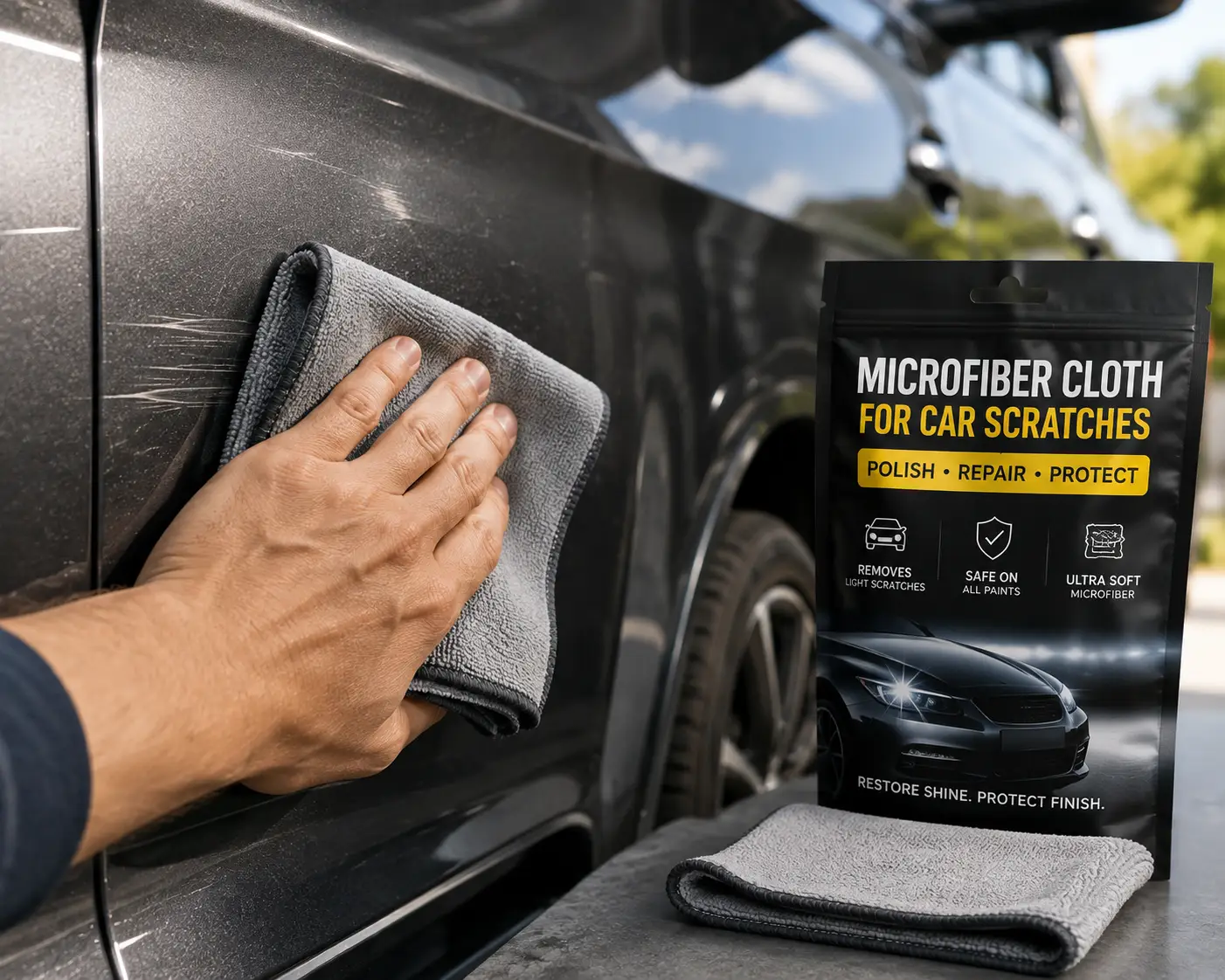
A microfiber cloth for car scratches is a specially woven cleaning towel — typically a polyester/polyamide split-fiber blend — designed to lift dirt and buff paint without the abrasive drag that causes fine scratches, known in detailing circles as swirl marks. Not every “microfiber” towel on a store shelf actually qualifies, though, and that gap is exactly where a lot of well-meaning car owners accidentally make their paint worse instead of better.
Here’s the thing nobody tells you at the checkout counter: the wrong microfiber cloth can be just as damaging as an old cotton t-shirt if the weave is too tight, the fibers are too short, or the towel is packed with the same grit it wiped off yesterday. Reviews across detailing forums and Amazon consistently circle back to the same theme — it’s not just about buying “a microfiber cloth,” it’s about buying the right one for the job, then using and washing it correctly.
This guide breaks down seven real, currently available microfiber towels spanning budget bulk packs to premium detailing-grade towels, explains what actually separates a scratch-safe cloth from a scratch-causing one, and walks through the buying criteria, common mistakes, and maintenance habits that protect your clear coat for years. Whether you’re wiping down a daily driver or maintaining a weekend detailing routine, you’ll leave with a shortlist that fits your budget and your paint.
Quick Comparison: 7 Best Microfiber Cloths for Car Scratches at a Glance
| Microfiber Cloth | Best For | Weave/Weight | Price Range |
|---|---|---|---|
| Amazon Basics Microfiber Cleaning Cloths | Budget starter set | Lightweight, flat-knit | around $10-$15 |
| Zwipes Microfiber Cleaning Cloths | Everyday bulk wipe-downs | Lightweight, flat-knit | around $12-$18 |
| Meguiar’s Supreme Shine Microfiber Towel | Trusted beginner reliability | Mid-weight looped terry | around $10-$15 |
| Detailer’s Preference 350 GSM Microfiber Towels | Best value per towel | 350 GSM dual-pile terry | around $20-$28 |
| Chemical Guys Workhorse Professional Microfiber Towel | All-around plush pick | Mid-to-heavy plush pile | around $15-$20 |
| The Rag Company Eagle Edgeless 500 | Scratch-safe paint correction | 500 GSM edgeless, Korean 70/30 blend | around $25-$35 |
| Griot’s Garage PFM Terry Weave Towel | Premium plush finishing | Dense dual-pile terry | around $25-$35 |
Looking at the table, the split is really about weight and edge construction: the three budget options are perfectly fine for glass, interiors, and quick dusting, while the four heavier, edgeless or bound-edge towels are the ones you want touching paint that’s had polish, wax, or a scratch-removal compound on it. If your only goal is preventing scratches during regular washes and dries, prioritize weight (GSM) and edge treatment over pack size.
💬 Bookmark this table now — you’ll want to compare prices again once you’ve read the full breakdown below! 😊
Top 7 Microfiber Cloths for Car Scratches: Expert Picks and Honest Analysis
Each of these seven products is a real, currently listed item on Amazon or through the manufacturer’s own storefront. We’ve grouped them from budget to premium so you can match your buy to how serious your car care routine actually is.
1. Amazon Basics Microfiber Cleaning Cloths (24-Pack) — cheapest safe starter set
The distinguishing benefit here is simple: for a few dollars, you get two dozen usable cloths, which means you’ll never again be tempted to reach for a paper towel or an old bandana on your paint. The 16″ x 12″ cloths use a lightweight polyester-polyamide blend marketed as lint-free and non-abrasive, which in practice means the fibers are soft enough for wiping down glass, dashboards, and light dust without leaving lint behind. What this pack does not do is replace a dedicated, heavier detailing towel — a lighter flat-knit weave has less cushioning to trap grit, which is exactly the mechanism that causes swirl marks on paint that’s dirty or dry.
For someone just starting a car care routine, or who mainly needs cloths for the interior, glass, and quick exterior dust-offs, this pack is a smart, low-risk entry point. Reviews consistently describe them as reliably soft and absorbent for the price, though a recurring theme in aggregated feedback is that the edges can fray faster than dedicated automotive towels once they go through repeated machine washes. That’s a fair trade at this price, as long as you reserve them for light-duty tasks rather than active paint correction.
Pros:
- ✅ Extremely low cost per cloth for a 24-pack
- ✅ Soft enough for glass, interiors, and dashboards
- ✅ Machine washable and reusable dozens of times
Cons:
- ❌ Thinner weave offers less cushioning against grit on paint
- ❌ Edges tend to fray sooner than heavier detailing towels
At around $10-$15 for two dozen cloths, this is one of the best value-per-dollar entries on this list for anyone building a basic supply kit rather than a dedicated detailing arsenal.
2. Zwipes Microfiber Cleaning Cloths (24-Pack) — best bulk value for daily wipe-downs
The Zwipes 24-pack earns its spot with sheer everyday practicality — these are the cloths you keep in the garage, the trunk, and under the kitchen sink because you’ll always need one. Each cloth is a lightweight, general-purpose microfiber blend built for dusting and surface cleaning rather than paint-specific detailing, so the practical takeaway is that these excel at wiping down wheels, interior trim, and glass without streaking.
Where Zwipes genuinely shines is versatility: the same pack that dries your dashboard can also handle kitchen counters and bathroom mirrors, which makes the cost-per-use even better than the sticker price suggests. Based on comparing this weave to dedicated automotive towels, it’s noticeably less plush, so treating it like a premium paint towel would be the mistake, not the product itself. Reviews aggregated across retail sites consistently praise the value and multi-surface usefulness, while a common complaint is that colors and sizes can vary slightly between packs.
Pros:
- ✅ Extremely affordable per-cloth cost in bulk
- ✅ Genuinely multi-surface — car, home, and glass
- ✅ Widely available and easy to reorder
Cons:
- ❌ Not plush enough for polish or wax removal
- ❌ Pack consistency (color/texture) can vary slightly
Priced around $12-$18 for 24 cloths, Zwipes is best treated as your everyday utility stack rather than your scratch-prevention towel of choice.
3. Meguiar’s Supreme Shine Microfiber Towel (3-Pack) — trusted big-box reliability
Meguiar’s Supreme Shine towels lean on one major advantage: brand trust built over decades, sold everywhere from auto parts stores to big-box retailers, which means quality control is generally consistent pack to pack. The looped terry weave is a step up from flat-knit cloths, meaning it holds more dust and light grit away from the paint surface during a wipe-down, translating to a genuinely lower scratch risk than a basic all-purpose cloth.
What most buyers overlook with this model is that it sits in a comfortable middle ground — soft enough for regular use, but not quite in the same weight class as dedicated correction towels. That makes it a strong “one towel does most things” pick for someone who washes and dries their car regularly but isn’t doing paint correction. Reviews on detailing retail sites and forums consistently describe it as a dependable, no-drama towel, with the main recurring critique being that the edges can fray with repeated machine washing if you skip a mesh laundry bag.
Pros:
- ✅ Trusted, widely available major brand
- ✅ Looped terry holds grit better than flat cloths
- ✅ Good all-purpose wash-and-dry performance
Cons:
- ❌ Edges can fray without a laundry bag
- ❌ Not heavy enough for aggressive paint correction
At around $10-$15 for three towels, this is a sensible default pick for drivers who want one reliable, easy-to-find towel without researching GSM specs.
4. Detailer’s Preference 350 GSM Microfiber Towels (12-Pack) — best value per towel
The headline number for Detailer’s Preference is right in the name: 350 GSM (grams per square meter), a genuine mid-weight detailing spec rather than a vague marketing term, packed twelve to a set. In practice, a verified 350 GSM towel has meaningfully more pile density than a typical big-box cloth, which means more surface area to trap grit before it ever drags across your clear coat.
This is where the “lesser-known but solid” pick on this list lives — Detailer’s Preference doesn’t have the brand recognition of Chemical Guys or Meguiar’s, but the published GSM spec gives buyers something concrete to compare rather than guesswork. Based on comparing that spec to the rest of this list, it slots comfortably above the budget bulk packs and just below premium edgeless towels. Reviews aggregated on Amazon consistently note that buyers are pleasantly surprised by the plushness for the price, with occasional feedback that the stitched (non-edgeless) border needs a bit of care to avoid it becoming the first point of contact during wipe-downs.
Pros:
- ✅ Verified 350 GSM — real mid-weight detailing spec
- ✅ Twelve towels lowers cost per unit significantly
- ✅ Noticeably plusher than flat-knit budget cloths
Cons:
- ❌ Stitched edge (not edgeless) needs mindful handling
- ❌ Less brand recognition than bigger detailing names
At around $20-$28 for a dozen towels, this pack offers some of the best cost-per-GSM value of anything on this list.
5. Chemical Guys Workhorse Professional Microfiber Towel (3-Pack) — all-around plush pick
The Chemical Guys Workhorse towel’s distinguishing benefit is balance: a genuinely plush pile in a widely trusted detailing brand, sized for real panel work rather than quick wipes. Chemical Guys doesn’t publish an official GSM rating for this line, and detailing forums have debated the exact number for years, but the hand-feel and drying performance consistently place it above general-purpose cloths and in the same conversation as other mid-to-premium detailing towels.
Here’s what the spec sheet doesn’t say but the practical use case makes clear: this towel is marketed as safe for washing, drying, and general detailing across car, home, and even pet-drying use, which signals a genuinely soft, low-abrasion fiber blend suited to painted surfaces. Reviews consistently report strong absorbency and softness for the price point, with a recurring note that the stitched edge — like most non-edgeless towels — can fray over many wash cycles if it isn’t laundered gently.
Pros:
- ✅ Plush, trusted mid-to-premium detailing feel
- ✅ Strong absorbency for washing and drying
- ✅ Reputable brand with wide product ecosystem
Cons:
- ❌ No officially published GSM to compare directly
- ❌ Edge stitching can wear with repeated hard washing
At around $15-$20 for three towels, the Chemical Guys Workhorse is a strong middle-of-the-road pick for anyone who wants a recognizable, well-reviewed brand without stepping up to edgeless premium pricing.
6. The Rag Company Eagle Edgeless 500 (4-Pack) — safest edgeless design for correction work
The Eagle Edgeless 500 is arguably the most detailing-community-recommended towel on this list, and the reason is right there in the name: a verified 500 GSM Korean 70/30 microfiber blend with a fully edgeless, ultrasonically sealed border. That edgeless construction matters more than it sounds — stitched or bound edges are the single most common cause of induced scratches during buffing, because a hard seam dragged across paint under pressure behaves nothing like soft microfiber pile.
Based on comparing this towel’s specs to the rest of the field, the 500 GSM density plus edgeless design makes it the clear pick for anyone actively removing wax, sealant, or light polish residue from paint — the exact tasks most likely to introduce swirl marks with a lesser towel. Reviews and long-running detailing forum threads consistently rank the Eagle Edgeless line among the most trusted plush towels available, citing consistent density and durability across dozens of wash cycles; the main critique that surfaces is that its plushness can make it feel almost too soft for stubborn, dried-on grime that needs a coarser cloth first.
Pros:
- ✅ Verified 500 GSM density, genuinely premium spec
- ✅ Fully edgeless — the safest design for buffing
- ✅ Consistently praised across long-term detailing forums
Cons:
- ❌ Too soft/plush for scraping off dried, heavy grime
- ❌ Priced above general-purpose towel packs
At around $25-$35 for a 4-pack, this is the towel most worth the upgrade if you’re serious about protecting a clear coat you’ve invested time correcting.
7. Griot’s Garage PFM Terry Weave Towel (2-Pack) — plushest premium finishing towel
Griot’s Garage built its reputation on obsessively engineered detailing gear, and the PFM (“Pretty Freakin’ Magic,” as the brand itself has branded it) Terry Weave Towel reflects that with a dense, dual-pile terry weave designed specifically for final wipe-downs, wax removal, and glass finishing. The dual-pile construction means one side can be used for heavier residue while the reverse stays cleaner for final buffing, a small design choice that meaningfully reduces the odds of dragging embedded grit across fresh paint.
What most buyers overlook with premium towels like this one is that the real value shows up in the last step of detailing, not the first — this is not meant to be your grime-scrubbing towel, it’s meant to be the final pass that leaves zero marring behind. Reviews and long-standing detailing community threads consistently describe the PFM line as exceptionally soft and effective for wax and sealant removal, with an honest, recurring note that brand-new microfiber towels (this one included) can shed loose fibers for the first few washes until they settle — a normal microfiber trait, not a defect.
Pros:
- ✅ Dual-pile terry weave built for wax/finish removal
- ✅ Trusted, detailing-community-favorite brand
- ✅ Two-sided design extends practical use per towel
Cons:
- ❌ Premium price for only two towels per pack
- ❌ New towels may shed lightly before their first wash
At around $25-$35 for two towels, the Griot’s Garage PFM is the pick for someone who already owns workhorse towels and wants a dedicated, top-tier finishing cloth.
Side-by-Side: All 7 Microfiber Cloths Compared
| Product | Entry/Mid/High | Verified Weight Spec | Best Use | Value Verdict |
|---|---|---|---|---|
| Amazon Basics Microfiber Cleaning Cloths | Entry | Not published | Glass, interior, dust | Best raw cost-per-cloth |
| Zwipes Microfiber Cleaning Cloths | Entry | Not published | Multi-surface wipe-downs | Best all-around utility value |
| Meguiar’s Supreme Shine Microfiber Towel | Entry/Mid | Not published | Wash and dry routine | Best trusted-brand default |
| Detailer’s Preference 350 GSM Microfiber Towels | Mid | 350 GSM | Regular detailing | Best GSM-per-dollar |
| Chemical Guys Workhorse Professional Microfiber Towel | Mid | Not officially published | General detailing, drying | Best recognizable mid-tier brand |
| The Rag Company Eagle Edgeless 500 | High | 500 GSM | Buffing, wax/polish removal | Best for scratch-safe correction |
| Griot’s Garage PFM Terry Weave Towel | High | Not officially published | Final finishing, glass | Best premium finishing towel |
Reading across this table, the pattern that matters most is the “Verified Weight Spec” column — the two products with a manufacturer-confirmed GSM number, Detailer’s Preference and The Rag Company Eagle Edgeless 500, give you something concrete to compare rather than a marketing adjective. If you only buy one towel from this entire list to actively work on scratches or swirl marks, the edgeless, 500 GSM option is the one built for that specific job.
✨ Ready to upgrade your car care kit?
🔍 Compare current pricing and availability on the picks above before you commit — stock and bundle deals shift often, and matching the right towel to the right task is what actually keeps your paint scratch-free.
How to Choose the Right Microfiber Cloth for Car Scratches
Picking a microfiber cloth for car scratches isn’t about finding the softest-sounding product name — it’s about matching a few concrete specs to what you’ll actually use the towel for. Here’s the criteria that matter, in order of importance:
- Weave and pile height — a looped or dual-pile terry weave holds grit away from the surface far better than a flat-knit cloth, which is the single biggest factor in whether a towel causes or prevents micro-scratches.
- GSM (grams per square meter), when published — heavier towels (300+ GSM) generally offer more cushioning; treat “premium feel” marketing claims with skepticism if no GSM number backs it up, and lean on independent reference material on microfiber’s split-fiber structure to understand why density matters at the fiber level.
- Edge construction — edgeless (ultrasonically sealed) borders eliminate the hard seam that causes the most common accidental scratches during active buffing.
- Fiber blend ratio — a 70/30 polyester-to-polyamide blend (common in premium towels) is generally softer and less abrasive than lower-grade blends.
- Intended task — separate your “dirty work” towels (wheels, undercarriage, heavy grime) from your “paint-safe” towels; never let the two categories cross.
- Pack size versus cost per towel — bulk packs win for interior/glass duty, while paint-correction towels are worth buying individually or in smaller premium packs.
- Washability — confirm the towel is machine washable without fabric softener (which coats and dulls the fibers), since a poorly maintained towel becomes abrasive regardless of its original quality.
If you remember only one rule from this list, make it this: a cheap towel used correctly is safer for your paint than an expensive towel used dirty, dry, or on the wrong surface.
Common Mistakes to Avoid When Buying (and Using) a Microfiber Cloth for Car Scratches
Even a well-reviewed microfiber cloth for car scratches can end up causing them if it’s bought or used the wrong way. These are the mistakes that show up again and again in detailing forums and customer reviews alike:
Buying based on softness claims alone. “Ultra-soft” and “scratch-free” are common marketing phrases, and while they’re not necessarily false, they aren’t independently verified either — the FTC’s guidance on endorsements and advertising claims exists precisely because unverified product claims are common in consumer goods, and detailing towels are no exception. Look for a published GSM or fiber-blend spec instead of relying on adjectives.
Using the same towel on wheels and paint. Brake dust and road grit are abrasive enough to embed in fibers permanently; a towel that’s touched a wheel should never touch your hood again, no matter how many times it’s been through the wash.
Skipping the pre-rinse or lubricant. Wiping a dry, dusty panel with any cloth — no matter how premium — is one of the most common causes of swirl marks, since dust particles act like sandpaper under even light pressure.
Overloading the washing machine with fabric softener. Softener coats microfiber strands and reduces their ability to trap dirt, which paradoxically makes a $30 towel behave like a $3 one after a few washes.
Ignoring pack size versus actual need. Buying a single premium edgeless towel when you need a dozen interior wipe-down cloths (or vice versa) wastes money either way — match the purchase to the task, as covered in the buying criteria above.
Microfiber Cloths vs Cotton Towels and Chamois: What Actually Protects Your Paint
| Material | Scratch Risk on Paint | Absorbency | Best For |
|---|---|---|---|
| Microfiber towel (looped/plush) | Low, when clean and heavy-weight | High | Washing, drying, buffing, wax removal |
| Cotton terrycloth towel | Moderate to high | High | Non-paint surfaces, garage rags |
| Natural or synthetic chamois | Moderate | Very high (single wipe) | Fast drying of large flat panels |
| Paper towel/shop rag | High | Low to moderate | Never recommended on paint |
The table makes the case plainly: cotton terrycloth and chamois can absorb water just as well as microfiber, but their fiber structure is coarser and less forgiving of trapped grit, which is exactly the mechanism behind swirl marks. A quality microfiber towel’s split fibers are engineered at a microscopic scale to lift particles into the pile rather than dragging them across the surface — a distinction independent car-care researchers and outlets like Consumer Reports have highlighted when evaluating scratch-related products and remedies. Chamois still has a place for quick, single-pass drying of large flat panels, but it shouldn’t be your only paint-contact tool if avoiding scratches is the priority.
Features That Actually Matter (and Ones That Don’t)
Cutting through the marketing noise, here’s what genuinely affects scratch risk versus what’s mostly packaging language:
Actually matters: pile height and density (GSM when published), edge construction (edgeless versus stitched), fiber blend ratio, and color-coding towels by task to prevent cross-contamination between dirty and clean surfaces.
Doesn’t matter much: towel color itself (beyond your own task-organization system), thread count claims without a GSM backing them, and “professional grade” language on packaging that isn’t paired with a verifiable spec.
Somewhat matters, situationally: pack size (great for cost-per-unit on utility cloths, irrelevant for a dedicated correction towel you’ll only need one or two of) and dual-pile design (genuinely useful for finishing towels, unnecessary for basic wipe-down cloths).
The spec sheet doesn’t say this outright, but the pattern across every product on this list is consistent: the towels with a published, verifiable weight spec (Detailer’s Preference and The Rag Company Eagle Edgeless 500) are also the ones detailing communities trust most for actual paint-contact work — that’s not a coincidence, it’s a reasonable proxy for manufacturing consistency.
Long-Term Cost and Maintenance: Getting the Most from Your Microfiber Towels
| Tier | Typical Lifespan (with proper care) | Estimated Cost Over 2 Years | Maintenance Notes |
|---|---|---|---|
| Budget bulk (Amazon Basics, Zwipes) | 6-12 months per cloth | around $20-$40 (rotating stock) | Replace often; not worth heavy investment in care |
| Mid-tier (Meguiar’s, Detailer’s Preference, Chemical Guys) | 1-3 years per towel | around $30-$60 total | Wash separately, skip fabric softener, air dry or low heat |
| Premium (Rag Company Eagle Edgeless 500, Griot’s PFM) | 3-5+ years per towel | around $50-$90 total (fewer replacements) | Dedicated wash bag, gentle detergent, rotate use to extend life |
Looking at the numbers, premium towels aren’t actually the most expensive option over a two-year window once you account for replacement frequency — a $30 edgeless towel that lasts five years often costs less per year than a $10 budget cloth replaced every few months. The real long-term cost driver isn’t the sticker price, it’s maintenance discipline: skipping fabric softener, using a dedicated microfiber-safe detergent, and air-drying or tumble-drying on low heat all meaningfully extend a towel’s usable, scratch-safe life. Total cost of ownership, in other words, rewards buying fewer, better towels and taking care of them rather than constantly replacing cheap ones.
How to Use a Microfiber Cloth to Prevent and Buff Out Car Scratches: Step-by-Step
Getting the technique right matters as much as the towel itself. Follow this sequence for any wipe-down, wax removal, or light scratch-buffing task:
First, always start with a clean, dry, or lightly lubricated panel — never wipe dust off with a dry cloth alone; use a rinse, a quick detailer spray, or your regular wash routine first to float grit away from the surface before any cloth makes contact.
Second, use the “fold-in-eighths” method: fold your towel into quarters, then in half again, giving you eight clean surfaces to rotate through as each section picks up grit, so you’re never dragging the same dirty patch across multiple panels.
Third, use light, straight-line motions rather than circular scrubbing when buffing out light swirl marks or polish residue — circular motion on a stationary point of pressure is one of the more common ways an otherwise-safe towel introduces new marring.
Fourth, always work top to bottom on the vehicle, since gravity naturally carries the dirtiest runoff toward the lower panels, wheels, and rocker areas — using the same towel section there last, never first.
Fifth, wash your towels separately from regular laundry, in a mesh bag, using a detergent free of fabric softener; softener residue coats the fibers and reduces their grit-lifting ability over time.
Sixth, in the first 30 days of ownership, resist the urge to use a brand-new premium towel on your dirtiest tasks first — let it go through an initial gentle wash cycle, since new microfiber can shed loose fibers before settling into normal use.
Real-World Scenarios: Matching the Right Microfiber Cloth to Your Car Care Routine
If you’re a college student washing your car in a shared apartment parking lot once every few weeks on a tight budget, the Amazon Basics or Zwipes 24-packs make the most sense — low cost, easy to replace, and perfectly adequate for interior and glass duty between washes.
If you’re a daily commuter who washes and dries your own car most weekends and wants one dependable towel without researching specs, the Meguiar’s Supreme Shine 3-pack is the low-effort, high-reliability choice — a known brand, available almost anywhere, suited to routine wash-and-dry use.
If you’re a budget-conscious enthusiast who’s started applying wax or sealant and wants real detailing performance without premium pricing, the Detailer’s Preference 350 GSM 12-pack delivers a verified mid-weight spec at bulk-pack pricing, giving you both value and a legitimate detailing-grade towel.
If you’re someone who’s invested time correcting light swirl marks or applying polish and wants to protect that work, the Chemical Guys Workhorse or the edgeless Rag Company Eagle Edgeless 500 are the towels built for that exact task — the latter especially, given its verified 500 GSM and fully sealed edge.
If you’re a detailing hobbyist who already owns workhorse towels and wants a dedicated final-finish cloth for glass and wax removal, the Griot’s Garage PFM rounds out a kit that separates “dirty work” from “final polish” — exactly the task-separation habit that prevents most scratch-related mistakes in the first place.
Problem → Solution: Fixing the Most Common Scratch and Swirl Mark Mistakes
Problem: New, faint swirl marks appear after every wash. Solution: switch from a stitched-edge or flat-knit cloth to an edgeless, heavier-GSM towel like the Rag Company Eagle Edgeless 500, and confirm you’re using the fold-in-eighths rotation method rather than one dirty section repeatedly.
Problem: Towels feel stiff or less absorbent after a few washes. Solution: stop using fabric softener and switch to a dedicated microfiber detergent; softener buildup is the single most common cause of degraded towel performance.
Problem: A cheap towel left a fine scratch pattern after a single use. Solution: check whether it was used dry on a dusty panel — pair any cloth, even a premium one, with a rinse or detailer spray first, since dry friction is the real culprit more often than the towel itself.
Problem: You can’t tell which towels are “safe” for paint anymore. Solution: adopt a simple color-coding system (for example, one color for wheels, one for glass, one for paint) so cross-contamination between dirty and clean tasks becomes physically impossible to forget.
Problem: You’re unsure if a scratch needs a towel-based fix or a repair product. Solution: a microfiber towel paired with a light polish can typically buff out shallow clear-coat swirl marks, but for deeper scratches that catch a fingernail, independent testing from outlets like Consumer Reports on scratch repair pens is a useful, honest starting point before assuming a cloth alone will solve it.
What to Expect: Everyday Performance
Translating the specs above into daily reality: a budget flat-knit cloth will get your car clean and your windows streak-free, but you’ll feel a subtle difference in how “grabby” it feels against a dusty panel compared to a looped or plush terry towel — that grabbiness is friction, and friction on a dirty surface is the root cause of most fine scratching. A 300+ GSM towel, by contrast, glides rather than drags, which is a genuinely noticeable difference the first time you switch from a bargain cloth to a heavier one.
Clear coat itself is thinner than most drivers assume — professional detailers measuring paint depth with tools referenced by industry resources like DeFelsko’s automotive paint thickness guidance routinely find clear coats in the range of a couple of thousandths of an inch, which is exactly why repeated abrasive contact — even from a “soft” but poorly matched towel — accumulates into visible swirl marks over months and years, not just from one bad wipe. Expect a properly matched, well-maintained microfiber towel to feel noticeably gentler within the first few uses, and expect that gentleness to directly translate into fewer new marks showing up under direct sunlight, which is when swirl marks are most visible.
Frequently Asked Questions
❓ What is the best microfiber cloth for car scratches overall?
❓ Can a microfiber cloth actually remove scratches from a car?
❓ How many GSM should a microfiber cloth be for car detailing?
❓ Is Amazon Basics microfiber good enough for car detailing?
❓ How often should you wash microfiber towels used on a car?
Conclusion
A microfiber cloth for car scratches only does its job when the weave, weight, and edge construction actually match the task — and as this lineup shows, that spans a genuinely wide range, from a $10 bulk pack of Amazon Basics cloths for glass and interiors, to a verified 500 GSM, fully edgeless Rag Company Eagle Edgeless 500 built specifically for scratch-safe buffing and polish removal.
If you take one habit away from this guide, make it task separation: dedicate specific towels to wheels, specific towels to glass, and specific towels to paint, and never let those categories cross. Pair that with correct washing (no fabric softener, mesh bag, gentle detergent) and correct technique (fold-in-eighths, straight-line motions, top-to-bottom order), and even a mid-tier towel like the Chemical Guys Workhorse or Detailer’s Preference 350 GSM will protect your paint just as effectively as a premium one used carelessly would fail to.
Whichever tier fits your budget — entry, mid, or premium — the seven real products above give you a verified, honestly reviewed starting point rather than a guessing game at the store shelf.
✨ Ready to protect your paint the right way? Check current pricing and availability on the picks above, and start rotating dedicated towels into your routine today! 🚗✅
Recommended for You
- Can You Put Microfiber Towels in the Dryer? 7 Best Options to Try
- Washing Microfiber Towels for Car Wash: 7 Best Detergents (2026)
- Are Microfiber Cloths Lint Free? 7 Best Options to Know in 2026
Disclaimer: This post contains affiliate links. As an Amazon Associate, I earn from qualifying purchases made through these links, at no additional cost to you.
✨ Found this article helpful? Share it with someone who needs it! 💬🤗