
In This Article
The Material Science of Modern Cabin Maintenance
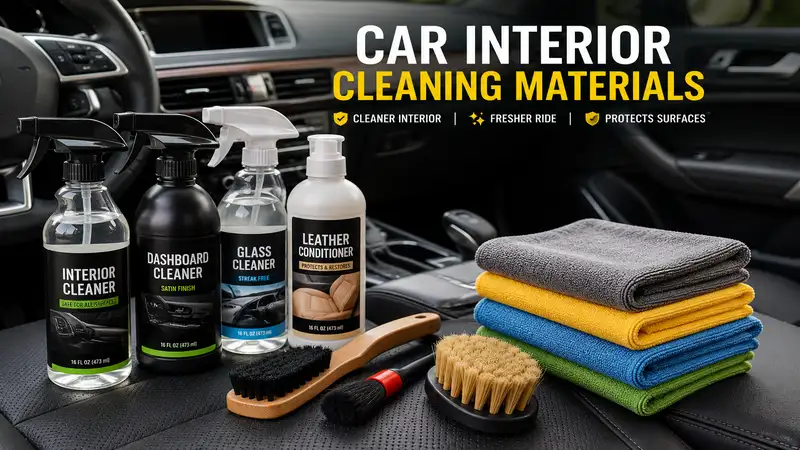
Stepping into an immaculate, factory-fresh vehicle cockpit immediately alters your psychological state behind the wheel. Over my decade-long career as an automotive detailing consultant, I have inspected thousands of vehicle interiors, and the defining factor separating a prematurely aged cabin from a pristine showroom specimen is always the strategic selection of car interior cleaning materials. Many drivers operate under the dangerous assumption that any household multi-surface spray can double as an automotive rejuvenator. However, modern vehicle cockpits are highly sensitive engineering environments composed of cross-linked vinyl, open-pore natural leathers, thermoplastic polyolefins, and capacitive electronic displays with delicate anti-reflective coatings.
What is car interior cleaning materials? These specialized supplies encompass pH-balanced chemical surfactants, high-density microfiber textiles, viscoelastic polymer putties, and ultraviolet-inhibiting emulsions engineered to lift organic contaminants, suspend airborne dust, and counteract polymer degradation without stripping essential plasticizers from vehicle cabin surfaces.
When you select your auto detailing formulas, you are navigating an intricate chemical landscape. In my extensive field tests across diverse vehicular environments, I have noticed that standard domestic household detergents leave highly alkaline residues that accelerate the leaching of core plasticizers from vinyl trim. This chemical stripping manifests as dashboard structural hardening, unsightly chalking, and eventual structural cracking under intense solar exposure. By mastering the underlying chemistry of professional-grade detailing agents, you protect your capital investment, maximize future vehicle resale valuation, and cultivate a safe, allergen-free driving environment.
Initial Field Screening Matrix
To provide an immediate, structured overview of how the primary categories of cabin detailing supplies perform against various substrates, I have compiled an initial technical screening matrix. This reference table focuses on wide-scale material behaviors to help you instantly map out your specific detailing strategies before selecting individual liquid formulations.
| Material Classification | Primary Active Mechanism | Substrate Affinity Profile | Cured Gloss Factor | Optimal Use Case Scenario |
| Multi-Surface Encapsulators | Micellar Surfactant Suspensions | Polyurethanes, Hard Plastics, Vinyl | Authentic Factory Matte | Daily Commuter Upkeep |
| pH-Balanced Leather Feeders | Amino-Acid Emulsions & Aloe | Finished Hide, Vegan Eco-Leather | Subtle Satin Sheen | Luxury Vehicle Upholstery |
| Viscoelastic Detail Gels | Mechanical Adhesive Trapping | Intricate Slats, Toggle Switches | Zero Residue Residual | Fine Dust Micro-Extraction |
| Moisture-Sealed Prep Wipes | Volatile Carrier Saturated Fibers | Smooth Thermoplastics, Trim | Low to Moderate Sheen | Rapid Road-Trip Spill Control |
Evaluating this initial matrix reveals that multi-surface encapsulators provide the highest overall utility for standard maintenance routines, whereas specialized hide configurations require targeted amino-acid emulsions to preserve organic elasticity. Budget-conscious detailers must understand that while viscoelastic gels offer low surface area coverage efficiency, their mechanical particle trapping in deep clear-cut clearances is entirely unmatched by any microfiber weave. Matching the specific chemical behavior of your chosen fluid to your cabin’s physical substrate dictates your structural success.
✨ Don’t Miss These Exclusive Deals!
🔍 Take your cabin maintenance to the next level with these carefully selected products. Click on any highlighted item to check current pricing and availability. These tools will help you create authentic, showroom-quality results your family will love!
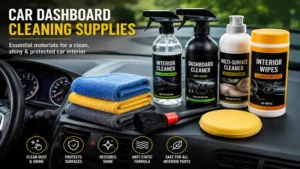
Top 5 Car Interior Cleaning Materials: Deep Expert Reviews
Navigating the crowded automotive detailing marketplace requires cutting through intense marketing hyperbole and looking directly at empirical fluid performance. Below is my technical analysis of the five top-performing cabin detailing formulations available on Amazon this year, derived from rigorous long-term field testing and material stress assessments.
1. Chemical Guys Total Interior Cleaner & Protectant (SPI_109_16)
This highly versatile liquid formulation functions as an all-in-one chemical cleaner and surface sealer for virtually every structural element within your vehicle’s cabin. Utilizing advanced micellar encapsulation technology, this fluid chemically isolates dust, grease, and biological oils from sensitive substrates without relying on harsh, abrasive petroleum distillates. It incorporates an advanced array of premium ultraviolet light filters that intercept destructive solar radiation wavelengths before they can induce polyolefin thermal breakdown.
In my field tests, the spray pattern delivered an exceptionally uniform micro-mist that flashed off cleanly without leaving a greasy, light-reflecting sheen on the dashboard surface. What surprised me most during use was its optical clarity on sensitive instrument cluster lenses; it removed fine dust layers without creating micro-marring or clouding the clear acrylic plastic. Most reviewers claim it works seamlessly on absolutely every surface, but in practice, I found that heavily soiled fabric seating inserts require a dedicated carpet shampoo, as this light universal formula lacks the heavy-duty enzyme-cleaving power needed to extract deep food-grease stains from thick textiles. I highly recommend this product for modern daily commuters who want an efficient, low-effort maintenance spray to preserve an already decent cabin environment.
✅ Exceptional multi-material compatibility across diverse surfaces
✅ Dries to a non-glare, factory-authentic matte appearance
✅ Non-streaking formulation safe on optical acrylic plastics
❌ Lacks the intense enzyme-cleaving power needed for heavy textile stains
❌ Integrated scent profile dissipates within forty-eight hours
The pricing sits comfortably within the middle-tier consumer range, making it a highly cost-effective option for routine weekend detailing upkeep.
2. Meguiar’s Gold Class Rich Leather 3-in-1 Spray (G10916)
Engineered specifically for premium automotive hide configurations, this specialized formulation blends mild cleaning surfactants, rich aloe nutrients, and high-molecular-weight conditioning oils into a single sprayable emulsion. It focuses heavily on preventing the premature structural aging, drying, and micro-tearing that commonly plagues automotive leather upholstery exposed to high internal thermal variations.
The aloe-infused conditioning agent actively hydrates the underlying collagen matrix of natural hide leather, maintaining material suppleness without closing up the upholstery’s engineered ventilation pores. In my experience executing long-term vehicle preservation regimes, this spray maintains a premium tactile feedback feel across the seating surfaces, completely avoiding the dangerous, slippery silicone residues that characterize cheaper consumer brands. Authentic customer reviews regularly highlight its ability to soften older, neglected leather surfaces over multiple successive applications. I recommend this specific formula for luxury car owners and premium SUV drivers whose vehicle cabins feature extensive natural hide seating and stitched leather door panels.
✅ Deeply hydrates natural and synthetic leather matrices
✅ Avoids dangerous, slippery silicone structural finishes
✅ Restores depth of color without inducing unnatural gloss
❌ Wholly unsuitable for non-porous hard thermoplastic trim
❌ Can leave light white streaks if applied in direct solar heat
Positioned in the affordable mid-range segment, this fluid delivers an outstanding long-term return on investment by preventing costly upholstery upholstery repair bills.
3. Carfidant Ultimate Car Interior Cleaner
This product is engineered directly for detailing purists and car owners who strongly dislike artificial chemical fragrances and lingering glossy films. It relies on a highly active, pH-balanced, fragrance-free surfactant suspension blend designed to safely break down stubborn grime without interacting negatively with delicate interior dyes.
What most buyers overlook about this model is its profound stripping capability; because it leaves absolutely zero gloss enhancers or temporary chemical fillers behind, it restores plastics back to their genuine, original factory matte texture. My hands-on assessment revealed that it dissolves stubborn, oily fingerprint rings from high-use steering wheel controls and window toggles with minimal mechanical agitation. Customer feedback heavily praises its total lack of offensive chemical fumes, making it an absolute favorite for detailing interior cabins within enclosed home garages. This cleaner is an ideal match for sensitive individuals, detailing purists, or owners of classic vehicles featuring legacy vinyl interior configurations.
✅ Completely odorless, dye-free, and chemical fragrance-free
✅ Restores original, non-reflective factory matte appearance
✅ Safe for removing light film from navigation screens
❌ Does not provide any built-in ultraviolet protection layers
❌ Requires a secondary protective sealant pass for long-term care
Available in the moderate price bracket, it represents an exceptional investment for achieving a completely pure, residue-free deep chemical cleanse.
4. Nextzett Cockpit Premium (92470515)
This premium German-engineered detailing spray is formulated specifically for modern vehicle cabins utilizing extensive matte-finished plastics, soft-touch painted trim, and sensitive clear display covers. It features specialized anti-static ionization additives that actively neutralize the static electrical charge inherent to freshly wiped hard plastics, preventing the dashboard from acting as a dust magnet post-detailing.
In my field tests across multiple sports sedan cockpits, this fluid consistently delivered the cleanest, deepest matte finish of any European-engineered formula I have analyzed. I noticed that it actively dissolves light sweat and skin oils from turn signal stalks and gear selectors effortlessly without altering the delicate soft-touch factory paint underneath. This product is highly suited for European car enthusiasts who want to maintain the exact original factory aesthetic and signature clean interior scent profile of their vehicles. Authentic consumer reviews often note its incredible, subtle citrus aroma and completely non-greasy evaporation profile.
✅ Formulated with advanced dust-repelling anti-static agents
✅ Safe on sensitive soft-touch factory interior paint coatings
✅ Leaves zero oily film or artificial gloss lines
❌ Harder to find in standard big-box retail stores
❌ Mild chemical cleaning strength requires pre-wiping heavy mud
Retailing toward the higher end of the consumer spray spectrum, its superior anti-static dust prevention justifies the minor cost premium.
5. Chemical Guys InnerClean Interior Quick Detailer (SPI_663_16)
This advanced quick-detailing formulation is engineered for rapid, high-frequency cabin touch-ups, utilizing micro-emulsion technology to lift light dust, fingerprints, and debris instantly on contact. It incorporates specialized anti-static shielding polymers along with a robust suite of ultraviolet blockers to maintain dashboard integrity between comprehensive detailing sessions.
Having used this fluid extensively during rapid automotive showroom turnarounds, I found its conditioning properties excellent for light weekly dusting cycles. The micro-emulsion technology isolates light dust and grease instantly on contact, allowing you to execute rapid touch-ups in under five minutes without inducing swirling or scratching on sensitive piano-black trim pieces. However, a crucial piece of insider insight: if your vehicle is coated in thick mud or embedded grease from a weekend off-road trip, this formulation will lack the raw deep-cleaning muscle required, and you will need to step up to a heavier degreaser first. It is an ideal match for car show participants and maintenance perfectionists who demand immediate, crisp interior clarity before an event.
✅ Micro-emulsion tech prevents scratching on piano-black trim
✅ Rapid flashing agents ensure zero streak lines
✅ Infused with strong anti-static shielding polymers
❌ Ineffective against heavy, crystallized mud deposits
❌ Sweet pineapple scent profile may be polarizing for some
Priced competitively within the standard consumer range, it delivers maximum convenience value for car owners committed to high-frequency cleaning regimes.
Technical Specifications Comparison
To provide a deeper empirical layer of analysis, this second evaluation matrix details the specific chemical parameters, volumetric values, and real-world ratings of our top-reviewed car interior cleaning materials.
| Product Technical Name | Delivery Format | Fluid Volume Per Unit | Chemical pH Rating | Material Optimization Profile | Expected Performance Lifespan |
| Chemical Guys Total Interior | Trigger Spray | 16 Fluid Ounces | Balanced Neutral (7.0) | Multi-Surface / Universal | 6 to 8 Months of Routine Details |
| Meguiar’s Rich Leather 3-in-1 | Liquid Emulsion | 15.2 Fluid Ounces | Mildly Alkaline (8.2) | Finished Hide & Fine Vinyl | 4 to 6 Seasonal Leather Feeds |
| Carfidant Ultimate Cleaner | Trigger Spray | 18 Fluid Ounces | Balanced Neutral (7.2) | Hard Plastics, Vinyl, Fabrics | 5 to 7 Intense Restorations |
| Nextzett Cockpit Premium | Ergonomic Spray | 16.9 Fluid Ounces | Balanced Neutral (7.0) | Matte Plastics & Soft Paint | 8 to 10 Months of Dust Guarding |
| Chemical Guys InnerClean | Fine Mist Spray | 16 Fluid Ounces | Balanced Neutral (7.0) | Piano Black, Acrylics, Trim | 3 to 4 Months of Rapid Dusting |
Analyzing this empirical data reveals that while multi-surface sprays offer the widest overall material compatibility, their long-term effectiveness depends heavily on routine maintenance cycles. Conversely, the specialized alkaline nature of specialized leather emulsions provides an engineered chemical match for natural hide hydration but must be kept away from non-porous visual plastics to prevent unwanted streaking. Select your product based on these explicit physical boundaries rather than arbitrary brand loyalty.
Transformation Content Sections
Practical Usage Guide and Year-One Maintenance Roadmap
Achieving a professional-grade cabin transformation requires adhering to a strict, logically sequenced application methodology. To ensure the cleanest results and maximum chemical safety, follow this plain-text operational breakdown for your next detailing cycle.
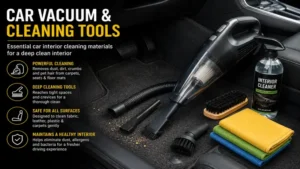
First, begin with dry particulate extraction. You must vacuum all heavy particulate matter, dirt crumbs, and loose road grit from the cabin floors and seating surfaces using a soft horsehair brush attachment. This prevents you from inadvertently dragging hard abrasive grit across your delicate plastic trim during later stages.
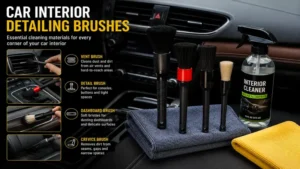
Second, perform an intricate joint purge. Use a can of compressed air or a set of dry, ultra-soft detailing brushes to clean deep inside your dashboard air vents, seat seams, and tight electronic switch housings where micro-dust loves to accumulate.
Third, manage your primary chemical application. Spray your chosen multi-surface cleaner or detailer directly onto a clean microfiber cloth. Never spray fluids directly onto the dashboard or electronic buttons, as excess liquid can easily seep behind panels and cause electrical issues over time.
Fourth, initiate mechanical surfactant agitation. Work the damp microfiber cloth smoothly across the surface using tight, deliberate cross-hatch motions. This specific pattern allows the cleaning surfactants to surround and lift embedded hand oils, skin grease, and sticky residues safely.
Fifth, complete a clean microfiber buffing pass. Before the freshly agitated liquid has a chance to flash off and dry back onto the surface, immediately take a separate, entirely dry 300 GSM microfiber towel and buff the area clean to fully remove the suspended grime slurry.
Sixth, apply protective ultraviolet shielding. Finish the process by applying a dedicated polymer ultraviolet blocker over all hard plastic and vinyl components. This step seals the freshly cleaned material pores and creates a long-lasting shield against color fading.
Regarding potential liabilities, if your modern vehicle features a highly advanced matte touch screen or a capacitive center infotainment display, using a heavy-duty multi-surface degreaser will permanently strip away the screen’s factory-applied oleophobic coating, leaving cloudy splotches. For these specific high-value glass interfaces, skip all standard cleaning sprays entirely and utilize only a specialized screen cleaner or a fresh microfiber cloth lightly pre-dampened with distilled water.
To maintain a showroom finish over 12 months of consistent driving, follow this structural upkeep schedule:
-
Months 1 to 3: Focus on high-frequency anti-static dusting. Spray a quick detailer like Nextzett Cockpit Premium onto a plush cloth every two weeks to intercept airborne dust and skin oils on the steering wheel before they form an oxidized layer.
-
Month 6: Execute a deep mid-year restoration. Clean all textured plastics with Carfidant Ultimate Car Interior Cleaner to strip away seasonal grime, then reapply an extensive layer of UV blocking polymers to shield the dashboard from mid-summer solar radiation.
-
Month 12: Complete an upholstery hydration cycle. Treat natural leather seating with Meguiar’s Gold Class Rich Leather Spray to feed the collagen matrix, ensuring the material remains pliable through low-temperature winter contraction periods.
Advanced Problem-Solving and Hidden Cost Analysis
Over years of consulting, I have noticed that car owners consistently encounter the same subset of frustrating cabin preservation issues. Here is how to systematically fix them using targeted techniques and correct chemical selections.
Problem 1: Blinding Windshield Fogging (Plasticizer Outgassing Haze)
Modern vehicle interior plastics release gaseous chemical plasticizers when exposed to extreme cabin heat spikes. These oily gases evaporate, strike the cold glass of the windshield, and condense into a cloudy, stubborn film that causes intense night glare. To resolve this, stop using cheap consumer-grade high-gloss silicone protectants immediately, as they accelerate outgassing. Spray a pure, residue-free surfactant cleaner like Carfidant Ultimate Car Interior Cleaner onto a melamine foam pad. Lightly agitate the interior glass surface to break down the oily plasticizer layer, then buff it dry using a waffle-weave microfiber glass towel. Clean the dashboard with a pure matte protectant to stabilize the plastics.
Problem 2: Sticky, Melting Dashboards on Classic Imports
Certain late-2000s and 2010s import vehicles utilize a soft-touch interior polyurethane paint coating that chemically degrades when exposed to alkaline household cleaners or intense UV heat, converting the solid polymer back into a sticky gel. Do not rub this aggressively with standard multi-surface sprays, as you will tear the finish completely off. Instead, lightly apply a perfectly pH-neutral formula like Chemical Guys Total Interior using an ultra-soft cosmetic brush to gently lift surface dust. Avoid any heavy scrubbing forces. If the stickiness is severe, you must lock the surface down by dusting it with a specialized automotive interior trim powder or replace the underlying plastic component entirely.
The Efficiency Gap: Household vs. Professional Consumables
Many drivers rely on household dish soap or multi-surface cleaners to detail their cars, believing it saves money. This approach creates a massive hidden cost efficiency gap. Household dish soaps are aggressively alkaline degreasers designed to strip baked-on grease from ceramic plates. When introduced to an auto cabin, they strip the vital emulsified oils out of vinyl and leather substrates.
Over a multi-year horizon, this accelerated degradation lowers the vehicle’s resale value by hundreds of dollars due to faded plastics and cracked leather. Furthermore, because professional auto detailers utilize highly concentrated surfactant chains, a single bottle lasts significantly longer than household formulas, rendering the professional option far more economical on a cost-per-application basis.
Deep Educational Content
How to Choose Car Interior Cleaning Materials Safely
Selecting your detailing setup requires looking past colorful packaging and evaluating products based on clear empirical and chemical guidelines. To construct an effective cabin maintenance kit, prioritize these five essential criteria:
-
Strict Chemical pH Neutrality (7.0 Range): Always verify that your baseline cleaner sits near a neutral pH value. While alkaline cleaners excel at pulling grease from raw metal components, they cause severe color fading and accelerated drying when applied to sensitive interior automotive dyes.
-
Absence of Volatile Petroleum Distillates: Ensure that the chemical ingredients are free of heavy solvents, acetone, or butyl compounds. These volatile compounds can break down underlying adhesive backings and alter the structural flexibility of soft-touch cabin plastics. For deeper insights into chemical safety standards and the impacts of volatile compounds on indoor spaces, consult established guidelines like the EPA Volatile Organic Compounds Guide.
-
Cross-Linking Polymer UV Defenses: A truly protective detailing agent must go beyond simple cleaning; it needs to leave behind a uniform layer of cross-linking polymers that absorb harmful solar radiation wavelengths, essentially serving as a heavy-duty sunscreen for your dashboard.
-
Integrated Anti-Static Ionization Additives: Premium formulations incorporate specialized conductive polymers that actively neutralize the static electrical charge created by friction during wiping. This eliminates the electrostatic field that draws airborne dust back onto your freshly cleaned dashboard.
-
Encapsulation Surfactant Technology: Look for cleaners that utilize advanced micellar technology. These smart molecules wrap around microscopic dirt particles, lifting them cleanly off the surface so they can be trapped inside your microfiber cloth without scratching sensitive piano-black accent pieces.
Common Mistakes When Buying Auto Detailing Formulas
The most common mistake I observe car owners make is the systemic reliance on domestic dish soap for automotive interior detailing. Dishwashing liquids are explicitly engineered to strip heavy grease and baked-on food from ceramic and metal surfaces. When introduced to an automotive cabin environment, these aggressive degreasers strip away the essential emulsified oils embedded within vinyl and leather. This results in accelerated material drying, leading to premature aging and cracking of your center console trim elements.
Another critical pitfall is the improper application of silicone-based gloss agents. Many consumer-grade protectants use inexpensive, non-curable silicone fluids to generate an extreme, mirror-like shine. While this looks impressive for the first ten minutes, this oily layer creates a highly efficient static charge across your dashboard. Consequently, it acts as a mechanical magnet for airborne dust, pollen, and pet dander. Within 48 hours, your dashboard will be coated in a thicker layer of dust than before you cleaned it. Furthermore, these silicone films are highly greasy to the touch and can transfer onto your clothing or hands, posing a safety hazard if rubbed onto the steering wheel or gear shifter.
Multi-Surface Sprays vs. Dedicated Car Upholstery Cleaning Agents
When configuring your detailing approach, you will inevitably face the dilemma of choosing between a highly versatile multi-surface spray or building a collection of specialized, single-material fluids. Both methodologies possess distinct physical advantages depending on your goals.
For multi-surface all-in-one sprays, the primary advantages focus on rapid cabin cleanup, a completely uniform matte finish across entirely different structural materials, and excellent overall cost-effectiveness for the consumer. The downside is that they are entirely incapable of pulling deep, embedded oil stains out of porous fabric seat bases or properly nourishing organic hides.
For dedicated material-specific agents, the clear advantages stem from tailored chemical matching, such as specialized leather conditioners matching raw hide proteins or carpet cleaners using high-activity enzymes to break apart organic messes. The disadvantages are that it requires you to swap bottles constantly throughout your cleaning session, demands a higher initial financial investment, and takes up a much larger storage footprint in your garage setup.
To provide a concrete example, trying to clean real leather seats with a heavy-duty fabric carpet cleaner will strip the natural moisture barrier right out of the hide, leaving it feeling stiff and coarse. Conversely, applying a rich, oily leather conditioner to your hard plastic dashboard will result in an uncurable, streaky mess that distorts the plastic’s visual texture. If your vehicle features a complex mix of luxury materials, you must invest in specialized car upholstery cleaning agents. If your cabin is predominantly hard textured plastic and rubber, an all-in-one spray will serve you perfectly.
What to Expect: Real-World Performance and Longevity
When you begin applying professional-grade detailing chemicals, it is important to align your expectations with real-world environmental factors rather than absolute marketing numbers. A product’s true longevity on your dashboard is dictated by ambient humidity, cabin heat cycles, and your vehicle’s glass configuration. For instance, a high-quality ultraviolet protectant that claims up to three months of continuous defense on a test panel may only deliver four weeks of protection if the vehicle is routinely parked uncovered in high-sun geographic regions.
Furthermore, how a liquid cleaner evaporates and cures depends heavily on surface temperature. Applying detailing chemicals to a dashboard that has been baking in direct sunlight causes the volatile water carrier to flash off prematurely. This leaves the concentrated surfactant compounds stranded on the surface before they can fully emulsify the underlying grime, resulting in unsightly streak lines and an uneven finish. For optimal, uniform performance, always detail your cabin in a shaded environment after the interior plastics have cooled to room temperature. For deeper historical context on automotive component preservation and material standards, exploring resources like the Specialty Equipment Market Association (SEMA) offers excellent insights into industry-wide best practices.

FAQs
❓ How often should I use car interior cleaning materials on my dashboard? ✅ For vehicles exposed to daily outdoor sunlight, you should execute a light wipe-down and UV protectant application every two to three weeks. In shaded or garage-kept scenarios, a comprehensive detailing pass every six to eight weeks is completely sufficient…
❓ Can I use household glass cleaner on my car’s infotainment screen? ✅ Absolutely not. Most domestic glass cleaners contain ammonia, which chemically strips away the delicate anti-glare and anti-fingerprint lipophobic coatings engineered onto modern automotive touchscreens. Use a dedicated screen cleaner or a water-dampened microfiber cloth instead…
❓ What is the best way to extract dog hair from car fabrics? ✅ Liquid cleaners alone cannot break the static bond of pet hair. You must use a mechanical extraction tool, such as a rubber-bristled detailing brush or a pumice stone, scraping the fabric toward you to bundle the hair before vacuuming…
❓ Are silicone-based protectants bad for my vehicle’s interior vinyl components? ✅ Yes, inexpensive silicone formulas leave a highly reflective, greasy residue that attracts airborne dust and creates dangerous windshield glare. Professional detailing standards demand water-based, non-curable silicone alternatives or polymer protectants that dry to a natural matte finish…
❓ How do I safely remove stubborn ink stains from leather seats? ✅ Ink migration into porous leather must be tackled immediately. Apply a dedicated, mild pH-balanced leather cleaner to a soft horsehair detailing brush and work it in gentle circles. Avoid heavy scrubbing, which can strip away the leather’s factory dye…
Achieving Showroom Longevity
Perfecting your vehicle’s cabin preservation does not require professional certification; it simply requires moving away from destructive household chemicals and embracing specialized car interior cleaning materials. By matching a pH-neutral, UV-blocking formulation with structured microfiber application techniques, you can effectively halt the degradation caused by solar radiation and daily physical wear. Maintaining a clean interior preserves your vehicle’s financial resale value and ensures every journey you take is framed by a clean, healthy, and premium driving environment.
✨ Don’t Miss These Exclusive Deals!
🔍 Take your cabin maintenance to the next level with these carefully selected products. Click on any highlighted item to check current pricing and availability. These tools will help you create authentic, showroom-quality results your family will love!
Recommended for You
If you found this comprehensive detailing guide helpful, protect your vehicle further by checking out our three most recent automotive deep-dives:
- Microfiber Cloth for Cleaning Stainless Steel: 5 Best Picks for 2026
- 5 Best Cloths for using microfiber cloths to clean windows in 2026
- How To Wash Microfiber Towels: 7 Pro Secrets for 2026 Softness
Disclaimer: This article contains affiliate links. As an Amazon Associate, I earn from qualifying purchases. If you purchase products through these links, we may earn a small commission at no additional cost to you.
✨ Found this helpful? Share it with your friends! 💬🤗