In This Article
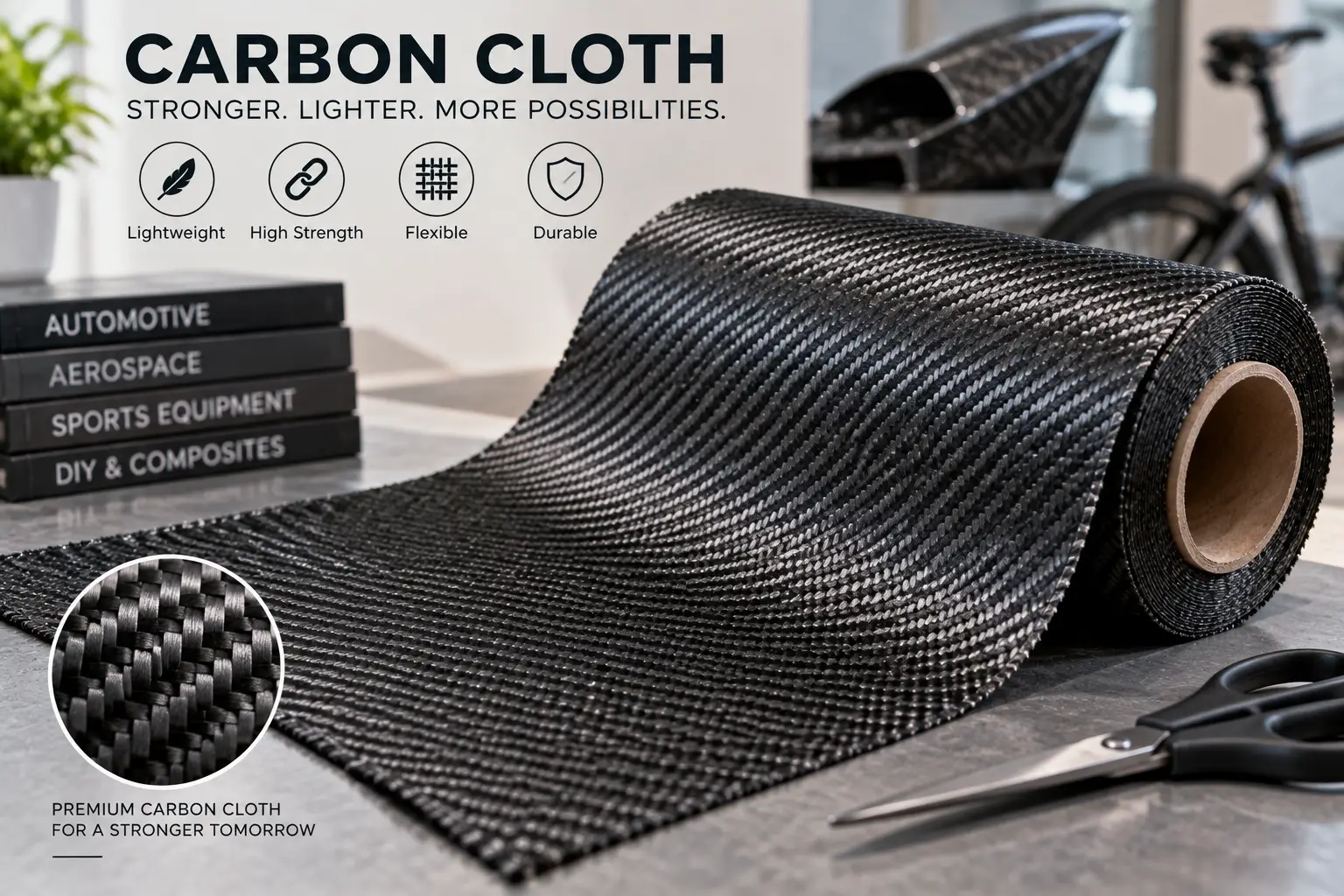
If you’ve ever run a search for carbon cloth, you already know the results are a mixed bag: aerospace-grade rolls next to bargain two-packs, plain weave next to twill, and prices that swing wildly depending on width, weight, and where the fabric was woven. Carbon cloth is a woven fabric made from thin, high-strength carbon fiber strands, typically combined with epoxy resin to form a rigid, lightweight composite used in everything from car body panels to RC aircraft frames and structural repairs. On its own, dry carbon cloth is flexible and drapeable; it only becomes rigid once it’s wetted out with resin and cured. That distinction trips up a lot of first-time buyers, and it’s one of several things this guide will walk through in plain language.
This article breaks down seven real carbon cloth products you can find on amazon.com, spanning budget rolls to aerospace-grade, USA-woven sheets. You’ll get an honest look at weave types (plain vs. twill vs. unidirectional), weight classifications in grams per square meter (GSM) and ounces, and how those specs translate into real project outcomes — not just a rundown of features copied from a listing page. Along the way, we’ll cover how to choose the right carbon cloth for your project, common buying mistakes, safety considerations backed by OSHA’s guidance on advanced composite materials, and a few real-world scenarios to help you match the fabric to the job.
One quick note before we dive in: this article contains affiliate links, and as an Amazon Associate, purchases made through those links may earn a small commission at no extra cost to you — full disclosure is at the bottom of the page, consistent with FTC guidance on endorsement and affiliate disclosures. For background on the material itself, Wikipedia’s entry on carbon fiber reinforced polymer is a solid starting point if you want the deeper materials-science context.
Let’s get into the comparison.
Quick Comparison: 7 Carbon Cloth Picks at a Glance
Before the full breakdown, here’s a snapshot of how these seven products stack up on weave, weight, and price range.
| Product | Weave / Fiber Count | Weight | Price Range | Best For |
|---|---|---|---|---|
| ARRIS Carbon Fiber Cloth | 2×2 Twill, 3K | 220g | around $30–$45 | All-around beginner projects |
| Tudomro Carbon Fiber Fabric (2-Roll) | 2×2 Twill, 3K | 220g | around $30–$45 | Best value for two-roll coverage |
| Co-parts Carbon Fiber Cloth Fabric | 3K Weave | 200g | around $30–$40 | Wider single-piece panels |
| Aerospace Grade Carbon Fiber Cloth | Twill, 3K, Grade A | 5.8oz | around $50–$75 | Premium, cosmetic finish work |
| 24″x36″ Plain Weave Carbon Cloth | Plain, 3K | 6oz | under $30 | Small, precise flat parts |
| 10-Yard Bulk Carbon Fiber Roll | 2×2 Twill, 3K | 5.7oz | around $150–$220 | Large or multiple projects |
| AXILA Conductive Carbon Cloth | Non-woven mat | 5x5cm swatch | around $10–$25 | Battery/fuel cell electrode work |
Looking at this table, the pattern that jumps out is that price mostly tracks two things: total yardage and where the fabric is manufactured. The bulk 10-yard roll and the small AXILA swatches sit at opposite ends of the spectrum for opposite reasons — one is buying volume, the other is buying a specialized, lab-grade material in a tiny format. For most home and hobby builders, the twill-weave rolls in the $30–$45 band cover the widest range of use cases.
💬 One click helps other shoppers make an informed choice too! 😊
Top 7 Carbon Cloth Picks: Expert Analysis
Below is a closer look at each product, including what the specs actually mean for your project, honest analysis of who each one fits best, and what aggregated buyer feedback tends to say.
1. ARRIS Carbon Fiber Cloth — best all-around starter roll
The ARRIS Carbon Fiber Cloth earns its spot as the default recommendation for anyone trying carbon fiber layup for the first time. It comes as a 79″ x 12″ roll of 3K, 2×2 twill weave fabric at 220 grams per square meter — a middle-of-the-road weight that’s forgiving to work with but still produces a strong laminate.
In practice, the 2×2 twill weave means the fibers cross in a diagonal pattern rather than a strict over-under checkerboard, which gives the fabric noticeably better drape over curved surfaces like fenders, helmets, or RC fuselage sections. The listed edges are hemmed and taped, a small but genuinely useful detail: it keeps the fabric from fraying while you cut and handle it, which matters more than it sounds like when you’re working with a material that sheds fine, sharp filaments.
Who it’s for: first-time builders and hobbyists who want one roll that handles hood scoops, drone arms, and small repair patches without needing to special-order anything. Reviews of this style of carbon cloth roll consistently mention that the twill pattern is easy to wet out evenly with standard epoxy, though buyers should note you’ll need to source resin separately since the fabric ships dry. As with many small-business industrial listings, published review volume is moderate rather than massive, so treat sentiment as directional.
Pros:
- ✅ 2×2 twill drapes well over curved parts
- ✅ Hemmed, taped edges resist fraying
- ✅ Mid-weight 220g works for most beginner projects
Cons:
- ❌ Resin and hardener sold separately
- ❌ 12″ width limits single-piece large panels
Pricing typically lands around $30–$45 for the roll (check current price, as it fluctuates); for a first roll of dry carbon fiber fabric, that’s a reasonable entry point that won’t leave much material unused.
2. Tudomro Carbon Fiber Fabric (2-Roll) — best value for two-roll coverage
The Tudomro Carbon Fiber Fabric two-roll set is built for buyers who know they’ll need more than a single roll’s worth of material — think a full body panel repair or a multi-part RC build. Each roll measures roughly 10ft x 12″ in the same 2×2 twill, 3K, 220g spec as most entry-level carbon cloth.
Getting two rolls instead of one changes the math on a project in a practical way: it removes the temptation to stretch a single roll too thin across a part that really needed a double layer for stiffness. The twill weave and gram weight here mean the same drape and handling characteristics as other mid-tier options, so the differentiator is really quantity and per-yard value rather than a unique fabric property.
Who it’s for: buyers tackling structural reinforcement on concrete, basements, boats, or automotive panels where one roll clearly won’t be enough, and who’d rather buy in a bundle than reorder mid-project. Aggregated feedback on multi-roll carbon fiber fabric kits tends to flag consistent weave quality roll-to-roll as the main thing buyers care about, since a mismatched second roll can create visible seams in cosmetic work.
Pros:
- ✅ Two rolls means fewer mid-project reorders
- ✅ Consistent 3K twill weave across both rolls
- ✅ Suited to structural reinforcement jobs
Cons:
- ❌ Bulkier to store than a single roll
- ❌ Still needs separately purchased resin
Expect a price in the $30–$45 range for the pair, which typically works out to better per-square-foot value than buying two single rolls separately — a real advantage if your project specs call for double-layer reinforcement.
3. Co-parts Carbon Fiber Cloth Fabric — best wider single-piece panel
The Co-parts Carbon Fiber Cloth Fabric stands out mainly for its width: at 19.5 inches wide and 78.5 inches long, it’s noticeably roomier than the 12″-wide rolls that dominate this category, at a listed weight of 200 grams per square meter in a 3K weave.
That extra width matters more than it might seem. A wider bolt of fabric means fewer seams on larger flat or gently curved parts — a hood, a boat transom, a skateboard deck — which directly affects the cosmetic quality of the finished piece, since visible seams are one of the more common complaints in DIY carbon fiber work. The listed technical specs (roughly 3,400 MPa tensile strength, 230 GPa tensile modulus) are in line with standard-modulus 3K carbon fiber used across the hobby and light-structural market, translating to a fabric that’s strong for its weight but not exotic aerospace-tier material.
Who it’s for: builders working on single flat or mildly curved panels who want to avoid piecing together narrow strips. Feedback on wider-format carbon cloth rolls in this category commonly notes that the extra width reduces waste when cutting patterns, though buyers should double-check their project’s exact dimensions before ordering, since return shipping on cut fabric is often limited.
Pros:
- ✅ 19.5″ width reduces seams on larger panels
- ✅ Standard-modulus 3K specs suit general use
- ✅ Good waste-to-yield ratio for pattern cutting
Cons:
- ❌ Narrower than industrial-width fabric
- ❌ Limited return options once cut
Pricing generally sits in the $30–$40 range, positioning it as a mid-tier pick that’s worth the modest premium over 12″-wide rolls if your project genuinely needs the extra coverage.
4. Aerospace Grade Carbon Fiber Cloth — premium, USA-woven finish
The Aerospace Grade Carbon Fiber Cloth is the clear step-up pick here: Grade A, 3K fiber, 5.8oz weight, in a 50″ x 12″ format that’s explicitly marketed as woven in the USA. It’s aimed squarely at buyers doing visible, cosmetic carbon fiber work where finish quality is non-negotiable.
The practical difference between “Grade A” and standard commercial-grade cloth usually comes down to weave consistency and fewer visible defects — fewer broken tows, more even tension across the fabric, which shows up as a cleaner, more uniform pattern once it’s wetted out and cured under a glossy clear coat. For a hood, trunk lid, or any part meant to be shown off rather than hidden under paint, that consistency is the whole point of paying more. The listing also emphasizes careful rolling to avoid wrinkles or creases in shipping, a detail that matters because a crease in dry carbon cloth can be nearly impossible to fully work out before layup.
Who it’s for: buyers prioritizing cosmetic finish over pure cost-efficiency — think show cars, visible trim pieces, or anyone who’s been burned before by inconsistent weave on a cheaper roll. Reviews on USA-woven, small-business carbon fiber sellers frequently cite responsive customer service and careful packaging as differentiators, which tracks with the extra care implied by the product description, though as always, treat this as directional sentiment rather than a guarantee.
Pros:
- ✅ Grade A consistency for visible cosmetic work
- ✅ Woven in the USA with quality control emphasis
- ✅ Shipped rolled to prevent creases
Cons:
- ❌ Meaningfully pricier than standard-grade cloth
- ❌ Overkill for hidden structural reinforcement
Expect to pay around $50–$75 for this option (prices vary — check the current listing), which is a real premium over entry-level rolls, but one that’s easier to justify when the finished part will actually be seen.
5. 24″x36″ Plain Weave Carbon Cloth — best for precise, flat small parts
The 24″x36″ Plain Weave Carbon Cloth is the one plain-weave option on this list, and that distinction matters more than the modest size might suggest. At 3K fiber and 6oz weight, it’s a first-quality, commercial-grade fabric made in the USA, cut to a manageable sheet size rather than sold as a long roll.
Plain weave differs from twill in a specific, useful way: the fibers alternate over-under in a tight checkerboard rather than a diagonal pattern, which gives the fabric more dimensional stability and makes it hold its shape better during cutting and layup. The tradeoff is reduced drapability over curved surfaces, so this fabric is a better match for flat or near-flat parts — mounting plates, small brackets, modeling projects — than for compound curves. The pre-cut 24″x36″ format also removes the guesswork of cutting a clean piece from a long roll, which is a genuine convenience for smaller projects.
Who it’s for: modelers, RC builders, and anyone making small, flat structural pieces where dimensional accuracy matters more than drape. Buyer sentiment around plain-weave carbon cloth sheets in this size range tends to highlight ease of handling for precise cuts, since the tighter weave resists fraying and shifting better than twill during scissor or rotary-cutter work.
Pros:
- ✅ Plain weave holds shape well for precise cuts
- ✅ Pre-cut sheet avoids roll-cutting waste
- ✅ Made in the USA, first-quality commercial grade
Cons:
- ❌ Poor drape over curved or compound surfaces
- ❌ Smaller total coverage than roll formats
Pricing generally lands under $30, making it one of the more affordable entries here and a smart pick specifically for flat-part projects rather than a general-purpose choice.
6. 10-Yard Bulk Carbon Fiber Roll — best for large or multiple projects
For builders with bigger plans, the 10-Yard Bulk Carbon Fiber Roll is the volume play: a full 50″ x 10-yard (30ft) length of 5.7oz, 3K, 2×2 twill weave fabric, intended for buyers who’d otherwise be reordering standard rolls repeatedly.
The math here is straightforward — buying in bulk almost always beats the per-yard cost of smaller rolls, and for anyone doing a full vehicle wrap-style cosmetic project, multiple RC builds, or a small business making repeat parts, that adds up fast. The 50″ width also opens up larger single-piece panels than the 12″-wide options on this list, which reduces both seams and the number of separate cuts needed for a big project. Functionally, the weave and weight are similar to the entry-level twill options, so this isn’t a premium-spec fabric — it’s the same general-purpose 3K twill, just sold at commercial scale.
Who it’s for: small composite shops, serious hobbyists working through several projects a year, and anyone who has already confirmed carbon fiber layup is a repeatable part of their workflow rather than a one-off experiment. Because bulk industrial rolls like this see fewer individual buyers than small hobby-sized listings, published review counts tend to be thinner — worth factoring in if verified aggregate feedback matters to your purchase decision.
Pros:
- ✅ Best per-yard value for repeat or large projects
- ✅ 50″ width reduces seams on big panels
- ✅ Standard 3K twill spec, familiar to work with
Cons:
- ❌ Large upfront cost and storage footprint
- ❌ Thinner published review history than hobby-sized rolls
Given the yardage, pricing commonly runs in the $150–$220 range — a significant outlay, but one that typically pencils out well below buying the equivalent yardage across several smaller rolls.
7. AXILA Hydrophilic Conductive Carbon Cloth — best specialty pick for electrode work
The AXILA Hydrophilic Conductive Carbon Cloth is a genuinely different animal from the other six picks, and it’s worth including precisely because “carbon cloth” searches often turn up buyers looking for this application rather than composite layup. Sold in small swatches (commonly 5x5cm), this is a non-woven, PAN-based conductive carbon cloth used as a substrate in fuel cell, battery, and electrochemistry research — not a structural layup fabric.
The key spec here isn’t weave or weight but surface treatment: the listing distinguishes between a base hydrophobic cloth and a hydrophilic-treated version, along with an MPL/PTFE-coated variant for gas diffusion layer applications. That treatment determines how the material interacts with liquid electrolytes and gases, which is the entire point for anyone using it in a lab or DIY electrochemistry setting — a distinction that simply doesn’t exist in the composite-fabric products above. Reported resistivity below 5 mΩ·cm² is a meaningful, checkable spec for this use case, unlike the more qualitative claims typical of cosmetic composite cloth listings.
Who it’s for: students, hobbyist electrochemists, and small-scale battery or fuel cell researchers who specifically need conductive carbon cloth substrate rather than resin-based composite fabric. This is a clear case where the keyword “carbon cloth” covers two genuinely different buyer intents, and steering the wrong audience toward composite fabric — or vice versa — would waste their money.
Pros:
- ✅ Purpose-built for fuel cell/battery electrode use
- ✅ Documented resistivity and treatment options
- ✅ Small format ideal for lab-scale testing
Cons:
- ❌ Not suitable for structural composite layup
- ❌ Small swatch size limits larger DIY builds
Small packs typically run around $10–$25 depending on quantity and treatment type — inexpensive in absolute terms, but priced per square inch, it’s actually one of the more specialized (and costly per area) materials on this list.
How to Get Started With Carbon Cloth: Layup Basics for Your First 30 Days
Buying the fabric is the easy part. The first month of actually working with carbon cloth is where most beginners either build confidence or get discouraged, so here’s a realistic starting sequence.
Start with a flat, low-stakes practice piece before touching your real project — a scrap panel or test plate, not the hood you’ve been saving up for. Cut your fabric slightly oversized (about an inch of overhang) so you’re not fighting for exact edges while you’re still learning to control resin flow. Mix small batches of epoxy resin at the specified ratio rather than eyeballing it; under- or over-catalyzed resin is one of the most common causes of a cloudy, weak, or tacky cured part. Apply resin to the mold or surface first, lay the dry cloth on top, then work resin into the fabric from the center outward with a brush or squeegee — pushing air out rather than trapping it under the weave. Watch your pot life closely: most standard epoxies give you a working window of 20–45 minutes before viscosity climbs too high to wet out fabric cleanly, and rushing this step is where bubbles and dry spots come from.
If you want structured, hands-on instruction rather than trial and error, composite fabrication programs like SLCC’s Composites Technician training cover wet layup, resin infusion, and safety practices in a lab setting — useful context even if you’re not enrolling, since it outlines the same fundamentals professionals rely on. Common first-30-days mistakes include cutting fabric with dull scissors (which frays the twill edge), skipping a test batch of resin to check working time in your specific ambient temperature, and pulling a part off the mold before it’s fully cured, which can warp thin laminates.
Real-World Scenarios: Matching Carbon Cloth to Your Project
Different buyers land on “carbon cloth” for very different reasons, and the right pick genuinely depends on the scenario.
If you’re a weekend RC hobbyist building a lightweight drone frame on a tight budget, a single roll like the ARRIS Carbon Fiber Cloth or the 24″x36″ Plain Weave Carbon Cloth covers small, flat, structural pieces without overbuying material you’ll never use. If you’re restoring a classic car hood and want a show-quality, glassy carbon fiber finish, the Aerospace Grade Carbon Fiber Cloth is worth the premium — cosmetic flaws in the weave are far more visible on a large, clear-coated panel than on a hidden structural brace. If you’re reinforcing a cracked boat hull or a basement wall crack, the Tudomro Carbon Fiber Fabric two-roll set or the Co-parts Carbon Fiber Cloth Fabric‘s wider format give you enough material to handle unexpected extra coverage without a second order mid-project. If you’re running a small composite fabrication side business or building multiple parts a year, the 10-Yard Bulk Carbon Fiber Roll brings the per-yard cost down enough to matter across repeat projects. And if you’re a chemistry or engineering student building a DIY fuel cell for a class project, none of the composite fabrics above are the right tool — the AXILA Hydrophilic Conductive Carbon Cloth is the one actually built for that application.
How to Choose Carbon Cloth: 6 Criteria That Actually Matter
What’s the best way to choose carbon cloth for a project? Match the weave, weight, and width to your part’s shape and size, confirm you’re buying composite fabric (not conductive electrode cloth) if that’s your intent, and budget separately for resin, since dry cloth alone can’t be used. Here’s the fuller breakdown:
- Confirm your application first. “Carbon cloth” covers both resin-based composite fabric and conductive electrode substrate — buying the wrong one wastes money and won’t perform at all for the other use case.
- Match weave to shape. Twill weave drapes better over curves; plain weave holds dimensional stability better on flat parts.
- Pick weight (GSM/oz) for strength vs. flexibility. Lighter fabrics (around 200g) are easier to wet out and drape but build less thickness per layer; heavier fabrics add strength faster with fewer layers.
- Check width against your part size. Narrow 12″ rolls mean more seams on large panels; wider formats reduce piecing but cost more per order.
- Budget for resin and consumables separately. Epoxy resin, hardener, mixing cups, brushes, and gloves typically add $20–$50+ to any carbon cloth project.
- Buy a little extra. Cutting waste, practice pieces, and mistakes are normal for first-time layup — 10–15% extra material avoids a frustrating mid-project reorder.
Carbon Cloth vs. Fiberglass Cloth: Which Should You Actually Use?
Carbon cloth and fiberglass cloth solve overlapping but distinct problems, and the comparison table below summarizes where each one wins.
| Factor | Carbon Cloth | Fiberglass Cloth |
|---|---|---|
| Strength-to-weight | Higher | Lower |
| Cost per yard | Higher | Lower (often 3–5x cheaper) |
| Stiffness | Very high, brittle under impact | More flexible, absorbs impact better |
| Cosmetic appeal | Distinctive woven look | Typically painted over |
| Ease for beginners | Moderate (unforgiving of mistakes) | Easier, more forgiving |
| Electrical conductivity | Conductive | Non-conductive |
The table makes the tradeoff pretty clear: carbon cloth wins decisively on strength-to-weight and looks, which is exactly why it commands a premium price, but fiberglass remains the more forgiving and budget-friendly choice for beginners or parts that will be painted anyway. One factor the table can’t fully capture is conductivity — carbon fiber conducts electricity, which matters for anything going near electronics or wiring, while fiberglass is electrically inert and often preferred for that reason alone in certain repairs.
Features That Actually Matter (and Ones That Don’t)
Marketing copy on carbon cloth listings loves to throw around numbers, but not all of them affect your finished part equally.
What actually matters: weave type (plain vs. twill) for drape and stability; GSM/oz weight for how many layers you’ll need; fiber tow count (like 3K) for surface texture and cost; and width, which directly controls how many seams a large part will have. What matters less than it sounds: “aerospace grade” branding on its own doesn’t guarantee a specific certified standard unless the listing references an actual spec sheet or test data — it’s often more about weave consistency and finish than a formal aerospace qualification. Similarly, tensile strength numbers quoted in isolation (like 3,400 MPa) are real specs for standard 3K carbon fiber, but they describe the fiber, not the finished composite part, whose actual strength depends heavily on resin quality, layer count, and how well the cloth was wetted out during layup.
| Weave Type | Pattern | Best For | Drape |
|---|---|---|---|
| Plain | Tight over-under checkerboard | Flat, load-bearing parts | Low |
| Twill (2×2) | Diagonal crossing pattern | Curved cosmetic parts | High |
| Unidirectional | Fibers run one direction | Targeted directional strength | Low |
This second table underlines the same point from a different angle: there’s no single “best” weave, only the right weave for a specific part’s geometry and purpose, which is why this guide recommends a mix of plain and twill options rather than pushing one weave as universally superior.
Common Mistakes to Avoid When Buying Carbon Cloth
Even experienced DIYers repeat a handful of predictable mistakes when shopping for carbon cloth. Ordering by price alone without checking weave type is a common one — a cheap plain-weave roll won’t drape a curved fender no matter how good the price looks. Forgetting that resin, hardener, and consumables are sold separately catches a lot of first-time buyers off guard, since the sticker price on the cloth itself is only part of the total project cost. Underestimating yardage is another frequent issue; it’s much cheaper to buy 10–15% extra fabric upfront than to place a second small order and hope the weave and lot match closely enough to avoid a visible seam. Buyers also sometimes skip checking whether a listing is composite fabric versus conductive electrode cloth, which — as covered above — are genuinely different products despite showing up under the same search term. Finally, storing leftover dry carbon cloth folded rather than rolled introduces creases that are difficult to fully work out during layup, quietly degrading the finish of a later project.
Carbon Cloth for Different Skill Levels
Beginners are generally best served by a single mid-weight, 2×2 twill roll like the ARRIS Carbon Fiber Cloth — forgiving to wet out, versatile enough for both flat and curved test pieces, and inexpensive enough that a practice piece or two doesn’t sting. Intermediate builders who’ve completed a few successful layups tend to benefit more from matching weave precisely to the part — plain weave like the 24″x36″ Plain Weave Carbon Cloth for flat brackets, twill for anything curved — since they’ve already built the resin-handling skills to focus on weave-specific technique. Advanced or repeat builders, including small composite shops, get the most value from bulk purchasing through options like the 10-Yard Bulk Carbon Fiber Roll, where the per-yard savings compound across multiple projects and the wider format reduces labor-intensive seaming. Specialists working outside structural composites entirely — students, hobbyist electrochemists — should skip the composite-fabric conversation altogether and go straight to purpose-built material like the AXILA Hydrophilic Conductive Carbon Cloth.
Long-Term Cost and Maintenance
Carbon cloth itself doesn’t have an ongoing maintenance cost once it’s cured into a finished composite part — the material becomes essentially permanent, barring impact damage or UV degradation of the resin over years of outdoor exposure. The real long-term cost conversation is about total project economics: a single roll of mid-tier twill fabric plus resin, hardener, sandpaper, and clear coat for a small cosmetic panel commonly totals somewhere in the $80–$150 range once every consumable is accounted for, not just the cloth’s sticker price. For repeat builders, the math shifts meaningfully toward bulk fabric purchases, since resin costs stay roughly proportional to project size regardless of where the dry cloth was sourced, while per-yard fabric costs drop substantially at bulk pricing tiers. One overlooked long-term cost is storage: dry carbon cloth should be kept rolled (not folded), away from direct sunlight and moisture, since UV exposure can degrade the sizing resin coating the fibers even before layup — a detail that matters more for buyers holding onto bulk rolls for months between projects.
Safety, Regulations, and Standards
Carbon cloth handling carries real, well-documented occupational hazards that DIY guides sometimes gloss over. According to OSHA’s technical manual on advanced composite health hazards, carbon fibers are often coated with resin-based sizing that can cause skin irritation or sensitization, and machining or cutting cured composite parts generates fine, respirable dust that should be treated with the same caution as other industrial particulates. Uncured epoxy resin poses its own, separate hazard — repeated skin contact is a well-established cause of contact dermatitis and, over time, sensitization that can turn into a lasting allergic reaction to epoxy compounds generally, not just the specific brand you started with.
Practical takeaways for home builders: wear nitrile gloves any time you’re handling wet resin or freshly cut fabric edges, work in a ventilated space (fine carbon dust and resin vapors both benefit from airflow), and use eye protection when cutting or sanding cured parts, since the resulting dust can irritate eyes as easily as skin. There’s no single federal certification specific to hobby-scale carbon cloth the way there is for, say, electrical devices under UL listing — the relevant safety framework here is proper handling practice, not a product certification you should expect to see on the packaging.
Frequently Asked Questions
❓ Can you use carbon cloth without resin?
❓ What's the difference between carbon cloth and carbon fiber sheet?
❓ How much carbon cloth do I need for a small project?
❓ Does carbon cloth conduct electricity?
❓ Is twill or plain weave carbon cloth better for beginners?
Conclusion
Carbon cloth isn’t a one-size-fits-all product, and the right pick really does depend on what you’re building. For most first-time buyers, a mid-weight, 2×2 twill roll like the ARRIS Carbon Fiber Cloth or the Tudomro Carbon Fiber Fabric two-pack strikes the best balance of drapability, price, and forgiveness for early mistakes. If cosmetic finish is the priority, the extra cost of the Aerospace Grade Carbon Fiber Cloth buys real weave consistency that shows up under a clear coat. Flat, precise parts are better served by the 24″x36″ Plain Weave Carbon Cloth, while repeat builders and small shops will get more value from the 10-Yard Bulk Carbon Fiber Roll‘s per-yard pricing. And if your project involves batteries or fuel cells rather than resin at all, the AXILA Hydrophilic Conductive Carbon Cloth is the only product on this list actually built for that job.
Whichever direction you go, budget for resin and safety gear alongside the cloth itself, buy a little extra material, and take the time to understand weave and weight before you order — those three habits prevent the vast majority of first-project frustrations with carbon cloth.
✨ Ready to start your carbon fiber project?
🔍 Compare these seven picks side by side, click through to check current pricing and availability, and pick the roll that matches your project’s shape, size, and budget. A little planning now saves a lot of frustration mid-layup!
Recommended for You
- 7 Best Glass Cleaning Fabric Picks for a Streak-Free Shine (2026)
- 7 Best Microfiber Lens Cloths in 2026: Streak-Free Picks
- Lens Cleaning Cloth Microfiber: 7 Best Picks for 2026
Disclaimer: This post contains affiliate links. As an Amazon Associate, I earn from qualifying purchases made through these links, at no additional cost to you.
✨ Found this article helpful? Share it with someone who needs it! 💬🤗