In This Article
If you’ve started digging into fabric carbon fiber for a build, repair, or restoration project, you’ve probably noticed the sheer number of rolls, kits, and weave patterns out there — and how little most listings actually explain about what you’re buying. That gap matters, because the wrong weight, weave, or resin pairing can turn a weekend project into a frustrating, wrinkled mess. This guide cuts through the noise.
We’re going to walk through seven real, currently available products — from small aerospace-grade sample cuts to full DIY repair kits with resin included — and break down what each one is genuinely good at, who it fits, and where it falls short. You’ll also get a practical framework for choosing weave type, weight, and fiber tow size based on your specific project, plus honest guidance on handling, safety, and the mistakes that trip up most first-time buyers.
One quick note before we dive in: this article contains affiliate links, and we may earn a commission if you purchase through one, at no extra cost to you (full disclosure below), in line with FTC endorsement guidelines. That relationship doesn’t change the analysis — every recommendation here is based on real spec sheets and aggregated customer feedback, not on which product pays the highest commission.
Whether you’re reinforcing a concrete beam, building a lightweight body panel, or just want that unmistakable woven look on a hobby project, understanding what fabric carbon fiber actually is — and how the different products differ — will save you money and a lot of trial and error.
What Is Fabric Carbon Fiber?
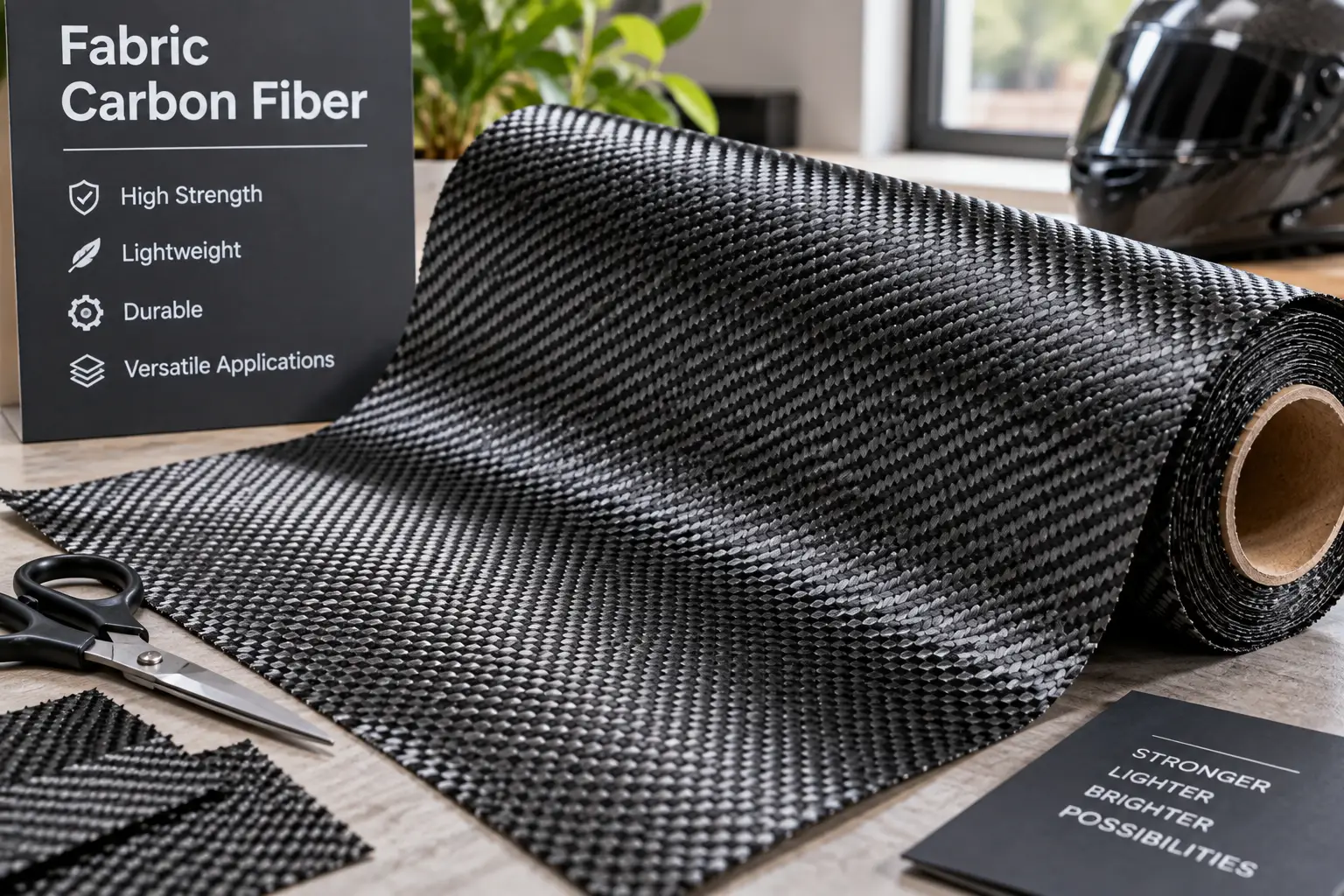
Fabric carbon fiber is woven cloth made from thousands of ultra-thin carbon filaments bundled into “tows” (commonly 1K or 3K, meaning 1,000 or 3,000 filaments per bundle) and woven into a textile — typically in a plain or 2×2 twill pattern. On its own, the dry cloth is flexible and drapeable; it only becomes rigid and load-bearing once saturated with a resin, usually epoxy, in a process called lamination or layup. These fabrics form the basis of what’s technically known as carbon-fiber reinforced polymer, prized for its high strength-to-weight ratio and stiffness across aerospace, automotive, marine, and sporting goods applications, and the same material has become widely accessible to home builders through Amazon.
| Quick Comparison | Weave / Tow | Approx. Weight | Price Range* | Best For |
|---|---|---|---|---|
| Fibre Glast Carbon Fiber Cloth Mat | 3K Twill | 6 oz | $30–$45 | Aerospace-grade small repairs |
| Fiberglass Warehouse Carbon Fiber Cloth | 3K Twill | 5.7 oz | $60–$150+ | Structural reinforcement, bulk |
| Jecery Carbon Fiber Repair Kit | 2×2 Twill | 220 g | Under $40 | First-time all-in-one kit buyers |
| YOTEBLE Carbon Fiber Repair Kit | Twill | ~200 g | Under $30 | Small budget repairs |
| Tudomro 2-Roll Carbon Fiber Fabric | 2×2 Twill, 3K | 220 g | $45–$65 | Multi-panel/bulk projects |
| KARBXON Beehive Weave Fabric | Beehive, 3K | 240 g/m | $35–$50 | Distinctive cosmetic finishes |
| ihreesy Carbon Fiber Fabric Cloth | Twill | Lightweight | Under $20 | Budget decorative accents |
*Prices fluctuate; always check the current listing before buying.
Looking at the table, you’ll notice a clear split between structural-grade cloth sold by the yard (meant to be cut, resined, and laid up in layers for actual strength) and all-in-one repair kits that bundle a smaller sheet with epoxy and tools for a single project. The Fibre Glast Carbon Fiber Cloth Mat and Fiberglass Warehouse Carbon Fiber Cloth sit in the first camp, while the Jecery and YOTEBLE kits are built for convenience over volume. Your choice should hinge less on price and more on whether you already own epoxy resin and mixing tools, since buying a bare roll without those on hand just adds a second purchase.
💬 Bookmark this guide before you buy — the right weave and weight save you a resin bottle’s worth of frustration later! 😊
Top 7 Fabric Carbon Fiber Products: Expert Analysis
We researched real spec sheets, manufacturer listings, and aggregated customer feedback for each of these seven picks. None of these are ranked “best overall” — instead, each is matched to the buyer profile it actually serves.
1. Fibre Glast Carbon Fiber Cloth Mat — aerospace-grade cosmetics
The Fibre Glast Carbon Fiber Cloth Mat is a 3K twill-weave sheet made in the USA, and it’s the closest thing on this list to a professional-grade reference material. Weighing 6 oz per square yard in a 50″ x 36″ cut, it’s sized for a single hood scoop, small panel, or repair patch rather than a full-body wrap. What matters in practice: the manufacturer states this fabric is first-quality certified for demanding applications ranging from marine craft to aerospace, and supplies the same material to institutional buyers like the US Olympic Luge Team — that’s a meaningful signal of consistency, since inconsistent tow spacing is one of the most common complaints with bargain carbon cloth.
Based on comparing the specs against the other cloth-only options here, this is the pick for buyers who care more about a flawless cosmetic finish (visible under clear-coat resin) than about buying in bulk. Reviews consistently describe the weave as tight and easy to wet out evenly with epoxy, with minimal fraying at cut edges — a common failure point on cheaper rolls.
Pros:
- ✅ Tight, consistent 3K twill weave with minimal fraying
- ✅ Made in the USA with certified quality control
- ✅ Ideal for visible cosmetic panels under clear coat
Cons:
- ❌ Small 1-yard cut limits larger structural projects
- ❌ Priced higher per square foot than bulk rolls
At around $30–$45 for the single-yard cut, the Fibre Glast Carbon Fiber Cloth Mat isn’t the cheapest way to buy fabric carbon fiber, but for a small, visible panel where a wrinkle or gap in the weave would be obvious, the consistency is worth the premium.
2. Fiberglass Warehouse Carbon Fiber Cloth — best for structural layups
Sold by the yard in 3, 6, and 10-yard roll lengths, the Fiberglass Warehouse Carbon Fiber Cloth is a 5.7 oz, 3K, 2×2 twill fabric made in the USA and aimed squarely at buyers doing real structural work rather than a single cosmetic patch. The 50-inch width means fewer seams across large panels, and the 2×2 twill pattern conforms more easily around curves than a plain weave — a detail that matters a lot once you’re wrapping a compound-curved fender or a boat hull section.
What most buyers overlook with a bulk roll like this is the value of buying in the exact yard length you need rather than rounding up to a repair-kit size; if your project needs multiple layers (which most structural layups do, since a single ply of 5.7 oz cloth is thin), a 6 or 10-yard roll works out to a lower cost per layer than buying several small kits. Aggregated customer feedback highlights the fabric’s dimensional stability — it holds its 90-degree weave angle well during handling, which reduces distortion once resin is applied.
Pros:
- ✅ Available in 3, 6, or 10-yard rolls for larger jobs
- ✅ 2×2 twill drapes well over curved surfaces
- ✅ Made in the USA with stable weave geometry
Cons:
- ❌ No resin included — a separate purchase is required
- ❌ Full 10-yard rolls run well past $150
Expect to pay roughly $60–$90 for a 3-yard roll, scaling toward $150 or more for the full 10-yard length — a genuinely strong value-for-money pick if you’re doing a multi-layer structural build rather than a single patch.
3. Jecery Carbon Fiber Repair Kit — best all-in-one starter kit
The Jecery Carbon Fiber Repair Kit bundles a 78 x 12-inch roll of carbon cloth with 7 oz of epoxy resin, 3.5 oz of hardener, and basic application tools — everything a first-timer needs except gloves and a mixing surface. That “everything included” structure is the entire point: it removes the guesswork of matching resin ratios and cloth weight that trips up a lot of beginners buying components separately.
Here’s what to weigh before buying: the included resin volume is sized for one modest project (think a skateboard deck, a small dashboard trim piece, or a patch on a kayak hull), not a full car hood. Reviews commonly note the resin cures glossy without a separate topcoat, which is a real convenience, but a handful of buyers report the hardener ratio is unforgiving if you eyeball it instead of measuring precisely — a mistake we cover later in this guide’s problem-solving section.
Pros:
- ✅ Resin and hardener included — no separate purchase
- ✅ Glossy cured finish without a topcoat needed
- ✅ Generous 78-inch roll length for multiple small parts
Cons:
- ❌ Resin volume limits you to smaller projects
- ❌ Ratio must be measured precisely for a clean cure
At under $40, the Jecery Carbon Fiber Repair Kit is a strong value for anyone testing the waters with fabric carbon fiber before committing to buying cloth and resin separately.
4. YOTEBLE Carbon Fiber Repair Kit — best for small, quick fixes
Where the Jecery kit targets slightly larger single projects, the YOTEBLE Carbon Fiber Repair Kit is built for genuinely small jobs: an 8 x 23.6-inch twill sheet paired with 100 g of epoxy resin, 27 g of hardener, a measuring cup, mixing sticks, and a brush. It’s explicitly marketed toward cars, bikes, boats, and surfboards — items where you’re patching a crack or delaminated corner, not laying up a new panel from scratch.
Based on the included tool set, this kit is clearly designed to remove friction for someone who has never handled epoxy before: the measuring cup takes the guesswork out of resin-to-hardener ratios, which is exactly where a lot of DIY carbon fiber repairs go wrong. What the spec sheet doesn’t say, but customer feedback suggests, is that the smaller resin batch cures faster than larger kits — convenient for quick repairs, but it also means less working time if you’re covering a larger patch than expected.
Pros:
- ✅ Includes a measuring cup for accurate resin ratios
- ✅ Compact size ideal for surfboards, bikes, and small parts
- ✅ Fast cure time suits quick repairs
Cons:
- ❌ Sheet size too small for anything beyond a patch
- ❌ Short working time can rush larger applications
Priced under $30, the YOTEBLE Carbon Fiber Repair Kit is arguably the easiest entry point on this list for someone who just wants to fix one cracked panel without buying more material than they’ll ever use.
5. Tudomro 2-Roll Carbon Fiber Fabric — best value for multi-panel projects
The Tudomro 2-Roll Carbon Fiber Fabric pack delivers two separate 10-foot x 12-inch rolls of 2×2 twill, 3K, 220 g cloth — effectively 20 linear feet of material split across two more manageable widths. That two-roll structure is a genuinely practical touch: instead of unrolling one long, awkward sheet, you get two rolls sized for panels like door cards, a motorcycle fairing, or a pair of matching concrete columns.
What sets this apart from a single big roll is flexibility in how you allocate material — you can dedicate one roll to a structural reinforcement job (say, wrapping a basement support post) and keep the second roll intact for a future cosmetic project. Aggregated reviews describe the weave as consistent for the price point, though a few buyers note the black dye can rub off slightly on hands during cutting before resin is applied, a cosmetic quirk rather than a structural flaw.
Pros:
- ✅ Two separate rolls add flexibility across projects
- ✅ 220 g weight balances strength and workability
- ✅ Competitive cost per square foot for bulk buyers
Cons:
- ❌ Dye can transfer to hands before resin application
- ❌ No resin or tools included in the pack
Typically priced in the $45–$65 range for both rolls combined, the Tudomro 2-Roll Carbon Fiber Fabric offers one of the better costs-per-square-foot on this list for buyers tackling more than one panel.
6. KARBXON Beehive Weave Fabric — best for a distinctive cosmetic look
Most fabric carbon fiber on the market uses a plain or 2×2 twill weave, so the KARBXON Beehive Weave Fabric stands out simply by looking different: a honeycomb-style weave pattern at 3K tow and 240 g per square meter, sold in a full 1-meter (39.8-inch) width with a hemmed edge to resist fraying during handling.
The honeycomb pattern isn’t just cosmetic novelty — because the interlacing points are spaced differently than a standard twill, the fabric reads as visually distinct once clear-coated, which matters for buyers building a panel meant to stand out (interior trim, a custom helmet shell, a showpiece hood). Reviews consistently describe the hemmed edges as a genuine time-saver, since un-hemmed rolls often need to be taped or sealed before cutting to prevent tow slippage. On the technical side, the wider fabric weave does require slightly more careful wet-out to avoid trapping air in the honeycomb pockets — something worth practicing on a scrap piece first.
Pros:
- ✅ Distinctive beehive weave stands out from standard twill
- ✅ Hemmed edges resist fraying during cutting
- ✅ Full 1-meter width reduces the need for seams
Cons:
- ❌ Honeycomb pattern can trap air bubbles if rushed
- ❌ Less common, so matching panels later can be tricky
Expect to pay around $35–$50 per meter length, which is a reasonable premium for a weave pattern that genuinely looks different from the carbon fiber on every other car in the parking lot.
7. ihreesy Carbon Fiber Fabric Cloth — best budget decorative pick
The ihreesy Carbon Fiber Fabric Cloth is a lightweight twill sheet measuring 34.2 cm x 153 cm, available in black, black/red, and black/blue color combinations, and it’s explicitly positioned for decorative rather than structural use. The manufacturer markets it for decorating helmets, furniture, tables, mice, snowboards, water skis, and kiteboards, which tells you exactly where it belongs in your project list: cosmetic accents, not load-bearing repairs.
Here’s the honest trade-off: at this price and weight, this isn’t the fabric to reach for if you’re reinforcing a structural component — the thinner weave and softer hand-feel prioritize drapeability and color options over tensile strength. What reviews consistently praise is the ease of cutting and shaping it around small, detailed items like a helmet vent or a mouse shell, and the color options let you skip a separate dye or vinyl wrap step for a stylized look.
Pros:
- ✅ Multiple color options beyond standard black
- ✅ Soft, flexible weave shapes easily around small items
- ✅ Very accessible price point for experimenting
Cons:
- ❌ Not rated for structural or load-bearing use
- ❌ Thinner weave shows less depth than 3K cloth
At under $20, the ihreesy Carbon Fiber Fabric Cloth is the cheapest way to experiment with the carbon fiber look before committing to a structural-grade roll for a bigger project.
How to Choose Fabric Carbon Fiber for Your Project
Picking the right roll comes down to five factors, in order of importance:
- Structural vs. cosmetic intent. If the part carries load — a bike frame gusset, a structural beam wrap — you need a rated structural-grade cloth like the Fiberglass Warehouse Carbon Fiber Cloth, not a decorative sheet like the ihreesy Carbon Fiber Fabric Cloth.
- Tow size (1K vs. 3K vs. 12K). Smaller tows (1K) produce a finer, more expensive weave prized for cosmetics; 3K is the versatile middle ground most hobby kits use; larger tows are cheaper but coarser-looking.
- Weave pattern. Twill drapes better over curves and hides small imperfections; plain weave is more dimensionally stable and slightly cheaper, better for flat panels.
- Weight (oz/sq yd or g/m²). Lighter cloth (around 5–6 oz) is easier to wet out with resin and better for cosmetic layers; heavier cloth builds strength faster with fewer plies.
- Kit vs. component buying. If you don’t already own epoxy resin, mixing cups, and application brushes, a bundled kit like the Jecery Carbon Fiber Repair Kit saves a second shopping trip and avoids resin-ratio mismatches.
Running through these five questions before you buy will save you from the single most common and expensive mistake: buying beautiful cosmetic-grade cloth for a job that actually needed structural reinforcement, or vice versa.
Fabric Carbon Fiber vs. Fiberglass Cloth
The most natural comparison for fabric carbon fiber isn’t between brands — it’s against fiberglass cloth, the material it most often replaces or supplements.
| Attribute | Fabric Carbon Fiber | Fiberglass Cloth |
|---|---|---|
| Strength-to-weight | Significantly higher | Lower per unit weight |
| Cost per yard | Higher | Lower |
| Appearance | Distinctive woven look | Typically painted over |
| Flexibility | Stiffer once cured | More flexible, more forgiving |
| Cutting/handling | Conductive, sharper dust | Less conductive, softer dust |
The core trade-off is straightforward: carbon fiber reinforced polymer combines carbon fibers for strength and stiffness with a polymer matrix that provides toughness, creating a lightweight alternative to metals, though production costs remain higher than many conventional materials. In practice, that means fiberglass remains the more forgiving, budget-friendly choice for a first-time layup, while fabric carbon fiber earns its higher price on projects where weight savings or a visible woven finish actually matter — a bike frame gusset, a hood scoop, or a boat hull section where every ounce counts.
Getting Started: Your First Carbon Fiber Layup
Your first project with fabric carbon fiber goes far more smoothly if you follow a consistent process rather than improvising. Start by cutting your cloth roughly 1–2 inches oversized on every edge — you’ll trim the excess after curing, and this margin prevents dry, resin-starved edges. Lay the fabric dry over your mold or surface first to check for wrinkles before you introduce resin; once wet, repositioning is far harder.
Mix your epoxy resin and hardener exactly to the manufacturer’s ratio (this is where kits like the YOTEBLE Carbon Fiber Repair Kit, with a dedicated measuring cup, remove real guesswork). Apply a thin resin coat to the surface first, lay the dry fabric down, then use a plastic squeegee — not a brush — to work resin through the weave from the center outward, pushing air bubbles to the edges rather than trapping them. For your first 30 days of practice, the most common mistakes are using too much resin (which adds weight without adding strength) and disturbing the layup before the resin reaches a tacky “green” stage. A light sanding pass with 400-grit paper after a full cure, followed by a clear topcoat, gives you the glossy, professional look most buyers are chasing.
Real-World Scenarios: Matching the Right Carbon Fabric to Your Project
Consider three common buyer profiles. A weekend car hobbyist on a tight budget, replacing a cracked mirror housing once every year or two, is best served by a compact kit like the YOTEBLE Carbon Fiber Repair Kit — low commitment, everything included, no leftover material going stale in a drawer. A DIY boat or home renovator reinforcing a dock post or a basement support beam needs real yardage and doesn’t need cosmetic perfection, making the bulk Fiberglass Warehouse Carbon Fiber Cloth or Tudomro 2-Roll Carbon Fiber Fabric the more economical choice per square foot.
A hobbyist builder working on RC models, custom helmets, or furniture accents who prioritizes appearance over raw strength should lean toward the KARBXON Beehive Weave Fabric for a standout finish, or the budget-friendly ihreesy Carbon Fiber Fabric Cloth for smaller, purely decorative pieces where color options matter more than tensile strength.
Problem → Solution: Fixing Common Carbon Fiber Fabric Issues
Even experienced builders run into a handful of recurring problems. Frayed or unraveling edges are best prevented before they start — seal raw edges with a thin bead of cyanoacrylate glue or masking tape before cutting, rather than trying to fix fraying after the fact. Trapped air bubbles under the weave usually come from applying resin too thick or too fast; slow down, use a squeegee instead of a brush, and work from the center outward. A cloudy or dull cured finish typically means the resin cured in a humid or cold environment — most epoxies need 65–75°F and moderate humidity to cure clear; a cheap space heater in your work area solves this in most garages.
Resin that never fully hardens almost always traces back to an inaccurate hardener ratio — this is exactly why kits with a measuring cup, like YOTEBLE, exist. And dye transfer or a slightly loose weave on budget rolls, a complaint noted with the Tudomro 2-Roll Carbon Fiber Fabric, is cosmetic only; it disappears entirely once the fabric is saturated with resin and cured.
What to Expect: Everyday Performance and Handling
On paper, fabric carbon fiber looks intimidating, but in practice it behaves a lot like a stiff, slightly slippery cloth until resin is added. Dry fabric drapes reasonably well over gentle curves but resists sharp folds — expect to make small relief cuts around tight corners rather than forcing the weave to bend. Once cured, the finished panel is notably lighter than an equivalent fiberglass layup and holds its shape well under normal handling, though it’s brittle under sharp point impacts (a hard drop can crack it rather than dent it, unlike sheet metal). Sanding and trimming cured carbon fiber produces fine, conductive dust that should never be handled casually — we cover the specifics in the safety section below.
Long-Term Cost and Maintenance
Fabric carbon fiber has a higher upfront material cost than fiberglass or plastic composites, but the total cost of ownership often favors it over time on weight-sensitive applications, since lighter parts reduce wear on connected components (suspension, motors, structural fasteners) and rarely need repainting the way a body-colored panel does. Maintenance is minimal: a cured, clear-coated carbon fiber panel mainly needs the same UV-protective wax or coating you’d use on any clear-coated surface, since raw epoxy resin can yellow under prolonged UV exposure without protection. Budget roughly every 2–3 years for a fresh UV-protective topcoat on exterior applications, and avoid abrasive cleaners that dull the clear coat and expose the weave beneath.
Features That Actually Matter (and Ones That Don’t)
Cutting through the marketing language on most listings, three features are worth paying attention to: fabric weight (directly affects strength per layer and how many plies you’ll need), weave type (affects how well it conforms to curves), and whether resin is included (affects your total cost and whether you need a second purchase). Two features that get a lot of marketing attention but matter far less for most home projects: exotic weave patterns like the beehive pattern on the KARBXON Beehive Weave Fabric (a genuine aesthetic choice, not a strength advantage) and country-of-origin claims beyond “Made in the USA” or verified quality certification, since raw tensile strength is largely determined by the base carbon fiber, not the weaving location alone.
Fabric Carbon Fiber for Different Skill Levels
Complete beginners are almost always better served starting with a bundled repair kit — the Jecery Carbon Fiber Repair Kit or YOTEBLE Carbon Fiber Repair Kit — since matching resin ratios correctly on your first attempt matters more than saving a few dollars buying components separately. Intermediate builders who’ve completed a project or two and understand resin handling get better value buying cloth and resin separately, since bulk rolls like the Fiberglass Warehouse Carbon Fiber Cloth or Tudomro 2-Roll Carbon Fiber Fabric cost less per square foot. Advanced builders chasing a flawless cosmetic finish, or working on multiple matching panels, should prioritize consistency and certification over price — which is where the Fibre Glast Carbon Fiber Cloth Mat‘s certified quality control earns its premium.
Safety, Regulations, and Handling Standards
Fabric carbon fiber is genuinely different from most craft materials in one important way: it’s electrically conductive, and cutting or sanding it releases fine fibers and dust that shouldn’t be inhaled or handled bare-skinned. according to OSHA’s technical handling guidance, the principal hazards of carbon-fiber handling are mechanical irritation and abrasion, with skin rashes from carbon fiber exposure reportedly more severe than those caused by glass fiber. Practically, that means gloves, safety glasses, and a dust mask rated for fine particulates are worth the few extra dollars for any cutting or sanding step — not just a suggestion, a genuine precaution. Also worth knowing: fine carbon dust can short-circuit nearby electronics if it settles into switches or outlets, so vacuum your workspace when you’re done rather than sweeping dust into the air.
No federal certification (like UL or FCC) applies to raw carbon fiber fabric itself, since it’s a raw material rather than a finished electrical or consumer product — but if you’re building a part for use on a public road or watercraft (a body panel, a structural repair), check your state’s vehicle modification and safety inspection rules before installing it, since regulations vary meaningfully state to state.
<p style=”text-align:center”>✨ <strong><em>Ready to start your first fabric carbon fiber project? Compare today’s pricing on the picks above before they sell out of stock!</em></strong> 🔧</p>
FAQ
❓ Where can I buy fabric carbon fiber online?
❓ How much does fabric carbon fiber cost?
❓ What's the difference between 3K and 1K fabric carbon fiber?
❓ Can I use fabric carbon fiber without epoxy resin?
❓ Is fabric carbon fiber safe to cut and sand at home?
Conclusion
Fabric carbon fiber rewards a little upfront research more than almost any other DIY material — the difference between a flawless panel and a wrinkled, resin-starved mess usually comes down to matching the right weight, weave, and resin ratio to your specific project, not raw skill. If you’re just starting out, a bundled kit like the Jecery Carbon Fiber Repair Kit or YOTEBLE Carbon Fiber Repair Kit removes the biggest variable — resin measurement — from your first attempt. If you’re tackling a genuinely structural job, bulk rolls like the Fiberglass Warehouse Carbon Fiber Cloth or Tudomro 2-Roll Carbon Fiber Fabric deliver a far better cost per square foot. And if cosmetics matter most, the certified consistency of the Fibre Glast Carbon Fiber Cloth Mat or the standout pattern on the KARBXON Beehive Weave Fabric are worth the premium.
Whichever direction you go, the fundamentals stay the same: measure your resin carefully, work in a warm, dry space, and don’t rush the wet-out step. Do that, and fabric carbon fiber is far more forgiving than its reputation suggests.
✨ Don’t miss these exclusive deals!
🔍 Take your next build to the next level with this carefully curated lineup. Click a highlighted item to check current pricing and availability. These picks will help you get a lighter, stronger, better-looking finished project — whether it’s your first layup or your fifth!
Recommended for You
- Carbon Cloth: 7 Best Picks for DIY Projects in 2026
- Glass Towels: 7 Best Picks for a Streak-Free Shine (2026)
- 7 Best Glass Cleaning Fabric Picks for a Streak-Free Shine (2026)
Disclaimer: This post contains affiliate links. As an Amazon Associate, I earn from qualifying purchases made through these links, at no additional cost to you.
✨ Found this article helpful? Share it with someone who needs it! 💬🤗