In This Article
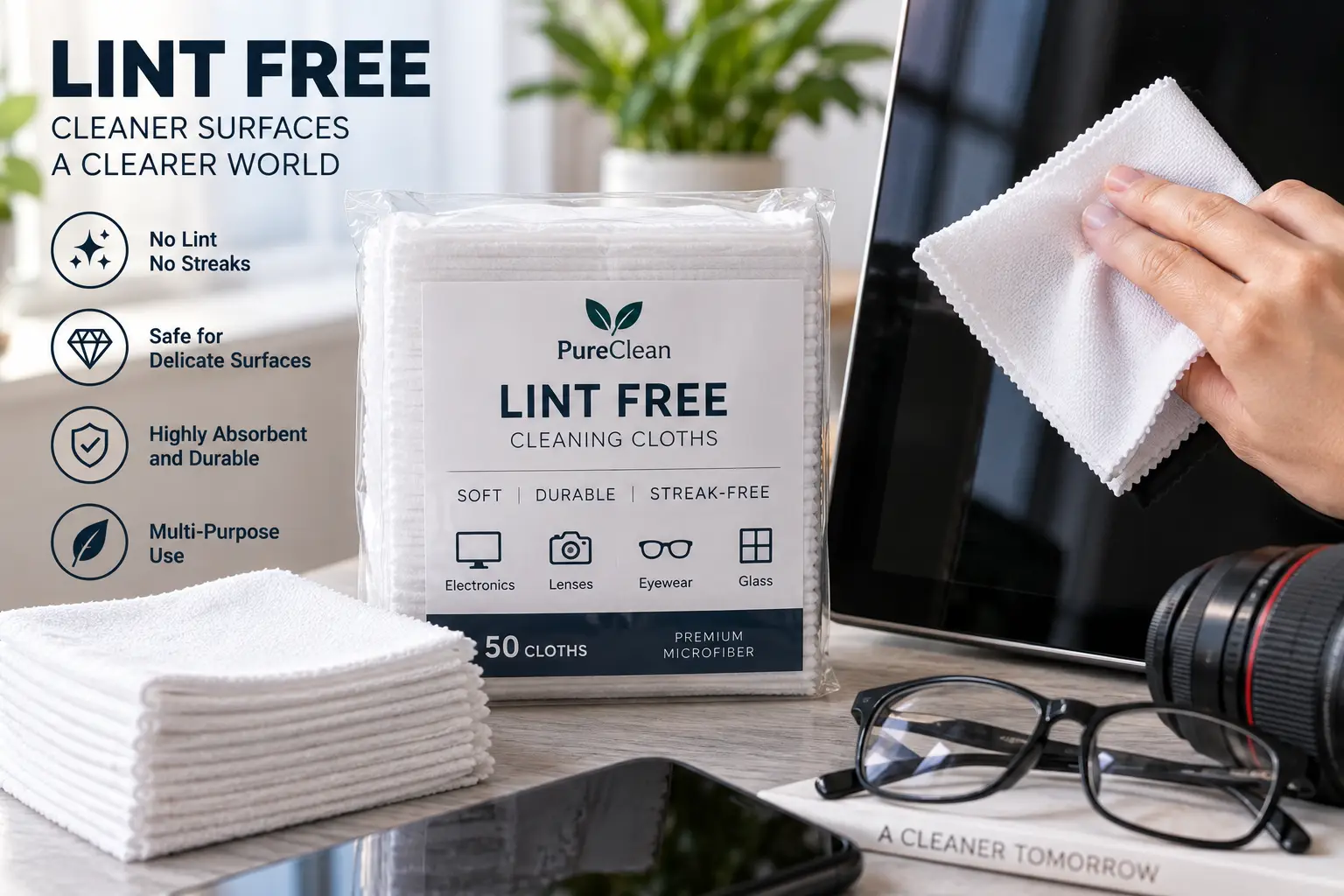
Grab any random rag from your kitchen drawer and wipe down a phone screen, and you’ll probably end up with more fuzz on the glass than you started with. That’s the whole problem lint free cloths were invented to solve. A lint free cloth is a cleaning cloth — usually woven from split microfiber, sometimes from tightly spun cotton — engineered so its fibers stay locked into the weave instead of shedding onto whatever you’re cleaning, which is why it leaves glass, screens, and finished surfaces streak-free instead of fuzzy.
If you’ve ever tried to polish a pair of glasses with a paper towel, you already know the frustration: instead of clarity, you get scratches and a fresh dusting of paper fiber. The right lint free cloth fixes that instantly, and once you own a good one, it’s genuinely hard to go back to anything else.
This guide breaks down seven real, currently available options on Amazon — from budget bulk packs to specialty cotton cloths built for furniture care — and explains exactly which one fits your situation, your surfaces, and your budget. We’ll also walk through how to choose, how to care for what you buy, and where people commonly go wrong. Whether you’re outfitting a car detailing kit, stocking up for weekly house cleaning, or just tired of streaky eyeglasses, there’s a specific pick below built for that job. Let’s get into it.
Quick Comparison: 7 Best Lint Free Cloths at a Glance
| Product | Best For | Pack Size | Price Range | Rating Snapshot |
|---|---|---|---|---|
| Amazon Basics Microfiber Cleaning Cloths | Everyday budget cleaning | 24 cloths | Under $15 | Consistently high customer satisfaction |
| FIXSMITH Microfiber Cleaning Cloth | Best overall value | 50 cloths | Under $25 | Editor-tested top pick |
| MagicFiber Microfiber Cleaning Cloths | Electronics & lenses | 6 cloths | Around $10-15 | Strong reviews for softness |
| USANOOKS Microfiber Cleaning Cloth | Car detailing & durability | 12 cloths | Around $15-20 | Rated for hundreds of washes |
| MR.SIGA Microfiber Cleaning Cloths | Color-coded whole-home use | 12 cloths | Under $15 | High volume of positive reviews |
| Furniture Clinic Lint Free Cotton Cloths | Wood, furniture, oiling | 3 cloths | Around $10-15 | Praised for absorbency |
| HOMEXCEL Microfiber Cleaning Cloth | Budget multi-surface use | 12 cloths | Under $12 | Popular budget best-seller |
Looking at the table above, the FIXSMITH Microfiber Cleaning Cloth stands out as the best all-around value thanks to its enormous 50-pack count and independently tested performance, while the MagicFiber Microfiber Cleaning Cloths justify a higher per-cloth price if your main use case is delicate electronics rather than general household cleaning. Budget shoppers comparing Amazon Basics and HOMEXCEL should note both deliver similar everyday performance, so the deciding factor often comes down to pack size and color preference rather than cleaning power.
💬 One click helps other shoppers make an informed choice too! 😊
Top 7 Lint Free Cloths: Expert Analysis
1. Amazon Basics Microfiber Cleaning Cloths — best budget bulk pack
If you just need a big stack of reliable, lint free cloths without overthinking it, this is the pack that ends the search. The 24-count bundle in blue, white, and yellow gives you enough cloths to stash one in every room without rationing them.
Each cloth measures roughly 16 x 12 inches — noticeably larger than the pocket-sized cloths sold for eyeglasses — which matters in practice because a bigger cloth means fewer passes to dry a countertop or buff a mirror dry before streaks set. The blend is a standard polyester-polyamide microfiber, and the non-abrasive weave means you can use it on painted surfaces, stainless steel, and glass without worrying about fine scratches, something a paper towel or old t-shirt scrap can’t promise.
This is the pick for anyone who wants “good enough for everything” rather than a specialist tool: renters doing a move-out clean, parents who go through cloths fast, or anyone building a first home-cleaning kit on a budget. Reviews consistently report that the cloths hold up well through dozens of machine washes before the absorbency starts to fade, and that the assorted colors make it easy to color-code by room. A recurring theme in feedback is that a few cloths in any given 24-pack feel thinner than the rest — not unusual for a value-tier bulk pack, but worth knowing going in.
Pros:
- ✅ Large 24-cloth count covers a whole household
- ✅ Generously sized at 16 x 12 inches per cloth
- ✅ Machine washable and reusable hundreds of times
Cons:
- ❌ Occasional thinner cloths mixed into the pack
- ❌ Less plush than premium electronics-specific cloths
At around $12-15 for two dozen cloths, the cost per cloth is about as low as this category gets, which makes it an easy value pick if quantity matters more than luxury feel.
2. FIXSMITH Microfiber Cleaning Cloth — editor-tested best overall
The FIXSMITH Microfiber Cleaning Cloth earned its reputation the hard way: it came out on top after a multi-week, side-by-side household testing process run by a major consumer publication, beating out several well-known competitors on absorbency and durability. That’s a meaningfully different bar than a cloth that simply has a lot of five-star reviews.
Each cloth in the 50-pack measures 16 x 12 inches and is made from a 90% polyester, 10% polyamide blend — a ratio that leans toward durability and absorbency over ultra-plush softness. In practical terms, that means it soaks up spills fast and wipes down a grimy stovetop or keyboard without needing a second pass. The sheer pack size also changes how people use it: instead of rationing a handful of cloths, testers reported grabbing a fresh one for each task and tossing it straight in the laundry, which keeps cross-contamination between surfaces to a minimum.
This is the pick for anyone who wants one product to standardize their entire cleaning routine around — kitchen, bathroom, car, office — without juggling five different specialty cloths. Reviewers frequently mention that even after dozens of washes, the cloths keep their lint free performance instead of degrading into the pilled, scratchy texture cheaper microfiber develops over time.
Pros:
- ✅ Independently tested as a top overall performer
- ✅ Massive 50-cloth pack lowers cost per use
- ✅ Holds up through repeated washing without pilling
Cons:
- ❌ Less plush feel than premium electronics-focused cloths
- ❌ Large pack size takes up more storage space
Priced under $25 for 50 cloths, this works out to roughly half a dollar per cloth — genuinely excellent value for a pick that’s outperformed pricier competitors in independent testing.
3. MagicFiber Microfiber Cleaning Cloths — plushest pick for screens and lenses
Where FIXSMITH wins on durability and value, the MagicFiber Microfiber Cleaning Cloths win on feel — and for delicate optics, feel is function. These cloths use a higher polyamide content than typical all-purpose microfiber, which is what gives them their noticeably thicker, softer texture straight out of the pack.
That extra plushness isn’t just a marketing point. On a camera lens, phone screen, or anti-glare laptop display, a stiffer cloth can drag micro-debris across the coating and leave faint marring over time; a softer, denser weave glides instead of scrapes. The compact size — smaller than the general-purpose cloths on this list — is also intentional, since it’s built to fold into your camera bag, glasses case, or laptop sleeve rather than serve as a countertop rag.
This is the pick for photographers, anyone with prescription glasses or sunglasses, and households with expensive touchscreens to protect. Reviews consistently single out the plush feel and streak-free glass performance as the standout traits, with several buyers noting they specifically switched from cheaper microfiber after noticing faint scratching on a lens or screen. The trade-off is that you’re paying a premium per cloth compared to bulk household packs, and the smaller size makes it a poor fit for anything larger than a screen or a pair of glasses.
Pros:
- ✅ Noticeably softer, thicker feel than standard microfiber
- ✅ Safe for coated lenses, screens, and eyeglasses
- ✅ Compact enough to carry in a bag or case
Cons:
- ❌ Higher price per cloth than bulk household packs
- ❌ Too small for larger cleaning jobs like counters or cars
In the $10-15 range for a six-pack, it’s priced like a specialty tool rather than a commodity cloth — which is exactly what it is if your priority is protecting delicate optics.
4. USANOOKS Microfiber Cleaning Cloth — most durable for car detailing
Automotive detailing is brutal on cloths: road grime, wax residue, and repeated wringing wear out cheap microfiber fast. The USANOOKS Microfiber Cleaning Cloth is built specifically to survive that abuse, with a manufacturer durability rating of roughly 1,200 washes — well above the average lifespan most budget microfiber cloths are rated for.
At 12.5 x 12.5 inches, each cloth in the 12-pack is large enough to wrap around a drying mitt or fold into quadrants during a full car wash without running out of clean surface area. The grey color choice is also practical rather than cosmetic: light-colored cloths show brake dust and grease stains, while grey hides light soiling between washes, which matters if you’re doing this weekly. What most buyers overlook with a durability-focused cloth like this is that “high wash count” also means less lint shedding over time, since a cloth that’s degrading is exactly the kind that starts leaving fibers behind on paint and glass.
This is the pick for anyone detailing cars, motorcycles, or boats regularly, or for households that just go through cleaning cloths unusually fast. Reviews consistently praise the streak-free mirror shine it leaves on glass and chrome, and the high absorbency for wet wax or soap removal.
Pros:
- ✅ Rated for roughly 1,200 washes
- ✅ Large 12.5 x 12.5-inch size for full panels
- ✅ Grey color hides light grime between washes
Cons:
- ❌ Bulkier feel than lightweight household cloths
- ❌ Overkill for light dusting or eyeglass cleaning
Expect to pay in the $15-20 range for the 12-pack — a fair trade for a cloth built to outlast several cheaper packs combined.
5. MR.SIGA Microfiber Cleaning Cloths — most versatile color-coded system
The MR.SIGA Microfiber Cleaning Cloths show up on more “best overall” lists than almost any other cloth on the market, and the reason is versatility: an 85% polyester, 15% nylon blend that performs well across kitchens, bathrooms, cars, and general dusting without needing a specialty cloth for each job.
The color-coded pack (commonly sold in sets of 12, with larger 24-count variety packs available) is the real functional advantage here. Assigning a color to each zone of the house — say, blue for glass, yellow for kitchen counters, green for bathrooms — is a simple system that professional cleaning services use specifically to avoid cross-contaminating surfaces, and it works just as well at home. In practice, that means you’re not accidentally wiping a toilet handle with the same cloth you used on a cutting board.
This is the pick for households that want one system to standardize cleaning across the whole home. Reviews consistently praise the absorbency and softness for general surfaces, though a smaller number of reviewers have noted occasional lint or light residue left behind specifically on glass and mirrors — worth flagging honestly, since it means this cloth is better suited to countertops and dusting than to a streak-free window job, where the MagicFiber Microfiber Cleaning Cloths above would be the stronger choice.
Pros:
- ✅ Color-coded system prevents cross-contamination
- ✅ Strong absorbency for everyday spills and grime
- ✅ Consistently high review volume across retailers
Cons:
- ❌ Some users report light lint on glass and mirrors
- ❌ Not as specialized as dedicated glass-only cloths
At under $15 for a 12-pack, it remains one of the more affordable whole-home options, with the color-coding alone adding real practical value over a single-color bulk pack.
6. Furniture Clinic Lint Free Cotton Cloths — best for wood and furniture care
Every product so far on this list is microfiber. The Furniture Clinic Lint Free Cotton Cloths are the deliberate exception, and that’s the point: for applying oils, waxes, and finishes to wood furniture, cotton actually outperforms microfiber, since it absorbs and releases liquid more evenly instead of trapping it in split synthetic fibers.
The 3-pack of 100% cotton cloths is designed specifically for this application-and-buff workflow — soaking up teak oil or furniture wax without leaving cotton lint embedded in the finish, then buffing it to an even sheen once it’s set. The brand notes its products have been evaluated by the Good Housekeeping Institute, which is a meaningful third-party quality signal in a category where marketing claims are otherwise hard to verify. The cloths are also hypoallergenic and free of added chemical treatments, a detail that matters if you’re using them around kids or pets while a wood finish is curing.
This is the pick for anyone restoring furniture, oiling a butcher block countertop, refinishing hardwood trim, or maintaining leather with conditioning oils. It is not the pick for glass, electronics, or general dusting — cotton simply doesn’t have the static-cling dust-grabbing properties microfiber does. Reviews consistently highlight the absorbency for oil-based products specifically, which lines up with what the material science would predict.
Pros:
- ✅ Ideal for wood oiling, waxing, and finishing
- ✅ Hypoallergenic with no added chemical treatments
- ✅ Evaluated by the Good Housekeeping Institute
Cons:
- ❌ Small 3-cloth pack compared to microfiber bundles
- ❌ Not suited for glass or electronics cleaning
Priced around $10-15 for three cloths, it’s a specialty buy rather than a bulk household pick — but for wood care specifically, there’s no substitute on this list.
7. HOMEXCEL Microfiber Cleaning Cloth — cheeriest budget multi-pack
Rounding out the list, the HOMEXCEL Microfiber Cleaning Cloth is a straightforward, colorful, budget-friendly option that consistently ranks among Amazon’s top sellers in the reusable cleaning cloth category — a signal that a large number of repeat buyers are happy with it at this price point.
The 12-pack comes in four assorted colors (green, blue, yellow, and pink) at 11.5 x 11.5 inches — slightly smaller than the Amazon Basics and FIXSMITH cloths above, which makes it a touch easier to wring out one-handed while holding a spray bottle in the other. The lint free, scratch-free weave performs the way you’d expect from standard microfiber: fine on glass, countertops, cars, and general dusting, without the plush upgrade you’d get from a specialty electronics cloth.
This is the pick for anyone who wants a cheerful, no-fuss set of general-purpose cloths without committing to a 50-count bulk pack, or for households that like the built-in color variety for casual color-coding. Reviews consistently mention the softness and absorbency relative to the price, with the four-color assortment frequently called out as a nice touch for keeping track of which cloth is used where.
Pros:
- ✅ Cheerful four-color assortment aids organization
- ✅ Compact, easy-to-wring 11.5-inch size
- ✅ Consistent best-seller status signals reliability
Cons:
- ❌ Smaller pack size than Amazon Basics or FIXSMITH
- ❌ Slightly smaller cloth size than 16 x 12-inch options
At under $12 for a dozen cloths, it sits right alongside Amazon Basics as one of the most budget-friendly entries here, distinguished mainly by its smaller size and color variety.
How to Use and Care for Your Lint Free Cloths
Buying a good lint free cloth is half the job; caring for it correctly is what keeps it performing that way for hundreds of washes instead of dozens. Right out of the package, give new microfiber cloths one wash on their own — new cloths often carry a light manufacturing residue that can actually cause streaking on the very first use, which sometimes gets blamed on the cloth itself rather than the packaging.
From there, a few habits make an outsized difference. Wash microfiber and cotton lint free cloths separately from regular laundry, since lint from towels, socks, and cotton clothing will embed itself in the microfiber weave and defeat the entire purpose of the cloth. Skip fabric softener entirely — it coats the fibers with a waxy residue that blocks the split-fiber structure responsible for absorbency and dust attraction, which is the single most common reason a once-great cloth suddenly starts performing like a rag. Air-drying or a low-heat tumble cycle is safer than high heat, which can melt or fuse the fine synthetic fibers over repeated cycles.
Day to day, use cloths dry for dusting (static cling does most of the work) and lightly dampened for wiping and polishing. For glass and screens specifically, a two-cloth method works best: one slightly damp cloth to lift grime, then a second, completely dry cloth to buff away any remaining moisture before it can streak. Rotate a “retirement” cloth into rougher jobs — garage cleanup, shoes, greasy tools — once its softness starts to fade, rather than throwing it out; a cloth that’s lost its plush feel for screens still has plenty of life left for less delicate work.
✨ Don’t miss these exclusive deals! 🔍 Take your cleaning routine to the next level with this carefully curated lineup. Click a highlighted item to check current pricing and availability. These picks will help you get a streak-free, lint-free home the whole family will enjoy!
Real-World Scenarios: Which Lint Free Cloth Matches Your Life
Matching the product to the person tends to work better than chasing star ratings alone, so here’s how three common situations map onto the picks above.
The new apartment renter on a tight budget. If you’re stocking a first apartment and need cloths for everything — counters, mirrors, the car, dusting — from a limited budget, either the Amazon Basics Microfiber Cleaning Cloths or the HOMEXCEL Microfiber Cleaning Cloth covers nearly every task for well under $15. Buy one of the two, use it for a season, and only upgrade to something specialized once you’ve identified a specific gap, like streaky glasses.
The weekend car detailer. If you’re spending your Saturdays washing and waxing a car, cheap cloths are a false economy — they wear out fast and start leaving swirl marks in clear coat as they degrade. The USANOOKS Microfiber Cleaning Cloth, rated for around 1,200 washes, is built for exactly this workload, and its size is large enough to fold into quadrants during a full detail session.
The remote worker glued to three screens. If your main frustration is smudgy monitors, a laptop screen, and glasses that fog up with fingerprint marks by lunchtime, general household cloths are the wrong tool. The MagicFiber Microfiber Cleaning Cloths are sized and finished specifically for that job, and their plush weave avoids the faint scratching risk that stiffer, all-purpose cloths carry on anti-glare coatings.
Common Lint Free Cloth Problems (and How to Fix Them)
Problem: The cloth leaves streaks on glass instead of a clean finish. This is almost always a residue issue, not a defect. Either fabric softener has coated the fibers, or the cloth is being used damp with too much cleaning solution. Switch to a barely-damp cloth followed by a dry buffing pass, and wash the cloth on its own without softener going forward.
Problem: The cloth feels stiff or scratchy after a few washes. High heat in the dryer is the usual culprit, since it can fuse or damage the fine split fibers that make microfiber effective in the first place. Air-dry or use the lowest heat setting available, and the softness typically returns within one or two proper washes.
Problem: Lint keeps transferring onto surfaces even though the cloth is labeled lint free. Check what else went into that laundry load. A single cotton towel or sock washed alongside microfiber will shed fibers directly into the weave, which then transfer right back onto your next glass or screen. Always wash lint free cloths in their own load.
Problem: A specific cloth seems to have gotten worse over time, faster than the rest of the pack. Bulk packs occasionally include a thinner or lower-grade cloth mixed in during manufacturing, a complaint that shows up in reviews across nearly every brand on this list. Rather than tossing the whole pack, retire that individual cloth to rougher jobs like garage or tool cleanup.
Problem: A cloth that worked great on countertops is now scratching a phone screen. Different jobs need different weaves. General-purpose cloths like MR.SIGA Microfiber Cleaning Cloths are excellent for countertops but not engineered with the same plush finish as a dedicated electronics cloth like MagicFiber Microfiber Cleaning Cloths — matching the cloth to the surface solves this instantly.
How to Choose Lint Free Cloths: 7 Expert Criteria
- Match the weave to the surface. A tighter, flatter weave (like MagicFiber) suits glass, lenses, and screens; a plusher, thicker weave (like FIXSMITH or Amazon Basics) suits countertops and general dusting.
- Check the fiber blend. A higher polyamide percentage generally means softer and more absorbent, while a higher polyester percentage tends to mean more durable and better at scrubbing.
- Think about pack size relative to use frequency. Heavy daily use in a busy household favors a 50-pack like FIXSMITH; occasional touch-ups favor a smaller specialty pack like MagicFiber.
- Consider size for the job. Larger cloths (16 x 12 inches or bigger) cover more ground per pass on counters and cars; smaller cloths are easier to fold precisely for glasses and lenses.
- Look at wash-count ratings when durability matters. For high-wear jobs like car detailing, a cloth rated for hundreds of washes, like USANOOKS, earns back its slightly higher price over time.
- Match material to task, not just brand reputation. Cotton, like Furniture Clinic Lint Free Cotton Cloths, genuinely outperforms microfiber for oil and wax application on wood, even though microfiber dominates the rest of this category.
- Factor in color-coding if hygiene matters to you. A color-coded system like MR.SIGA makes it easy to avoid cross-contaminating kitchen and bathroom surfaces without having to think about it every time.
According to a University of Washington fact sheet on microfiber cleaning, microfiber cloths have been shown in comparative testing to remove significantly more bacteria from surfaces than traditional cotton-loop tools, which is one more reason microfiber dominates this category outside of specialty wood-care use.
Common Mistakes to Avoid When Buying Lint Free Cloths
The most common mistake is buying based on pack size alone. A 50-pack sounds like the obvious value play, but if your main use case is protecting a $1,200 laptop screen, a handful of properly finished electronics cloths will serve you better than a mountain of general-purpose ones.
A second mistake is assuming “lint free” on the label guarantees performance regardless of care. As covered above, fabric softener and high heat can degrade even a premium cloth’s lint free performance within a few washes — the label describes the product as sold, not as it will perform under improper laundering.
A third, subtler mistake is buying one cloth type for every surface in the house. Reviewers who complain about lint on mirrors are frequently using a general household cloth, like the base version of MR.SIGA, for a job better suited to a dedicated glass-finish cloth. Matching the tool to the task — rather than expecting one cloth to be optimal at everything — solves most of the disappointment reflected in mixed reviews across this category.
Finally, don’t ignore size specs when comparing prices. A pack of small 6 x 7-inch cloths priced similarly to a pack of 16 x 12-inch cloths isn’t actually the better deal; always compare price per square inch of usable cloth, not just price per unit, when two packs look similar on the surface.
Lint Free Microfiber Cloths vs. Paper Towels and Cotton Rags
| Factor | Lint Free Microfiber | Paper Towels | Old Cotton Rags |
|---|---|---|---|
| Streak-free on glass | Yes | No — leaves lint | No — leaves lint |
| Reusable | Yes, hundreds of washes | No, single use | Yes, but sheds over time |
| Safe on coated screens | Yes (specialty cloths) | No — can scratch | Risky — depends on fabric |
| Cost over one year | Low after initial purchase | Adds up with repeat buys | Free, but limited performance |
| Best for | Glass, electronics, cars, counters | Quick spills, raw messes | Rough jobs, garage use |
The analysis here is straightforward: Consumer Reports has noted that a proper microfiber cloth — one built with a split-fiber cross-section rather than plain cylindrical fibers — is specifically recommended over paper towels for screens precisely because it won’t scratch or leave lint behind. Paper towels still win for genuinely disposable jobs, like mopping up a raw egg or wiping up motor oil you never want back in your laundry, but for anything you’ll clean repeatedly, a lint free cloth pays for itself within a few uses and keeps working long after the paper towel roll runs out. Old cotton rags fall in the middle: free and absorbent, but prone to shedding exactly the lint this whole category exists to eliminate.
What to Expect: Everyday Performance
On paper, every product in this category claims to be absorbent, streak-free, and lint free — so it helps to know what that actually looks like day to day. A genuinely good lint free cloth should leave a glass surface clear on the first pass when used correctly (barely damp, followed by a dry buff), not require three or four attempts to eliminate streaking.
Absorbency in practice means a single cloth can soak up a moderate spill — a knocked-over glass of water, a coffee ring — without needing to be wrung out mid-cleanup. Durability shows up less in the first few washes and more around the 30-50 wash mark, which is when lower-grade cloths start to visibly thin, pill, or lose their static-cling dust-grabbing ability, while higher-grade options like FIXSMITH or USANOOKS are specifically built to hold that performance well past that point.
One realistic expectation to set: even excellent microfiber occasionally leaves faint residue on very cold glass or in low humidity, simply due to static buildup pulling fine dust back onto the surface as it dries — this is a physics quirk of the material, not a defect, and a quick second dry pass clears it.
Long-Term Cost and Maintenance: Is Buying in Bulk Worth It?
| Product | Approx. Cost per Cloth | Rated Lifespan | Best Value Scenario |
|---|---|---|---|
| Amazon Basics Microfiber Cleaning Cloths | Roughly $0.50-0.65 | Dozens of washes | High-frequency household use |
| FIXSMITH Microfiber Cleaning Cloth | Roughly $0.40-0.50 | Well beyond 50 washes | Whole-home standardization |
| MagicFiber Microfiber Cleaning Cloths | Roughly $1.75-2.50 | Dozens of washes | Low-frequency, high-value electronics |
| USANOOKS Microfiber Cleaning Cloth | Roughly $1.25-1.65 | Up to ~1,200 washes | Weekly car detailing |
Looking at the table above, the math clearly favors bulk microfiber for anything used often: FIXSMITH and Amazon Basics both land under a dollar per cloth, and with proper care neither needs replacing for a year or more of regular use. Specialty cloths like MagicFiber cost several times more per unit, but that premium only matters if you’re using them dozens of times a month; for occasional lens cleaning, six cloths can realistically last well over a year, which brings the effective annual cost back in line with the cheaper bulk options.
Maintenance costs are close to zero beyond the wash cycle itself — no replacement solutions, no disposable refills — which is the core reason lint free cloths beat paper towels on total cost of ownership for any recurring cleaning task. The only real “maintenance cost” is discipline: skipping fabric softener and high heat, which cost nothing but do determine whether a cloth lasts one year or three.
Safety, Regulations, and Sustainability Standards
Lint free cloths sold on Amazon for household use aren’t subject to the kind of formal certification you’d see on electrical appliances, but a few practical safety and sustainability points are worth knowing. Look for cloths explicitly labeled non-abrasive and hypoallergenic if you have sensitive skin, young children, or pets handling the same surfaces — the Furniture Clinic Lint Free Cotton Cloths, for example, are marketed specifically around that hypoallergenic, chemical-free profile.
On the sustainability side, it’s worth being honest about a trade-off: most lint free cloths are synthetic microfiber, meaning polyester and polyamide, which are technically plastics. Peer-reviewed research on domestic laundering has found that synthetic textiles — including microfiber cleaning cloths — shed small amounts of microfiber during every wash cycle, contributing to the broader microplastic pollution issue affecting waterways. This doesn’t mean microfiber cloths are a poor choice; their durability and reusability still make them dramatically lower-impact than single-use paper towels over their full lifespan. But it does mean washing them in full loads rather than constantly running small loads, and considering a laundry filter bag if you’re washing microfiber frequently, are small, genuinely useful habits if the environmental angle matters to you.
If wood or leather care is part of your routine, cotton options like Furniture Clinic Lint Free Cotton Cloths sidestep the microplastic question entirely, since cotton is a natural fiber — one more reason that pick earns its spot on this list beyond pure cleaning performance.
Frequently Asked Questions
❓ What makes a cloth 'lint free' instead of a regular cloth?
❓ Can lint free microfiber cloths be used without any cleaning spray?
❓ How often should lint free cloths be replaced?
❓ Is microfiber or cotton better for a lint free cloth?
❓ Do lint free cloths work on car paint without scratching it?
Conclusion
The right lint free cloth really does come down to matching the material and weave to the job rather than chasing the single “best” product on the market. For most households, a bulk pack like the FIXSMITH Microfiber Cleaning Cloth or the budget-friendly Amazon Basics Microfiber Cleaning Cloths covers 90% of daily cleaning without a second thought. Once you’ve got that baseline covered, it’s worth adding one specialist to your kit: the MagicFiber Microfiber Cleaning Cloths if screens and lenses are a daily frustration, the USANOOKS Microfiber Cleaning Cloth if a car or boat gets regular attention, or the Furniture Clinic Lint Free Cotton Cloths if wood furniture care is part of your routine.
What all seven of these picks have in common is that they solve the exact problem paper towels and old rags can’t: a genuinely streak-free, fiber-free finish on the surfaces that show every smudge. Start with one bulk pack, add a specialty cloth for your specific pain point, and treat both right — skip the fabric softener, wash them separately, and air-dry when you can — and a good lint free cloth will quietly outperform its price tag for years.
Recommended for You
- Is Microfiber Lint Free? 7 Best Lint-Free Cloths (2026)
- Commercial Microfiber Mop: 7 Top Picks for Busy Facilities (2026)
- Washing Microfiber Rags: 7 Powerful Tips to Keep Them Clean and Reusable
Disclaimer: This post contains affiliate links. As an Amazon Associate, I earn from qualifying purchases made through these links, at no additional cost to you.
✨ Found this article helpful? Share it with someone who needs it! 💬🤗